Last updated November 17, 2026
DIY vs Professional Insulation: The Las Vegas Homeowner’s Decision Guide
You can rent a blower-door kit in Las Vegas for roughly $300 a day. It’s the same pressurization rig a contractor brings to your driveway, and renting it puts real diagnostic hardware in your hands. Here’s the catch: a blower-door test produces a single number (ACH50, or air changes per hour at 50 pascals of pressure) and that number is meaningless until you read it against a floor plan, a pressure-pan sweep, and an infrared image of where the air is actually escaping. Without that interpretation, the data is noise, and insulation gets installed over leaks that should have been sealed first. This guide separates the insulation jobs where correct placement is visually obvious from the jobs that require diagnostic sequencing, so you can decide what to do yourself and what to hand off.
Quick Answer
The DIY-versus-professional insulation question in Las Vegas isn’t really about skill. It’s about whether the task needs diagnostic equipment to determine where material goes before any material is installed. Batt replacement on an accessible attic floor and a blown-in top-off are reasonable DIY projects. Spray foam in a wall cavity, roof-deck encapsulation, and vapor barrier placement in an unvented assembly are not, because the correct sequence depends on pressure testing and dew-point math you can’t eyeball. For those, hire a licensed contractor who documents air sealing before insulating.
Table of Contents
- The Two Categories of Insulation Work: Diagnostic or Not
- What You Can Reasonably Do Yourself in Las Vegas
- Where DIY Insulation Fails: The Sequencing Problem
- Permits, Warranties, and Rebates: The Paper Trail
- The Hybrid Approach and What It Actually Saves
- Why Las Vegas Conditions Change the Math
- Common Mistakes to Avoid
- When to Call a Professional
The Two Categories of Insulation Work: Diagnostic or Not
Every insulation task you might tackle falls into one of two buckets. The first bucket contains jobs where the correct placement of material is visible without instrumentation. You can see missing batts, you can see a compressed batt, you can see an obvious gap around a recessed light. The second bucket contains jobs where placement and sequence depend on measurements you can’t get by looking: where air is leaking, how much, and whether a vapor barrier belongs on the interior or exterior side of an assembly given the local dew point.
Jobs with a visually obvious answer:
- Replacing a missing or damaged fiberglass batt on an accessible attic floor
- Adding loose-fill insulation over a clean, unobstructed, already-sealed attic floor
- Replacing batts in an accessible knee wall where the cavity is open and visible
- Removing wet or compressed insulation and letting the cavity dry before reinstalling
Jobs that require testing before material goes in:
- Spray foam in a closed wall cavity, where the cavity is sealed after the fact and any air leak left behind is now trapped
- Roof-deck encapsulation, where the assembly’s vapor profile changes entirely
- Vapor barrier placement in an unvented attic, which depends on a dew-point calculation for your specific assembly
- Air sealing of top plates and penetrations, which only makes sense once a blower door tells you where the dominant leaks are
The distinction matters because most DIY insulation failures in Las Vegas aren’t installation failures. The material went in correctly. It went in the wrong place, or in the wrong order, over leaks that should have been sealed first. Our attic insulation work in Las Vegas starts with a written price and a documented air-sealing scope for exactly this reason: the order of operations is the whole job.
What You Can Reasonably Do Yourself in Las Vegas
Two projects are genuinely within reach for a careful homeowner with a weekend and a truck. Both share a trait: the correct placement is visible, the material is forgiving, and a mistake won’t create a moisture problem or void a warranty on work you didn’t touch.
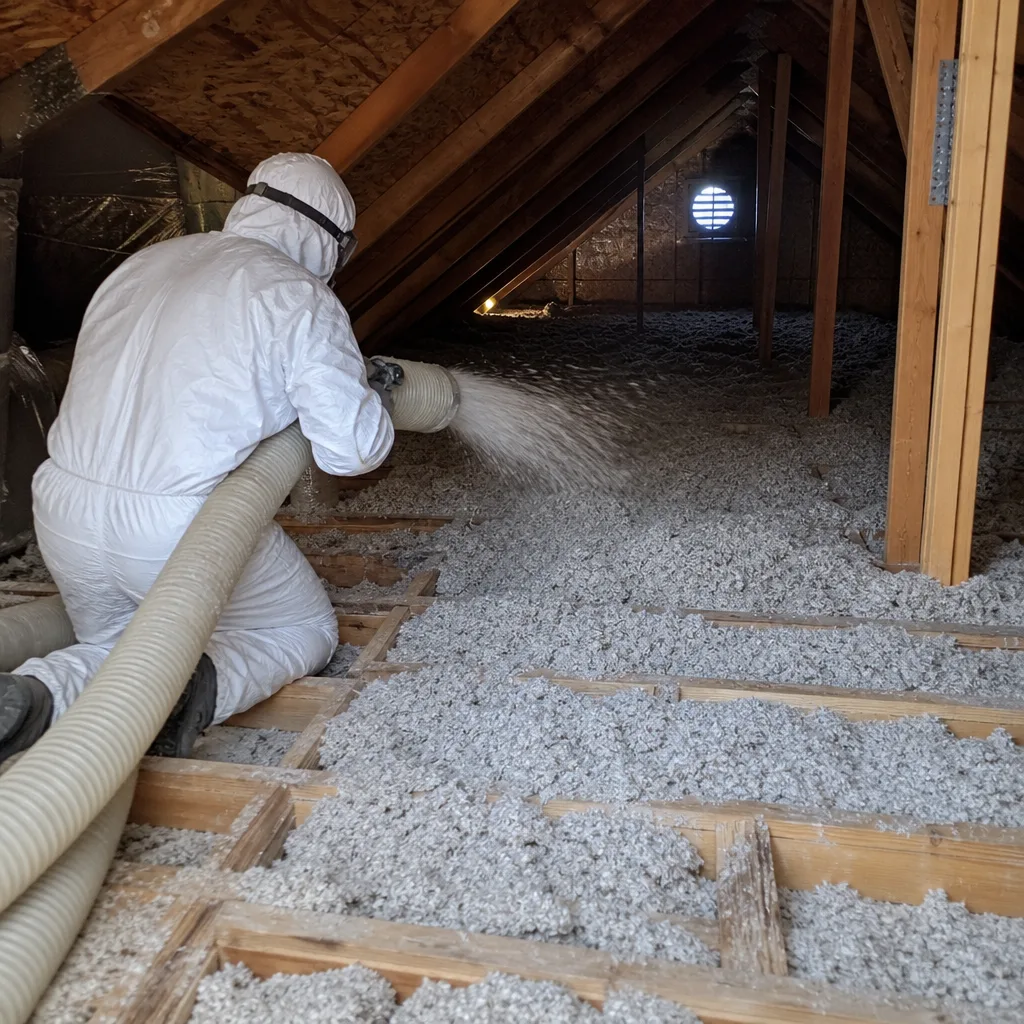
Project 1: A blown-in attic top-off using a rented blower machine. Hardware stores in Las Vegas rent the blower and sell the loose-fill bags together, and one person feeding the hopper while another works the hose is the standard setup. This works when your attic floor is already air-sealed (or was built that way), the existing insulation is clean and dry, and you’re simply bringing the R-value up to code. It does not work over a floor with open top plates, unsealed can lights, and a dozen plumbing penetrations, because you’ll bury the leaks rather than fix them.
Tool list for the top-off:
- Rented insulation blower with hose (usually rented by the day, often including a second hose section)
- Loose-fill insulation bags (GreenFiber and Owens Corning both make blown products widely stocked locally)
- N95 respirator, safety glasses, and long sleeves; fiberglass and cellulose dust in a closed attic is no joke
- Knee pads and a bright headlamp
- Depth markers or a marked stick so you can verify the settled depth as you go
- Pull-down ladder rated for the load, and a second person as a spotter
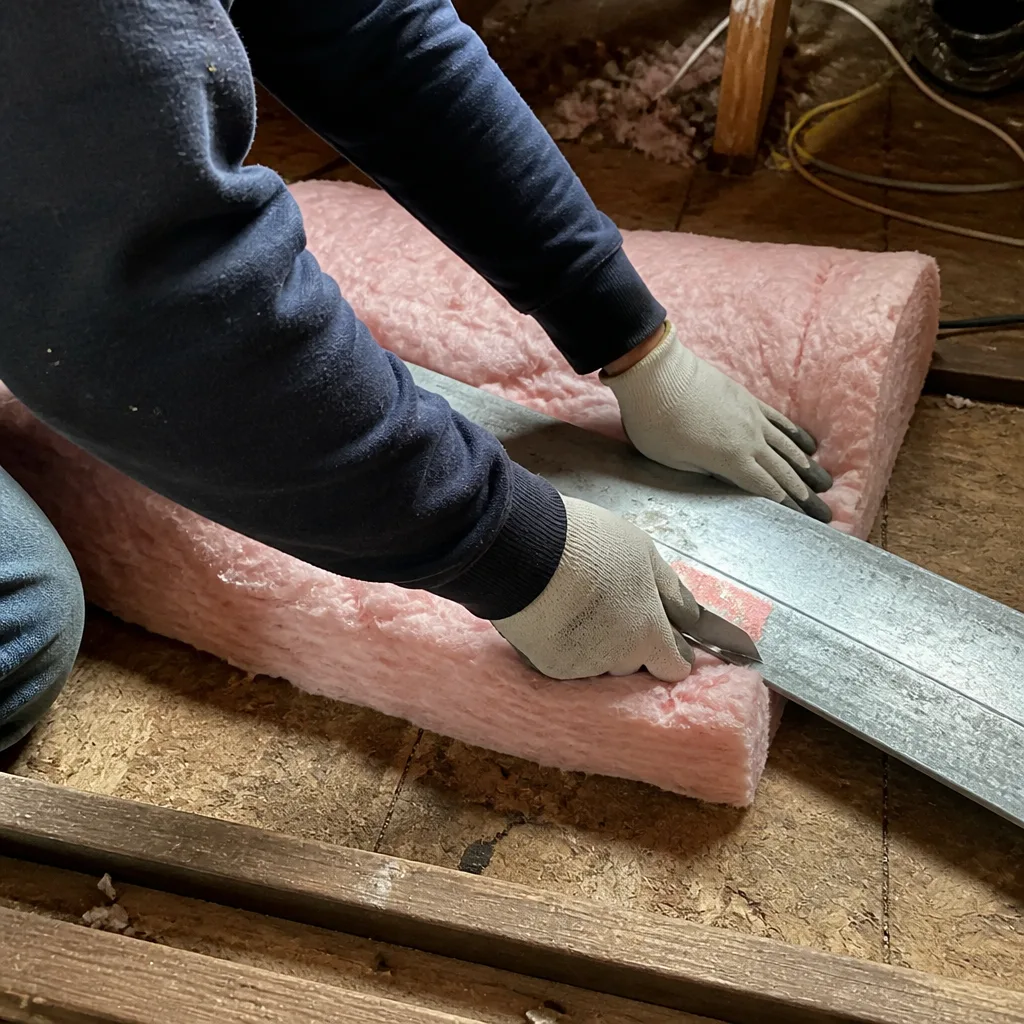
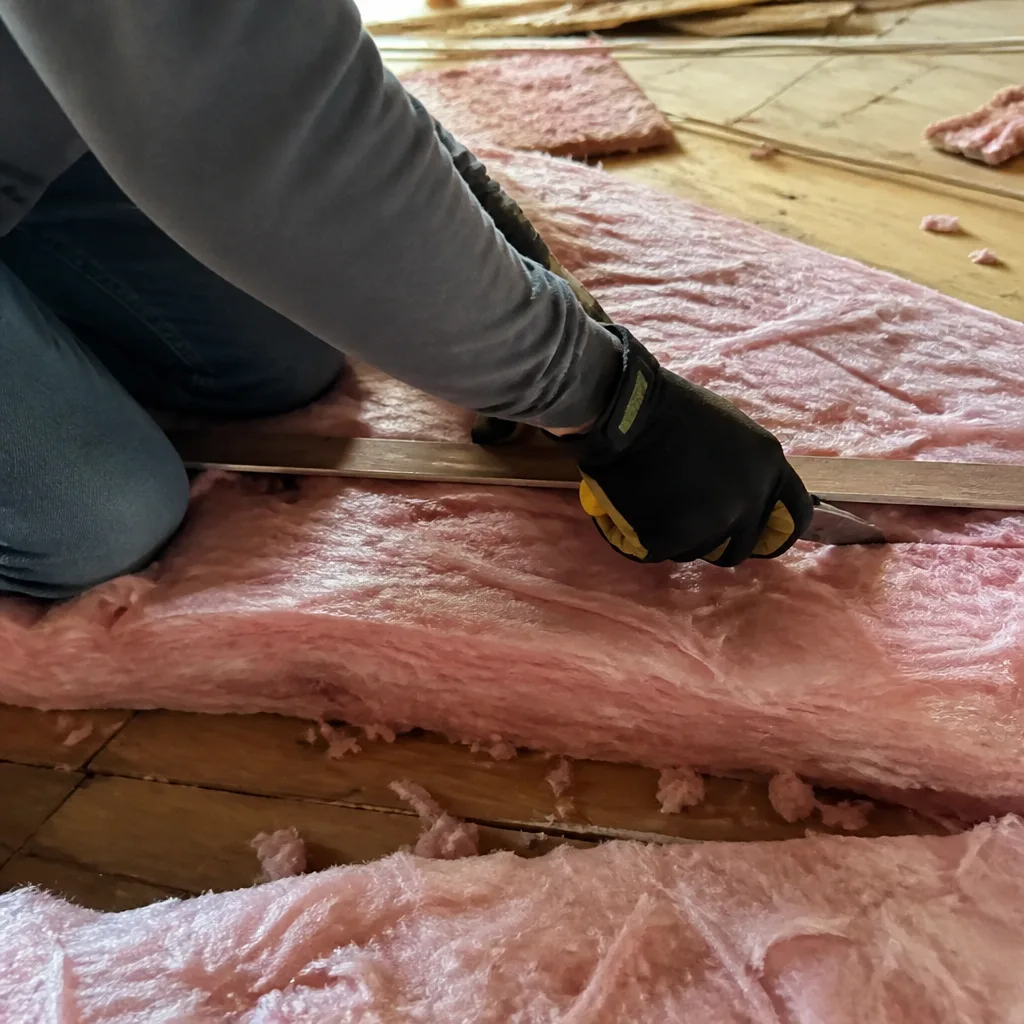
Project 2: Batt replacement in accessible knee walls. If a knee-wall cavity is open and you can see where the batt belongs, replacing a compressed or missing fiberglass batt is a low-risk task. Use the same nominal thickness as the framing allows, don’t compress the batt to make it fit (compression kills R-value), and leave a gap between the batt and any roof sheathing so you don’t create a moisture trap.
Neither of these projects requires a permit in Clark County when you’re simply adding insulation to an existing assembly. Both are physically demanding in a Las Vegas attic between May and September, where attic temperatures routinely climb well past 130°F. Start at dawn, hydrate hard, and don’t try to do it in July at noon.
Where DIY Insulation Fails: The Sequencing Problem
Insulation is often described as a material. It’s really a sequence. The material’s performance depends on what happens before it goes in, and if the sequence is wrong, more insulation can make a home perform worse while looking like progress. This is where the professional question actually lives.
DIY spray foam at top plates without a pre-seal blower door. Top plates, where the wall framing meets the ceiling, are one of the highest-leakage junctions in a house. A homeowner with a can of spray foam can make those junctions look sealed. But without a before reading on a blower door, you have no baseline to confirm what you actually closed off, and no way to find the second and third leak paths feeding the same pressure loss. Pressure-pan testing (a small pan taped over an opening while the house is under pressure) is how a technician isolates which penetrations matter. A can of foam doesn’t do that. In our experience doing this work across Las Vegas, a blower-door test before and after air sealing routinely shows the biggest single improvement coming from penetrations the homeowner would never have guessed.
Vapor barrier placement in an unvented attic without a dew-point calculation. Whether a vapor barrier belongs on the interior or exterior side of an assembly depends on the local dew point and the assembly’s drying direction. Put it on the wrong side and you can trap moisture inside a cavity that has no escape route, which is a recipe for mold and rot down the road. This is not a judgment call you want to make by eye, and it’s exactly the kind of thing a licensed contractor documents in a written scope before the work begins.
Any work inside a roof assembly that changes the vapor profile. Encapsulating a roof deck with spray foam is a real professional project. It changes where the dew point sits inside the assembly, and it requires the installer to be confident about the assembly’s drying behavior in Las Vegas conditions. Spray foam insulation in Las Vegas belongs in this category: it’s the material with the least forgiveness and the most dependence on pre-work diagnostics.
Under our Haven Standard, we never blow insulation over an unsealed attic floor. Air sealing comes first, then insulation, in that order, every time. It’s the one sequencing rule we won’t bend, because the before-and-after blower-door numbers are the only way a customer can verify the improvement they paid for actually happened.
Permits, Warranties, and Rebates: The Paper Trail
DIY insulation has a paper problem. It’s not the physical installation that trips people up, it’s what happens when a future buyer, a warranty department, or a rebate program asks who installed the material and where the record is.
Clark County permits. Adding insulation to an existing floor or wall assembly typically doesn’t require a building permit in Clark County. Changing an assembly (for example, converting an unvented attic to a conditioned space, or spraying foam into a wall cavity that’s being closed up) can cross into permit territory. If you’re unsure, call the Clark County building division before you start, not after.
Manufacturer warranty voidance. This is the one that surprises people. Many insulation manufacturers condition their warranty on installation by a licensed contractor following the manufacturer’s published installation instructions. A homeowner installing the material themselves can usually track down the manufacturer’s position on this, but the answer isn’t always simple, and you don’t want to discover the warranty gap the day after a problem shows up. When we install GreenFiber, Owens Corning, or Johns Manville products, the written scope and the documented photo record are your evidence that the material went in as the manufacturer specified.
NV Energy rebates. NV Energy’s residential insulation and air-sealing rebate programs typically require a licensed contractor on record, with documented pre- and post-work measurements. A DIY installation generally doesn’t produce the record a rebate program needs, which means the material cost out of your pocket can end up higher than a professional job that qualifies for the rebate. The rebate rules and amounts do change; verify current terms directly with NV Energy before you plan around them. What doesn’t change is the paperwork a contractor is positioned to produce and a DIY installation usually isn’t.
The Hybrid Approach and What It Actually Saves
There’s a middle path that’s worth taking seriously. You do the prep and the visible work. A contractor does the air sealing, the diagnostic testing, and the final install. On a 2,000-square-foot Las Vegas home, this approach can shave a real amount off a full professional job without giving up the blower-door record and the warranty coverage.
What the homeowner can take on:
- Clear the attic floor of stored boxes, holiday decorations, and anything blocking access
- Remove old, compressed, or wet batts in the accessible areas where new material will go
- Caulk visible gaps around obvious penetrations (plumbing, electrical, framing)
- Photograph the attic before the contractor arrives so you have your own record
What the contractor takes on:
- Blower-door test before any work begins
- Air sealing of top plates, can lights, and penetrations, driven by the pressure readings
- Installation of new insulation to the target R-value for the assembly
- Blower-door test after work, with before-and-after numbers published on the job record
On a 2,000-square-foot home, having a contractor handle prep (clearing the attic floor, pulling old material, then bagging and removing it) is often the single largest labor line on an attic insulation estimate, and having the homeowner cover it instead commonly saves a meaningful percentage of the total project price. The exact savings depend on how much material needs to come out and how accessible the space is. Ask for a written price that separates prep and disposal from air sealing and installation, so you can see the split before you commit. A free second opinion on any written estimate makes this easier: bring us a competing quote, and we’ll read it with you line by line.
Why Las Vegas Conditions Change the Math
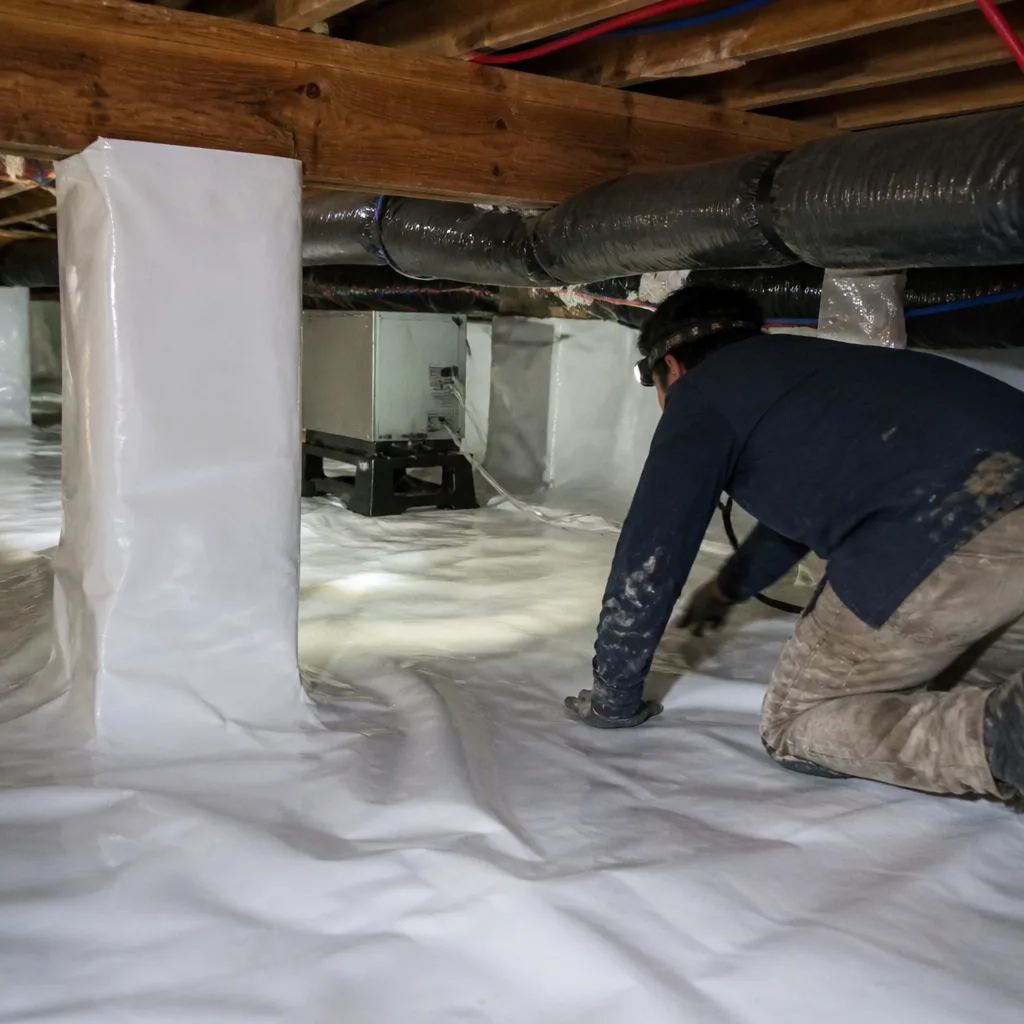
Generic insulation advice assumes a climate that doesn’t look like ours. Three local factors shift the priorities.
Attic heat drives summer cooling load hard. Las Vegas attics can hit 150°F or more on a July afternoon, and that heat pushes down through an under-insulated ceiling assembly directly onto the cooled living space below. In practice, a properly air-sealed and insulated attic in Las Vegas is one of the highest-leverage improvements a homeowner can make for summer electric bills, because the cooling system is fighting a ceiling that’s radiating heat inward rather than a sun that’s just hitting the roof.
Dry air means moisture problems look different. Homes in Las Vegas run dry most of the year, and the moisture that does accumulate tends to come from specific sources: evaporative coolers, a leaky roof, irrigation spraying a wall, or an HVAC condensate line that drips into the wrong place. This changes the DIY calculus. Caulking a gap that admits dry outside air is low-risk. Installing a vapor barrier that traps a moisture source on the wrong side of an assembly is not, and in a dry climate the moisture problem can hide for years before it shows up.
Older housing stock and recent construction both matter. A 2020 build and a 1995 build have very different envelope profiles. Newer construction in Las Vegas is often tighter than older homes but still has gaps at top plates and penetrations. An older home can have a leakier envelope and a more complicated vapor profile. The diagnostic step matters more, not less, when the house’s construction era is uncertain. Crawl space encapsulation and vapor barrier work in Las Vegas is a good example of a job where a dry climate doesn’t remove the need for a proper vapor assessment, because the assembly still has to manage the moisture that does occur.
Common Mistakes to Avoid
- Blowing insulation over an unsealed attic floor. This is the single most common error. The new material buries the leaks, hides the evidence, and the home still leaks just as much. Air sealing first, insulation second, every time.
- Compressing a batt to fit. A batt works because of trapped air. Squeeze it into a shallow cavity and you’ve paid for R-value you don’t get. Buy the batt that fits the cavity.
- Installing a vapor barrier on the wrong side. In an unvented roof assembly, the barrier’s position depends on a dew-point calculation. Guessing traps moisture, and moisture problems are expensive to fix once they’re inside a wall.
- Doing the work in a Las Vegas attic in July. Attic temperatures can climb past 130°F. Heat exhaustion is a real risk. Start at dawn, work in short bursts, keep water nearby, and consider hiring out any mid-summer attic project.
- Installing spray foam without a blower-door baseline. Without a before reading, you have no way to verify whether the air sealing worked, and no way to find the secondary leak paths feeding the same pressure loss.
- Assuming a DIY job preserves a manufacturer warranty. Many insulation manufacturers condition warranty coverage on installation by a licensed contractor. Check the manufacturer’s published position before you start.
- Planning around an NV Energy rebate without confirming eligibility. Rebate programs typically require a licensed contractor and documented pre/post measurements. Confirm the current terms with NV Energy before you plan a DIY install around the rebate.
When to Call a Professional
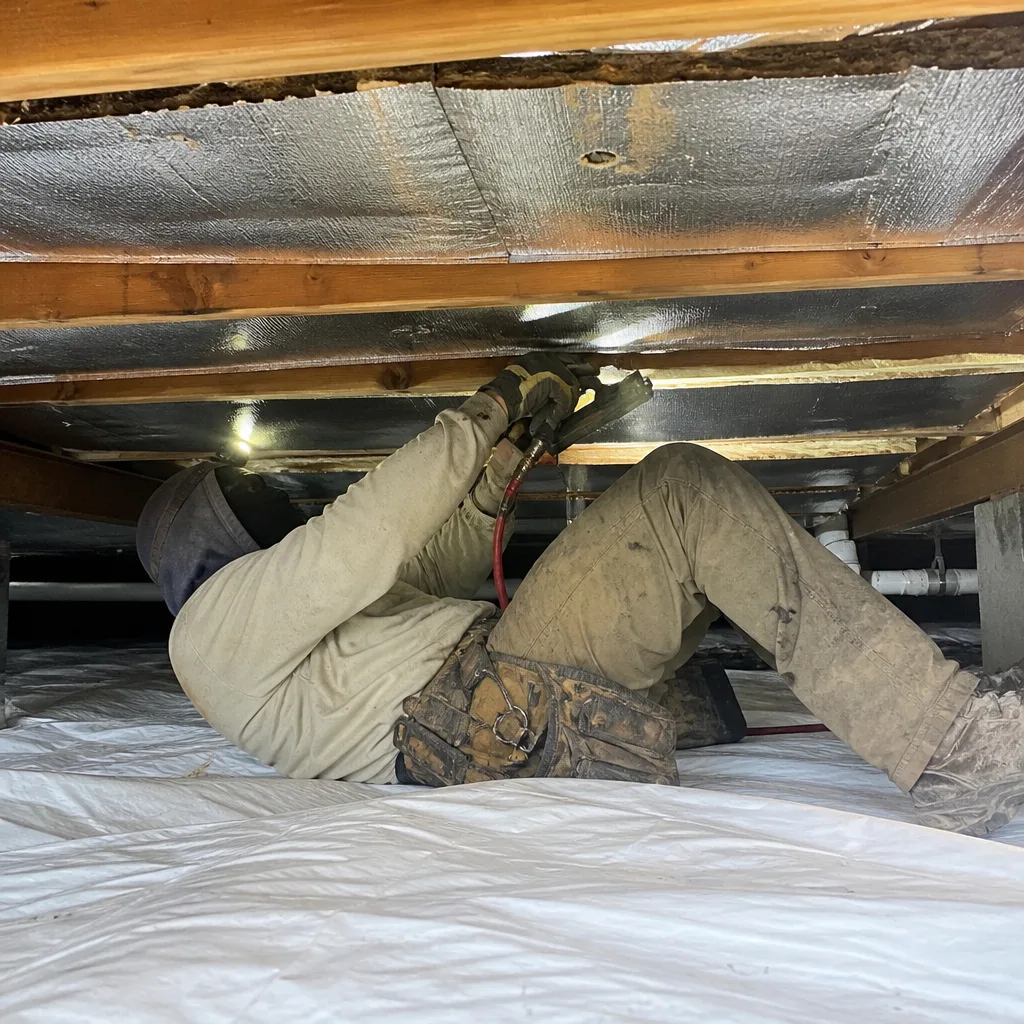
Call a professional when the task requires diagnostic sequencing, not just installation labor. That covers spray foam in a closed wall cavity, roof-deck encapsulation, vapor barrier work in an unvented assembly, air sealing of top plates and penetrations where you don’t have a blower-door baseline, and any slate of work you want to document for a warranty or an NV Energy rebate application. It also covers any project where you’d be guessing at the sequence because the assembly’s vapor profile is unclear. Spray foam and vapor barrier work are the two categories where we see the highest rate of homeowner regret, and the two where the diagnostic step matters most. The rest, you can reasonably take on yourself if you’re careful. Envelope Insulation Las Vegas is the local crew that treats air sealing as a prerequisite, publishes before-and-after blower-door numbers on every applicable job, and hands you a written price before any work starts. Envelope Insulation Las Vegas offers free estimates in Las Vegas; call (833) 362-4859 for a written price and a free second opinion on any estimate you already have.
Frequently Asked Questions
You can rent the equipment, but the number it produces means little without a pressure-pan sweep and an infrared survey to tell you where the air is actually going. A blower-door reading is only useful when it’s read against a floor plan and the penetrations that are driving the loss, and that interpretation is the technician’s job, not the equipment’s.
A DIY blown-in top-off on a clean, already-sealed attic floor is typically the cheapest path, because you’re paying for material and equipment rental, not labor. Once the project requires air sealing, diagnostic testing, or rebate documentation, the professional route often ends up comparable or lower after rebate, and you get a written scope and a documented photo record.
Many insulation manufacturers condition warranty coverage on installation by a licensed contractor following published installation instructions. It depends on the builder and the product. Check the manufacturer’s stated position for the specific product before you buy, because the warranty gap is easy to miss until a problem shows up.
NV Energy rebate programs typically require a licensed contractor on record with documented pre- and post-work measurements, so a DIY installation generally doesn’t produce the paper trail a rebate needs. Confirm the current program terms directly with NV Energy before you plan a project around the rebate.
Spray foam in a roof assembly is not a reasonable DIY project. It requires a dew-point and vapor-profile assessment before any material goes in, and once the foam is up, the assembly is sealed and any sequencing error is baked into the assembly. This is work for a licensed contractor.
Adding insulation to an existing assembly typically doesn’t require a Clark County building permit, but changing an assembly (for example, converting an unvented attic to conditioned space) can. When in doubt, call the Clark County building division before you start work, not after.
The Bottom Line
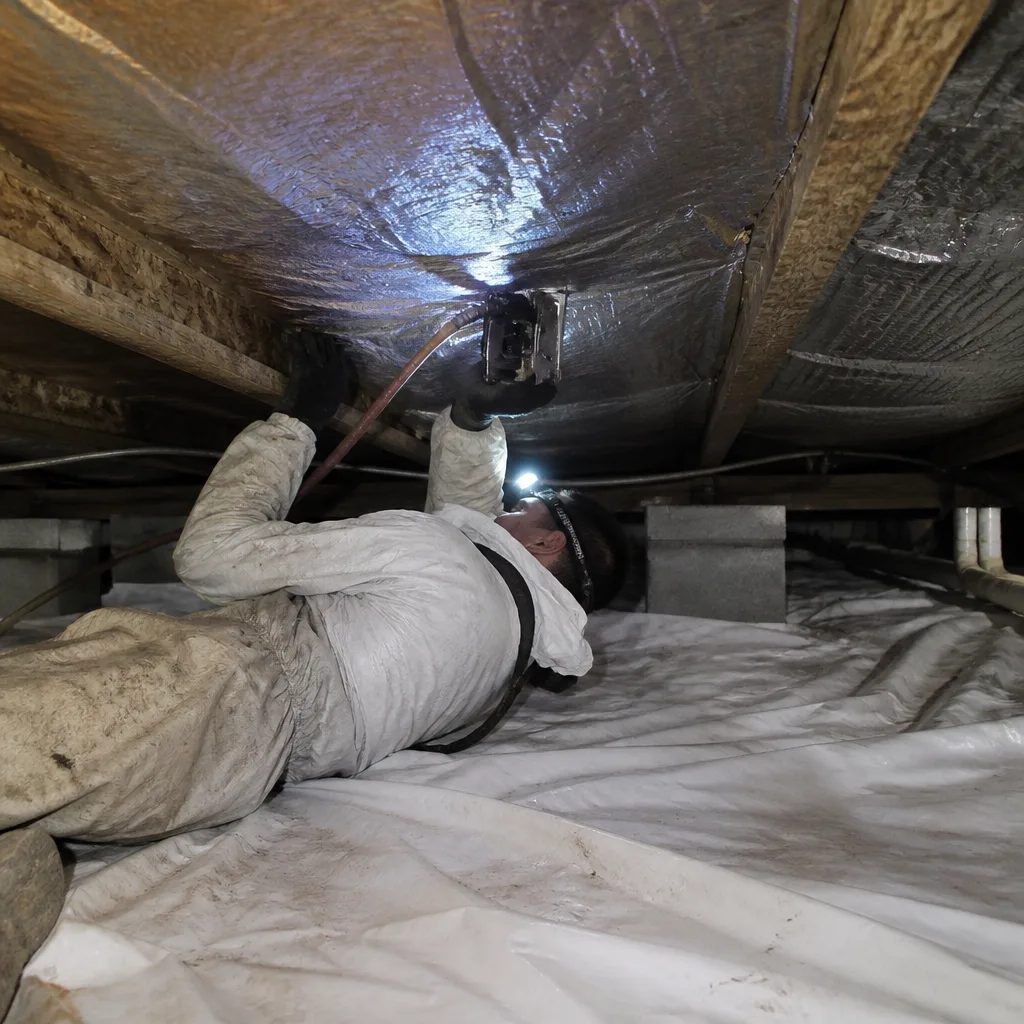
The DIY-versus-professional decision for Las Vegas insulation comes down to one question: does this task depend on diagnostic equipment to determine where the material belongs and in what order? If the answer is no, a careful homeowner can take it on. Blown-in attic top-offs and accessible batt replacement are the two projects that genuinely work DIY. If the answer is yes, the sequence matters more than the labor, and the sequence is what a licensed contractor documents. For spray foam, roof-deck work, and vapor barriers, hire a professional who can publish a blower-door reading before and after and hand you a written scope before anyone starts. With 9,000+ homes sealed and insulated since 2016 under The Haven Standard, we’ve seen the difference the sequencing rule makes. Call Envelope Insulation Las Vegas at (833) 362-4859 for a free written estimate, and a live person will answer 24/7 to talk through what your home actually needs.
Learn more about our Envelope Insulation Las Vegas home page, our attic insulation in Las Vegas, our crawl space encapsulation & vapor barrier in Las Vegas, and our spray foam insulation in Las Vegas.
Written by the team at Envelope Insulation Las Vegas.