
Last updated November 17, 2026
DIY vs Professional Spray Foam Insulation: What’s Safe to Do Yourself
The warning label on a two-part spray foam kit tells you something most buyers never read: the isocyanate in the B-side can sensitize your lungs permanently. Once sensitized, a person can react to any isocyanate product for the rest of their life, including automotive paint and many industrial coatings. We’re not describing discomfort. We’re describing an immune response that doesn’t reverse. That single fact reframes the whole DIY-versus-professional question, and it’s the one most online comparisons skip. This guide separates the foam work a homeowner can safely do in Las Vegas from the work that belongs to a trained crew, and it explains how to verify that a hired installer actually followed the specs.
Quick Answer
Small gap fills and single-component window-and-door foam are safe to do yourself with proper gloves and eye protection. Any two-component spray foam, including open-cell attic fills and closed-cell roofline installations, is professional-only work because the chemical exposure risk is permanent and off-ratio foam can’t be corrected without full removal. In Las Vegas, the substrate temperature problem alone rules out most garage and attic DIY foam in summer.
Table of Contents
- What’s the actual chemical risk of DIY spray foam?
- What spray foam work is safe to do yourself?
- What spray foam work is never safe to DIY?
- Why does Las Vegas heat break two-component kits?
- What happens when foam cures off-ratio?
- What does DIY foam really cost compared to professional install?
- What should a professional installation record include?
- How do you verify a contractor followed the specs?
What’s the Actual Chemical Risk of DIY Spray Foam?
Two-component spray foam is a chemical reaction between an A-side (typically polymeric MDI, a methylene diphenyl diisocyanate) and a B-side resin. When the two mix at the right ratio, they cure into an inert plastic. When they don’t mix right, or when the vapors are inhaled during application, the isocyanate exposures don’t leave the body cleanly.
The specific hazard is isocyanate sensitization. Isocyanates are among the leading causes of occupational asthma worldwide. The mechanism works like an allergy that never resolves: repeated or high-dose exposure triggers an immune response, and after that point, even trace exposures can provoke bronchospasm. A person who becomes sensitized to MDI may react to polyurethane paints, adhesives, and car refinishing products for the rest of their working life. There is no desensitization protocol.
The protective equipment matters as much as the exposure itself. Most DIYers grab a nuisance dust mask. That is not protection against isocyanate vapor.
- A nuisance dust mask (N95 or cloth): captures particles, does nothing for isocyanate vapor.
- A half-face respirator with P100 particulate filters only: captures particles, still does nothing for vapor.
- A half-face respirator with combination P100 + organic vapor (OV) cartridges: the minimum cartridge spec for MDI vapor. Cartridges must be changed on a schedule, not when they “smell bad” (you can’t smell MDI at hazardous levels).
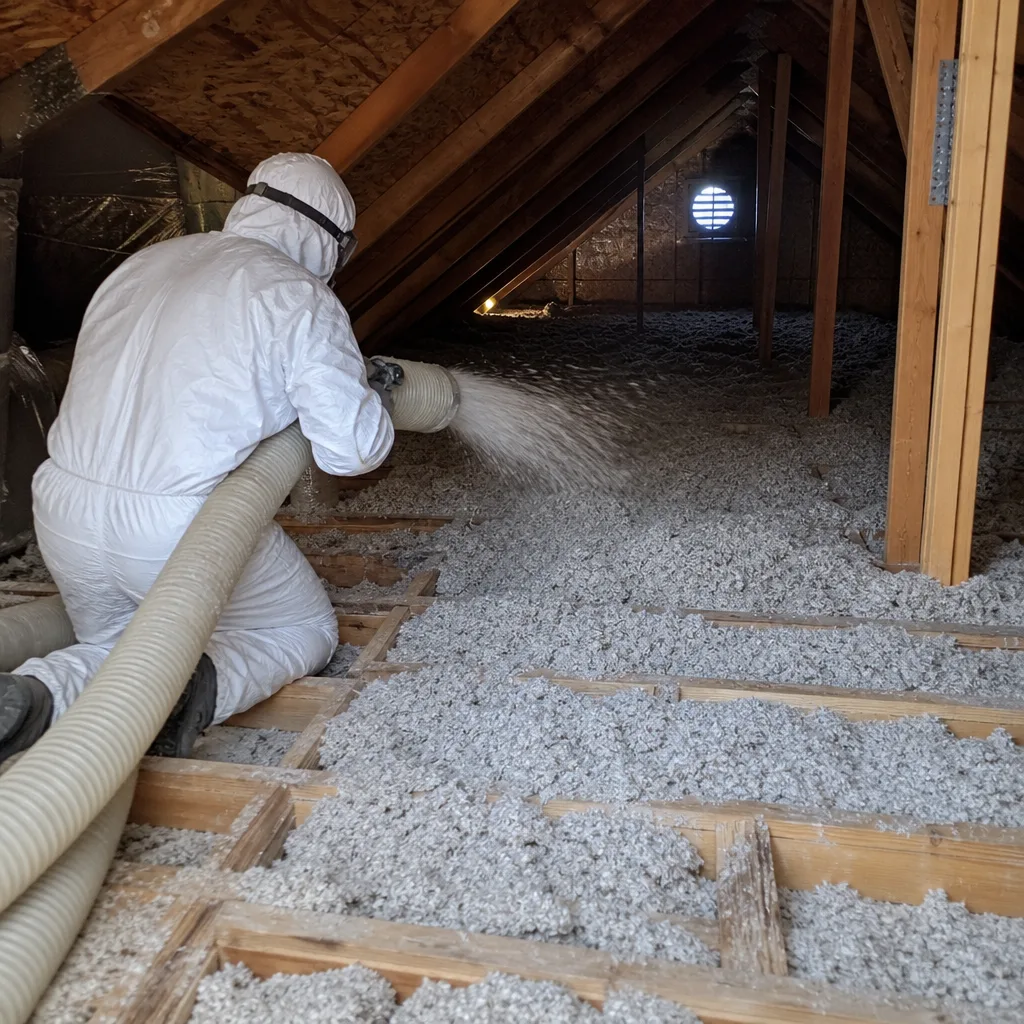
- Full-face supplied-air or PAPR with OV cartridge in an enclosed space: the standard for any sustained two-component application in an attic or crawl space.
- Skin protection: nitrile gloves, long sleeves, and eye protection. Isocyanate splash to the eyes is a separate, serious hazard.
We flag all of this because it’s the part of the DIY decision that doesn’t show up on a cost comparison chart. A homeowner who “saves $1,800” by spraying their own attic over a weekend but becomes isocyanate-sensitized has made a trade they can’t unwind.
What Spray Foam Work Is Safe to Do Yourself?
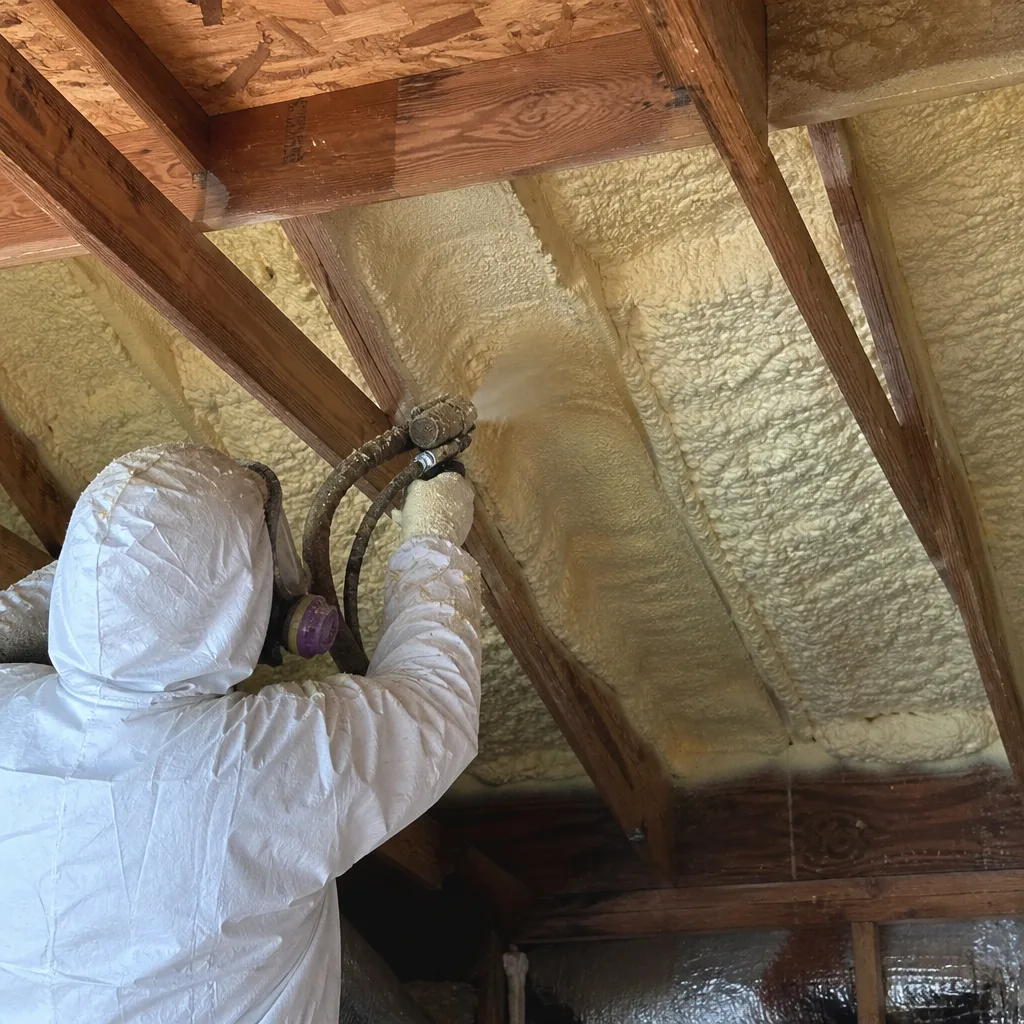
Single-component “window and door” foam cans from the hardware store are a different product category from two-component systems. They cure on moisture in the air, contain no MDI mix to get wrong, and are genuinely DIY-appropriate for narrow fills. In our experience, most homeowners can handle the following tasks without special training:
- Gap fills under about one linear inch around electrical boxes, plumbing penetrations, and where framing meets drywall.
- Window and door rough openings using a labeled “window and door” low-expansion foam, which is formulated not to bow jambs.
- Cracks under a quarter inch at baseboards, sill plates, and exterior penetrations.
- Small weatherization touch-ups around outlets and switches on exterior walls, with the power off and the box confirmed clear.
Even on these small jobs, worth wearing nitrile gloves and eye protection. Foam that cures on your skin takes days to wear off, and uncured foam in the eye is a same-day emergency room visit.
What a single-component can won’t do is build an air barrier at scale. If your attic floor has 40 penetrations, the three or four you seal yourself won’t move the needle on a blower-door test – a pressurization reading that shows, in one number, how much air your building envelope is losing. For a whole-attic approach, the work belongs with a crew trained on air sealing first, then insulation. That’s why every job we run through our Attic Insulation in Las Vegas service starts with the sealing (top plates, can lights, penetrations), then adds the insulation on top of a sealed surface.
What Spray Foam Work Is Never Safe to DIY?
Any two-component foam application is professional-only. That covers the categories most homeowners imagine when they think “spray foam”:
- Open-cell attic floor fills. Typically 6″ to 10″ of foam across the entire attic deck, applied with a two-part proportioner. Vapor exposure is sustained across hours.
- Closed-cell roofline (unvented attic) installations. The air barrier for the whole building, applied at 2″ to 3″ thickness at the roof deck. Off-ratio foam here compromises both the thermal and vapor performance of the whole assembly.
- Any pour-in two-component kit application exceeding one board-foot. Board-foot = 12″ x 12″ x 1″ of finished foam thickness. A one-board-foot job is a test spray; anything bigger is exposure-risk work.
- Crawl space encapsulation foam on joists and rim areas. Enclosed-space exposure combined with high substrate temperatures makes this a professional job. Our Crawl Space Encapsulation & Vapor Barrier in Las Vegas service handles the sealed-and-documented version of this work.
- Any closed-cavity injection in walls for existing homes. The window dressing on this reads like a can-foam project; the application is a two-component pressure job.
Las Vegas plumbing and HVAC chases are another one to leave alone. Many valley homes built in the 1990s and 2000s route supply lines and condensate drains through attic framing, and a homeowner spraying around a live chase without knowing what’s in it can trap moisture or block future service access. Our crew walks the chase line before spraying, and that walk is part of what you’re paying for.
Why Does Las Vegas Heat Break Two-Component Kits?
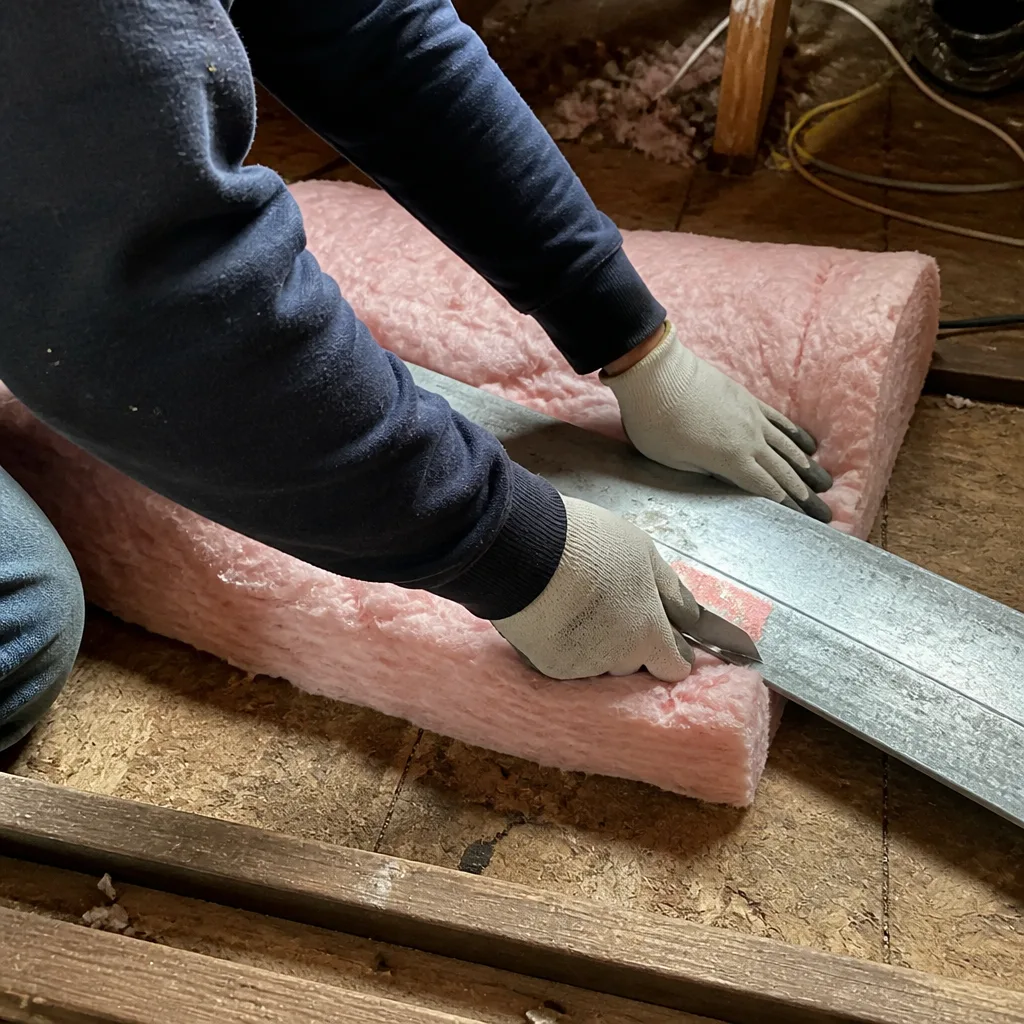
Two-component foam sells with a rated substrate temperature window – typically 60°F to 80°F for the surface being sprayed, sometimes up to 85°F. Read the data sheet on the specific product; the temperature window varies by manufacturer (Icynene and Demilec systems, for instance, publish slightly different windows).
Now consider a Las Vegas attic in July. Unvented attic ambient air routinely runs 130°F to 150°F in the afternoon, and the roof deck sheathing itself can read 160°F or higher. A garage wall in Summerlin or Southern Highlands routinely hits 110°F interior air temperature by 2 p.m., and exterior-facing wall sheathing reads higher still.
That gap between the kit’s rated window and the actual substrate temperature creates two failure modes:
- Off-ratio cure. The A and B sides react at temperature-sensitive rates. When either side is outside spec, the ratio the proportioner delivers stops matching the ratio the chemistry needs, and the foam cures soft, brittle, or tacky.
- Poor adhesion. Foam sprayed onto a substrate that’s 100°F-plus can skin over before it bonds. The lift pulls away from the substrate in sheets later.
Professional crews handle this by timing the work. Our installs in Las Vegas schedule attic and roofline foam for pre-dawn or nighttime windows in June through September, use cooled water in the proportioner where the spec sheet calls for it, and check substrate temperature with an IR gun at every lift. A homeowner with a Saturday afternoon and a two-part kit has none of those workarounds. The substrate just tells you what it is, and you either wait or you wreck the foam.
What Happens When Foam Cures Off-Ratio?
Off-ratio foam isn’t a cosmetic issue. It’s a material failure with a specific consequence: the foam can’t be fixed in place. You can’t re-spray over it and expect the assembly to work. The off-ratio foam has to come out, down to the substrate, before anything new goes in.
Following what typically happens on a failed 500-square-foot attic:
- Removal labor for the full 500 square feet, cut out by hand and bagged.
- Disposal fees for foam-contaminated materials; cured polyurethane foam is not recyclable in most waste streams and has to go to a waste facility that accepts it.
- Re-insulation of the same area after removal, because the failed foam provided no meaningful thermal value.
- Potential remediation if the off-ratio foam trapped moisture and compromised the framing or decking underneath.
We’ve priced removal work that exceeded the original professional install cost by 40% to 60%. That’s the asymmetry the DIY marketing copy doesn’t mention. A correctly installed professional job at full price is cheaper than a failed DIY job plus removal plus re-install, every time. The only way the DIY math works is if the plan was to do it right the first time – and doing it right requires the equipment, the training, and the substrate control a homeowner isn’t set up to run.
What Does DIY Foam Really Cost Compared to Professional Install?
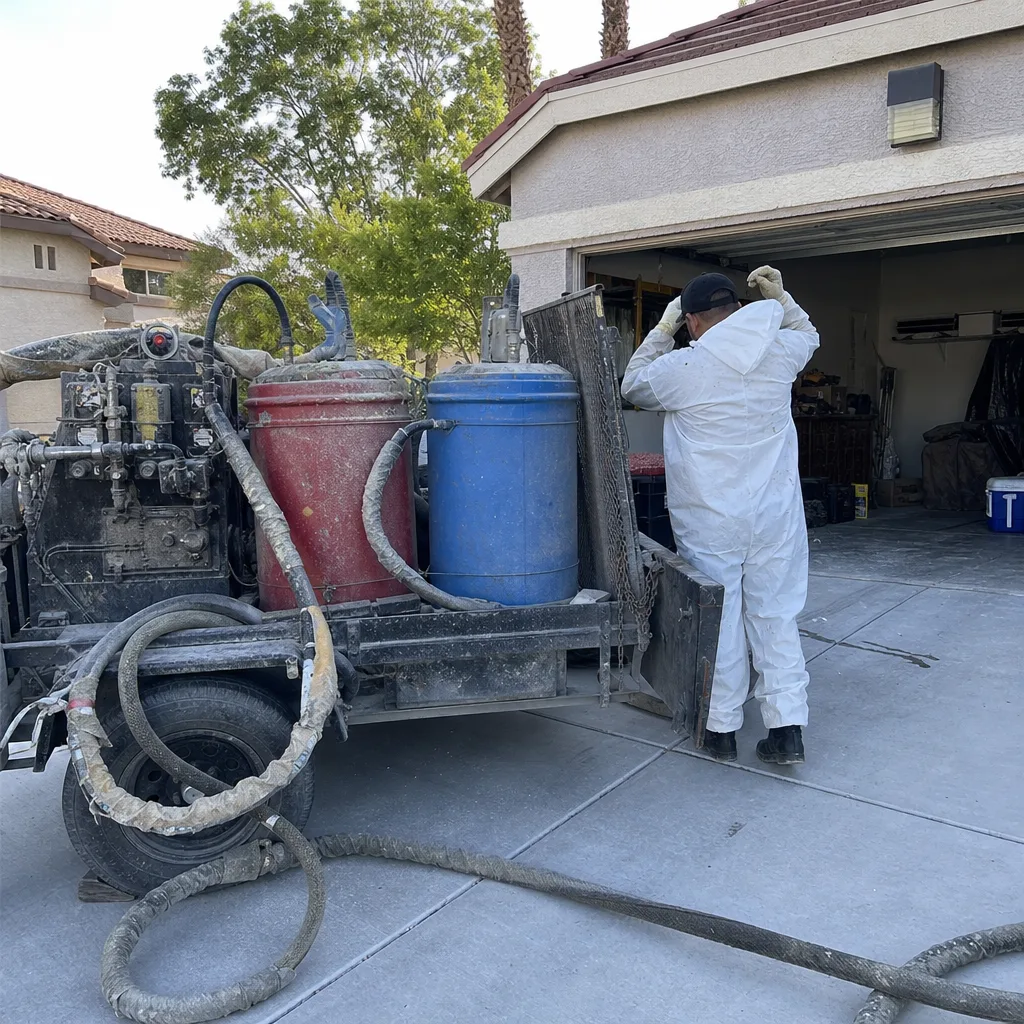
The hardware store kit pricing looks cheap because it prices the foam, not the outcome. Here’s how the numbers actually stack up for a 500-square-foot attic floor with open-cell foam, Las Vegas market pricing as of 2026:
- Professional open-cell attic fill, 500 sq ft, 6″ to 8″ depth: $1,800 to $3,200 installed, including air sealing, documentation, and blower-door readings where applicable. Labor and material combined.
- DIY two-component kit, 500 sq ft, 6″ to 8″ depth: $1,400 to $2,100 in kit and consumables, plus respirator (proper OV cartridge), nitrile gloves, IR thermometer, drop cloths, and disposal of empty cylinders. A single kit typically won’t cover 500 sq ft at that depth, so plan for two.
- Off-ratio removal, 500 sq ft: $2,200 to $4,500 in removal labor and disposal.
- Re-install of the same area post-removal: back to the $1,800 to $3,200 professional number.
The math on the DIY path only closes if everything goes right – proper respirator, substrate in spec, kit mix correct, lift thickness in spec. The probability of that on a Las Vegas summer weekend is not high. We don’t quote “call for pricing”; the price we’ve just written is the price you’d see on a written estimate.
What Should a Professional Installation Record Include?
Hiring a pro isn’t enough on its own – you need to know the pro actually followed the specs. The good news is that a written, auditable record of the install is reasonable to expect, and asking for it separates the accountable contractors from the ones who don’t want a paper trail. Under The Haven Standard we operate by, every job includes a written scope and a documented record when the crew leaves. Here’s what a proper spray foam installation record should document:
- Product name and manufacturer data sheet. Rockwool, CertainTeed, Icynene, and Demilec systems all have published install windows. The data sheet should be included, and the installed product should match.
- Substrate temperature at the time of spraying. An IR gun reading on the deck or wall before the first lift.
- Ambient temperature and humidity at the time of spraying. Attic readings, not outdoor weather report readings.
- Lift thickness. Spray foam goes in on lift schedules – typically 1″ to 2″ per pass, per manufacturer spec. The record should state passes and total cured thickness.
- Proportioner calibration. Confirmation that the two-component machine was shooting at the correct A:B ratio before application.
- Before-and-after blower-door readings. Where the job is applicable, a pressurization test in CFM50. This is the figure that verifies the envelope actually got tighter.
- Photo documentation of the pre-spray substrate, the sealing work, and the finished surface.
We publish before-and-after blower-door numbers on every applicable job so the homeowner can see the figure that represents the work they paid for. We don’t consider that an upgrade – it’s the record.
How Do You Verify a Contractor Followed the Specs?
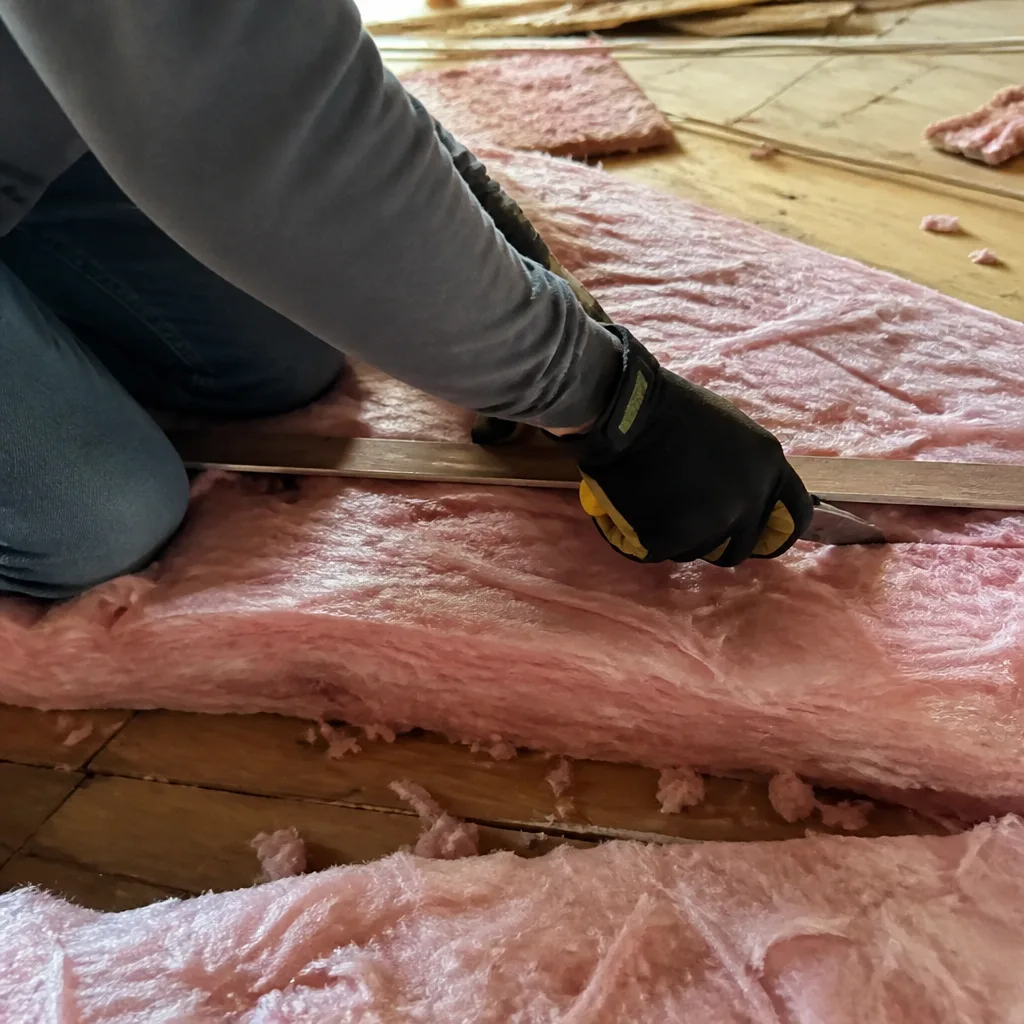
Ask for the record before the crew arrives. Any contractor installing a two-component system should be able to answer a few concrete questions during the estimate, and their answers tell you whether the process is in place. Use this list as a script for the next estimate you take:
- “What is the substrate temperature window for this product?” They should name the data sheet number, not “we just know from experience.”
- “What’s the lift schedule for this product, and what’s the total build thickness?”
- “How do you time summer installs to hit the substrate window?” See what they say about pre-dawn or evening scheduling for a Las Vegas summer job.
- “Will you do a blower-door test before and after, and provide the raw readings?”
- “Will the written scope and written warranty be provided before any work starts?”
A contractor who can’t answer the first two should be replaced. A contractor who can answer all five is one whose install you can hold to a result. We’ve put the same five questions on the front of our Spray Foam Insulation in Las Vegas service page because we’d rather a homeowner know what to look for before they call us than after.
Common Mistakes to Avoid
- Using a dust mask for two-component foam. A nuisance dust mask doesn’t touch isocyanate vapor. A half-face respirator with combination P100/OV cartridges is the minimum spec.
- Spraying a Las Vegas attic in July at 2 p.m. Substrate reads well past the rated window. The foam looks fine during the spray and fails over a few weeks.
- Buying one kit for a 500-square-foot attic floor. A single kit typically covers 200 to 300 square feet at open-cell depth. Two kits plus consumables usually exceeds the professional install price.
- Spraying over an unsealed attic floor. Foam insulation over air leaks still leaks – the envelope still passes air through the can lights and top plates. Sealing comes first.
- Skipping the substrate temperature check. A 100°F-plus substrate doesn’t look different from a 70°F one, and the foam behaves the same for the first few seconds. Time matters.
- Not asking for the data sheet and the record. A contractor who won’t provide the product spec and the install record either doesn’t have one or doesn’t want you to see it.
- Forgetting the disposal problem. Empty two-component cylinders are pressurized and most trash haulers won’t take them. Leave room in the budget for the special waste drop-off.
When to Call a Professional
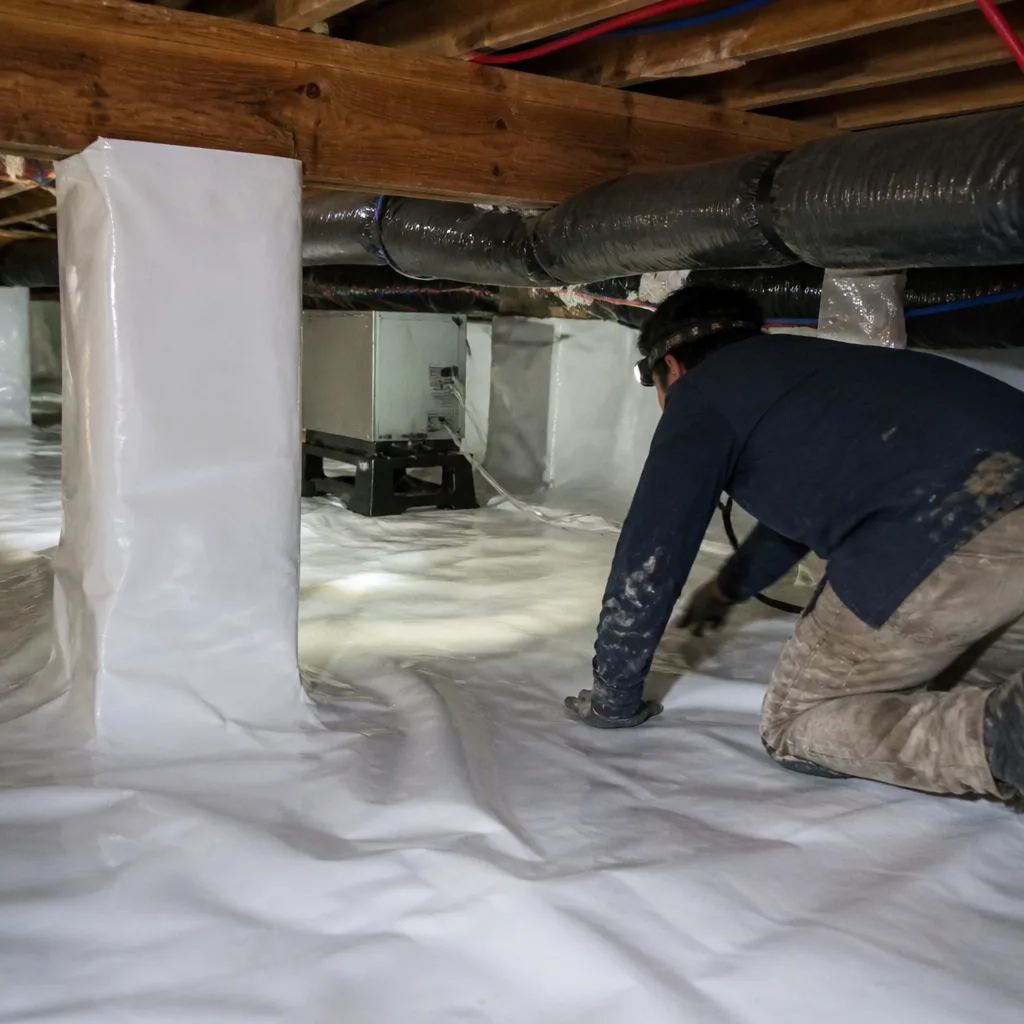
Call a professional for any two-component spray foam, any open-cell attic fill, any closed-cell roofline or wall injection, and any crawl space encapsulation work. That covers about 90% of the foam jobs a homeowner asks about. If your project is a whole-attic air barrier, a roofline insulation upgrade, or a sealed crawl space, the right call is to get a written estimate and a documented record. Envelope Insulation Las Vegas offers free estimates in Las Vegas – call (833) 362-4859. We’ll bring the substrate probe, the two-component proportioner, and the install record; you bring the questions above and see how we do on them. If we’re not the right fit for a job, we say so.
Frequently Asked Questions
Not the two-component foam that builds a real attic air barrier. Single-component cans are safe for narrow gap fills under about one linear inch. Any open-cell attic fill, closed-cell roofline, or two-component pour exceeding one board-foot belongs with a professional because of isocyanate sensitization risk and the substrate temperature window that a Las Vegas summer routinely breaks.
Usually not, once the full cost is counted. A hardware kit for a 500-square-foot attic floor lands around $1,400 to $2,100 with respirator and consumables, while a correctly installed professional job is $1,800 to $3,200. The gap closes when one kit doesn’t cover the area, and the numbers invert entirely if the DIY job fails and has to be removed. Call (833) 362-4859 for an exact quote on your square footage.
A half-face respirator with combination P100 particulate and organic vapor cartridges is the minimum for MDI vapor. A nuisance dust mask or a P100-only cartridge doesn’t capture isocyanate vapor, and skin protection (nitrile gloves, long sleeves, eye protection) is a separate requirement. For any sustained two-component application in an enclosed space, supplied-air or a PAPR is the standard.
The foam cures soft, brittle, or tacky and loses both thermal and structural performance. Off-ratio foam can’t be corrected in place – it has to be fully removed down to the substrate and re-applied. Removal labor for a 500-square-foot attic typically runs $2,200 to $4,500, plus disposal fees and the cost of re-installation.
Two-component foam data sheets specify a substrate window that usually tops out at 80°F to 85°F. A Las Vegas garage in July runs 110°F-plus interior air temperature, and exterior-facing sheathing reads hotter still. Professional crews schedule summer installs for pre-dawn or nighttime windows to hit the rated window; there’s no DIY workaround.
A documented install should include the product data sheet, substrate temperature readings from the time of spraying, ambient temperature and humidity, lift schedule and total cured thickness, proportioner calibration record, before-and-after blower-door readings where applicable, and a photo record of pre-spray substrate, sealing work, and finished surface. Plus the written scope and written warranty before work begins.
The Bottom Line
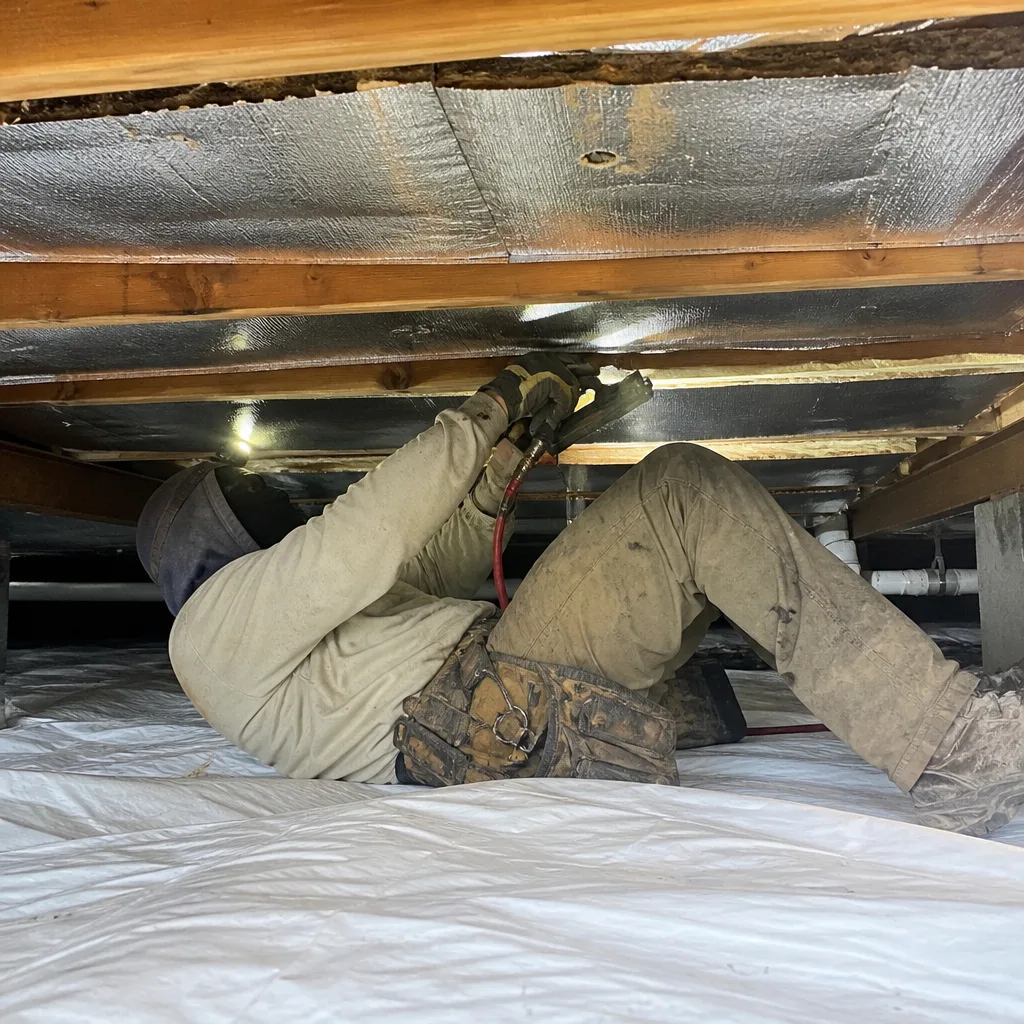
Small gap fills with single-component cans are safe for a careful homeowner. Every two-component spray foam application is professional-only work, and the reason isn’t skill – it’s that isocyanate sensitization is permanent and off-ratio foam can’t be corrected without full removal. In Las Vegas, summer substrate temperatures push a lot of DIY foam dates outside the rated window entirely. The pro choice is only accountable if you ask for the record: product data sheet, substrate temperature, lift schedule, blower-door readings. That record is how you know what’s in your attic. If you’d like to see one before committing, we’ll bring ours.
If you’re ready to compare a written price against what a DIY approach would actually cost on your square footage, call Envelope Insulation Las Vegas at (833) 362-4859 for a free estimate. Every job starts with a written price before any work begins, and every completed job closes with a Documented Photo Record – under The Haven Standard, that’s not an upgrade. You can also start with our Envelope Insulation Las Vegas home to see the full service line.
Written by the team at Envelope Insulation Las Vegas.