
Last updated November 17, 2026
The Complete Spray Foam Insulation Guide for Las Vegas Homeowners
Las Vegas attic air temperatures regularly hit 160°F in July. At that temperature, an R-38 fiberglass batt performs closer to R-28 because of convective looping inside the batt – a physics problem that closed-cell spray foam at R-6.5 per inch eliminates by removing the air movement entirely. That single fact reshapes almost everything about how spray foam should be specified here. This guide is organized around assembly location and solar exposure rather than generic R-value tables: which foam belongs on the underside of your roof deck versus an interior partition, how many inches you actually need in a 2×4 wall or a vented attic conversion, why air sealing comes before the foam, what documentation should follow the crew out the door, and honest timelines for off-gassing and cure.
Quick Answer
Spray foam insulation in Las Vegas works best as closed-cell foam (usually 2 to 3 inches, R-13 to R-20) applied to the underside of roof decking to stop radiant heat gain, paired with air sealing of top plates, can lights, and penetrations before any foam goes in. Open-cell foam belongs in interior partition cavities, not roof decks, and the two are not interchangeable in this climate. Installed cost typically runs $2.50 to $5.50 per board foot depending on foam type and access, and every job should close with thickness measurements, temperature logs, and the product data sheet for the specific foam system used.
Table of Contents
- Why Las Vegas Changes the Spray Foam Calculation
- Open-Cell vs. Closed-Cell: Which Assembly Each Belongs In
- Installed R-Value Benchmarks for Three Las Vegas Assemblies
- The Blower-Door Prerequisite: Seal First, Then Insulate
- The Documentation Every Spray Foam Job Should Include
- Off-Gassing, Re-Entry, and Desert Heat Cure
- What Spray Foam Costs in Las Vegas
- When to Call a Professional
Why Las Vegas Changes the Spray Foam Calculation
The dominant cooling load in a Las Vegas home is radiant heat through attic decking, not conductive loss through walls. Walk into an attic in Summerlin or Green Valley at 2 p.m. in August and the decking will read north of 150°F while the interior wall cavities sit far closer to room temperature. That imbalance is the whole argument for where your insulation dollars go. Foam on a roof deck interrupts heat at the point where it enters the conditioned envelope. Foam in a wall slows a load that was never the biggest one.
There’s a second desert-specific problem: convective looping. Loose fiberglass and batts rely on trapped air pockets to resist heat flow, and in a vented attic the temperature differential drives air movement inside the batt itself. The material doesn’t fail. It just stops performing at its rated number. Closed-cell foam has no internal air movement to disrupt because it’s a solid, so its stated R-value holds at attic temperatures where batts lose theirs.
Local building practice adds a wrinkle. Many Las Vegas homes built between 2015 and 2025 were framed with energy code minimums that assumed vented attic assemblies. Converting to an unvented, foam-sealed roof deck is legal under current code, but it requires the foam to serve as both insulation and the air barrier, which means thickness and coverage matter more than they would in a temperate climate. We’ve seen plenty of half-specified conversions in North Las Vegas and Henderson where 1 inch of foam was sold as “enough” – it isn’t, and the homeowner pays for it every July.
Open-Cell vs. Closed-Cell: Which Assembly Each Belongs In
Most homeowners are told the difference is price. In Las Vegas, the difference is location. Treat them as two materials with two jobs.
- Closed-cell on the underside of roof decking. At roughly R-6.5 to R-7 per inch, closed-cell foam bonds directly to the deck, adds structural rigidity, and stops the radiant load before it reaches the attic air. It’s also a vapor retarder at sufficient thickness, which matters during monsoon season.
- Open-cell in interior partition cavities. At about R-3.5 to R-4 per inch, open-cell foam is the right choice for interior walls between rooms, sound-dampening partitions, and any cavity where you want air sealing without the vapor-retarder behavior of closed-cell.
- Never interchangeable. Open-cell foam on a roof deck in Las Vegas can allow moisture to migrate into the assembly during the humid weeks of July and August. Closed-cell in a small interior partition is overkill and costs more than the assembly needs.
Material selection matters less than specification, but it does matter. We source systems from Icynene and Demilec for closed-cell work and use product data sheets that travel with the job file. If a contractor can’t hand you the exact foam system’s technical data sheet, that’s a specification gap, not a paperwork detail. For a broader look at the material itself, our spray foam insulation in Las Vegas page goes deeper on system selection.
Installed R-Value Benchmarks for Three Las Vegas Assemblies
Here’s what “enough” looks like in the three assemblies we specify most often in Las Vegas homes. These are installed values, not marketing numbers – the R you actually get once the foam is in the cavity at the stated thickness.
- 2×4 wall (interior partition or furred exterior). Closed-cell at 3 inches gives roughly R-19 to R-21 and fills the 3.5-inch cavity almost completely. Open-cell at 3.5 inches lands near R-13 to R-14 and is usually the more cost-effective choice where the wall isn’t directly sun-exposed.
- Vented attic conversion to unvented. Closed-cell on the roof deck at 3 inches delivers R-19 to R-21, which is the minimum we specify for a Southern Nevada conversion. Many local homes benefit from 4 to 5 inches (R-26 to R-32) on west- and south-facing roof planes where solar gain peaks.
- Unvented cathedral deck over living space. 5 to 6 inches of closed-cell (R-32 to R-42) depending on rafter depth, with attention paid to every rafter bay. Skip one bay and the whole assembly performs at the weakest point, because the deck is only as sealed as its least-covered section.
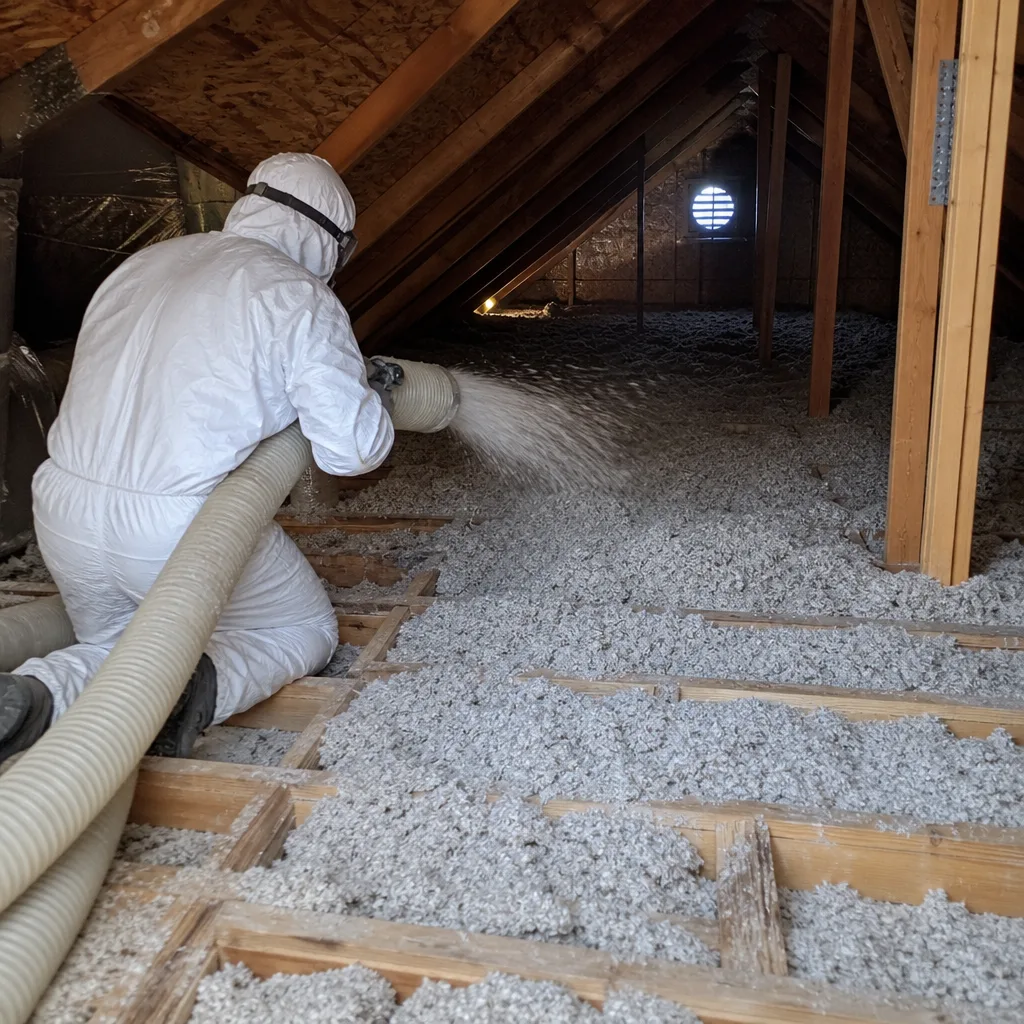
Notice the pattern: none of these numbers come from a generic R-value table. They come from what the assembly can physically hold and what the Las Vegas sun demands of it. If you’re comparing foam against a fiberglass approach, our attic insulation in Las Vegas guide covers the batt and blown-in side of the same decision.
The Blower-Door Prerequisite: Seal First, Then Insulate
Spray foam is an air barrier, which is exactly why it must not go in before the air leakage is mapped and sealed. If you foam over an unsealed attic floor – top plates with gaps, can lights punched through the ceiling plane, plumbing and electrical penetrations that were never fire-caulked – you trap those leakage pathways underneath a sealed surface. Now the air has nowhere to go but into the assembly, and in a Las Vegas attic that’s a moisture-and-performance problem you can’t see until it’s expensive.
The correct order is non-negotiable:
- Run a baseline blower-door test – a pressurization reading that shows, in one number (CFM50), how much air your building envelope is losing.
- Air-seal top plates, can lights, plumbing chases, and every electrical penetration with the appropriate foam or sealant.
- Re-test to confirm the leakage reduction before insulation goes in.
- Apply spray foam to the specified assemblies at the specified thickness.
- Run a final blower-door test and hand the before-and-after numbers to the homeowner.
This is the part most contractors skip, because it adds a day and the numbers don’t lie in their favor if the sealing work is half-done. At Envelope Insulation, we won’t blow or spray insulation over an unsealed attic floor – sealing first is a hard step in the process, not an upsell. Every applicable job closes with the before-and-after blower-door readings published in the job file, so you can see in a single figure what you paid for. If a competing quote skips the blower-door step entirely, that’s the first thing we’ll point out when you bring it in for a free second opinion.
The Documentation Every Spray Foam Job Should Include
Foam is hidden once it’s in. That’s why the paperwork is the only durable record of what you got, and why we require it on every job under the Haven Standard, which reads: have it in writing.
- Lift thickness measurements. Foam goes down in passes, and each pass has a measured thickness. The log should record each lift and its cumulative total against the specified R-value.
- Ambient and substrate temperature logs at time of install. Foam systems have minimum substrate temperatures for proper cure. A log records what the deck and the air actually read when each pass went down.
- Product data sheet for the specific foam system used. Not a generic brochure – the actual system’s technical data sheet, matched to the batch installed.
- Before-and-after blower-door readings. The single number that shows the envelope change, not a description of how it felt.
- Documented photo record. Coverage photos before the foam hides everything, included on every visit rather than available on request.
Ask for this package before you sign anything. A contractor who can’t describe what their documentation looks like probably doesn’t produce it. And a Written Price Before Any Work Starts, complete with written scope and written warranty, should be the first page of that package. The 365-Day Done Right Promise – if it’s not done right, we make it right – means something only when the scope is written down to begin with.
Off-Gassing, Re-Entry, and Desert Heat Cure
The honest version of the off-gassing story, in Las Vegas terms:
- 24-hour re-entry window. Standard practice is to keep occupants and pets out for 24 hours after foam application while the initial cure completes. That’s a real number, not a CYA figure.
- Residual odor at 72 hours indicates a cure problem. Some smell during the first day is normal. A persistent chemical odor on day three suggests the foam didn’t cure properly – usually a temperature or mix-ratio issue – and it should trigger a callback and an inspection rather than a wait-and-see.
- Substrate temperature causes under-cure in desert summer heat. This is the counterintuitive one: foam applied to a roof deck that’s been baking at 140°F under direct July sun can cure before it adheres properly, and foam applied to cold surfaces (a winter morning can dip into the 40s in Las Vegas) can fail to cure at all. Both extremes are temperature-control problems, which is why substrate logs exist. Skilled crews spray in the cooler morning hours in summer, and heat or wait in winter.
If a contractor can’t tell you the ambient and substrate temperature limits of the foam system they’re using, that’s a red flag. The data sheet carries those limits, and the log proves they were respected.
What Spray Foam Costs in Las Vegas
Las Vegas pricing follows board-foot (a 12-inch by 12-inch by 1-inch volume) rather than square footage, because thickness is the variable that drives material. Local ranges, installed:
- Closed-cell, roof deck or cathedral assembly: roughly $2.75 to $5.50 per board foot depending on access and thickness. A 1,500-square-foot attic roof deck at 3 inches typically falls in the $7,000 to $12,000 range.
- Closed-cell, 2×4 wall: roughly $2.50 to $4.50 per board foot at 3 inches.
- Open-cell, interior partition: roughly $1.00 to $2.00 per board foot.
- Air sealing (top plates, can lights, penetrations) performed before foam: usually $600 to $1,800 depending on attic complexity.
- Blower-door testing, before and after: often bundled; standalone, roughly $350 to $500 per test.
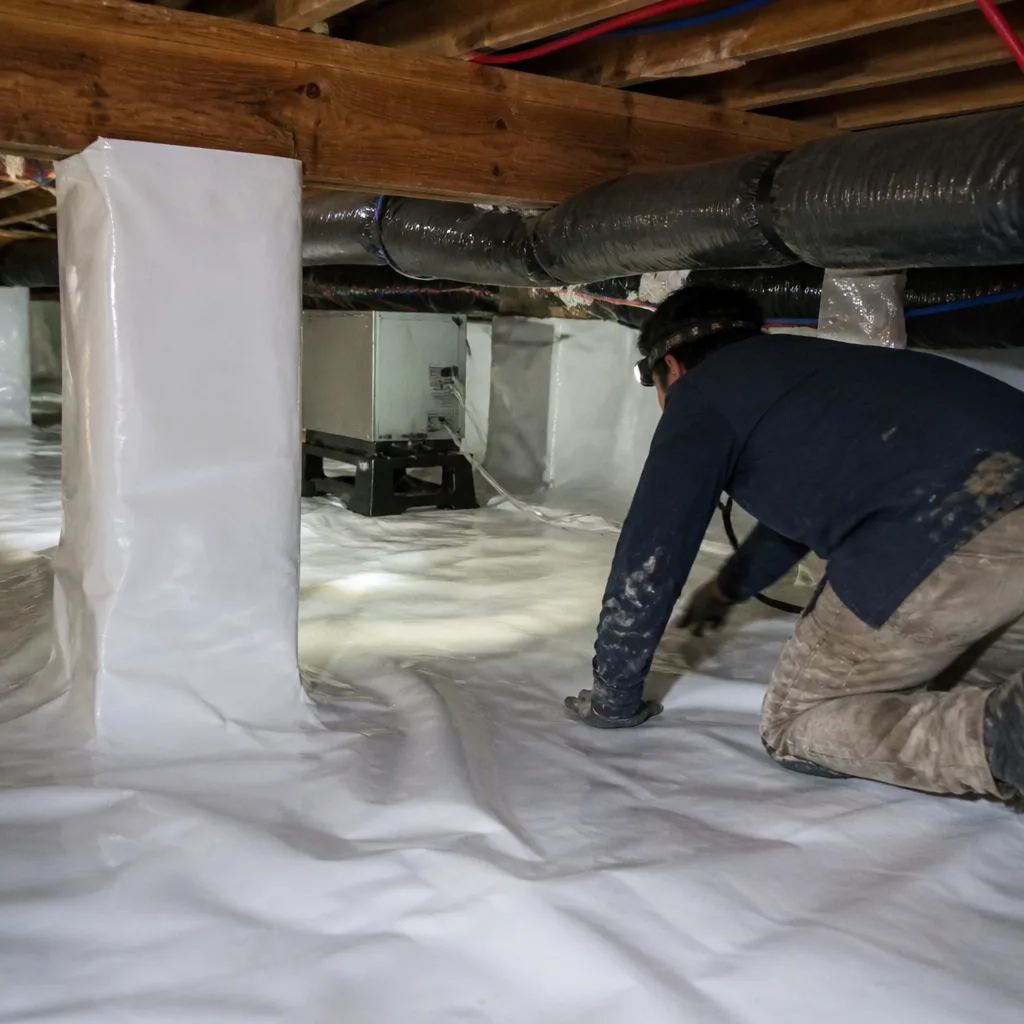
Two Las Vegas-specific variables move these numbers. First, access: a low-slope roof over a 1,200-square-foot ranch in North Las Vegas is easier and cheaper to foam than a two-story with a tight attic hatch in Summerlin. Second, seasonal scheduling – we don’t adjust price based on the calendar, but summer substrate temperature management can add time to a job, and time is a line item. If your crawl space is part of the same envelope conversation, our crawl space encapsulation and vapor barrier page covers the ground-up side of the assembly.
Common Mistakes to Avoid
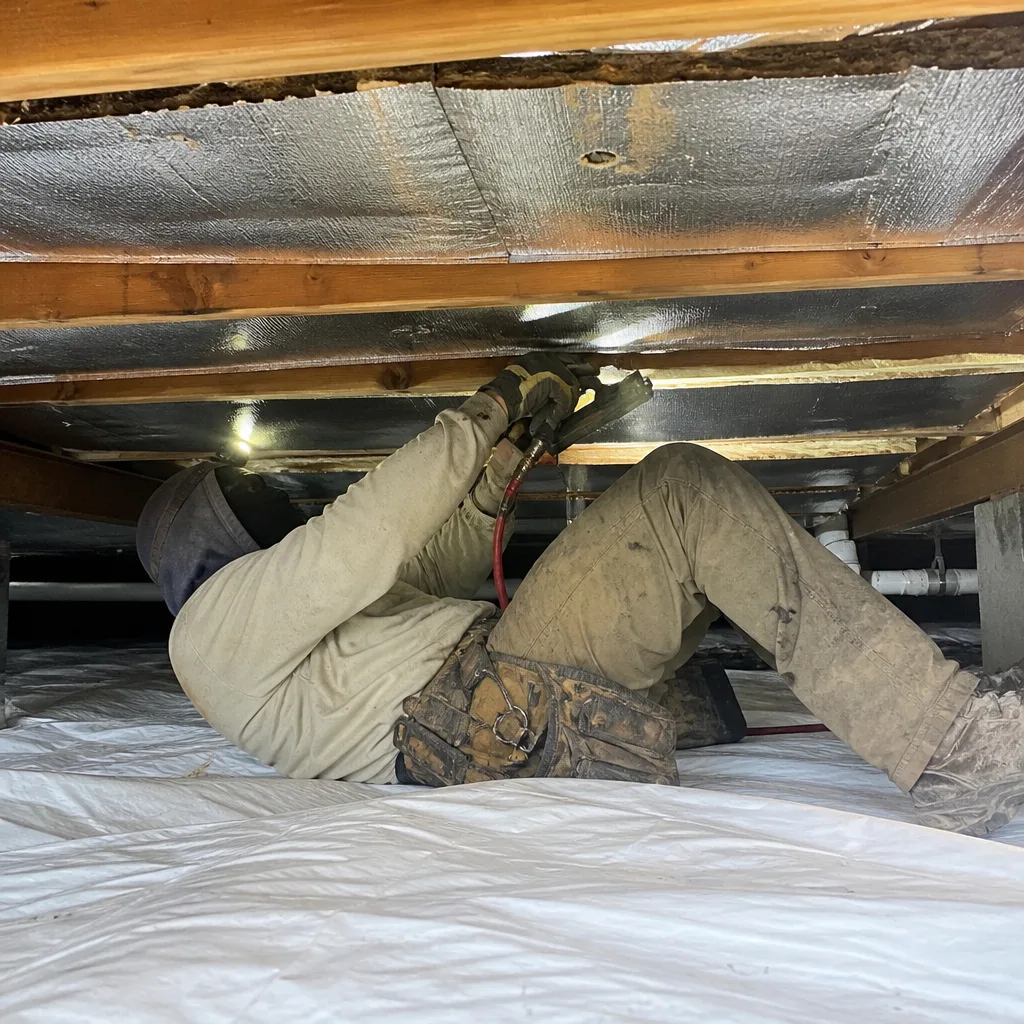
- Foaming over an unsealed attic floor. This traps existing leakage under a sealed surface. Seal first, spray second – no exceptions.
- Using open-cell foam on a roof deck. In a Las Vegas monsoon, that allows moisture into the assembly. Roof decks get closed-cell.
- Specifying 1 inch of foam and calling it done. One inch gives R-6.5, not R-19. It won’t meet the assembly’s needs, and the homeowner won’t know until the summer bill arrives.
- Skipping the blower-door test. Without a before-and-after reading, neither you nor the contractor has evidence of what changed. Any quote that omits it is selling you a feeling, not a measurement.
- Spraying in July without a substrate temperature plan. A roof deck at 140°F plus a fast-cure foam equals adhesion problems. Skilled crews schedule around the heat.
- Accepting a verbal scope. Under Haven Standard Clause 1, a flat price, written scope, and written warranty come before anyone lifts a tool. If you’re asked to approve work without that, walk.
- Ignoring the photo record. Once foam is in, the assemblies are hidden. Demand coverage photos, not a verbal assurance.
When to Call a Professional
Spray foam is one of the few insulation products where the failure modes involve chemicals, pressure, and temperature at the same time, and the assemblies it goes into are hot, tight, and easy to get wrong. Call a trained professional – don’t attempt this yourself. If you’re in Las Vegas and any of these describe your situation, it’s time to get a written price on paper: your attic hits 150°F or hotter in summer; your July electric bill keeps climbing despite a new HVAC system; a previous contractor foamed without air sealing first and now you suspect trapped leakage; or a prior job left an odor past 72 hours and you need a second set of eyes. Envelope Insulation Las Vegas offers free estimates – call (833) 362-4859 for a written price before any work starts, a documented photo record on the visit, and before-and-after blower-door numbers if the job calls for them.
Frequently Asked Questions
Most Las Vegas spray foam jobs run $2.50 to $5.50 per board foot installed, with a 1,500-square-foot roof deck at 3 inches of closed-cell landing roughly $7,000 to $12,000. Interior partition work with open-cell foam is often $1.00 to $2.00 per board foot. Call (833) 362-4859 for an exact quote – estimates are free and written.
Closed-cell is the right choice for roof decking and cathedral assemblies in Southern Nevada because it delivers R-6.5 to R-7 per inch and resists moisture migration during the monsoon. Open-cell is appropriate for interior partition cavities at about R-3.5 to R-4 per inch. The two aren’t interchangeable in this climate.
Yes. Air sealing of top plates, can lights, and penetrations comes before any foam, or you trap existing leakage paths under a sealed surface. A blower-door test before and after confirms the reduction. Call (833) 362-4859 to schedule a free estimate and a written scope.
Standard re-entry is 24 hours after application. Some odor during that first day is normal. A persistent chemical smell at 72 hours is a sign of a cure problem and should trigger a callback, not a wait-and-see approach.
It can, when specified correctly. Closed-cell foam on the roof deck removes the radiant load that drives most of the cooling cost here, and before-and-after blower-door numbers show exactly how much air the envelope was losing. Envelope Insulation publishes those readings on every applicable job – call (833) 362-4859 for a free estimate.
You should get lift thickness measurements, ambient and substrate temperature logs at the time of install, the product data sheet for the specific foam system used, and a documented photo record. On applicable jobs, before-and-after blower-door readings come with the package. Ask for all of it in writing before you sign. Call (833) 362-4859 to see what our job file looks like.
The Bottom Line
Spray foam in Las Vegas isn’t about hitting an R-value from a national table. It’s about stopping radiant heat at the roof deck with the right foam, in the right assembly, at the right thickness – and sealing the leaks first so the foam doesn’t trap them. Closed-cell for roof decks, open-cell for partitions, blower-door numbers published before and after, and a documentation package that proves what went in. If a quote skips the sealing step, skips the testing, or skips the written scope, that’s the quote you should question hardest. Start with our Envelope Insulation Las Vegas home page to see how we structure a job, or call (833) 362-4859 for a free estimate in Las Vegas. Our technicians have up to 10 years of experience, and a live person answers the phone – 24/7.
Written by the team at Envelope Insulation Las Vegas.