
Last updated November 17, 2026
Crawl Space Encapsulation & Vapor Barrier Warning Signs Every Homeowner Should Know
A crawl space vapor barrier can fail completely on the seams and still look intact from a 30-second flashlight inspection. That’s the problem with how most homeowners check on encapsulation: the visible sheet of plastic is the least informative thing down there. The real warning signs show up elsewhere, in higher summer power bills, in the pest report you get every spring, in a floor that feels slightly spongy near the hallway, or in a smell that only appears when the air handler kicks on. This guide walks through the warning signs that actually matter in Las Vegas, how to check for them safely, and when a moisture reading means it’s time to call someone before anything else gets touched.
Quick Answer
The most reliable warning signs of a failing crawl space encapsulation are indirect: HVAC runtime climbing without a change in thermostat setpoint, a musty odor that appears only during heating or cooling cycles, wood floors cupping or squeaking in new spots, pest activity concentrated at foundation vents, and condensation on cold water lines. A vapor barrier that was installed correctly but has since been breached by rodents or foot traffic looks different from one that was never sealed at seams and penetrations on day one, and knowing which you’re looking at changes the repair entirely. In Las Vegas, extreme summer soil temperatures make cold water lines a common wicking point that bypasses an otherwise intact barrier.
Table of Contents
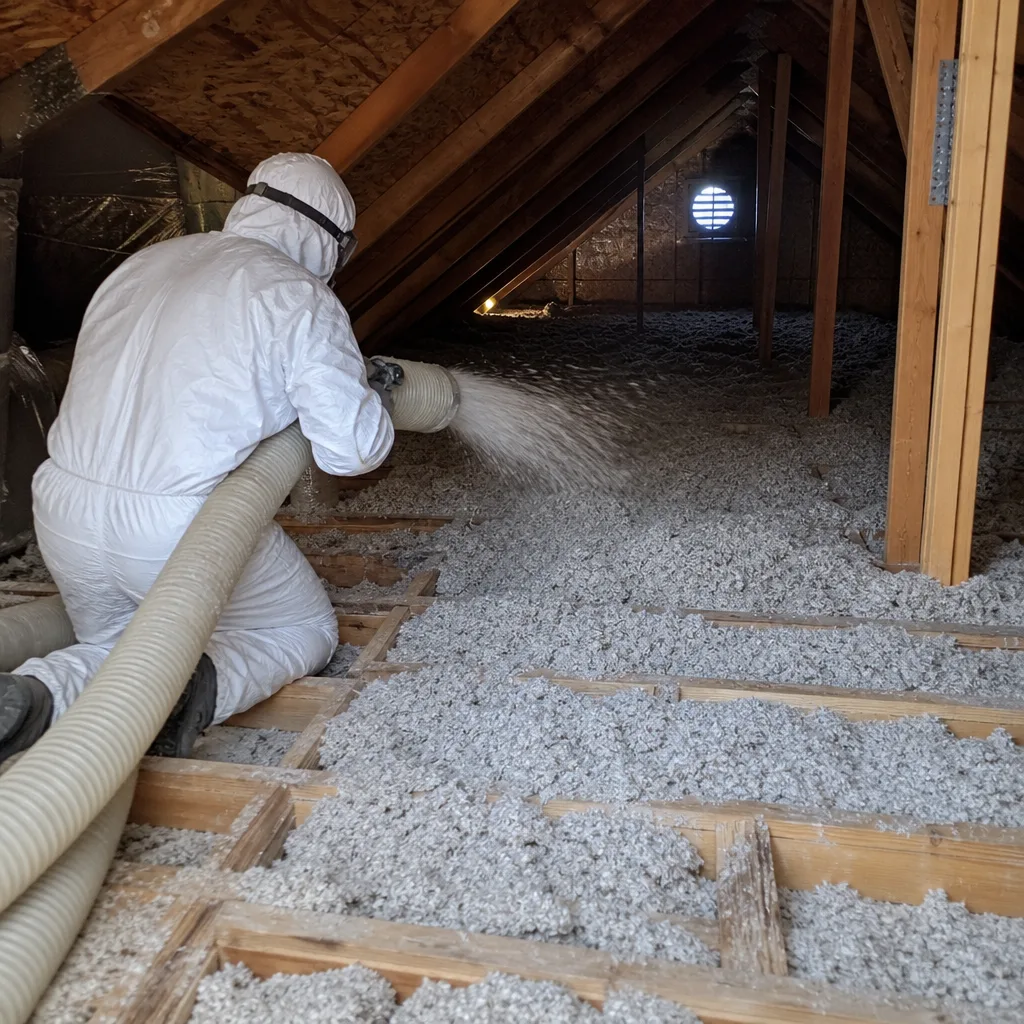
- The Indirect Warning Signs Most Homeowners Miss
- Installed Wrong vs. Installed Right and Since Breached
- Safe Visual Checks You Can Do Without Entering
- What a 19% Moisture Reading Actually Means
- Las Vegas-Specific Failure Points
- Why Your HVAC Data Is the Best Diagnostic You Own
- Common Mistakes to Avoid
- When to Call a Professional
The Indirect Warning Signs Most Homeowners Miss
Most crawl space moisture problems in Las Vegas don’t announce themselves as wet ground. The climate here does something unusual: soil under a slab or in an open crawl space can stay dry enough on the surface to pass a casual glance, even while vapor is pushing up through seams and pooling under the subfloor. That means the first symptoms show up in the living space, not the crawl space, and homeowners almost always attribute them to something else.
Here’s the mapping we use on energy audits: each indirect sign points back to a specific crawl space failure.
- HVAC runtime climbing 15 to 30 minutes per cycle without a thermostat change: the system is conditioning air that’s leaking up through a compromised subfloor, or fighting humidity that shouldn’t be in the envelope. Both trace back to a barrier problem.
- Musty odor that appears only when the air handler kicks on: return-air ducts pulling crawl space air into the living space. If the barrier is intact, the smell is minimal. If it’s not, the HVAC becomes a delivery system for the smell.
- Wood floor cupping or new squeaks near the hallway or kitchen: moisture gradient across the subfloor. Wood flooring in a Las Vegas home should sit at 6% to 10% moisture content. Above that, cupping starts.
- Pest activity concentrated at foundation vents or the sole plate: rodents and insects follow moisture. A dry encapsulated space is far less attractive than a wet one.
- Condensation on cold water lines in July and August: the tell for this climate. We’ll get to that in the Las Vegas section.
None of these signs say “crawl space” on their own. Together, they usually do. If you’re seeing three or more, the crawl space is the first place to look, and we’d suggest starting with a home energy audit through Envelope Insulation Las Vegas so the diagnosis is documented rather than guessed.
Installed Wrong vs. Installed Right and Since Breached
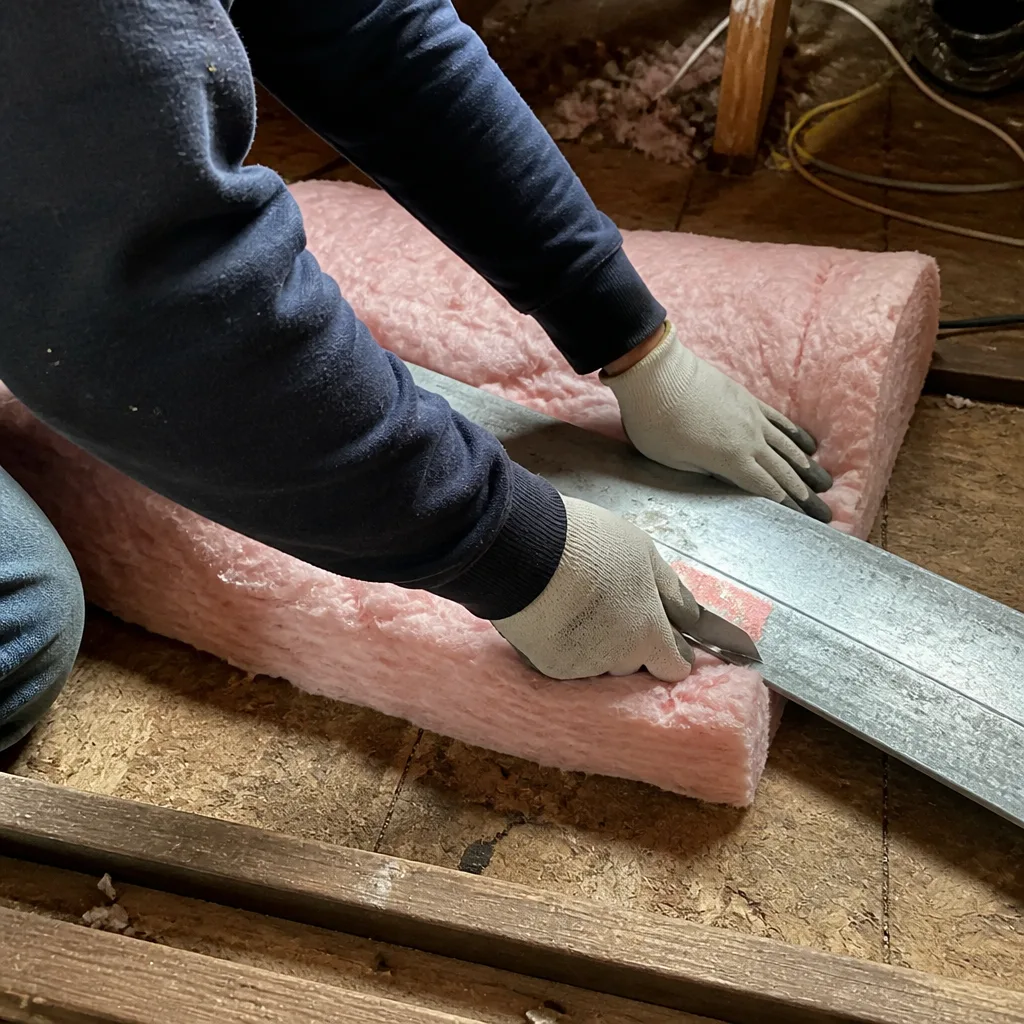
The repair for a failed vapor barrier depends entirely on which failure mode you’re looking at, and they’re not the same problem. A barrier that was installed wrong on day one needs to be rebuilt from the ground up. A barrier that was installed right and has since been damaged usually needs seam repair, patch work, and new mechanical fastening at the breach points. The visual tells are different, and so is the cost.
Installed wrong on day one
- Seams overlap less than 12 inches, or are taped with standard duct tape rather than a butyl or specialized vapor-barrier tape.
- Pipe penetrations and support piers are punched through with slack plastic rather than wrapped and sealed with a collar or a taped boot.
- The liner doesn’t run up the foundation wall. It stops at the ground-to-wall joint, which is where most vapor intrusion actually enters.
- No mechanical fastening at the top edge. A liner that’s just laid in place will pull free within two summers of summer heat cycling.
- Foundation vents left open. In Las Vegas, an open vent lets in hot dry air during the day and cool nighttime air later, driving a daily condensation cycle right onto the liner.
Installed right and since breached
- Rodent tunneling shows as fan-shaped chewed openings at the liner edge or near a pier, usually with droppings and shredded liner fragments nearby.
- HVAC technician foot traffic compresses the liner into the soil at low spots, which turns into a puddle trap.
- Tears at the sill plate or rim joist where the liner was strained during a prior pest inspection or plumbing repair.
- Seam tape lifting at 2 to 3 feet intervals, often after a contractor moved through to service a duct or water line.
If you want the structural picture of what a full rebuild looks like, the Crawl Space Encapsulation & Vapor Barrier in Las Vegas page covers the layers and materials from soil to rim joist. The short version: a correctly built encapsulation uses a reinforced liner of at least 12 mil, runs 6 to 12 inches up the foundation wall, is mechanically fastened at the top, and has every seam and penetration sealed with the correct tape. Anything less and you’re looking at a slowly failing system rather than a finished one.
Safe Visual Checks You Can Do Without Entering
A crawl space is not a safe place for a homeowner to enter untrained. Low clearances, exposed wiring, sharp fasteners, and the occasional pest all make it a professional’s job, not a homeowner’s. But you can do useful checks from outside with a smartphone and a selfie stick, and you should, because photographing the crawl space every spring turns a guess into a record.
- Photograph the foundation vents from outside. Note whether each vent has a screen, whether the screen is intact, and whether you can see plastic sheeting on the far side. If you see soil or wood, the barrier isn’t reaching that wall.
- Set your phone to video with the flashlight on and lower it through an access hatch on a selfie stick. Pan slowly. Film seams, pipe penetrations, the base of piers, and the top edge where the liner meets the foundation wall.
- Check for pooled water. Even small puddles under the liner are a sign that vapor is condensing. A properly encapsulated Las Vegas crawl space should be dry.
- Look at the wood above the liner. Joist ends, sill plate, and subfloor should look the same color and texture as interior framing. Darkening, white staining, or fuzzy growth means moisture has been sustained.
- Note the smell of the air coming up. If it has any earthy or musty note, the barrier has lost its seal somewhere, even if you can’t see where.
Photograph the same spots each spring. Comparing this April’s photo to last April’s tells you whether a seam is moving, whether a pier wrap is pulling free, or whether rodent activity is new. That photo record is also what a contractor wants to see before scheduling a visit. Under the Haven Standard, every visit ends with a Documented Photo Record, so you and the crew are looking at the same evidence.
What a 19% Moisture Reading Actually Means
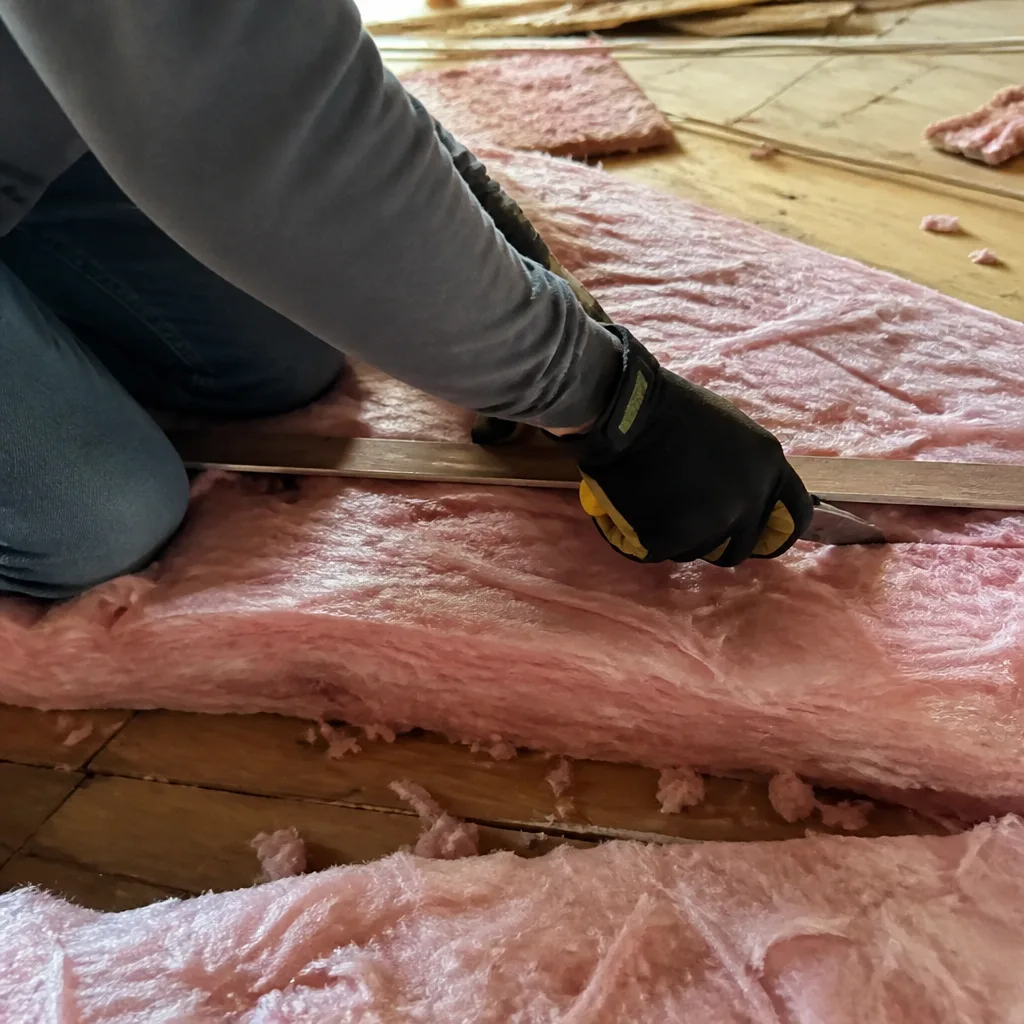
A pin-type moisture meter reading on a wood joist tells you one thing clearly: the wood’s moisture content as a percentage of its dry weight. For structural framing in a Las Vegas crawl space, that number should stay under 16% and ideally sit between 8% and 12% year-round. Here’s what the thresholds mean in practical terms.
- 8% to 12%: Normal for interior framing. No action needed beyond routine checks.
- 13% to 16%: Elevated. The wood is absorbing ambient moisture faster than it’s drying. Worth checking the barrier for a seam lift or a vent left open.
- 17% to 19%: Sustained at this range, wood-decay fungi begin establishing. The wood isn’t failing yet, but the spores are present and the environment is favorable. This is the threshold where we recommend a professional inspection before anything else gets repaired.
- Above 19%: Structural risk starts. Wood loses strength at higher moisture, fasteners begin to corrode, and decay fungi are actively feeding. Stop scheduling other work, including new insulation, until the moisture source is fixed and the wood is dry. Blowing insulation over a wet substrate traps moisture and makes things worse.
Two important caveats. First, a moisture meter reading on a joist is not the same as the relative humidity in the air. A dry read on the joist doesn’t guarantee a dry crawl space, and vice versa. Second, in Las Vegas the threshold matters more than the average, because summer heat cycling drives short, intense moisture spikes that a single reading will miss. A reading taken in February at 11% may be hiding an August spike to 21% that you’d only catch with a data logger left in place for a week.
Our standard practice, and the reason we publish before-and-after blower-door numbers on every applicable job, is to document the environment rather than eyeball it. A moisture reading is a figure, not an opinion. If a contractor tells you your crawl space “feels fine,” ask for the reading.
Las Vegas-Specific Failure Points
Las Vegas has a specific set of crawl space risks you won’t find described well in most national write-ups, because the climate here does something unusual to moisture barriers: it does the damage from below, not from above.
The cold water line problem
Summer soil temperatures in Las Vegas can reach 90°F to 100°F at 2 to 3 feet depth in a sunny exposure. Water lines coming in from the main sit at 75°F to 80°F, sometimes cooler. That temperature differential creates a nightly condensation cycle on the pipe surface, and any water that drips off a condensing line bypasses an otherwise intact vapor barrier because it’s falling on the top side of the liner instead of coming up through the soil.
The tell is a line of water staining on the liner directly under a water pipe, or visible condensation on the pipe in August. The fix is proper pipe insulation and moving the line’s contact point away from the liner surface. Without addressing it, a homeowner can have a perfectly installed vapor barrier and still see subfloor moisture.
Monsoon season and the slope problem
Las Vegas gets most of its annual rainfall in a handful of intense July and August storms. Homes in neighborhoods with graded lots, particularly in the older parts of Henderson and the west side, can take on surface water through poorly graded side yards and downspouts that dump within 3 feet of the foundation. That water finds the crawl space through the foundation wall, not through the barrier. Encapsulation is not a substitute for drainage repair, and any contractor who tells you it is has the order of operations wrong.
HVAC condensate lines
Las Vegas HVAC systems run hard, and the condensate drain is the most common quiet breach we find. A line that drips into the crawl space, or a pan that overflows once every few weeks, will feed a slow moisture problem under a liner that looks intact. Newer subdivisions with high-efficiency air handlers and an interior drain termination point are less prone to this than homes built before the 2005 code updates, but older parts of the valley see it often.
If you live in a home that was built before 2010 and you’ve never had the crawl space checked, we’d suggest starting with a Spray Foam Insulation in Las Vegas page review of the rim joist conditions, because unsealed rim joists are another common entry point for both moisture and exterior air.
Why Your HVAC Data Is the Best Diagnostic You Own
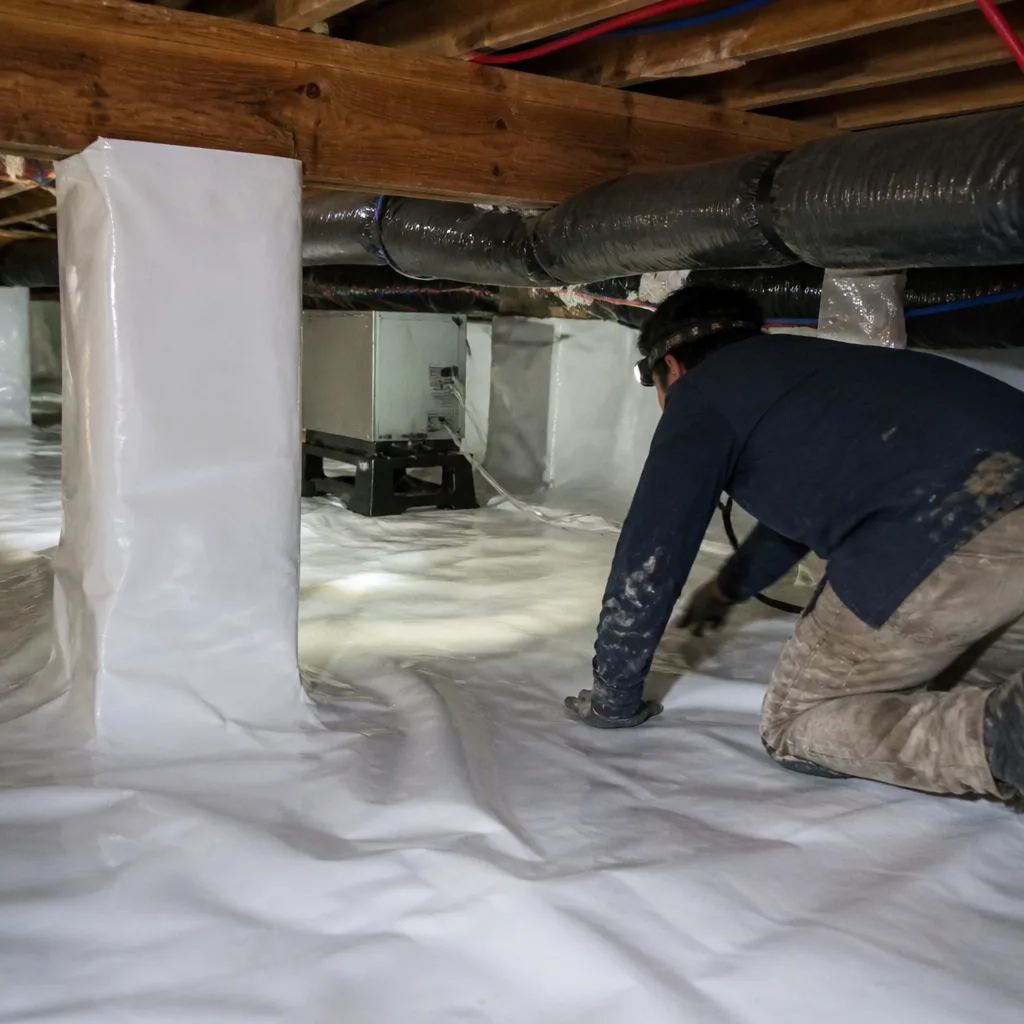
You don’t need a diagnostic tool to spot an HVAC problem that traces back to the crawl space. Your thermostat already logs the data.
Modern smart thermostats (Nest, Ecobee, Honeywell) track daily runtime by mode. If your cooling runtime in July is running 8 to 10 hours per day when the same weather last year produced 6, that’s a 33% to 66% increase in load, and it doesn’t happen without a reason. The three usual candidates are: a failing compressor, duct leakage, or a wet crawl space pulling enough humidity into the envelope that the system is spending runtime on dehumidification instead of temperature. The last one is the most often missed, because the temperature in the house stays fine while the system overloads.
- Pull runtime history from your thermostat app for the last 12 months. Compare July to July, not July to December. You’re looking for year-over-year drift, not seasonal variation.
- Compare runtime to the daily high temperature. Plot both for a two-week stretch in July. If runtime is climbing while temps are flat, the load source is inside the house.
- Listen for whistling or air movement at outlets, or feel for drafts at the base of interior walls. That’s supply or return duct leakage, which is common when the crawl space contains the ductwork.
- Note whether the thermostat humidity reading (if it has one) sits above 55% indoor relative humidity in summer. That’s a clear sign of an envelope humidity problem rather than a compressor problem.
Combine that reading with the crawl space photo check from the previous section and you have a diagnostic picture a contractor can act on, rather than a vague “the AC is running a lot” complaint. For homes that need both the crawl space fix and the attic work, we’d recommend addressing the envelope as a system: air sealing under the house, insulation above it, and a documented blower-door test before and after to verify the air-sealing result. The Attic Insulation in Las Vegas page goes deeper on the attic side.
Common Mistakes to Avoid
- Assuming a visible plastic sheet is a working vapor barrier. A barrier can look intact from the access hatch and be completely failing at the seams 20 feet away. Photograph the seams, not the middle.
- Installing new insulation over a wet crawl space subfloor. This is the failure mode we’ve seen too often: the insulation goes in, traps the moisture, and the problem is hidden for two years until the joists show staining. Fix moisture first.
- Leaving foundation vents open after encapsulation. In Las Vegas, an open vent drives a daily hot-dry-then-cool-moist cycle that condenses on the barrier nightly. Vents should be sealed as part of an encapsulation, not left as passive ventilation.
- Using duct tape on vapor barrier seams. Duct tape fails within 12 to 18 months in a Las Vegas crawl space. The correct tape is a butyl-based vapor barrier tape or a specialty liner tape, applied over at least 6 inches of overlap on clean surfaces.
- Skipping the wood moisture reading and going by smell alone. Smell tells you there’s a problem. A moisture reading tells you whether the wood has structural risk and whether the repair is urgent.
- Patching a rodent breach without addressing the entry point. Sealing one hole without blocking the foundation-to-rim-joist gap at the other end of the crawl space just sends the animal to the next available opening. Rodent exclusion and barrier repair happen together.
- Ignoring the HVAC condensate line. Most crawl space moisture problems we find on the west side of the valley and in older Henderson neighborhoods trace back to a slow drip from a condensate pan or a drain termination that’s pulled loose. It takes 10 minutes to check and costs far less than a joist repair.
When to Call a Professional
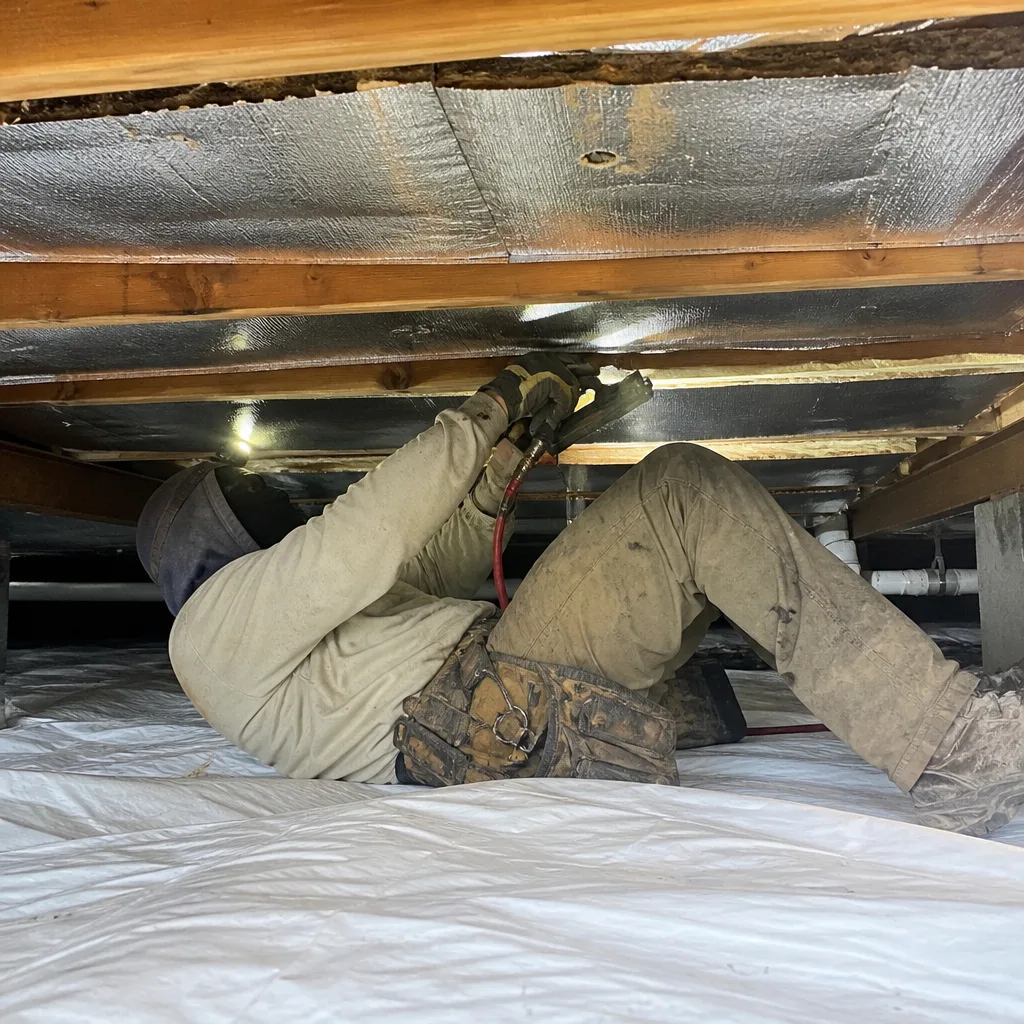
You should call a professional when a pin-type moisture meter reads 17% or above on a joist, when the crawl space smells musty from the access hatch, when you see pooled water or pest activity under the liner, or when you’re about to add insulation and aren’t sure the subfloor is dry. In Las Vegas, add three triggers to that list: any condensation you can see on cold water lines in summer, any standing water in the crawl space after a monsoon storm, and HVAC runtime climbing more than 20% year-over-year without a compressor diagnosis. Envelope Insulation Las Vegas offers free estimates in Las Vegas. Call (833) 362-4859 and a live person will answer. We’ll bring the meter and the moisture logger to the first visit, document what we find with photos, and hand you a written price before any work starts, which is Haven Standard Clause 1 and how we work on every job. Bring us any written estimate from another contractor and we’ll read it with you as a Free Second Opinion.
Frequently Asked Questions
The clearest signs are indirect: HVAC runtime climbing year-over-year, a musty odor when the air handler runs, wood floors cupping, pest activity concentrated at foundation vents, and visible condensation on cold water lines. From a visual check, failed seams, tears at piers, and plastic lifting at the foundation wall are the tells. A pin-type moisture meter reading above 17% on a joist confirms the barrier isn’t holding.
8% to 12% is normal for interior framing in Las Vegas, and readings should stay under 16% year-round. At 17% to 19%, decay fungi begin establishing and the wood is worth professional inspection. Above 19%, structural risk begins and all other work, including new insulation, should stop until the moisture source is fixed. Call (833) 362-4859 for an exact moisture reading and a written diagnosis; estimates are free.
Because return-air ducts are pulling crawl space air into the living space. If the vapor barrier and duct seals are intact, that smell is minimal. When they’re not, the HVAC becomes the delivery system. That symptom almost always correlates with a barrier seam lift or a duct boot that’s pulled free at the floor register.
Yes, with a smartphone and a selfie stick lowered through the access hatch, filming the seams, pipe penetrations, pier wraps, and the top edge where the liner meets the foundation wall. Do not enter the crawl space itself unless you’re trained and have proper clearance and lighting. Low clearance, exposed wiring, and sharp fasteners make it a professional’s environment. Photograph the same spots each spring and compare.
Because Las Vegas soil temperatures in summer reach 90°F to 100°F at depth while water lines run 75°F to 80°F. That differential drives a nightly condensation cycle on the pipe surface, and water dripping off a condensing line bypasses an otherwise intact vapor barrier because it comes from above. The fix is pipe insulation and moving the line’s contact point off the liner. Call (833) 362-4859 to have the pipes and liner checked together; the visit is free.
It stops vapor intrusion from the soil, which is the large majority of the problem, but it doesn’t stop surface water from bad grading or drips from HVAC condensate lines. Those need their own fixes. Encapsulation also isn’t a substitute for rodent exclusion or a moisture reading that shows active decay, which are separate repair scopes that come first.
The Bottom Line
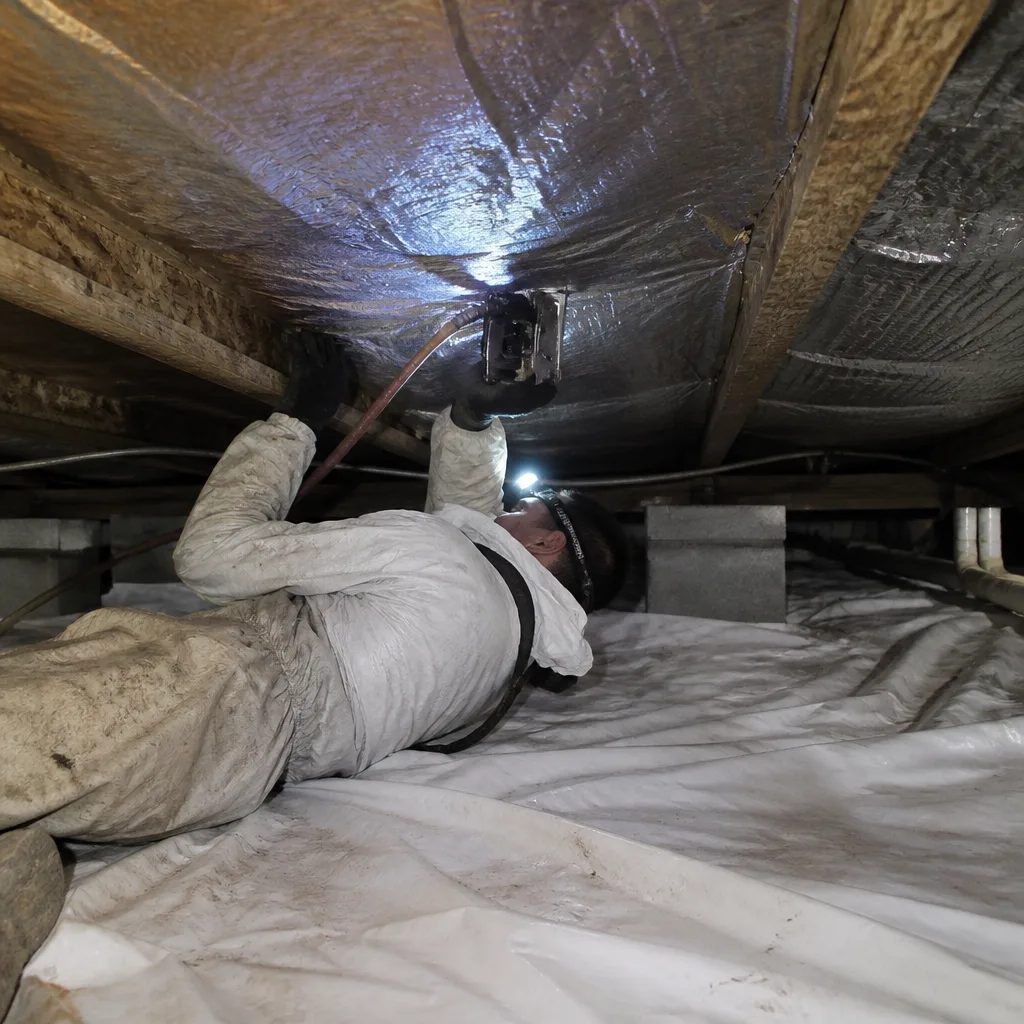
Warning signs of a failing crawl space encapsulation in Las Vegas are rarely visible from a flashlight sweep across the plastic. They show up as HVAC runtime climbing year-over-year, a smell that only arrives when the air handler runs, floors that cup in new spots, and pest reports that keep returning to the same vents. A 17% moisture reading on a joist is the threshold where a professional should be looking; above 19%, all other work stops until the moisture source is fixed. The good news is that every one of these signals is findable and fixable, usually well before structural damage starts. Document what you see, ask for the reading, and don’t let insulation go over a wet subfloor. Call (833) 362-4859 for a free estimate in Las Vegas; a live person answers 24/7, and every job we run ends with a written price, a written warranty, and a Documented Photo Record.
Written by the team at Envelope Insulation Las Vegas.