Last updated November 17, 2026
DIY vs Professional Blown-In Insulation: What’s Safe to Do Yourself
The machine is cheap to rent. The bags are on the shelf at any home center in Las Vegas. The instructions on the back tell you to keep the hose level and watch the depth markers. What they don’t tell you is that you’re about to bury the single most important part of the job under 12 inches of cellulose: the air leaks in your attic floor. Those leaks are where roughly 40% of a home’s thermal performance gets decided, and once they’re covered, they’re gone until someone hauls the insulation back out. This guide draws a clear line between what a careful homeowner can do safely and what needs a pressure diagnostic before the first bag opens.
Quick Answer
Topping off an attic floor that’s already sealed is a genuinely low-risk DIY job: rental machines handle loose-fill cellulose and fiberglass fine, and you’re just restoring depth. New insulation over an unsealed attic, wall cavities, and cathedral ceilings are not DIY jobs, because the work that determines performance is air sealing and density, both of which need instruments and training. Blow insulation over a bypass and you’ve made the leak permanently inaccessible.
Table of Contents
- What the rental blower actually gets right
- The DIY-safe jobs, specifically
- The jobs that need instruments first
- Why covering a bypass is a one-way door
- Blower-door cost vs. re-excavation cost
- What rental equipment can’t do (dense-pack)
- The documentation a DIY job can’t produce
- Las Vegas specifics: heat, attic temps, and code
What the Rental Blower Actually Gets Right
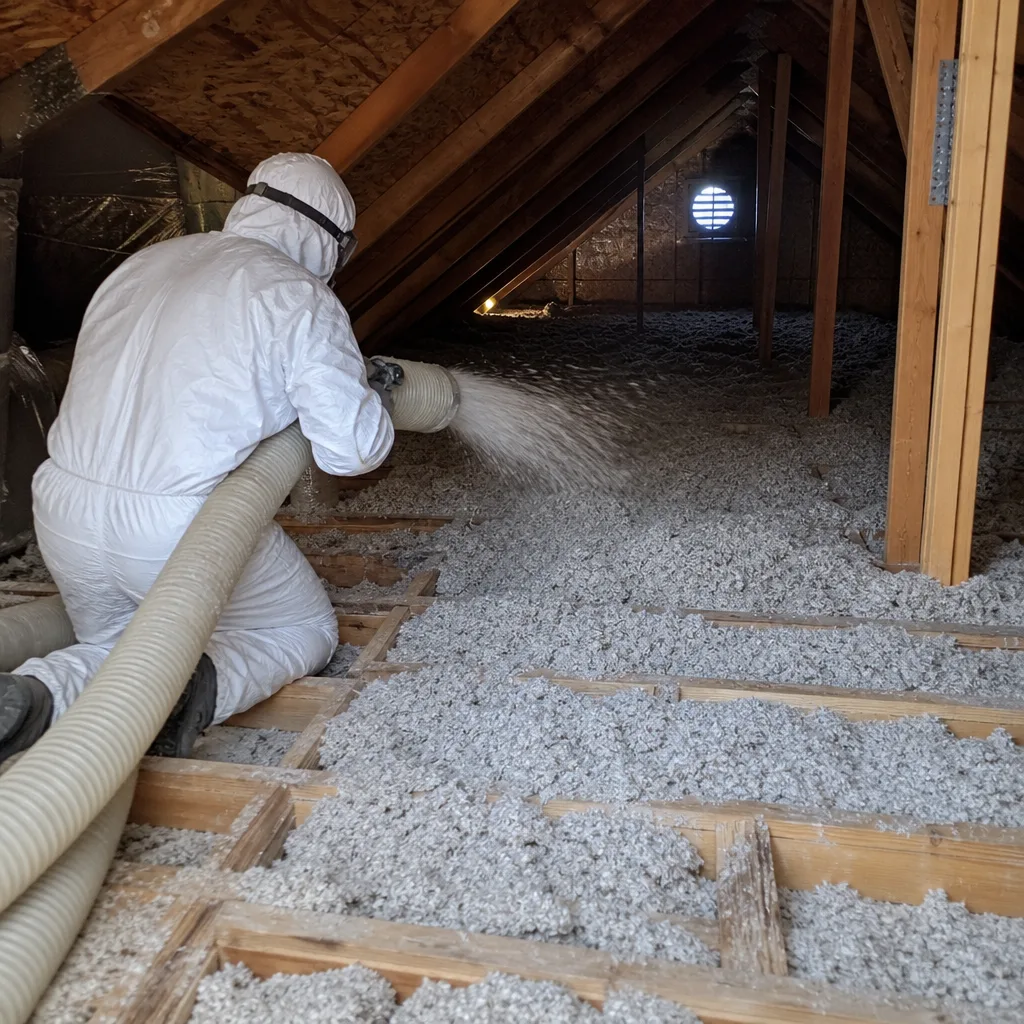
A residential blower machine does one thing well: it fluffs loose-fill insulation and pushes it through a hose so it lands at a reasonably even depth. That’s most of the physical labor of an insulation job, and it’s the part that wears people out. If your attic floor is already sealed and you’re simply restoring settled material to its original depth, the machine is genuinely useful and the work is within reach.
Here’s the thing the rental counter won’t say out loud: the machine is agnostic about what it’s blowing over. It doesn’t know whether the surface underneath is a sealed top plate or a recessed can light with a half-inch gap around it. It just fills the space. In a Las Vegas attic in July, where deck temperatures routinely climb past 140°F, that machine also becomes an endurance test. Homeowners who rent on a Saturday morning often quit by early afternoon, which is exactly how you end up with a floor that’s 9 inches deep in the middle and 4 inches at the eaves, where the heat gain is worst.
The trade-off is arithmetic, not opinion. The machine gets material into the attic. The work that separates an R-38 attic from one that performs closer to R-22 sits underneath, and the machine can’t do it. Most jobs we open up across Las Vegas have a mix of both: some real depth already there, and a long list of unsealed penetrations the previous owner never touched.
The DIY-Safe Jobs, Specifically
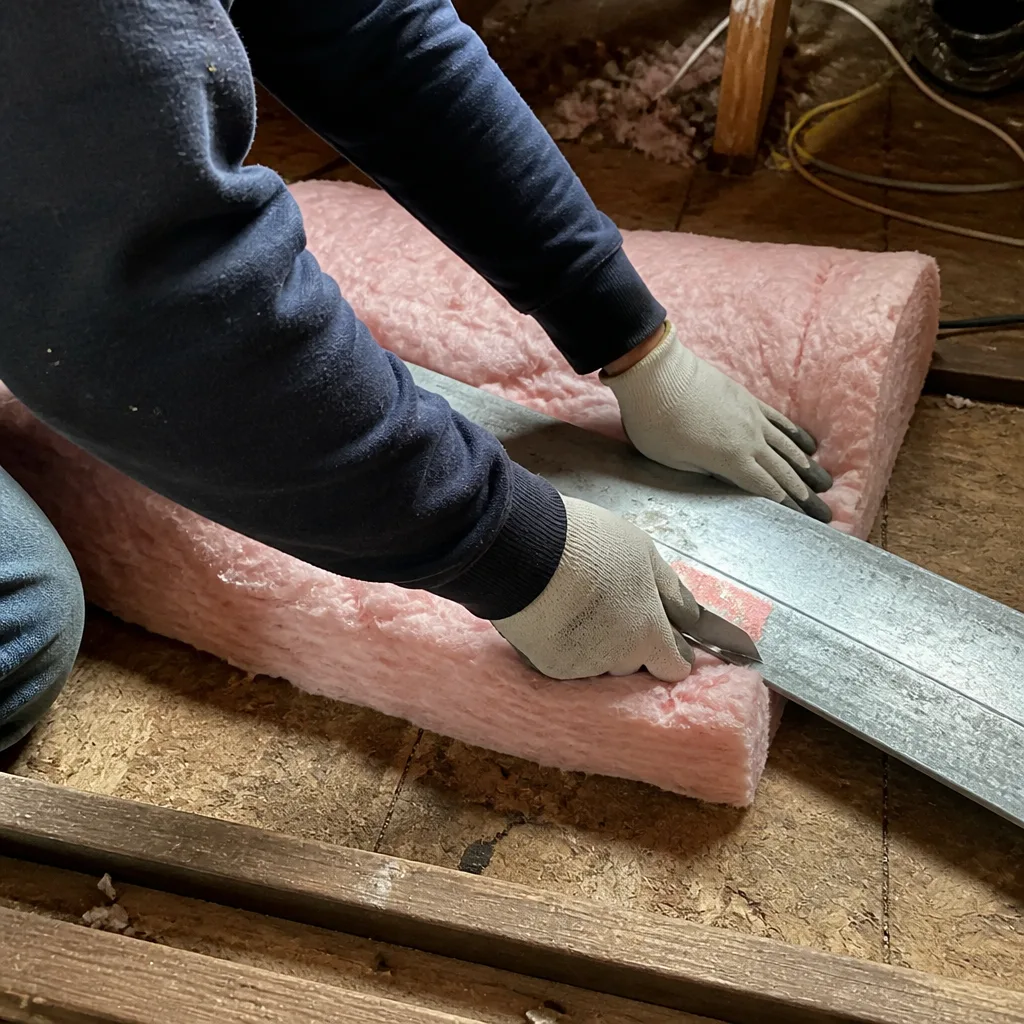
There are two scenarios where a homeowner with a free weekend and a helper can do this work without creating a problem they’ll pay to fix later. Both start from an attic that’s already been sealed.
- Topping off an already-sealed attic floor. If air sealing was done previously, either by a prior owner or a contractor, and the insulation has settled or was under-installed, adding depth is straightforward. You’re not creating new risk; you’re restoring a system that’s already in place.
- Adding insulation to an unconditioned garage ceiling with no bypasses. A garage ceiling that’s open, drywalled, and free of recessed lights, chases, or plumbing penetrations can take loose-fill without the same concerns. There’s no conditioned space above it fighting the work.
Two more conditions make either of those jobs safer to attempt: confirm the attic has no knob-and-tube wiring (common in some of the older homes near downtown Las Vegas) and that any recessed lights are rated IC (insulation contact). If you can’t confirm both, stop and get someone out to look. Even on a DIY-safe job, the physical reality is unforgiving. Attics in Las Vegas hit temperatures that make a full day up there genuinely dangerous without hydration breaks, a spotter, and a respirator rated for the material you’re blowing.
If your attic qualifies, the job is real and the savings are real. Materials run from a few brands you can buy at any major retailer: GreenFiber cellulose, Owens Corning fiberglass, or Knauf in some markets. The homeowner who does this right measures depth in multiple spots before and after, and doesn’t guess at the target number.
The Jobs That Need Instruments Before the First Bag Opens
This is the part of the guide that matters most. These jobs aren’t DIY because the risk isn’t in your hands; it’s in what you can’t see.
- New insulation over an unsealed attic. The most common mistake in Las Vegas attics is a previous owner or handyman who blew material over top plates, can lights, plumbing chases, and duct boots without sealing any of it. Adding more on top doesn’t fix it. It just makes the leaks invisible.
- Wall cavities. Blowing insulation into an existing wall cavity is a different job from blowing a flat attic floor. It requires a specific installed density (more below), and getting it wrong means gaps, settling, and no performance where you need it.
- Cathedral ceilings. A cathedral ceiling assembly has no attic access above it, so every penetration has to be reached from inside the room and sealed before insulation goes in. Once the material is in, you’re either opening drywall or living with the leak.
- Any attic where a blower-door test hasn’t been run. Without a baseline number, you’re installing material against an unknown air leakage rate. You can’t improve what you never measured.
In our work across Las Vegas, the majority of homes built between 2015 and 2025 still have at least one unsealed bypass. The house is newer than the problem. Builders install insulation to a code minimum; they don’t necessarily air seal every top plate and can light. A homeowner looking at a clean, well-insulated attic can’t tell by eye whether the sealing was done. A blower-door test tells you in a single number.
Why Covering a Bypass Is a One-Way Door
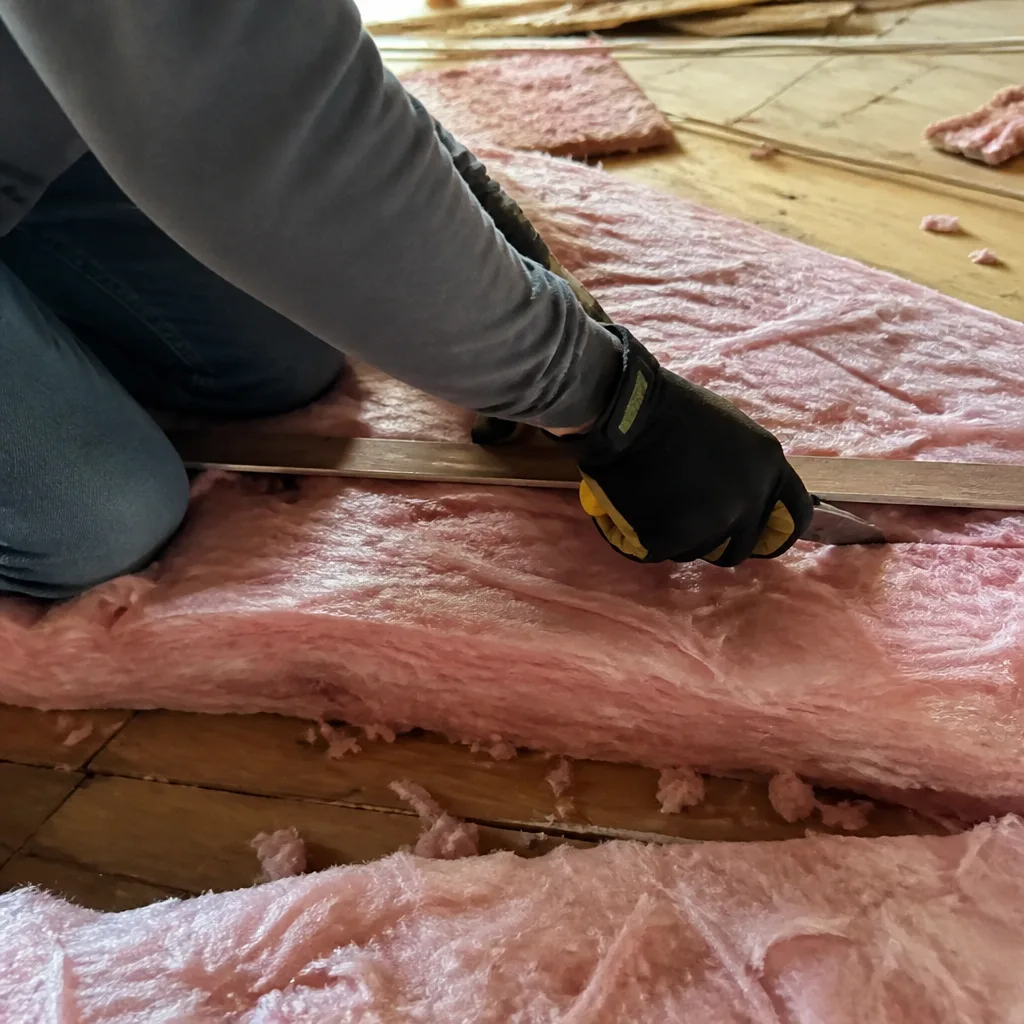
A bypass is any hole in the building envelope’s air barrier that lets conditioned air escape into the attic or crawl space. In a Las Vegas attic, the usual suspects are recessed can lights, the gaps along top plates where the wall meets the ceiling, plumbing and wiring chases through the framing, and the plenum of the HVAC system where it passes into the attic. Each one is a direct path for air your air conditioner just cooled to leave the house.
When insulation is blown over one of these, three things happen at once. First, the leak persists; the material is not an air barrier and never was. Second, the material around the leak gets dirtier and damper than the material beside it, because moving air carries both. Third, and this is the part that costs, the leak is now buried. To reach it again, someone has to physically remove the insulation to get to the surface, seal the bypass, and then replace the material.
That’s the one-way door: you can install the insulation, but you can’t uninstall the consequences. This is the reason Envelope Insulation Co. treats air sealing as a hard prerequisite and not an add-on. Under The Haven Standard, we never blow insulation over an unsealed attic floor. The sequence is sealed first, then insulated, every time. If a homeowner’s own attic qualifies for a DIY top-off, that’s a different job and we’ll say so. But once a bypass is covered, the cost of finding it again is the cost of undoing the whole attic. For more on how the sealing sequence fits into a larger attic program, see our page on Attic Insulation in Las Vegas.
Blower-Door Test Cost vs. Re-Excavation Cost
The economic comparison here is not close. A blower-door test, a diagnostic that pressurizes the house to measure air leakage in CFM50 (cubic feet per minute at 50 pascals), typically runs a few hundred dollars. The test tells you exactly how much air the home is losing and where the biggest leaks are. A competent diagnostician walks the house with the fan running and identifies the bypasses before anyone touches the insulation.
Re-excavating a blown attic to find a missed bypass is a different order of magnitude. The crew has to remove the settled material, bag it or vacuum it, reach the surface underneath, seal what should have been sealed, and then re-install insulation to the correct depth. That’s an attic insulation removal and replacement job, and the customer pays for both the material and the labor twice. On a typical Las Vegas home, the test is a small fraction of what the re-do costs.
The math is the whole argument. If a $300 to $500 test prevents a $3,000 to $6,000 re-excavation and re-install, the test isn’t a cost; it’s insurance against the DIY decision. We publish before-and-after blower-door numbers on every applicable job specifically so homeowners can see, in one figure, what they paid for. A test that reads 4,200 CFM50 before sealing and 2,100 after isn’t a marketing line; it’s a number the homeowner can compare against their own baseline.
| Scenario | Typical Cost |
|---|---|
| Blower-door diagnostic test (single home) | $300 – $500 |
| Air sealing of attic top plates, can lights, chases | $800 – $2,200 |
| Re-excavating a blown attic to fix a missed bypass | $3,000 – $6,000 |
| Rental blower machine + material (DIY top-off only) | $400 – $900 |
Haven Standard Clause 1 is relevant here: flat price, written scope, written warranty before anyone lifts a tool. That applies to a diagnostic as much as to a full install. You should never have to guess what a test or a job will cost before someone starts.
What Rental Equipment Can’t Do (Dense-Pack)
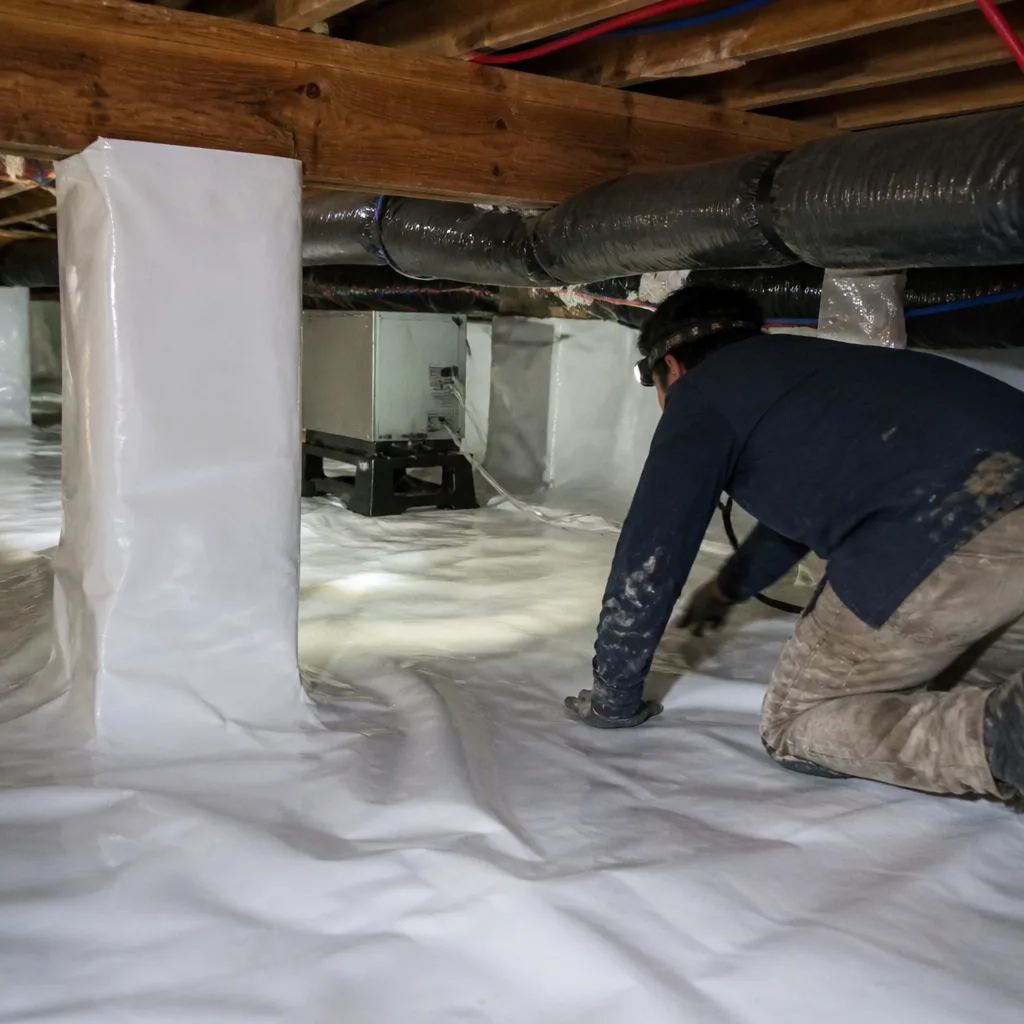
Wall cavities are the clearest place where the rental machine hits a wall. Blowing insulation into an enclosed wall is called dense-packing, and the word “dense” is not a marketing adjective. Dense-pack wall insulation is installed to a specific density, typically around 3.5 pounds per cubic foot for cellulose, because that density is what prevents the material from settling over time and what gives the wall an actual R-value. A residential rental blower rarely achieves that density, and the gap between what it delivers and what the wall needs is the difference between code-compliant performance and a wall that reads as insulated on paper but doesn’t perform in the summer.
This is a code and performance distinction, not a sales tactic. A dense-pack job uses a machine with a pressure gauge and a flow control, and the installer adjusts as the material goes in. The homeowner with a rental unit on a Saturday has neither. The result is settling, void spaces, and a wall that gets reinsulated within a few years. It’s the same reason cathedral ceilings and any enclosed cavity get flagged as not-DIY in the section above.
If you’re considering either wall insulation or spray foam for a retrofit, those are jobs for a trained installer. Our pages on Spray Foam Insulation in Las Vegas and Crawl Space Encapsulation & Vapor Barrier in Las Vegas go deeper on when a cavity needs a different approach entirely.
The Documentation a DIY Job Can’t Produce
This is the part most DIY guides skip entirely, and it’s the part that matters when you sell the house, file for a rebate, or try to prove a problem got fixed. A professional job produces a paper trail a homeowner with a rental machine simply cannot.
- Before-and-after ACH50 numbers. ACH50 (air changes per hour at 50 pascals) is the normalized leakage number a blower-door test produces. Before-and-after ACH50 is the single most useful measure of whether the work changed the building. A DIY attic top-off has no “before” and no “after,” so there’s nothing to compare.
- Thermal images. An infrared camera shows where cold air is leaving and where insulation is missing or compressed. On a Las Vegas home, thermal images taken before sealing and after installation document exactly which areas were addressed.
- A signed R-value attestation. Rebate programs and utility incentive applications typically require a signed statement of the installed R-value, along with the material specification. A homeowner who self-installs cannot produce a contractor attestation, and it can disqualify a rebate claim.
- A Documented Photo Record. Every job at Envelope Insulation Co. includes a photo record of what was sealed, what was installed, and what the depth looked like at completion. That’s not available as a special request; it’s on every job.
The trade-off is real. A homeowner who does a competent DIY top-off on an already-sealed attic saves money on labor. What they don’t get is the documentation, and for a rebate or a resale, the documentation often pays for itself.
Las Vegas Specifics: Heat, Attic Temps, and Code
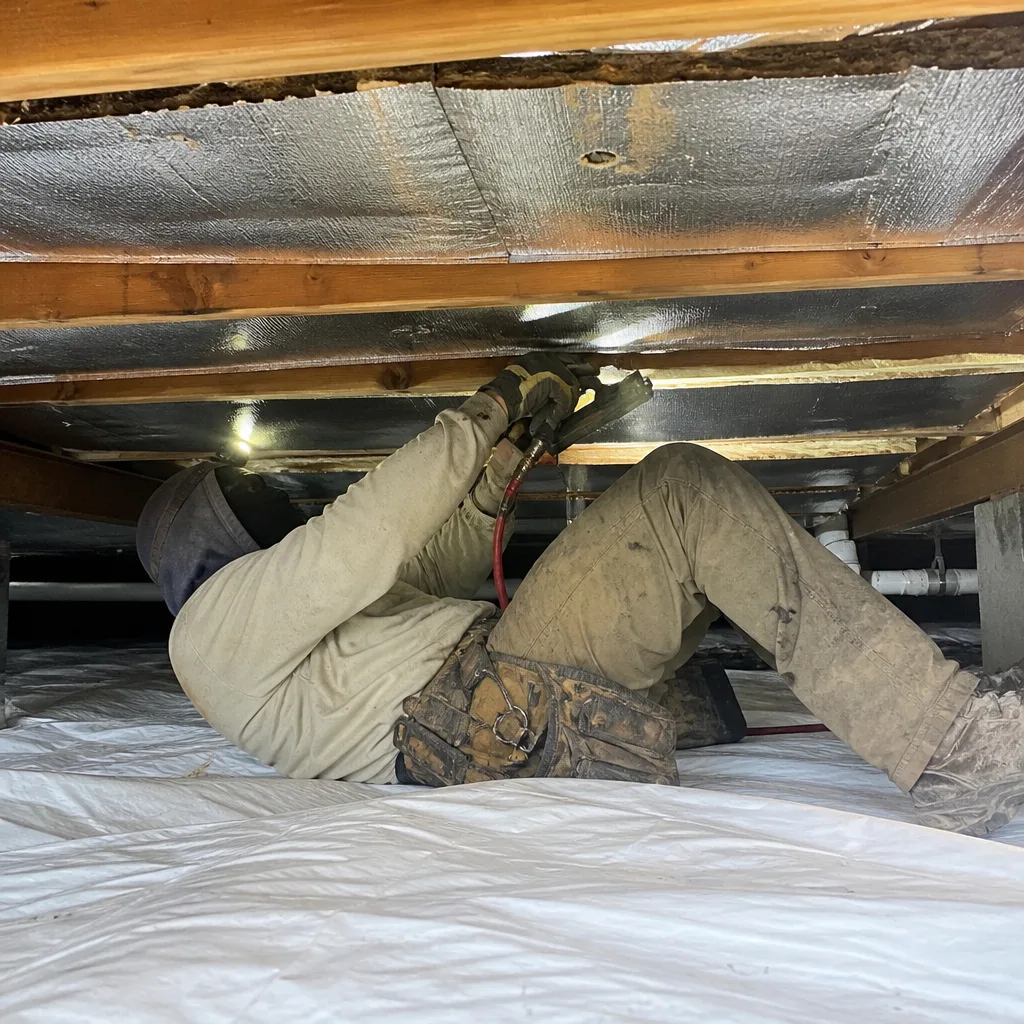
Insulation in Las Vegas is a summer question, and the summers are the reason. Attic deck temperatures above 140°F are routine in July and August, and the difference between an R-38 attic and an effectively R-22 attic shows up on the utility bill every month from May through September. That’s not a theoretical performance gap; it’s the reason the local energy utility’s rebate programs push R-38 or higher for attic insulation in this climate.
The Las Vegas housing stock also matters. Newer construction in areas like Summerlin and the west valley often has an attic that looks properly insulated but has minimal air sealing, because the builder installed the material to code and the sealing was a separate trade. Older neighborhoods near downtown and in parts of the east valley have homes with the opposite problem: degraded or missing insulation and a fresh set of penetrations where HVAC or plumbing was added after the original build. In our experience, the age of the house tells you almost nothing about whether the attic is sealed. The blower door tells you.
Two local conditions change the DIY math. First, the attic heat makes an all-day install dangerous, so the “just rent the machine on Saturday” plan often fails on stamina well before it fails on technique. Second, the local rebate environment rewards documented jobs; a homeowner trying to claim a utility incentive off a self-install will usually find the paperwork can’t be completed without a contractor attestation. If you want to understand what the diagnostic looks like in a house similar to yours, our Envelope Insulation Las Vegas home page walks through the full building-envelope service line, and if a crawl space sits beneath the conditioned floor, that’s part of the same conversation.
Common Mistakes to Avoid
- Blowing over an unsealed attic floor. The single most expensive mistake on this list. Once the material is down, the bypass is buried and the fix becomes removal plus re-install.
- Skipping the blower-door test to save money. The test is a few hundred dollars; a re-excavation is thousands. Testing first is the cheapest part of the whole job.
- Renting the machine without a second person. In a Las Vegas attic, one person feeding the machine and one person in the attic is the minimum. A single homeowner up there in July without a spotter is a genuine safety problem.
- Assuming the house is new, so the attic is sealed. Construction year is not a proxy for air sealing. Homes built in 2020 in Las Vegas still show up with unsealed top plates.
- Trying to dense-pack a wall with a rental machine. The pressure-gauge feedback you need isn’t there, and the wall will settle. Walls are not a rental-machine job.
- Installing insulation over non-IC recessed lights. Older recessed fixtures that aren’t rated for insulation contact can overheat when covered. Confirm IC rating before you cover a can light; if you can’t confirm it, get it checked.
- Forgetting the photo record. If you do a DIY top-off, take photos of the depth at multiple points before and after. It’s not official documentation, but it’s better than having nothing when a buyer or an adjuster asks what was done.
When to Call a Professional
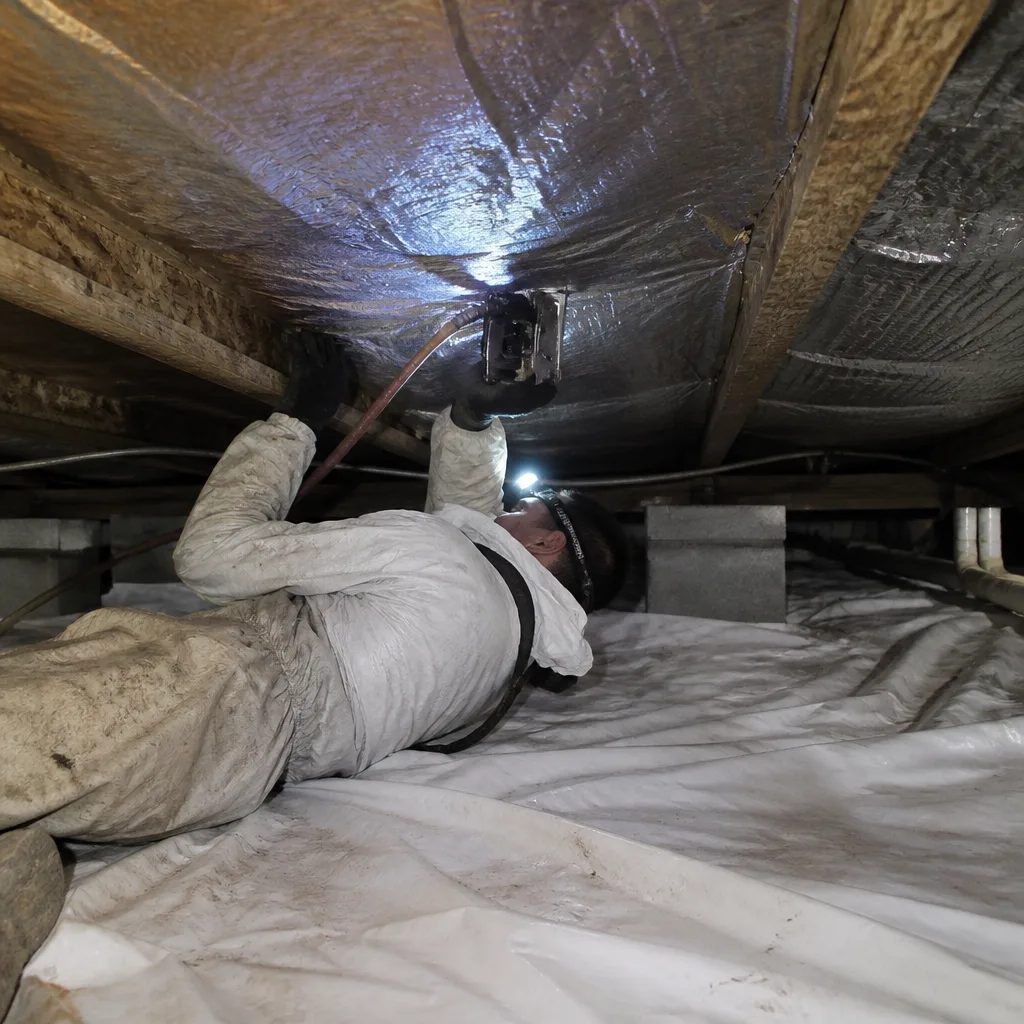
Call a professional if your attic has never been air sealed, if you’re considering wall or cathedral-ceiling insulation, if you don’t have a before-and-after blower-door number to work from, or if you’re planning to claim a rebate. Those are the four triggers. Everything else, if your attic is already sealed and you’re topping off an existing job, is a decision you can make on your own. On the professional side, call us at (833) 362-4859 and we’ll read a competing written estimate with you at no charge; the free second opinion applies to any written quote, and a live person answers the phone. Envelope Insulation Las Vegas offers free estimates in Las Vegas, and under Haven Standard Clause 1 you get a flat written price, a written scope, and a written warranty before any work starts. Our technicians have up to 10 years of experience, and every completed job comes with the 365-Day Done Right Promise: if it’s not done right, we make it right.
Frequently Asked Questions
Yes, if you’re topping off an attic floor that’s already sealed, or insulating an unconditioned garage ceiling with no bypasses. Those are genuinely owner-doable jobs with a rental machine. New insulation over an unsealed attic, wall cavities, and cathedral ceilings are not DIY jobs because they need a pressure diagnostic and a specific installed density before the material goes in. Call (833) 362-4859 for a free estimate if you’re not sure which category your attic is in.
Attic blown-in insulation in Las Vegas typically runs somewhere in the range of $1,500 to $4,500 for a full attic job, depending on the square footage, the existing material, and how much air sealing is needed. A diagnostic blower-door test alone runs $300 to $500. The safest way to price a job is with a written estimate that separates sealing from insulation, so call (833) 362-4859 and we’ll put one together for your home.
Yes, if your attic has never been tested. The blower-door test gives you a baseline ACH50 number (air changes per hour at 50 pascals) that tells you exactly how leaky the house is before any work, and it identifies where the biggest bypasses are. Without it, you’re installing insulation against an unknown, and you’ll never be able to prove that the job improved the house. Call (833) 362-4859 to schedule a test.
Air sealing is the work of closing the gaps at top plates, recessed can lights, plumbing chases, and HVAC penetrations so conditioned air stops escaping into the attic. A careful homeowner can do some of this with foam and caulk on accessible gaps, but a professional job goes further: it uses a blower door to find the leaks you can’t reach by eye, and it verifies the result by re-testing after the work. The value isn’t in the caulk; it’s in the instrument that proves the sealing worked. Call (833) 362-4859 for a free estimate on a sealed-and-tested job.
No. Dense-pack wall insulation requires an installed density of roughly 3.5 pounds per cubic foot for cellulose, and reaching that density requires a machine with a pressure gauge and a flow control that a residential rental unit doesn’t have. A rental machine will fill the cavity, but the material will settle over time and the wall won’t perform the way a properly dense-packed wall does. Call (833) 362-4859 to discuss a wall job.
Often, yes, because rebate programs typically require a signed contractor R-value attestation and a documented before-and-after measurement that a homeowner self-install cannot produce. If you’re planning to claim an incentive, check the program requirements before you rent the machine. The documentation cost is usually smaller than the rebate you’d lose. Call (833) 362-4859 if you’d like us to walk through what a rebate-ready job looks like.
The Bottom Line
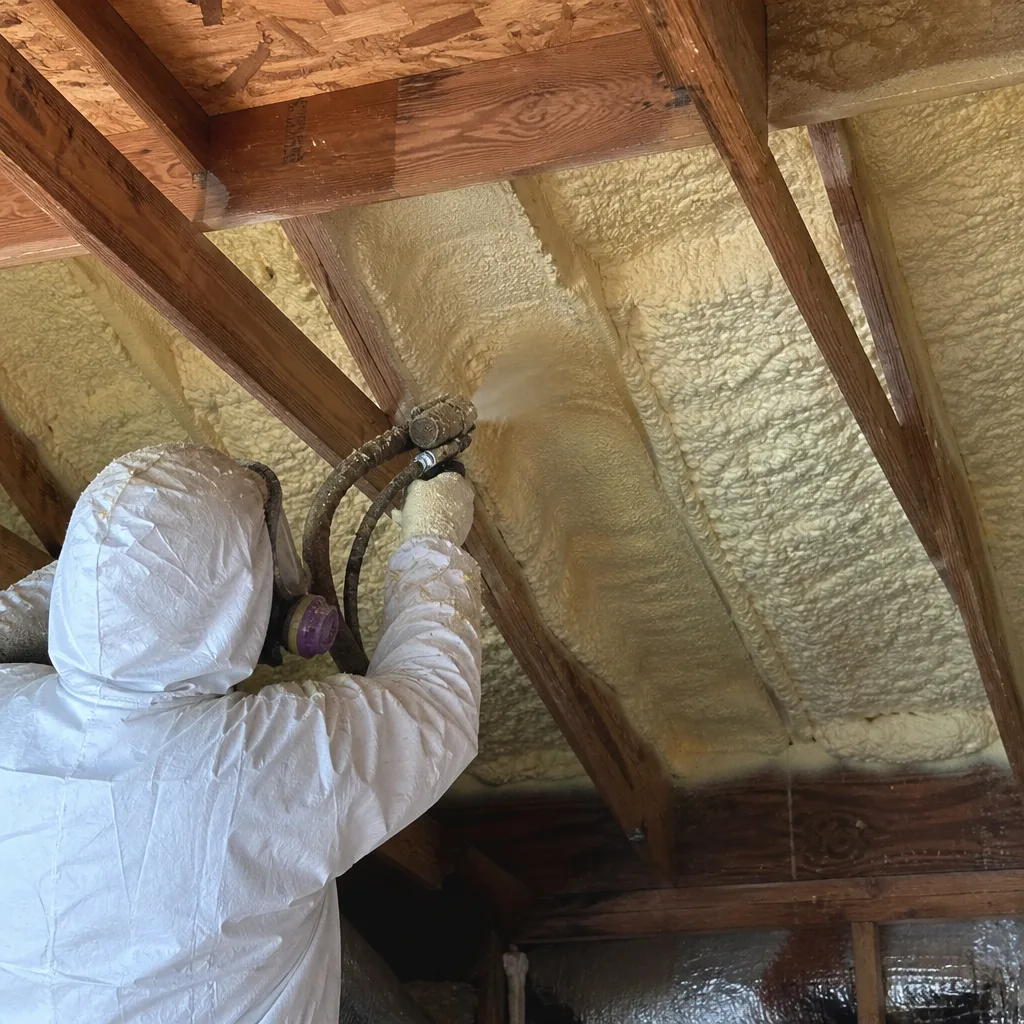
The rental machine gets the material into the attic. It does not seal the bypasses, and once the bypasses are covered, the cost of finding them again is the cost of re-excavating the whole attic. That’s the line. Topping off an already-sealed attic floor or insulating a clean, bypass-free garage ceiling is a real DIY option, and we’d rather you do that competently than pay someone for it. New insulation over an unsealed attic, wall cavities, cathedral ceilings, and anything where a blower-door test hasn’t been run belong in the hands of someone with the instruments to measure before and the documentation to prove after. If you want to know which side of the line your Las Vegas home is on, call us and we’ll tell you straight.
Call (833) 362-4859 for a free estimate. You’ll get a written price before any work starts, a written scope and warranty under Haven Standard Clause 1, and a documented photo record when the crew leaves. If you have a competing written estimate, bring it; our free second opinion is exactly that, and we’ll read it with you. If the answer is that your attic qualifies for a DIY top-off, you’ll hear that too. Under the 365-Day Done Right Promise, the work we do is backed for a full year. Sealed first, then insulated, in that order, every time.
Written by the team at Envelope Insulation Las Vegas.