Last updated November 17, 2026
Seasonal Insulation Care for Las Vegas: Year-Round Homeowner’s Guide
Las Vegas recorded 145 days above 100°F in 2023. That’s not a weather footnote – it’s a stress test running five months a year against your attic floor, your duct boots, and every bead of caulk on your exterior walls. The damage doesn’t announce itself. It shows up in November, when the first cold night drops interior surface temperatures and you find the corner of the guest room feels like a refrigerator. This guide covers the two distinct failure seasons in Las Vegas, the inspection protocols that catch each one, and the year-over-year record-keeping method that tells you whether your envelope is actually holding.
Quick Answer
Las Vegas homes need two inspections per year, not one: a March pre-season check focused on attic insulation depth, duct boots, and exterior caulk before cooling season, and an October post-season check focused on attic hatch weatherstripping, recessed light covers, and pipe penetration seals before the heating season. Fiberglass kraft facing, open-cell spray foam, and low-density backer rod degrade fastest here and should be inspected every 12 months. Between inspections, track utility cost per cooling degree day to quantify actual degradation.
Table of Contents
- Why Las Vegas Has Two Thermal Seasons (Not One)
- The March Protocol: Pre-Season Attic and Exterior Check
- The October Protocol: Post-Season Air Seal Verification
- The Materials That Fail Fastest in Las Vegas Sun
- Building Your Year-Over-Year Air-Tightness Log
- When Seasonal Care Becomes a Professional Job
- Frequently Asked Questions
Why Las Vegas Has Two Thermal Seasons (Not One)
Most insulation advice assumes one stress pattern: cold winters. Las Vegas doesn’t work that way. The envelope here faces two opposite loads, and each one attacks different parts of your home.
From roughly March through October, radiant load dominates. The attic becomes a solar oven, roof deck temperatures push past 150°F, and the primary threat to your envelope is downward heat flow through the attic floor plus convective air leakage from the conditioned space into that hot zone. Insulation R-value drops if batts have compressed or shifted, and any unsealed penetration becomes an open chimney pulling cooled air out of your living room.
From November through February, the pattern flips. Days are mild, nights drop into the 30s and 40s. This is diurnal-swing season, and the enemy changes: it’s no longer heat gain through the attic, it’s air infiltration at the wall and window perimeter. The stack effect reverses overnight. Cold air gets pulled in through every gap at top plates, outlet boxes, and window rough openings, and the heating system has to compensate.
A single annual inspection, scheduled in spring or fall, misses half the failure modes. We’ve seen this repeatedly in Las Vegas: an attic with pristine insulation and a failing wall assembly, or the reverse. Two checks, one per season, catch both.
The March Protocol: Pre-Season Attic and Exterior Check
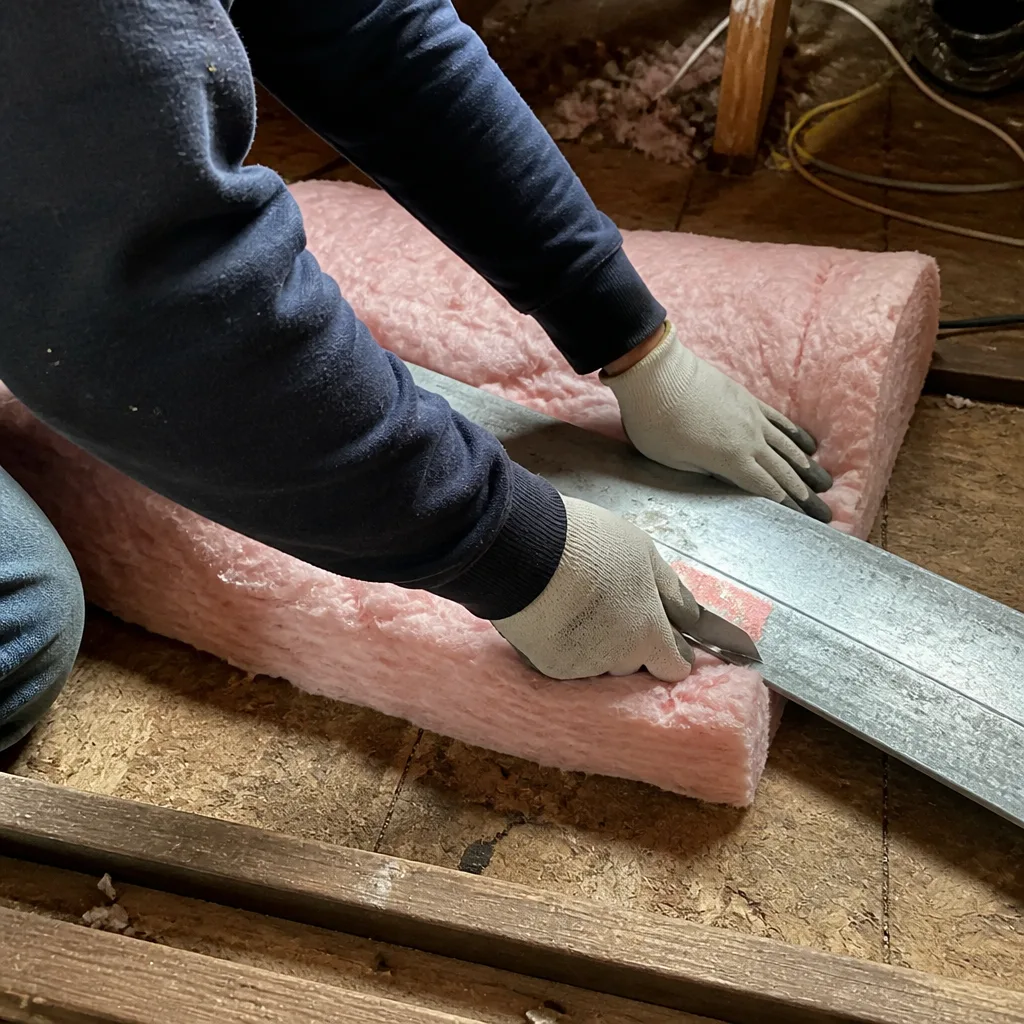
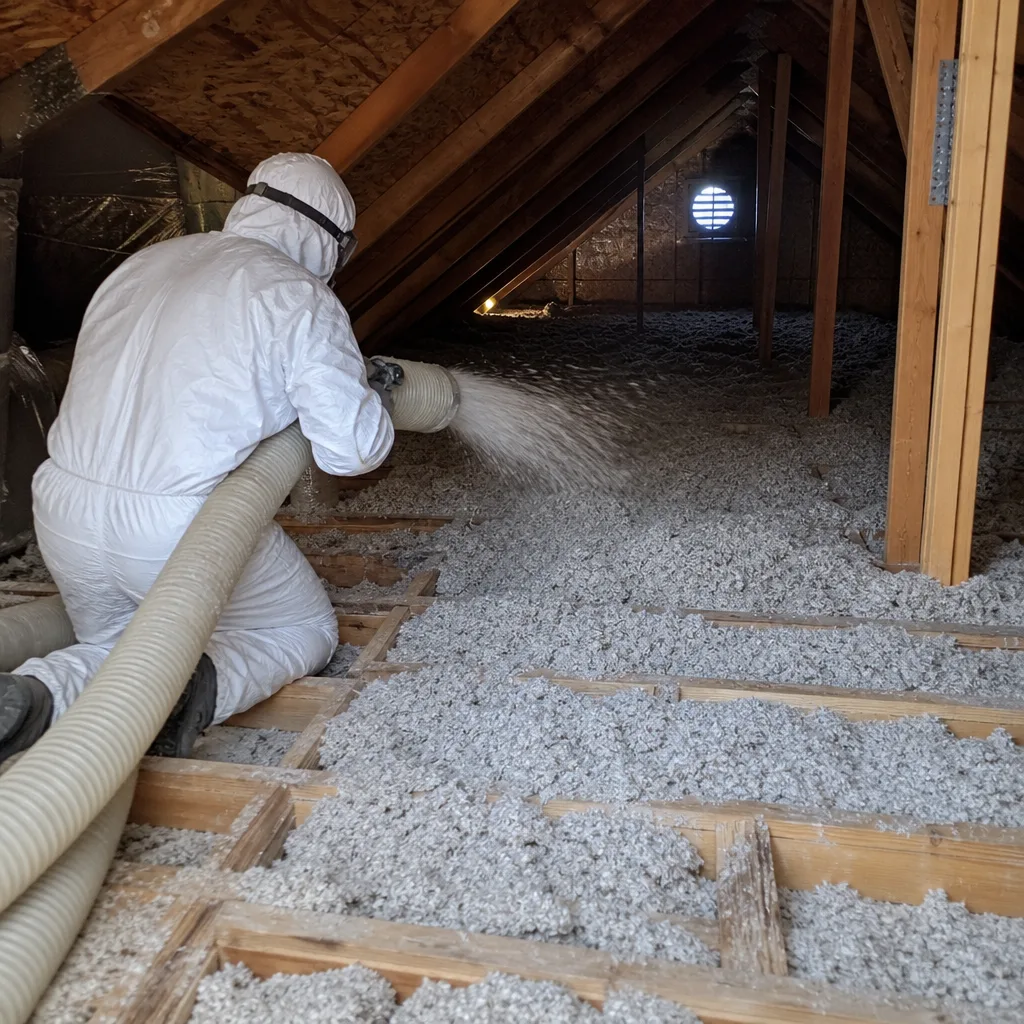
Run this before the first hot week, typically the second or third week of March. The goal is confirming the attic floor can handle six months of downward heat load with minimal leakage.
1. Attic depth spot-check
Take a ruler into the attic and measure insulation depth at three points: the center of the attic, the outer edge near the eaves, and around any mechanical unit. In Las Vegas, you want 14 to 16 inches of blown fiberglass or 10 to 12 inches of cellulose at the center. If any of your three measurements is more than two inches below the others, that’s a fail: it means the material has shifted, been disturbed, or was under-blown at installation. Depth inconsistency matters more than average depth.
2. Duct boot visual inspection
Duct boots are the metal collars where flex duct connects to the register in your ceiling. In Las Vegas, the mastic or tape sealing the boot to the drywall is under constant thermal cycling. Look for cracks, gaps wider than 1/16 inch, or mastic that has turned brittle and pulled away. Any visible light gap between boot and drywall is a fail: that’s a direct path from your hot attic into the conditioned space. This is a major source of energy loss we find on most audit calls in Las Vegas.
3. Exterior penetration caulk condition
Walk the exterior walls and inspect every penetration: hose bibs, dryer vents, A/C line sets, electrical conduit, and any gas line entry. Press a fingernail into the caulk bead at each one. If it indents and stays indented, the caulk is still pliable and passing. If it cracks or flakes, it’s failed and needs replacement before summer. UV degradation in Las Vegas is aggressive; exterior caulk on south and west walls is often the first to go.
The October Protocol: Post-Season Air Seal Verification
This check runs after the cooling season ends, before overnight temperatures drop. It’s about confirming that the air seals you have are still intact after five months of thermal expansion and contraction.
1. Attic hatch weatherstrip compression test
Open the attic hatch, look at the weatherstrip gasket along the frame, and check for a continuous compression groove. The groove should be visible all the way around. Flat spots or gaps mean the hatch isn’t sealing, which in a Las Vegas home means conditioned air leaking straight into the attic whenever the HVAC is running. Pass: continuous groove, no gaps. Fail: broken compression line.
2. Recessed light cover check
Every recessed can light in a ceiling below the attic needs an airtight cover (an IC-rated gasketed insert or a purpose-built box). From the attic side, look at each fixture. If you can see light coming through from below, or if you can feel air moving through the fixture with your hand, there’s no effective seal. This is a fail. In our experience, a typical 1990s Las Vegas build has six to ten of these cans, and most are unsealed or have had the gaskets degrade.
3. Pipe penetration seal inspection
Anywhere a pipe, wire, or duct passes from the attic into the wall or ceiling assembly, there should be a continuous seal. Inspect every penetration visually. Look for caulk or foam that has pulled away, dried out, or cracked. Pass: solid, continuous seal with no visible gap. Fail: any visible gap, or any seal that can be pulled away with light finger pressure.
For a full air-sealing assessment that goes beyond these three checks, the attic insulation service in Las Vegas includes air sealing of top plates, can lights, and penetrations before any insulation is added. Sealed first, then insulated, in that order – we don’t blow material over an unsealed attic floor.
The Materials That Fail Fastest in Las Vegas Sun
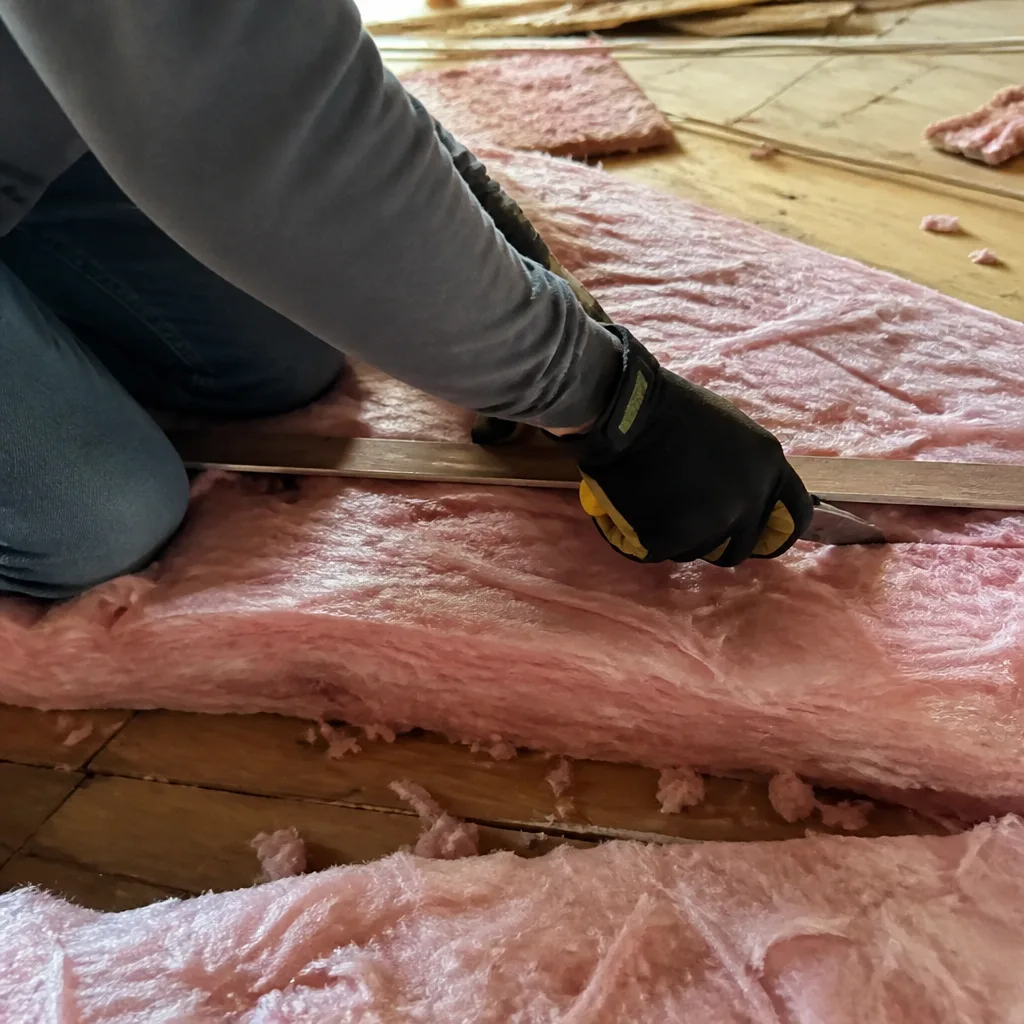
Not all insulation and sealing materials age at the same rate in this climate. Three specific materials need shorter inspection intervals here than in most of the country.
Fiberglass kraft facing. The paper facing on kraft-backed batts has a thin asphalt coating that begins to dry and crack under sustained high attic temperatures. In Las Vegas, we typically see facing on south-facing slopes fail within 8 to 12 years. Once the asphalt coating cracks, the facing loses its vapor-retardant function and the batt is more vulnerable to moisture intrusion from above. Inspect annually; replace facing that has become brittle or torn.
Open-cell spray foam in unvented assemblies. Open-cell foam is sometimes applied to the underside of roof decks in unvented attics. It works well, but in Las Vegas it’s exposed to roof deck temperatures that push past 150°F. Over time, the foam can shrink slightly at the perimeter where it meets the framing. Inspect every 12 months at the perimeter seams and at any penetration; look for gaps wider than 1/8 inch and re-foam as needed.
Low-density backer rod. Backer rod is the foam rope used to back caulk joints around windows and doors. Low-density versions crush and lose resilience faster than closed-cell versions under thermal cycling. If your window perimeter caulk is failing within a couple of years of installation, the backer rod is likely the culprit. Inspect annually and replace with closed-cell backer rod when re-caulking.
For high-heat areas or unvented assemblies where these materials have already failed, the spray foam insulation option in Las Vegas is worth discussing with a technician – closed-cell foam handles the high-temperature exposures better than open-cell in attic-side applications.
Building Your Year-Over-Year Air-Tightness Log
The most useful maintenance tool you can build for your Las Vegas home costs nothing but a notebook and ten minutes a month. It’s an informal air-tightness log that lets you measure whether your envelope is degrading or holding steady, using information you already have.
Here’s the method:
- Record monthly utility bills. Write down the kWh used each month and the total dollar amount. Do this for both summer (cooling) and winter (heating) months.
- Pull cooling degree days (CDD) and heating degree days (HDD). Your utility provider publishes these monthly, or you can pull them from a local weather data service.
- Calculate cost per CDD. Divide the monthly bill by the monthly CDD for that month. That number is your cost to cool your home per degree-day of heat load.
- Compare year-over-year. If your cost per CDD rises by more than about 5% year over year for the same months, your envelope is likely degrading or your HVAC efficiency is dropping. If it’s flat, your envelope is holding.
- Take dated photos of the same three spots. Every March and every October, photograph the same three attic locations – a consistent depth marker, the same duct boot, and the same hatch weatherstrip. Date the photos and keep them in a folder.
- Compare the photos. Year-over-year, you can spot compression, shift, or new gaps before they show up in a utility bill or a temperature complaint.
If you want a formal measurement to anchor that log, a blower-door test – a pressurization reading that shows, in one number, how much air your building envelope is losing – gives you a baseline figure. We publish before-and-after blower-door numbers on applicable jobs so you can see, in CFM50, exactly how much the air-sealing work changed the envelope.
What About the Lower Envelope?
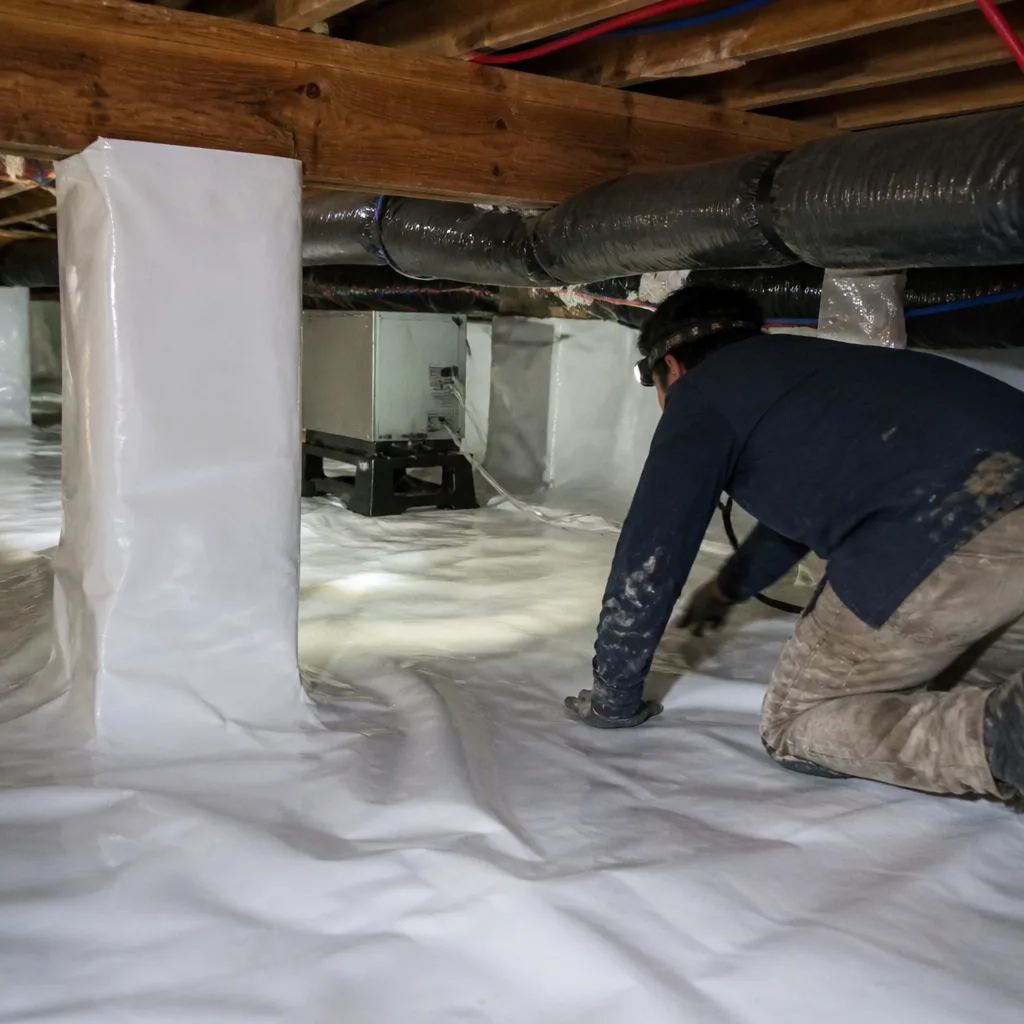
The attic gets most of the attention because that’s where the sun hits, but in Las Vegas homes with a crawl space, the lower envelope matters too. Our soil is often caliche-heavy and stays warmer than you might expect, but the vapor pressure differential between conditioned living space and a vented crawl space still drives moisture movement into the assembly. Seasonal inspection of the vapor barrier for tears, and of any penetration seals at the foundation wall, is worth doing at the same time as your October check. A dedicated crawl space encapsulation and vapor barrier in Las Vegas is the longer-term fix if you find repeated failures.
In southern Nevada, we also see wall assemblies on west-facing walls take more heat gain than the attic in homes built before roughly 2005, when radiant barrier use was less common. Wall cavity insulation inspection is harder to do yourself because it requires removing outlet covers or a section of drywall. If your cooling load seems higher than your neighbors’ with similar square footage, wall insulation is worth checking professionally.
When to Call a Professional
Some seasonal care tasks are safe and genuinely do-it-yourself: measuring attic depth with a ruler, photographing duct boots, pressing caulk with a fingernail, and logging utility bills. Others cross a line. Anything that requires you to walk an attic floor without a stable walking surface, touch spray foam that may be in contact with a powered fixture, or access a wall cavity should go to a trained technician. And if your March or October protocol turns up more than two fails on the same assembly – multiple duct boots failing, widespread hatch gasket failure, or seals that pull away with light finger pressure – the envelope has degraded past what spot fixes can address. That’s a full air-sealing and insulation job, not a maintenance job.
Envelope Insulation Las Vegas offers free estimates in Las Vegas. We also offer a free second opinion on any written estimate you already have – bring us a competing quote and we’ll read it with you, line by line. Calls are answered by a live person 24/7, and every quote is a written price with a written scope and a written warranty before any work starts. Call (833) 362-4859 for a free estimate.
Common Mistakes to Avoid
- Blowing insulation over unsealed penetrations. Adding R-value on top of an unsealed attic floor traps the hot air and money you’re trying to save. Air sealing first, then insulation.
- Doing one annual inspection in spring. Las Vegas has two distinct failure seasons. A March-only check will miss the winter wall-perimeter air leaks entirely, and an October-only check will miss the summer attic radiant load.
- Replacing caulk without replacing failed backer rod. Re-caulking over crushed low-density backer rod will fail again within a year. The backer rod is half the seal.
- Assuming a newer home doesn’t need an audit. Homes built in Las Vegas between 2015 and 2025 often have better insulation than older builds, but recessed can lights, duct boots, and hatch seals still fail on the same timelines.
- Trusting a visual “looks fine.” Failing kraft facing and perimeter foam shrink are often invisible unless you look at the right spot with a camera or a moisture meter. Documented photos beat memory.
- Skipping the log. Without a year-over-year baseline, you can’t tell whether a bill spike is envelope degradation or a change in utility rates. The log is the difference between guessing and knowing.
- Assuming “insulation work” equals “fixed.” A blower-door reading before and after is the only way to know whether the envelope actually improved. If a contractor doesn’t offer to document it, ask why.
Frequently Asked Questions
Twice per year, once in March before cooling season and once in October before the heating season. Las Vegas has two distinct thermal stress patterns, and each one attacks a different part of the envelope. A single annual inspection will miss half the failure modes.
Failed caulk at duct boots in the attic. The mastic or tape sealing the boot to the ceiling drywall is under constant thermal cycling from BOTH the summer radiant load and the overnight winter swing, and it typically fails within 10 to 12 years. It’s also one of the cheapest fixes and the most impactful. Call (833) 362-4859 if you want a technician to check yours.
A blower-door test makes more sense as a before-and-after measurement on a specific project than as an annual ritual. Run one baseline test, do your air-sealing and insulation work, and run a second test after. After that, run one more every few years to catch degradation. The informal utility-bill-per-CDD log fills the gap between formal tests.
Yes for the observation steps: measuring attic depth, photographing duct boots, checking caulk condition, and inspecting your own utility bills. No for the correction steps that involve walking an attic, touching spray foam near powered fixtures, or accessing wall cavities. Those should go to a trained technician.
Yes in emphasis, not always in R-value. Las Vegas homes are dominated by cooling load rather than heating load, which means attic radiant barriers, air sealing of top plates, and duct-sealing matter more than wall cavity R-value. The DOE climate zone for Las Vegas is 3B (hot-dry), and the priority is keeping heat out of the envelope rather than keeping it in.
Most attic air-sealing plus insulation jobs in a Las Vegas home in the 1,500 to 2,500 square foot range run between roughly $2,400 and $5,800, depending on the current attic condition, the number of penetrations to seal, and whether spray foam is required at any assemblies. Replacement of failing kraft facing adds to the range. Call (833) 362-4859 for an exact written price. Estimates are free, and we’ll give you a second opinion on any competing quote.
The Bottom Line
Seasonal insulation care in Las Vegas comes down to two checks per year, done on schedule, with a written record of what each one found. The March protocol protects the attic floor from the radiant load that runs from March to October. The October protocol protects the wall and window perimeter from the overnight air infiltration that runs from November to February. Focus your material inspections on the three fastest-degrading items here: fiberglass kraft facing, open-cell spray foam perimeter seams, and low-density backer rod. Keep dated photos and a utility-per-CDD log so you can tell degradation from rate increases. If either protocol turns up multiple fails, call a professional for a documented scope before the next season starts. The 365-Day Done Right Promise and a Written Price Before Any Work Starts are the baseline Envelope Insulation Las Vegas operates under. Start with a free estimate from our Envelope Insulation Las Vegas home page or call (833) 362-4859.
Written by the team at Envelope Insulation Las Vegas.