
Last updated November 17, 2026
Spray Foam Insulation Warning Signs Every Homeowner Should Know
If your utility bills climbed in the first summer after a spray foam attic installation instead of dropping, the foam didn’t fail – it was probably never thick enough to hit the rated R-value. Spray foam installed at 2 inches where 3.5 inches was specified performs at roughly 57% of the quoted R-value, and no visual inspection will catch it without a probe. In Las Vegas, where a July attic can run 150°F and the AC runs from May into October, that shortfall shows up fast on the power bill. This guide covers the warning signs that separate a real installation problem from a house that’s just doing what houses do, and the energy data, smell patterns, and material behavior you can read without a thermal camera.
Quick Answer
The main warning signs of failing spray foam insulation are: utility bills that rise instead of fall after the install, HVAC runtime that doesn’t drop, room-to-room temperature swings of 5°F or more, visible gaps or delamination at framing, water staining where foam meets wood, pest tunnels bored through the foam, and a persistent chemical smell that outlasts the cure window. Any two of these together are enough reason to request the original install documentation and have the foam thickness probed at accessible locations. A single sign on its own can have a simpler explanation.
Table of Contents
- Performance Warning Signs: What the Energy Data Says
- The Thickness Problem: How to Probe Your Own Foam
- Structural Warning Signs You Can See
- Odor as a Diagnostic Tool
- Pest Tunnels and the Sill Plate Clue
- The Documents That Prove or Disprove a Failure
- Why Las Vegas Installations Fail Differently
- Common Mistakes to Avoid
Performance Warning Signs: What the Energy Data Says
Performance warning signs live in your utility data, not on the surface of the foam. They show up as a trajectory. Pull the last 18 months of bills from your utility’s online portal and lay them out by month. You’re looking for the shape of the curve, not any single bill.
A correctly insulated attic in Las Vegas should flatten your summer-to-winter bill ratio. If your July bill was $310 before the install and $290 after, that’s a modest win. If it was $310 before and $335 after, the foam didn’t deliver. And if the bill climbed two summers in a row while your rates held steady, the problem is compounded by the installation, not just by summer weather.
Here’s what to collect:
- Twelve months of utility bills before the installation and twelve after, matched by month so you compare August to August.
- HVAC runtime from your smart thermostat’s history (Ecobee, Nest, and Honeywell all keep it). Compare hours of cooling per day in the same month, year over year.
- Room-to-room temperature differential. Put a cheap thermometer in your hottest upstairs bedroom and one in the main living area. A spread of 5°F or more on a 110°F Las Vegas afternoon points back to the envelope.
- Duct and register temperatures at the nearest supply and furthest supply. If the far room’s air arrives 8°F warmer than the near room’s, the duct run is losing its cold through an unsealed attic.
None of these numbers prove the foam is at fault. They tell you whether the investment paid off. That’s the first question worth answering. Our Envelope Insulation Las Vegas home page explains how a blower-door reading converts this data into one comparable number, which is the measurement that actually settles the argument.
The Thickness Problem: How to Probe Your Own Foam
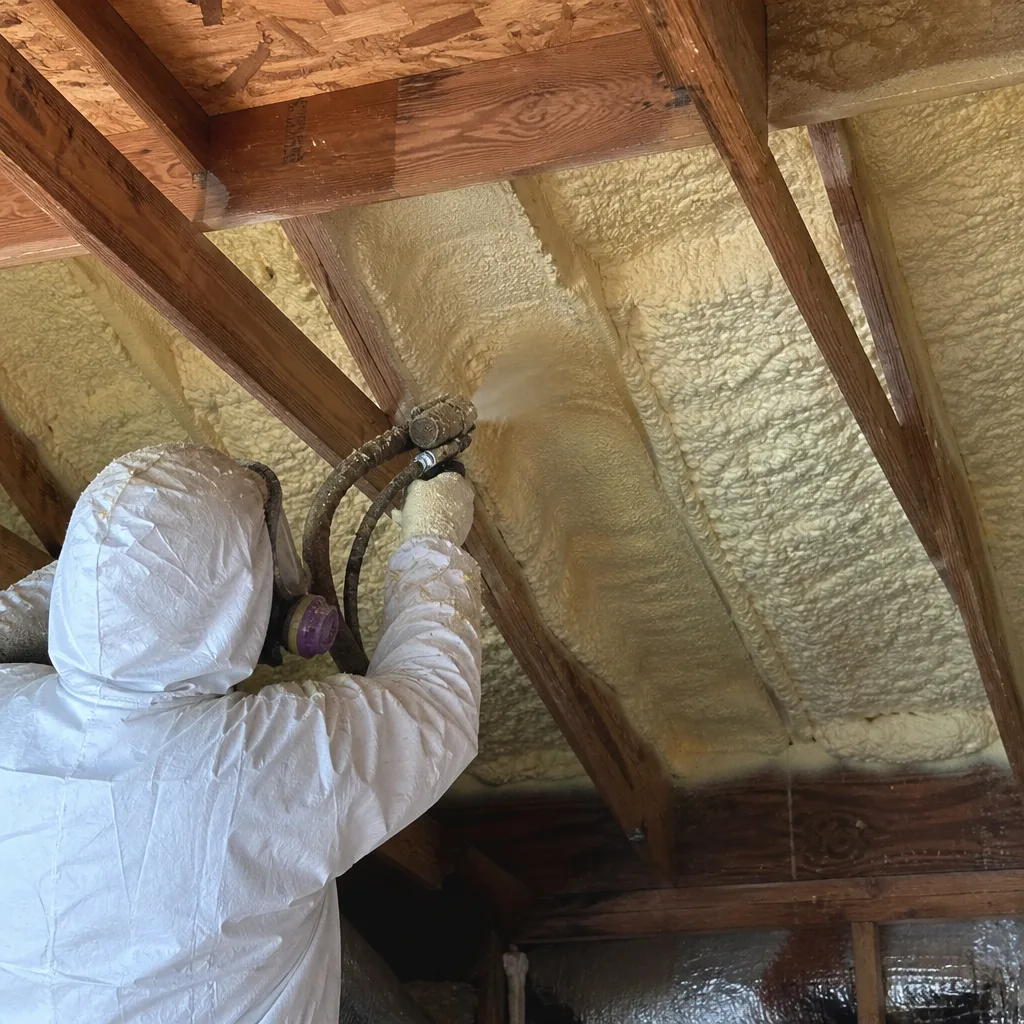
Spray foam’s R-value is a per-inch number. Open-cell foam runs about R-3.7 per inch; closed-cell runs about R-6.5 to R-7 per inch. A 2×6 rafter bay is 5.5 inches deep. If the original spec called for 3.5 inches of closed-cell foam in that bay to hit R-22, and the installer shot 2 inches because they were short on material or rushed the job, the delivered R-value is roughly R-13. That’s a 40% shortfall you’d never spot from the attic hatch.
Probing is simple. It’s a finish nail and a tape measure.
- Find an accessible spot. Anywhere the foam is exposed on a rafter face, rim joist, or knee wall you can reach without stepping off a joist. Attic floors in Las Vegas homes are usually walkable with a sheet of plywood for support.
- Push a finish nail straight into the foam until it stops against the substrate (sheathing, framing, or drywall). Mark the nail at the foam surface.
- Pull it out and measure from the tip to your mark. That’s the installed thickness at that spot. Check five locations across the assembly.
- Compare to the spec. Your original invoice or scope of work should state a target thickness in inches. If it states an R-value only, divide by the foam’s per-inch R-value (from the product data sheet) to get the target thickness.
- Check for taper. Foam that’s 3 inches at the rafter and 1.5 inches in the middle of the bay is the classic sign of a rushed pass. Consistent depth matters as much as average depth.
If your scope of work doesn’t state a thickness, that’s a documentation problem, not just a foam problem. Without a written target, there’s no baseline to measure against, and any contractor can argue the install met spec. Get the spec in writing next time. See how spray foam insulation in Las Vegas is scoped and priced when thickness and R-value are committed to paper first.
Structural Warning Signs You Can See
Structural warning signs are visual. Get a flashlight and spend twenty minutes in the attic. You’re looking for how the foam is behaving in contact with the framing.
- Visible gaps at the perimeter. Foam that stops an inch short of the top plate lets hot attic air bypass the entire assembly. This is the single most common install defect we find on reinspection.
- Delamination. Foam that peels away from the sheathing with light hand pressure didn’t bond. Cold substrate, moisture, or a skipped primer coat will cause it. Delaminated foam is thermal and air-sealing dead weight.
- Shrinkage gaps. A hairline gap between the foam edge and the framing, running the full length of a bay, means the foam pulled as it cured. That gap is now an air leak, which defeats the point.
- Water staining at foam edges. Any brown tide line at the boundary where foam meets wood means moisture has been tracking along the interface. In Las Vegas this is less likely from rain intrusion and more likely from an interior source: a bath fan venting into the attic, a leaking HVAC condensate line, or a roof penetration.
- Crumbling or powdery texture. Foam that turns friable has usually been exposed to a chemical or been installed off-ratio. It’s not salvageable in place.
Any of these paired with rising bills is enough to request a reinspection. Under the Haven Standard Clause 1, the written scope and written warranty you should have received before anyone lifted a tool are the record you’ll use to make the case. If you don’t have them, that’s the first conversation to have with whoever did the work.
Odor as a Diagnostic Tool
Smell isn’t a vague complaint; it’s a timeline question. Three different smells have three different causes, and the calendar is the diagnostic.
The curing smell (hours to about 72 hours). Fresh polyurethane foam off-gasses as it cures. The smell is a faint, sweet, solvent-like odor, and it fades quickly with ventilation. In Las Vegas, where attic temperatures run high, cure is fast. If the smell persists past three days, that’s a signal, not routine.
The off-ratio smell (persistent, stronger in heat). Foam mixed at the wrong A:B ratio doesn’t fully react. It cures with a chemical amine odor, sometimes described as fishy or like stale cat litter, and it gets stronger as attic temperatures rise, not weaker. This is a permanent defect. The foam has to come out. Off-ratio foam can also leave a sticky residue that doesn’t fully harden.
The trapped moisture smell (musty, sets in weeks to months). Closed-cell foam is a vapor barrier. If it went over wet sheathing or wet framing, the moisture has nowhere to go and stays there. You smell it as mustiness at the attic hatch. In Las Vegas the moisture source is almost always a venting or plumbing leak rather than ambient humidity, so track it back to the source before blaming the foam itself.
If you smell a cured odor two months after the installation and it worsens on 105°F days, ask for the product data sheet from the original install and a written scope. Those two documents tell you whether the foam was the specified product and whether it was applied under the conditions its own spec requires.
Pest Tunnels and the Sill Plate Clue
Spray foam is not a pest barrier. That surprises people. Foam is soft enough that some insects and rodents will work through it, especially where the material is thin or the foam has delaminated from the substrate. The clue to look for is a tunnel: a small, smooth channel through the foam face, often with frass (fine sawdust-like droppings) at one end.
Look at your sill plate, the horizontal wood member where the wall framing meets the foundation. Two things happen in that same gap. It’s a thermal bridge, where the wood conducts outdoor heat straight into the wall assembly, and it’s a common pest entry path from the exterior. Any evidence of insect boring at the sill, small round holes, sawdust, or tunnels through the foam, needs both a pest inspector and an insulation contractor to look at it.
Here’s why the order matters. If you spray new foam over an active pest issue, the pests work through the new material within a season. If you treat the pest issue first but skip the thermal bridge, you’ve solved half the problem. In older Las Vegas neighborhoods like the ones off Charleston and in the downtown core, where homes from the 1950s and 60s have penetrations that were never sealed, we regularly find pest paths and air leaks occupying the exact same inch-and-a-half of sill plate. Remediation has to fix both in the same pass or you’re paying twice.
The Documents That Prove or Disprove a Failure
Without a baseline, a suspected failure is a debate. With a baseline, it’s arithmetic. Here’s what to request from the original installer, in writing.
- The original install record. The date, the applicator (company, not an individual’s name), the ambient and substrate temperatures at time of install, and the pass thicknesses reported.
- The product data sheet (PDS) for the actual foam used. The PDS states R-value per inch, cure time, substrate temperature limits, and required substrate dryness. Without it, you can’t convert inches to R and you can’t prove which product is in your attic. Ask for the manufacturer and the specific product name. Our jobs use materials from manufacturers like Johns Manville, Knauf, and Icynene, and the PDS comes with the job file.
- The written scope of work that specifies thickness per assembly, target R-value, and area covered. If the original invoice only says “spray foam attic, R-38,” with no thickness, the contract is ambiguous and enforcement gets hard.
- Before-and-after blower-door readings. The blower-door test is a pressurization measurement. It produces one number, CFM50 (cubic feet per minute at 50 pascals of pressure), that says how much air the building envelope leaks. If the original job didn’t include this record, and most don’t, you have a harder argument to make.
- The warranty in writing. A verbal warranty is worth the paper it isn’t printed on.
If the original installer can’t produce these, that’s its own diagnosis. When we open a reinspection, the written price and written scope come first, and the documented photo record comes back with us from the attic. That’s what Haven Standard Clause 1 means in practice: everything that matters to the job is on paper before any tool comes out. For a broader look at what an insulated attic should contain, see attic insulation in Las Vegas.
Why Las Vegas Installations Fail Differently in This Climate
Las Vegas isn’t Phoenix and it isn’t Sacramento, and its spray foam failures have their own pattern. Three local factors drive most of what we see.
Attic temperatures. A Las Vegas attic under tile roofing can hit 150°F in late July. That’s above the service temperature ceiling on some foam products. Foam installed with too thin a profile in that environment takes more thermal stress per inch than the same product in a cooler market. Thickness that looked borderline on paper in a milder climate doesn’t hold here.
Vented vs. unvented assemblies. Las Vegas has a mix of legacy vented attics and newer unvented designs. Spray foam on the underside of roof decking (the unvented approach) requires the sheathing to stay dry. A home built in a West Las Vegas subdivision in the 2000s may have had its roof penetrations sealed, but the builder could have left condensation sources that foam makes worse. In the east valley neighborhoods with older ranch homes, we regularly see attic assemblies that were vented for 50 years and then partially foamed without a venting plan, which traps moisture.
Cooling season length. The HVAC runs from May into October. Every degree of attic heat that reaches the living space gets paid for across six months, not three. That’s why the performance warning signs show up first on the bill curve in a Las Vegas home. If your July and August bills stepped up after the install, the arithmetic is unforgiving.
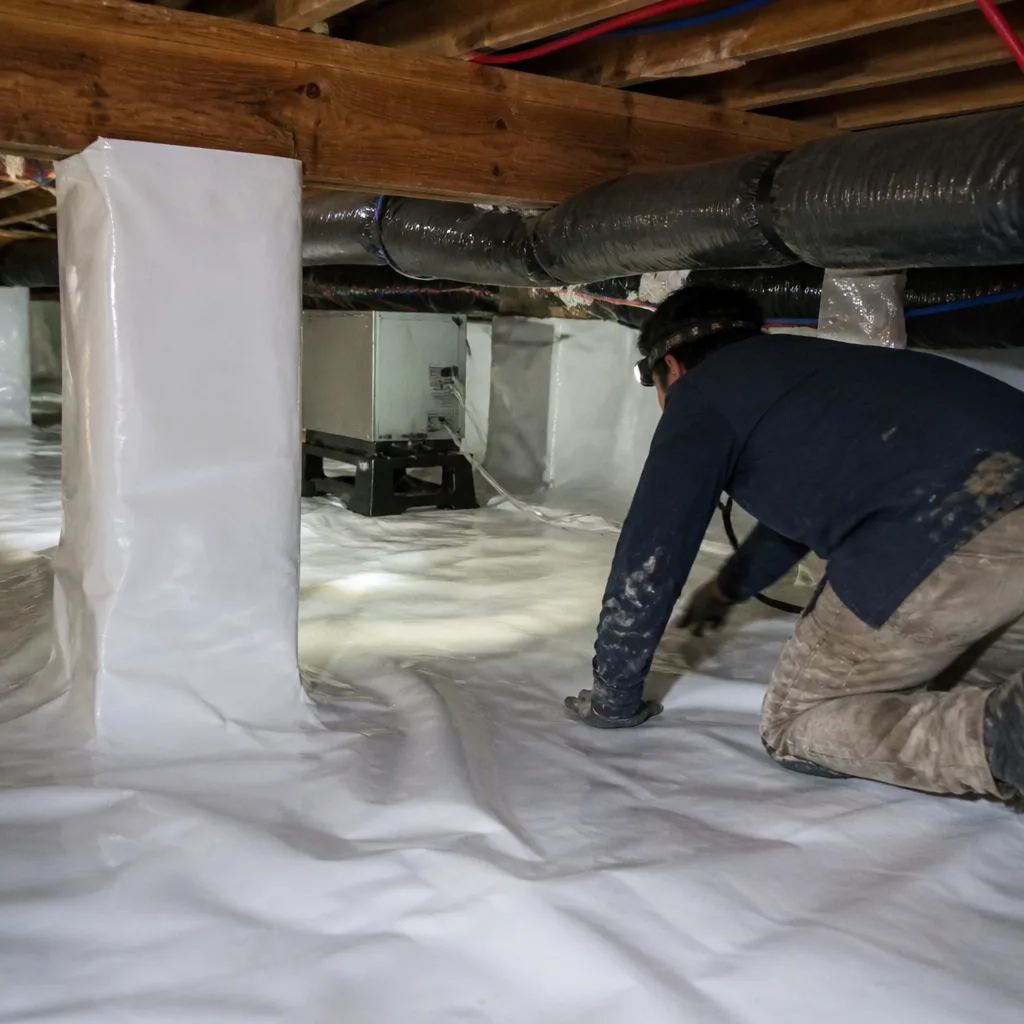
A crawl space encapsulation and vapor barrier matters less in Las Vegas than in humid markets, but the same principle applies: the envelope’s moisture path and its thermal path are the same gaps, and both have to be solved together.
Common Mistakes to Avoid
- Assuming a bigger bill means the foam failed. Rate increases, an aging AC unit, and a hotter-than-average summer can all push the bill. Compare the same month year over year, with rates matching. If your Las Vegas utility did raise rates, the bill can rise on a perfectly good install.
- Skipping the thickness probe. A five-minute finish-nail check at five locations is the single fastest way to find a short-pass install. Most homeowners never do it and argue about bills instead.
- Spraying over an unsealed attic floor. Foam on top plates, can lights, and penetrations comes first, before any insulation goes down. Skipping this step is what we see most often on reinspections around Summerlin and Henderson. Sealed first, then insulated, is the order that works.
- Accepting an invoice without a written thickness spec. A scope that says only “R-38” without per-assembly thickness leaves you nothing to enforce. Insist on both numbers before work begins.
- Treating pest signs as a foam problem alone. Call a pest inspector and an insulation contractor together. The bug entry path and the thermal bridge are the same gap.
- Relying on a visual inspection. The single most common install defect, a short pass, cannot be seen. You have to probe.
- Reblowing loose insulation over a failed foam job. Adding material without a blower-door reading before and after means you won’t know if the fix worked. The reading is the proof.
When to Call a Professional
Call a professional when you find two or more warning signs together, when the odor persists past the cure window, when you see pest tunnels at the sill plate, or when you don’t have the original scope of work that specifies thickness. Any one of those is a documented problem. Call when the attic itself is the question and you’re not comfortable walking it: roof sheathing at height, exposed bath fan penetrations, and anything requiring crawling into a knee wall are work for trained technicians. Envelope Insulation Las Vegas offers free estimates in Las Vegas – call (833) 362-4859. We arrive with a written price, and on applicable jobs we publish before-and-after blower-door readings so you have one number that shows whether the fix moved the needle.
Frequently Asked Questions
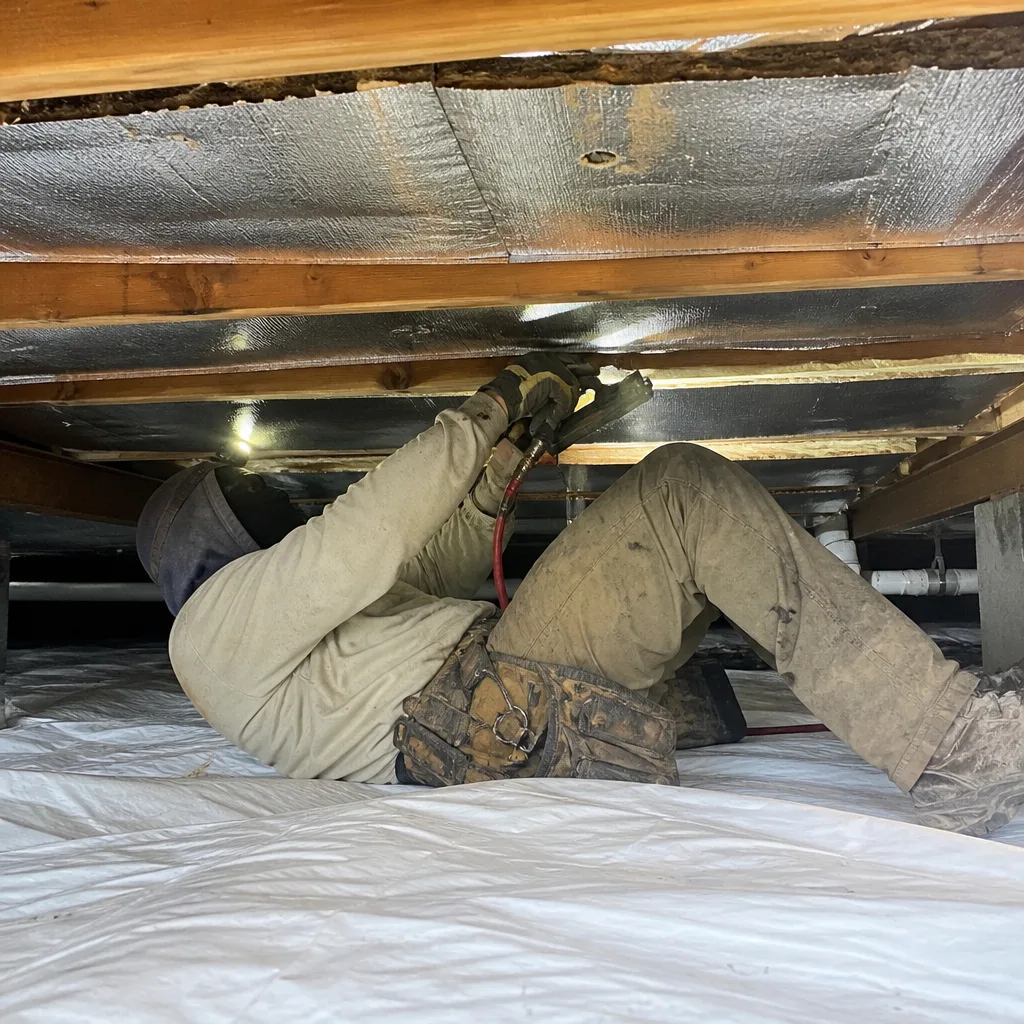
Probe the installed thickness with a finish nail at five accessible locations and compare to the thickness spec on your original scope of work. If the probe reads short of spec at any location, or if the foam is delaminated from the framing, the install is defective regardless of what the bill says. In Las Vegas, add a utility-bill comparison and an HVAC runtime history, and you have a documented case in about an hour.
Most commonly, the foam was installed at a thinner profile than specified, so the delivered R-value is lower than what was quoted. A 2-inch pass where 3.5 inches was spec’d delivers roughly 57% of the promised R-value. A second common cause in Las Vegas is foam applied over an unsealed attic floor, so the air leaks go unfixed. Call (833) 362-4859 for an exact quote on a reinspection – estimates are free.
A normal curing smell fades within about 72 hours, faster in a Las Vegas attic where heat accelerates cure. A persistent amine or fishy odor that gets stronger in heat is an off-ratio install, and the foam has to be removed. A musty smell that sets in weeks after the install points to moisture trapped behind the foam.
Yes, if you see tunnels, frass, or small round holes at the sill plate. Foam is not a pest barrier, especially when it’s thin or delaminated. Bring a pest inspector and an insulation contractor in together, because the entry path and the thermal bridge are the same gap. If you fix one and not the other, you’ll be back at the same problem next season.
It depends on the failure. A short pass where the foam is bonded and off-ratio is not in play can sometimes be topped off, which is far cheaper. Delaminated, off-ratio, or pest-tunneled foam has to be removed and replaced. In Las Vegas, a removal and re-install for a typical 1,500 sq ft attic runs higher than the original job because the old material comes out first. Get a written price on both paths before choosing.
Ask for four things: the install record with date and reported pass thicknesses, the product data sheet for the actual foam used with its R-value per inch, the written scope of work that specifies thickness, and the before-and-after blower-door readings. If the company can’t produce them, that tells you a lot about how much of the job was documented. Call (833) 362-4859 for a free second opinion on any written estimate you already have.
The Bottom Line
Failing spray foam announces itself, but in data and timelines more than in visible defects. Watch the utility-bill curve month over month and the HVAC runtime; probe the thickness with a finish nail; time the odor against the cure window; and look at the sill plate for pest tunnels. Any two of those signs together justify requesting the original install documentation, product data sheet, thickness spec, and blower-door readings. Without that file you can’t enforce anything. With it, the answer is arithmetic. In Las Vegas, where a poorly insulated attic costs you across a six-month cooling season, that arithmetic has real money attached. To see how spray foam insulation in Las Vegas is scoped with committed thickness and published before-and-after blower-door numbers, call (833) 362-4859 for a free estimate.
Written by the team at Envelope Insulation Las Vegas.