
Last updated November 17, 2026
Blown-In Insulation Warning Signs Every Homeowner Should Know
A homeowner in Las Vegas with 14 inches of cellulose in the attic called us about high summer bills. From the hatch, the insulation looked fine. A thermal camera at noon told a different story: three parallel hot stripes across the ceiling, each one marking where insulation had bridged over settling and left the top plates of every interior wall exposed. The depth was there. The performance wasn’t. That’s the pattern we see most in Las Vegas: the direct evidence (the fluffy stuff) hides the problem, and the indirect evidence (bills, blower-door readings, thermal scans) shows it. This guide teaches you to read the indirect signs before the direct ones get expensive.
Quick Answer
Blown-in insulation warning signs show up in three places long before you notice anything wrong in the attic: a 15 – 20% rise in cooling load with no change in thermostat settings, dark filtration streaks across the insulation surface (air moving through it rather than around it), and a blower-door reading that climbed by more than 2.0 ACH50 from your baseline. Visible moisture staining, insulation depth below 6 inches in any zone, or a sustained jump in your summer kWh with the same indoor setpoint all warrant professional assessment.
Table of Contents
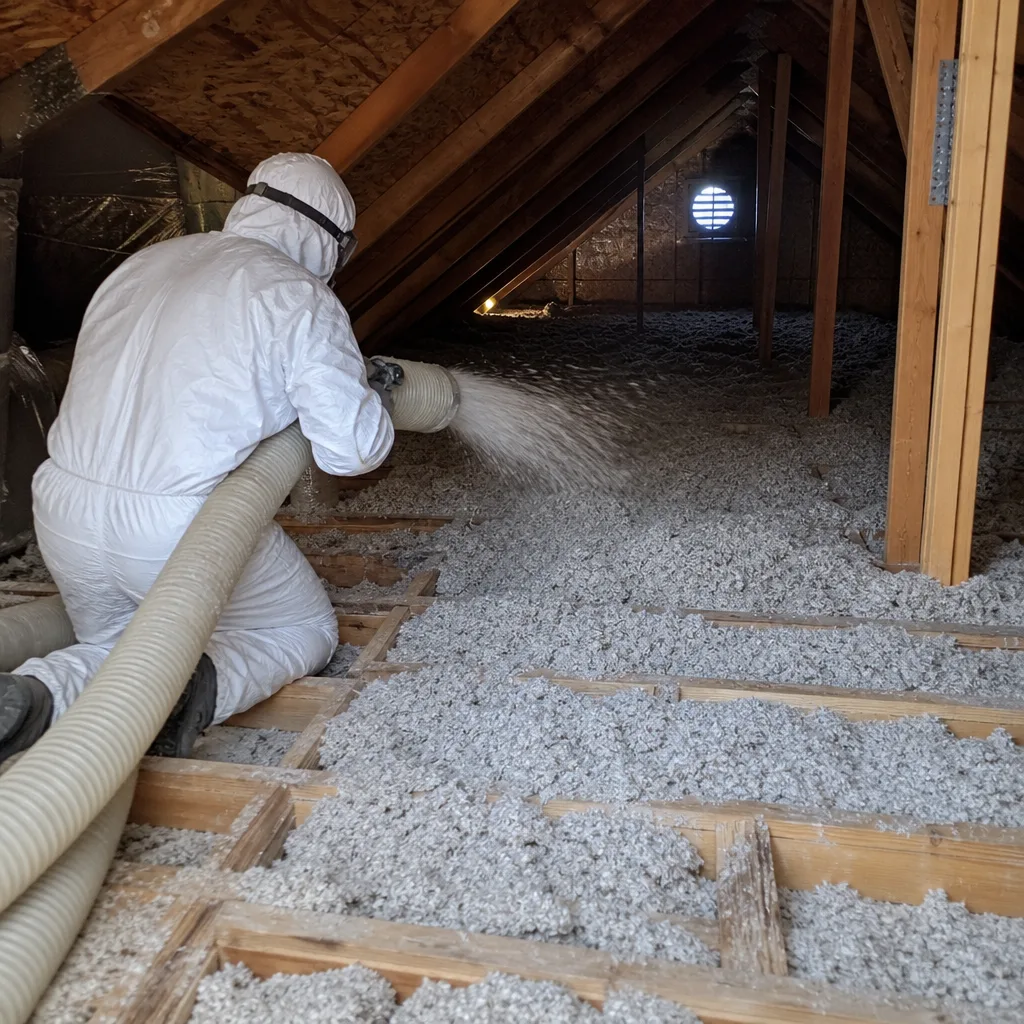
- The Utility-Bill Pattern That Signals Insulation Degradation
- Attic Warning Signs: Bypass Failure, Not Just Depth Loss
- What a Blower-Door Number Change Actually Means
- Animal Intrusion Signs Specific to Las Vegas
- Three Scenarios That Require Immediate Professional Assessment
- Reading Thermal Scans and What Your Ceiling Really Shows
- Repair or Replace? Why the Answer Starts at the Air-Seal Stage
- What Good Documentation Looks Like Before and After
The Utility-Bill Pattern That Signals Insulation Degradation
The clearest early warning isn’t in the attic at all. It’s the gap between your setpoint and the outdoor temperature relative to what you’re buying from the utility. A well-sealed, properly insulated Las Vegas home should track predictably: for every degree of difference between your 78°F setpoint and the outside air, the cooling system draws a roughly linear amount of energy. When that relationship bends, insulation or air sealing has degraded.
Specifically, watch for a 15 – 20% increase in cooling load year-over-year with the same thermostat schedule and the same weather patterns. That range is the zone where the problem is still cheap to fix. If you set the thermostat to 78°F, the daily high is 108°F, and your July kWh consumption is 18% higher than the July before without a rate increase, the envelope is telling you something. Most homeowners blame the air conditioner and call an HVAC tech first. The HVAC tech checks refrigerant and finds nothing wrong.
A few patterns to look for in your bill history:
- Flat season, rising cost: kWh up 15 – 20% in a mild month like May or October, where the HVAC runs less than peak. That’s the envelope, not the system.
- Room-specific hot spots: If the primary bedroom or a west-facing room runs 4 – 6°F hotter than the rest of the house at 4 p.m., that’s a localized insulation or sealing failure, not a duct problem.
- Cool-down lag: A system that used to bring the house from 85°F to 78°F in 25 minutes and now takes 45 minutes with the same outdoor temperature. That’s a loss of envelope performance.
- Second-floor ceiling heat: In two-story Las Vegas homes with attic over the second floor, a warm ceiling in summer usually means the cellulose has settled away from the top plate or was never installed at spec.
The upstream cause is almost always a failure of air sealing, not just a thin layer of insulation. Blown-in material loses effectiveness when conditioned air moves through it, and in Las Vegas that movement is driven by the extreme attic-to-living-space temperature difference (often 50 – 60°F between a 78°F ceiling and a 140°F attic in July). Insulation over an unsealed top plate doesn’t stop that leak; it just filters the air and stains. That’s why we only blow insulation after the air sealing is done, and why our whole Envelope Insulation Las Vegas home approach starts with the sealing stage, not the fluffy stage.
Attic Warning Signs: Bypass Failure, Not Just Depth Loss
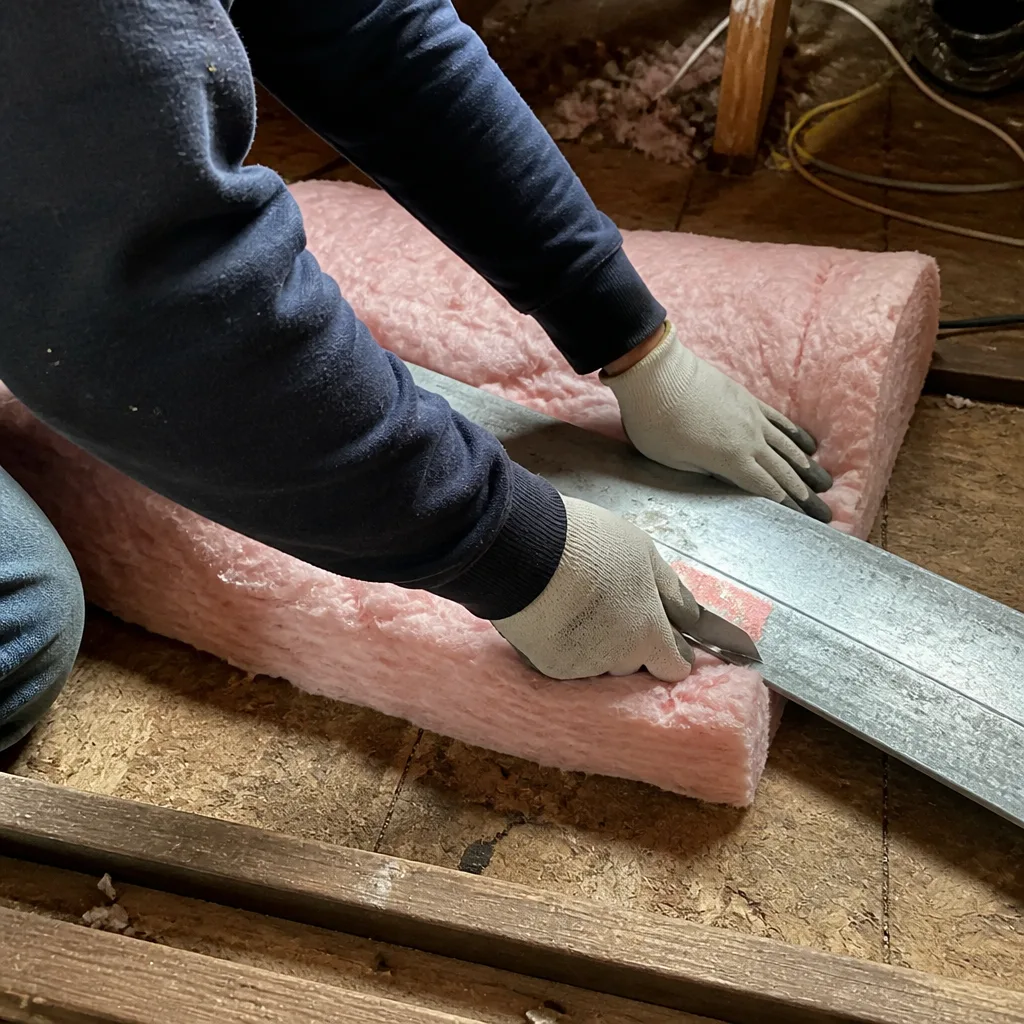
Depth is the number most homeowners check and the one that matters least on its own. A 14-inch cellulose depth means nothing if the material is bridged over settling, if it’s been walked on, or if it’s been compressed by a contractor’s knee boards that never got fluffed back. What you’re looking for in the attic is where air is moving.
Dark streaks on the insulation surface are the single most reliable visual signal. Those streaks are filtration staining, and they mean air is moving through the material rather than around it. Occasionally that’s benign (a fan blowing), but more often it’s a bypass: a top plate, a can light, a plumbing penetration, or a chimney chase that was never sealed and now channels attic-to-living-space air through the insulation. In Las Vegas, we see this most in homes built between 2005 and 2020 where the original crew blew insulation over a top plate that had never been caulked or foamed.
Other signs worth looking at:
- Settled insulation in strips over wall lines: parallel valleys of low material directly above interior wall locations are the classic footprint of a bridged top plate.
- Batt-style compression: patches where the blown material is denser and flatter than surrounding areas, usually from a knee board or a footpath.
- Visible gaps at the perimeter: material pulled back from the eaves, exposing the top plate and the soffit-to-wall junction.
- Dusty or greyish surface with a compressed crust: fine dust settlement on older material is normal, but a dense, grey crust suggests years of bypass filtration.
- Can light clearance rings: if you can see the ring of the recessed housing through the material, that penetration was never properly sealed and protected.
When the cause is bypass failure rather than depth loss, adding more insulation alone is the wrong fix. It will look better from the hatch and perform no better on the bill. The order matters: seal first, then insulate. If you want a deeper read on the fix itself, see our guide to Attic Insulation in Las Vegas.
What a Blower-Door Number Change Actually Means
A blower-door test is a pressurization reading that shows, in one number, how much air your building envelope is losing. It’s measured in CFM50 (cubic feet per minute at 50 pascals of pressure) or ACH50 (air changes per hour at that pressure). It converts the vague feeling of “the house feels leaky” into a figure that can be compared across years.
If your home tested at 4.0 ACH50 at some previous point and now tests at 6.5, that’s a quantified degradation, not an estimate. Any jump of more than 2.0 ACH50 from baseline is a signal that the air sealing has failed in a meaningful area. It’s usually not the insulation itself; it’s the sealant that held the top plates, can lights, and penetrations closed, now aged or cracked. The insulation is just riding on top of a broken seal.
Why this matters more than the bill: bills are confounded by rate changes, weather, and household behavior. A blower-door number is a single physical measurement of the same building, taken the same way, against the same standard. In Las Vegas homes, the most common cause of an ACH50 jump between testing cycles is the failure of construction adhesive or sealant that was applied in 90°F-plus attic conditions during the original build and then cooked at 140°F every summer since.
Ask any contractor doing envelope work for before-and-after blower-door numbers. Not a verbal claim, the actual readings. We publish them on every applicable job, because if a crew can’t produce the number, you don’t have evidence, you have a promise. If a contractor hasn’t published the before-and-after, ask what they’re basing their performance claim on. If you’re quoting out envelope work on the strength of energy claims, our offer of a free second opinion on any written estimate is worth using before you commit.
Animal Intrusion Signs Specific to Las Vegas
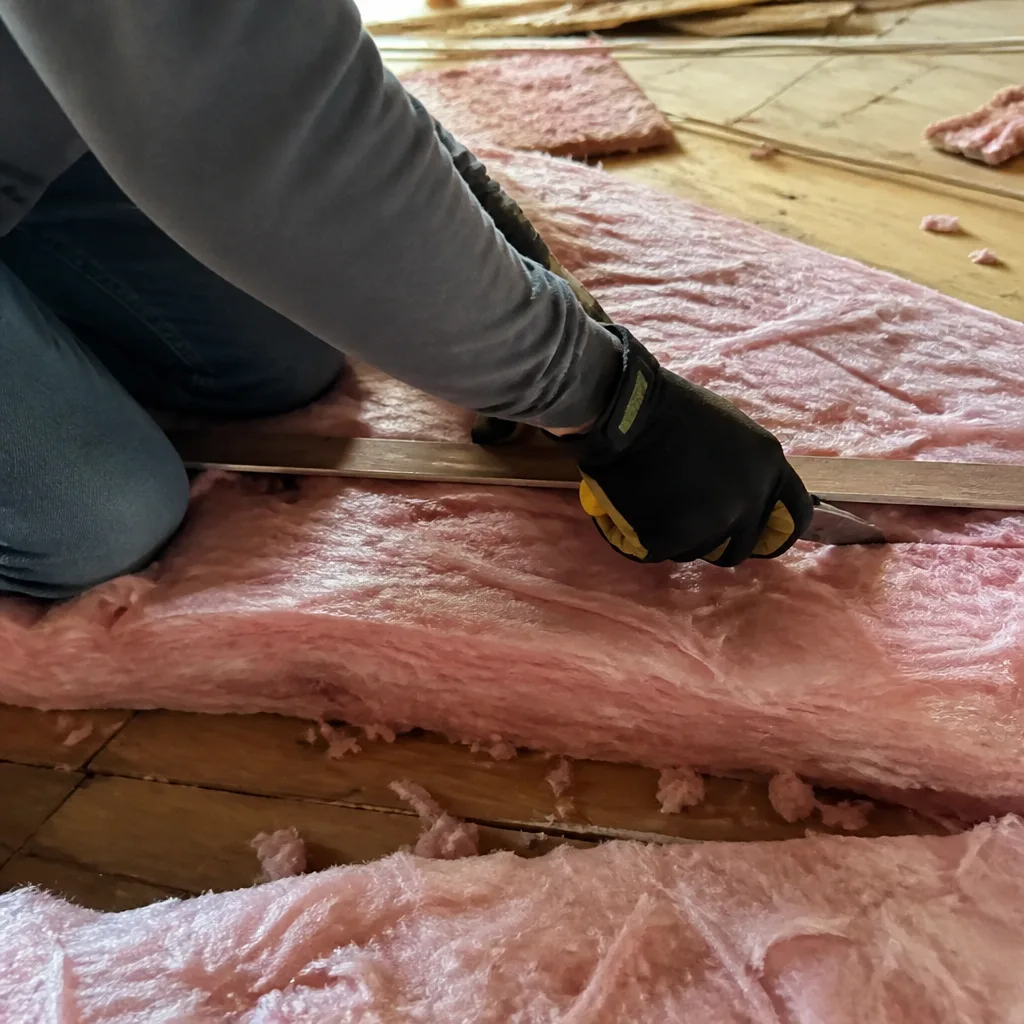
Las Vegas has two insulation pests that damage blown-in more than any other single cause: pack rats (a.k.a. desert woodrats, and you’ll also hear them called trade rats) and feral pigeons. Neither treats the material gently, and neither problem stays in the attic.
Pack rats love the loose, dry texture of blown-in material. They tunnel through it, nest in the compressed channels, leave droppings, and pull insulation aside to make room. The visible signs are disturbed material with small tunnels or runways along the top of the batts, gnawed edges on the craft paper or vapor barriers, and a scattered grain-like trail of droppings near the perimeter of the attic. Pack rat tunnels near the top plates can defeat air sealing in the exact place where the seal matters most.
Pigeons are the second issue. They nest on flat and low-pitch roofs common across Las Vegas, get under the roof tile at the ridge or eave, and work their way into the attic from above. Their droppings are corrosive and carry a disease risk that most homeowners don’t think about until an inspector flags it. The insulation problem is downstream: droppings saturate the material, and the destroyed sections need removal and replacement, not just fluffing.
The thermal and IAQ consequences are easy to misread. A rodent-disturbed attic often presents as an HVAC failure first: uneven room temperatures, musty air, a system that runs long in one zone and short in another. Homeowners call an HVAC company; the HVAC company finds nothing wrong; the actual issue is a breached envelope and contaminated insulation. If you suspect animal intrusion, the sequence is removal and cleaning first, rodent proofing of the entry points second, air sealing third, and fresh insulation last. Our Spray Foam Insulation in Las Vegas page explains why spray foam is often the right final step after a rat intrusion, because it can’t be tunneled through the way loose fill can.
Three Scenarios That Require Immediate Professional Assessment
Most insulation concerns can be monitored for a season. Three cannot. These are the situations where the next six months of monitoring costs more than the repair would have, and where the damage compounds.
- Visible moisture staining. Any rusty, brown, or dark ring on the insulation surface, any wet material, any water staining on the rafters or sheathing above the insulation. In Las Vegas, the usual culprit is a roof leak from a monsoon storm or a failed flashing detail, but in summer the staining can also come from condensate dripping off the AC air handler or from plumbing in the attic. Moisture plus blown-in insulation equals mold risk and permanently degraded R-value. Do not wait to “see if it dries out.”
- Insulation depth below 6 inches in any zone. Current guidance for Las Vegas (climate zone 2 and parts of 3) calls for R-38 to R-49, and 6 inches of any common blown-in material is well below that. A 6-inch average can hide an 8-inch section in the middle and a 3-inch strip over a wall line. Below 6 inches anywhere, the material isn’t doing the job and the zone has to be brought to spec.
- ACH50 increase of more than 2.0 from baseline. If you have a prior blower-door reading and the current one has jumped by more than 2.0, the air sealing has failed in a way that insulation cannot compensate for. This is the scenario where the fix is diagnostic first, then sealing, then a fresh insulation layer, not a blow-over.
In our experience, about a third of the homes we assess in Las Vegas that call about high bills have at least one of these three conditions. The most common is the moisture staining, usually trace and fixable, but occasionally the sign of a monsoon-driven roof intrusion that the homeowner never traced back to the source.
Reading Thermal Scans and What Your Ceiling Really Shows
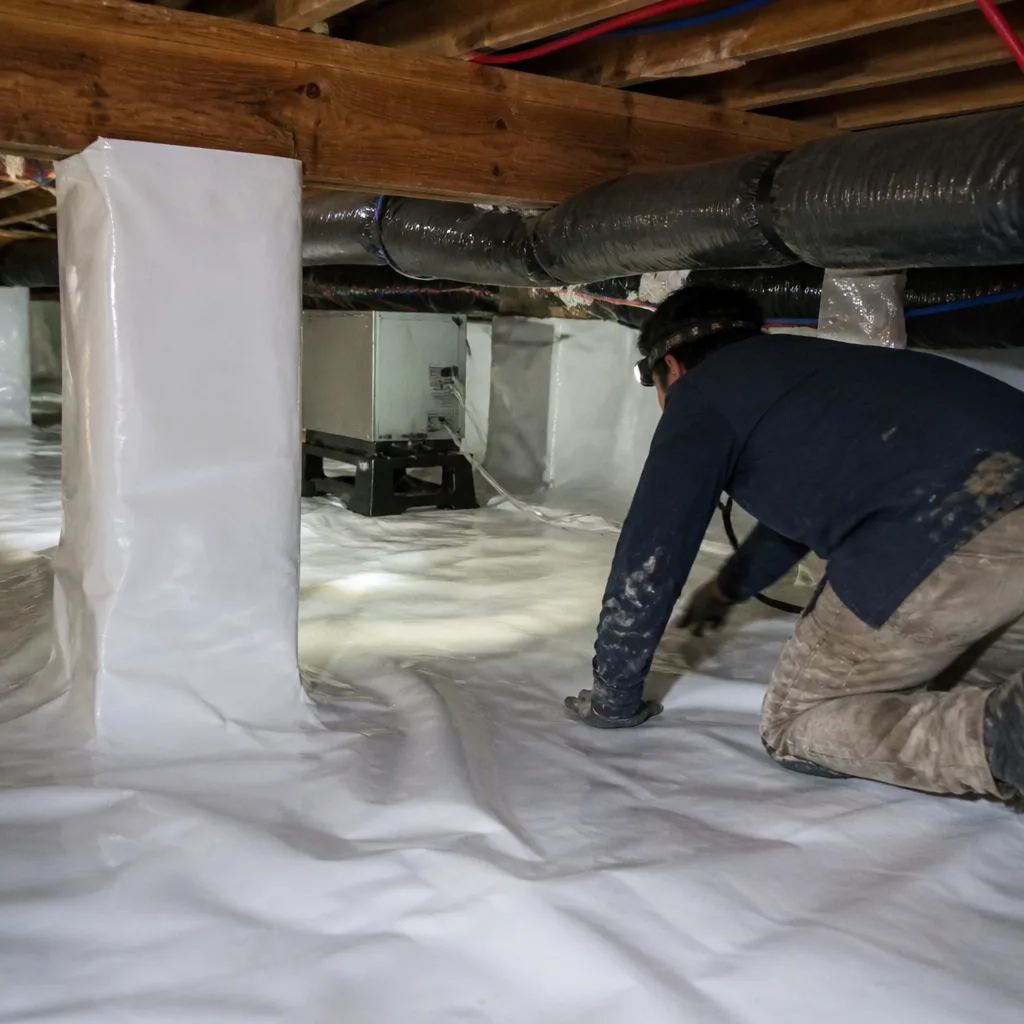
A thermal camera is the fastest way to see envelope failure that the surface of the insulation hides. Taken at the right time of day (mid-morning or mid-afternoon, when the attic is at peak temperature and the indoor/outdoor differential is largest), it shows the ceiling as a heat map. Insulation that is performing reads cool and even. Insulation that has failed reads hot in patterns.
The patterns tell you what kind of failure you have:
- Parallel hot stripes across the ceiling: bridged top plates. The insulation settled over the wall line, or was never dense enough over the plate in the first place. This is the pattern from the opening story, and it’s the most common thermal signature of a sealing failure in Las Vegas production-built homes.
- Localized hot spots over can lights and penetrations: unsealed recessed housings and plumbing stacks. Same cause as the stripes, smaller footprint.
- Broad hot zones on the second story: generalized depth loss or a pervasive bypass, not a single failure. This pattern calls for a full attic assessment.
- Cool banding near the ridge: ridge vent active and air moving, sometimes a signal that the exhaust path is working and the insulation isn’t the problem.
Thermal scans are a diagnostic, not a substitute for the blower door. The scan shows where; the blower door shows how much. If you’re going to spend money on a scan, get the blower-door baseline at the same visit or you’re missing half the picture. For the deep version of this work in a very humid envelope-adjacent space, see Crawl Space Encapsulation & Vapor Barrier in Las Vegas.
Repair or Replace? Why the Answer Starts at the Air-Seal Stage
The repair-or-replace question is the wrong first question for most blown-in insulation problems. The right first question is whether the air-sealing layer beneath the insulation is intact. If it is, the fix is often top-up and re-fluff, which runs modest. If it isn’t, adding insulation is throwing money at a known leak, and the repair-or-replace decision is downstream.
When the air seal has failed and there’s contamination (rodent damage, moisture staining, old dust and debris), removal and replacement is usually the correct path. When the air seal has failed but the material is clean, we reseal and then reinstall, which preserves the existing material and cuts cost. Any contractor who skips the air-seal diagnosis and goes straight to “blow in more” is skipping the part that drives performance.
A short decision list for homeowners who already have a quote on the table:
- Has the quote included a blower-door baseline and a published before-and-after target? If not, ask why.
- Does the written scope name the air-sealing work (top plates, can lights, penetrations) as a separate line item, or is it buried in the insulation price?
- Is existing insulation condition (moisture, rodent, dust) assessed and documented, or assumed?
- Is the warranty written and delivered before work starts? Under Haven Standard Clause 1, a written price, written scope, and written warranty come before anyone lifts a tool.
Bring a competing estimate and we will read it with you. That’s the free second opinion we offer on any written estimate, and in Las Vegas we do it often, because a lot of quotes in this market are written without a blower-door reference point.
What Good Documentation Looks Like Before and After
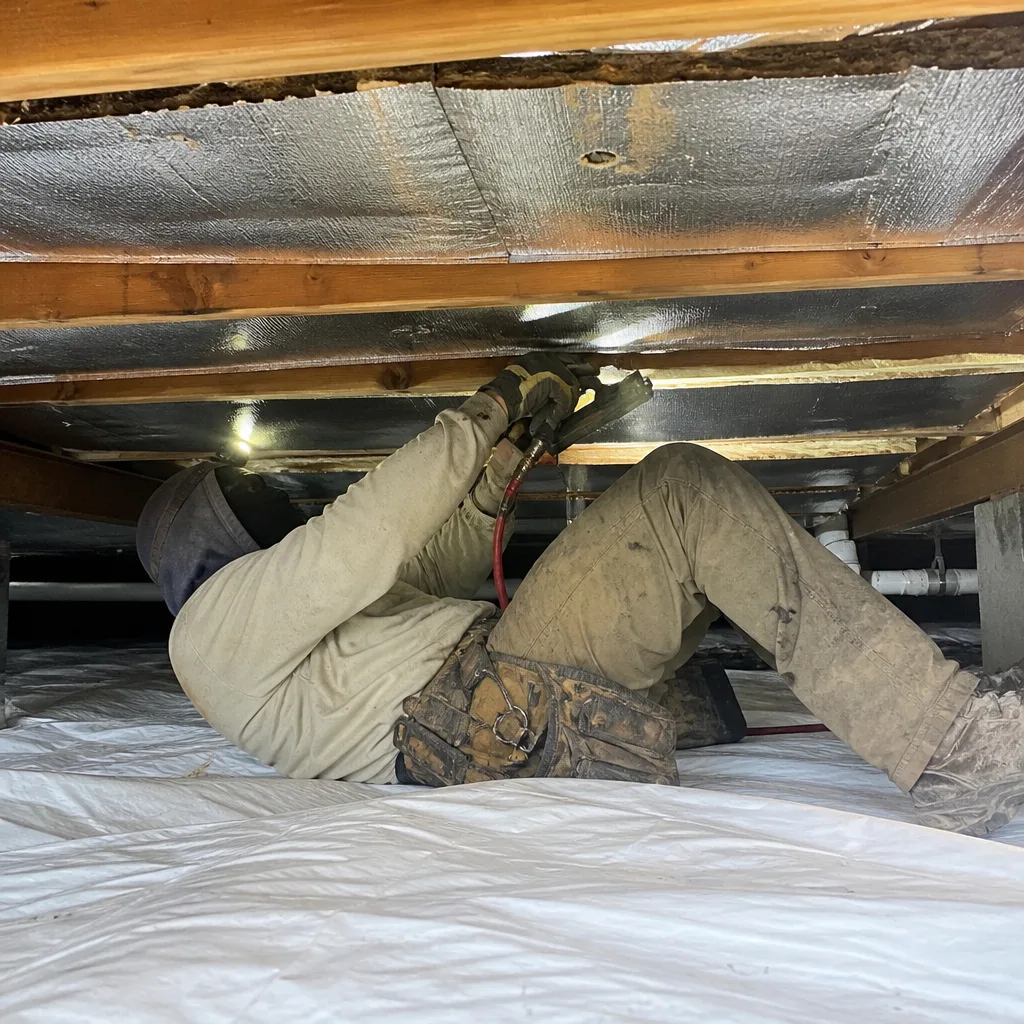
The difference between a professional insulation job and a hopeful one is the documentation trail. On something as invisible as an envelope, evidence is what you actually paid for. Here’s what good documentation includes.
- A written price and scope before any work starts. Line items for air sealing, insulation, removal (if any), and any HVAC-adjacent work, with materials and R-value targets named.
- A blower-door baseline at the diagnostic visit and a target figure for after the work. In a Las Vegas home we typically see the largest improvement when the sealing stage does most of the work.
- A documented photo record on every visit: before, during, and after, with the sealing stages clearly visible. Not available on request. Included.
- A published before-and-after blower-door reading at closeout, so you can verify the performance change you paid for against the number, not the sales description.
- A written 365-Day Done Right Promise covering the completed work, in writing, on the day of the job.
In our experience, the envelope problem most often missed in a Las Vegas assessment is the one inside the wall cavity or the ceiling plane, not the one on the surface. Materials from Owens Corning, GreenFiber, and Icynene all perform as designed when the seal beneath them is intact. When the seal has failed, no brand saves the job. The number is the evidence. If a contractor can’t point to the before-and-after, ask what the claim is based on. Our team publishes it job by job because we don’t have a better sales line than the reading.
Common Mistakes to Avoid
- Adding insulation over an unsealed attic floor. This is the most expensive version of the same mistake. The new insulation looks thick and reads at spec on a tape measure, but it filters bypass air the same way the old material did. Seal first, insulate second.
- Blaming the HVAC before testing the envelope. In Las Vegas, high cooling bills and cool-down lag send most homeowners to the HVAC company first. A blower-door baseline is a cheaper first move than a refrigerant recharge when the real problem is a failed top-plate seal.
- Ignoring depth variation. A 12-inch average across the attic can hide a 4-inch strip over the wall line where it actually matters. Measure at the perimeter and over the wall lines, not in the middle.
- Treating pack rat damage as a pest-only problem. Trapping the rat is step one; the disturbed insulation, droppings, and defeated air seal are steps two through four. Skip them and the thermal problem comes right back.
- Assuming brand-new insulation is fine. A 2018 build in a Las Vegas subdivision has seven or more summers of 140°F attic cycles on it. Brand new doesn’t mean sealed right, and the sealing is the part that ages fastest.
- Monitoring when the signs say act. Moisture staining, depth below 6 inches, or a 2.0+ ACH50 jump are not monitoring scenarios. The cost of waiting usually exceeds the cost of the fix.
- Accepting a quote with no blower-door reference. A quote without a baseline and a target can’t be verified after the work. Ask for the number or the claim can’t be checked.
When to Call a Professional
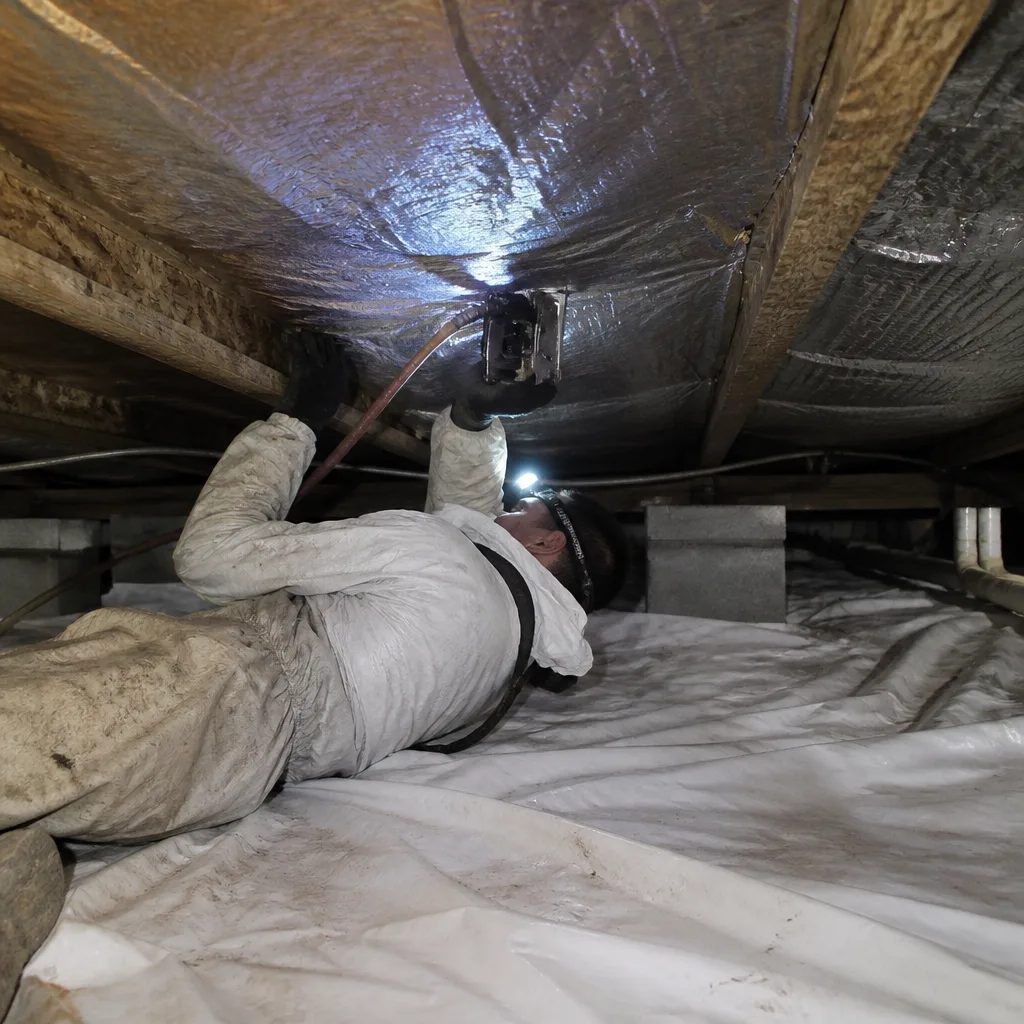
Call a professional when you see visible moisture staining on the insulation, when any zone measures under 6 inches of depth, or when a blower-door reading has climbed more than 2.0 ACH50 from baseline. Call if pack rats or pigeons have visibly disturbed the attic or left droppings. Call if the utility bill has moved 15 – 20% in the same weather with the same settings, and no HVAC diagnosis has found a cause. None of these are weekend projects. Blown-in insulation work involves confined attic space, high temperatures, electrical penetrations, and the sealing details that determine whether the job performs; a trained technician with proper PPE and a blower door is the right call. Envelope Insulation Las Vegas offers free estimates in Las Vegas. Call (833) 362-4859. Every written price comes before any work starts, and every job closes with a documented photo record.
Frequently Asked Questions
The three most reliable early signs are a 15 – 20% rise in cooling load at the same setpoint, dark filtration streaks on the insulation surface, and a blower-door reading that has climbed by more than 2.0 ACH50 from baseline. Filtration streaks mean air is moving through the material instead of around it, and the bill increase confirms the leak is costing money. Call (833) 362-4859 for an assessment with a baseline reading.
Depth loss shows up as a low, even surface across the attic, while bypass failure shows up as streaks, stripes, or localized hot spots over wall lines and penetrations. A tape measure in the middle of the attic tells you depth; a thermal scan and blower-door test tell you bypass. Most Las Vegas homes we assess have some of both, and the fix order starts with sealing before any new insulation goes down. Call us at (833) 362-4859 and we’ll read both numbers with you.
Yes. Pack rats tunnel through blown-in material and compress it along runways, which defeats its R-value and breaks the air seal at the same time. The damage looks small from above, but a thermal scan sees it as a warm channel. If you find droppings or gnawed vapor barrier, plan for removal, cleaning, and rodent proofing before any new material goes back in. Free estimates are available; call (833) 362-4859.
Repair is usually cheaper when the material is clean and the air seal can be restored; replacement is usually necessary when there’s moisture staining, rodent contamination, or material that can’t be re-fluffed to spec. The deciding factor isn’t the insulation brand or depth alone, it’s the condition of the seal beneath. Bring us any written estimate for a free second opinion, or call (833) 362-4859.
A baseline blower-door test at purchase or at any insulation job is the floor; a follow-up every five to seven years is a reasonable cadence for homes in the Las Vegas climate, because sealant that was applied in a 100°F attic ages faster here than in milder climates. You don’t need to test every year; you do need the baseline to compare against. Call (833) 362-4859 to get one scheduled.
A jump from 4.0 to 6.5 ACH50 means the envelope is losing about 62% more air at 50 pascals than it did at baseline, and the air-sealing layer has failed in a meaningful way. This is a quantified degradation, not an estimate, and insulation alone won’t fix it. The repair is a diagnostic visit, then sealing at the top plates, can lights, and penetrations, then a fresh insulation layer if needed. Call (833) 362-4859 for the diagnostic.
The Bottom Line
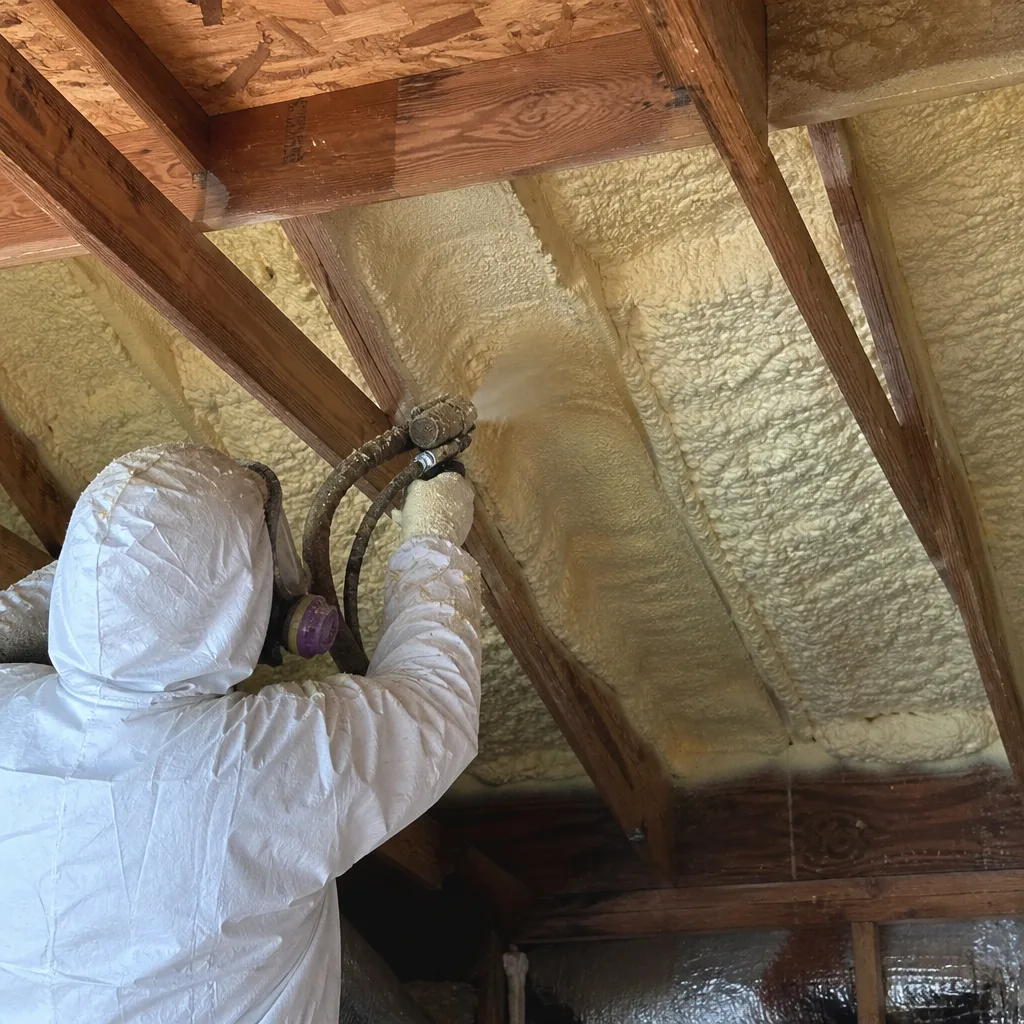
Blown-in insulation failure is almost never visible from the attic hatch. The direct evidence (the fluffy surface, the tape-measure depth in the middle of the attic) is the least informative thing you can check. The real warning signs are indirect: a 15 – 20% rise in cooling load at the same settings, filtration streaks and thermal stripe patterns over wall lines, a blower-door number that has climbed more than 2.0 ACH50, and the specific signature of pack rat or pigeon intrusion that looks like a failing HVAC system. When you see moisture staining, depth below 6 inches, or a 2.0+ ACH50 jump, stop monitoring and call. Seal first, then insulate, in that order. That’s the sequence that makes the number move.
If your Las Vegas home is showing any of these signs, call us at (833) 362-4859 for a free estimate. Every job starts with a written price, a written scope, and a written warranty before anyone lifts a tool, and every job closes with a documented photo record and, on applicable work, published before-and-after blower-door numbers.
Written by the team at Envelope Insulation Las Vegas.