
Last updated November 17, 2026
The Complete Attic Insulation Guide for Las Vegas Homeowners
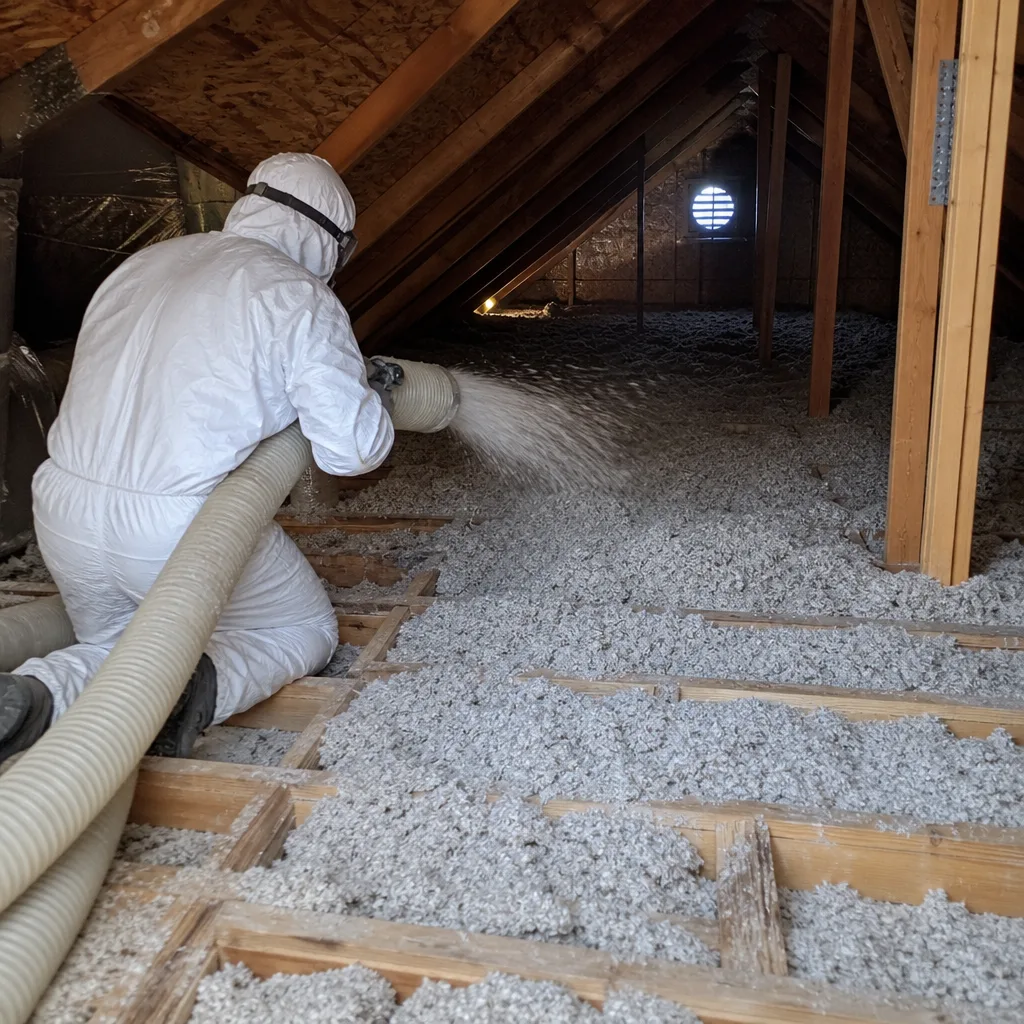
A bag of R-38 blown fiberglass is rated at 75°F. Your attic in July is not 75°F. At 150°F, that same material performs closer to R-32, a gap no one prints on the label. That single fact reshapes everything about how insulation should be specified in Las Vegas, because the number you’re sold is a laboratory figure measured under conditions your attic never sees. This guide covers what rated R-value actually delivers here, why air sealing has to come before any insulation goes in, how duct leakage and radiant barriers fit the picture, and what paperwork to demand when the crew leaves. If you’re comparing quotes for attic insulation in Las Vegas, the sections below will help you read them the way a technician would.
Quick Answer
Attic insulation in Las Vegas works only when the attic floor is air-sealed first and the R-value is sized for desert heat, not for a 75°F lab rating. Most homes here need a compensating R-value of R-38 to R-49 in the attic, sealed top plates and penetrations, and a blower-door test to prove the envelope actually tightened. Skipping the sealing step and blowing insulation over open gaps wastes money, because loose-fill over a leak performs like neither.
Table of Contents
- Why the R-Value on the Bag Isn’t Your Attic’s R-Value
- Convective Looping: The Hidden R-Value Thief
- Air Sealing Before Insulation: The Non-Negotiable Step
- The Penetration Types That Leak the Most
- Duct Leakage: Often a Bigger Loss Than R-Value
- Radiant Barrier vs. Added R-Value: When Each Is Right
- What Documentation to Request Before You Pay
- What Nevada Energy Code Actually Requires in Clark County
Why the R-Value on the Bag Isn’t Your Attic’s R-Value
R-value measures resistance to heat flow at a fixed mean temperature. The ASTM test that produces the number on a bag of Owens Corning or Johns Manville loose-fill runs at 75°F. Las Vegas attics spend four months a year at 140°F to 160°F and can push past that on a west-facing roof deck in July. As the mean temperature rises, the effective thermal conductivity of fibrous insulation climbs, which means the same inches of material insulate less. A rated R-38 behaves more like R-32 under those extremes.
This is not a manufacturing defect. It’s physics, and every brand behaves the same way. The practical consequence is that a contractor who installs to the label number in Las Vegas is undersizing the job by roughly 15% during the season that matters most. We compensate by specifying a higher installed R-value than code minimums and by checking installed depth with a ruler, not a guess, because depth is what actually determines loose-fill performance.
Two other forces reduce real-world performance on top of temperature:
- Settling. Blown fiberglass settles 10% to 20% over its first few years. If the installer targets depth without an allowance, the attic drifts below spec within two summers.
- Compression. Anything stored on top of the insulation, or batt pinched around an HVAC boot, loses R-value fast. Fiberglass loses resistance in near-linear proportion to compression.
None of this means you should ignore R-value. It means the target number should be the number your attic actually needs at desert temperatures, not the number printed on the package you’re handed.
Convective Looping: The Hidden R-Value Thief
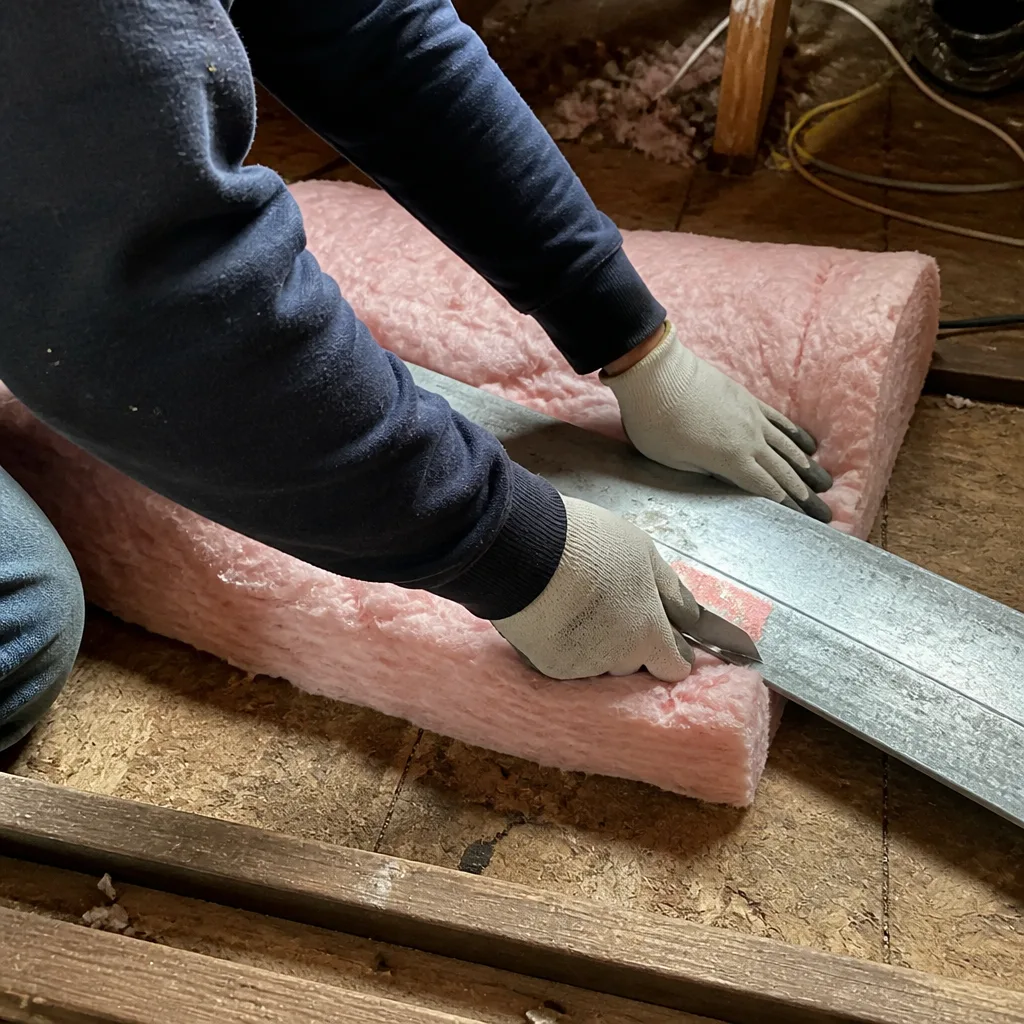
Loose-fill insulation in a hot attic doesn’t just sit there. Air inside the fibrous blanket heats at the top surface, becomes buoyant, rises, cools slightly, and drops back down, forming a slow circulation loop inside the insulation itself. In building science this is called convective looping, and it degrades thermal performance in an attic that runs hot at the top and cooler at the ceiling deck. The hotter the attic, the stronger the loop.
In Las Vegas, where attic air can sit above 150°F for hours, convective looping is a real and measurable loss. Two things reduce it: enough installed depth that the loop can’t form easily across the full thickness, and a radiant barrier or reflective surface above the insulation that lowers the temperature driving the loop in the first place. That’s the reason we often recommend addressing the roof deck’s heat load alongside R-value, not instead of it.
Compensating for both effects is why the insulation target in a Las Vegas attic tends to run higher than the same square footage in a milder climate. When we read a competing estimate, we look for whether it specifies installed depth in inches and the R-value the material reaches at desert temperatures. A quote that lists only “R-38” without a depth and a settling allowance is telling you what it bought, not what you’ll end up with.
Air Sealing Before Insulation: The Non-Negotiable Step
Here’s the order that matters: seal the attic floor, then insulate. Insulation resists conductive heat flow. It does not stop air movement. If you blow 14 inches of fiberglass over an open top plate and a gap around a recessed can, air still moves through those gaps every time the HVAC runs, and the insulation over the gap effectively doesn’t exist. That is a documented way to waste money, and it’s the single most common failure we’re called out to correct.
Air sealing means closing every path where conditioned air escapes from the living space into the attic. The blower-door test quantifies the result. That test is a pressurization reading that shows, in one number, how much air your building envelope is losing, expressed in CFM50 (cubic feet per minute at 50 pascals of pressure). Lower is better. Typical homes we see in Las Vegas before sealing read 3,800 to 5,200 CFM50. After a full attic air-sealing pass with penetrations closed, those readings commonly drop 20% to 35%.
That’s the number we publish. On a sealing job in a Summerlin home, we’ve recorded readings in the low 4,000s before the work and near 2,600 after, with the insulation applied only once the envelope was closed. In Natomas-style tract construction, the drop is often larger because the original build left more penetrations open. Under our Envelope Insulation Las Vegas home service line, we never blow insulation over an unsealed attic floor. Sealing comes first, always, not as an upsell.
The Penetration Types That Leak the Most
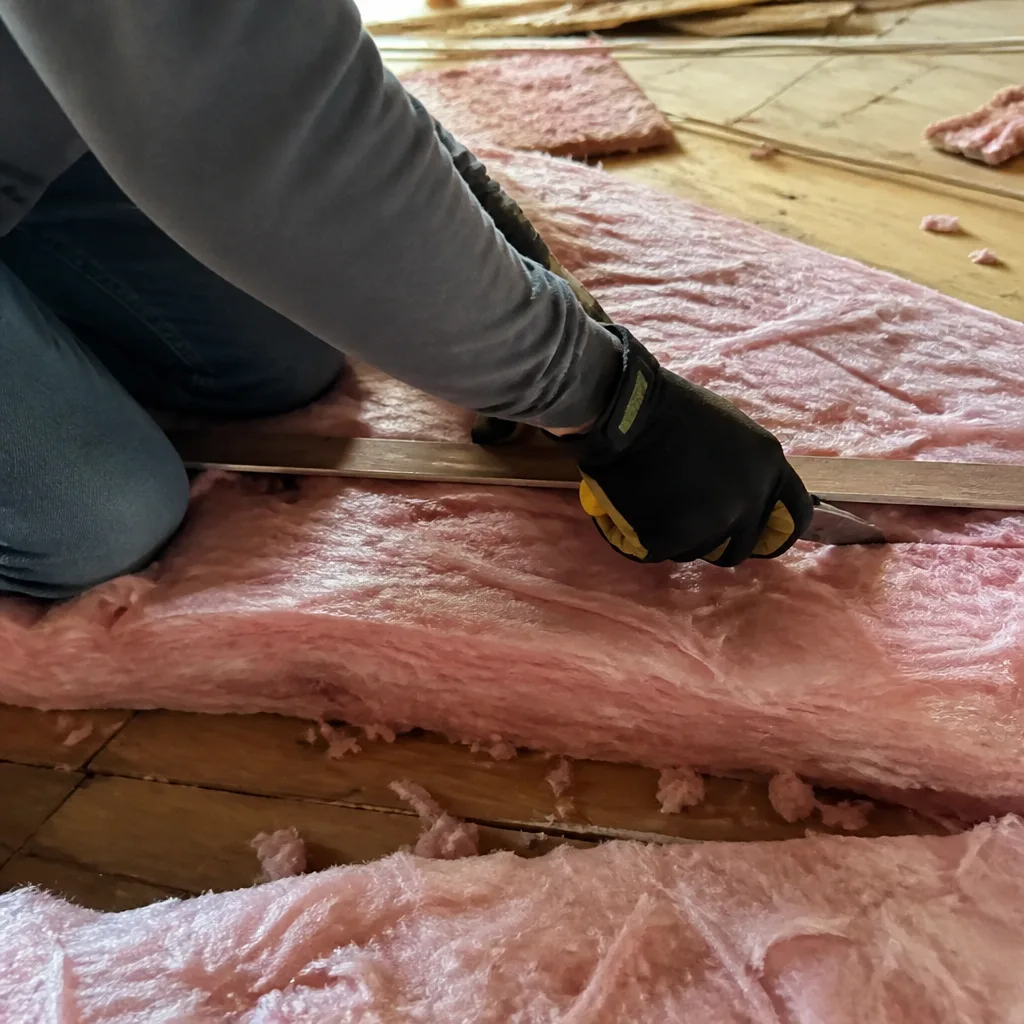
Every hole in the ceiling assembly is a leak in a pressure-driven envelope. Las Vegas homes built between 2015 and 2025 tend to have a predictable set, and a good air-sealing scope names each one.
- Top plates. The framing where wall studs meet the attic floor. Gaps along top plates are often the largest aggregate leak in a house, and they rarely show on a visual walk-through because drywall covers them below.
- Recessed lights (can lights). Older “non-IC” cans are essentially chimneys. IC-rated cans can be sealed with the right material; the wrong can sealed with the wrong material is a fire hazard. This is where a trained tech matters.
- HVAC boots and registers. The metal box connecting the duct to the ceiling register. Gaps around boots leak air straight into the attic and are usually found only by feel during a pressurization test.
- Plumbing and wiring penetrations. Every pipe and wire through the ceiling plate is a hole. Plumbers and electricians rarely caulk, and they shouldn’t be expected to.
- Chimney and flue chases. Often unsealed at the attic floor, with a large combined open area.
- Bathroom fan housings. The fan itself is a hole by design; the housing-to-drywall gap around it is not.
Sealing these properly usually takes a half day on a typical Las Vegas single-story and longer on a two-story with tight clearances. It requires specific materials rated for the application: fire-rated sealant at can lights, foam at boots, and a compatible caulk or foam at top plates. When a quote lists “air sealing” as a line item with no material detail and no test to confirm the result, that’s the time to ask questions.
Duct Leakage: Often a Bigger Loss Than R-Value
If your ducts run through an unconditioned attic, they leak conditioned air into that 150°F space every time the system runs. That’s supply air you paid to cool, dumped outside the conditioned envelope. In many Las Vegas homes, duct leakage and attic air leakage together outrank insulation R-value as a source of lost energy. Adding R-value to a leaky envelope is fixing the wrong problem first.
A duct blaster test quantifies duct leakage the same way a blower-door test quantifies envelope leakage. The duct blaster pressurizes the duct system itself and measures how much air escapes. Typical leaky attic duct systems in older Las Vegas construction show leakage of 10% to 25% of total system airflow. Sealing those joints can recover a large fraction of that, and reducing delivered-air loss makes the whole cooling system more effective in a climate where it runs most of the year.
What you should know before anyone insulates:
- Duct leakage inside an unconditioned attic is a higher-priority fix than added R-value if a duct blaster reading shows significant loss.
- A duct blaster test costs far less than re-running ducts and tells you whether sealing is worth it.
- Any attic insulation job on a home with exposed attic ducts should address both the ducts and the envelope. We address both in spray foam insulation in Las Vegas where the run configuration benefits from it.
Radiant Barrier vs. Added R-Value: When Each Is Right
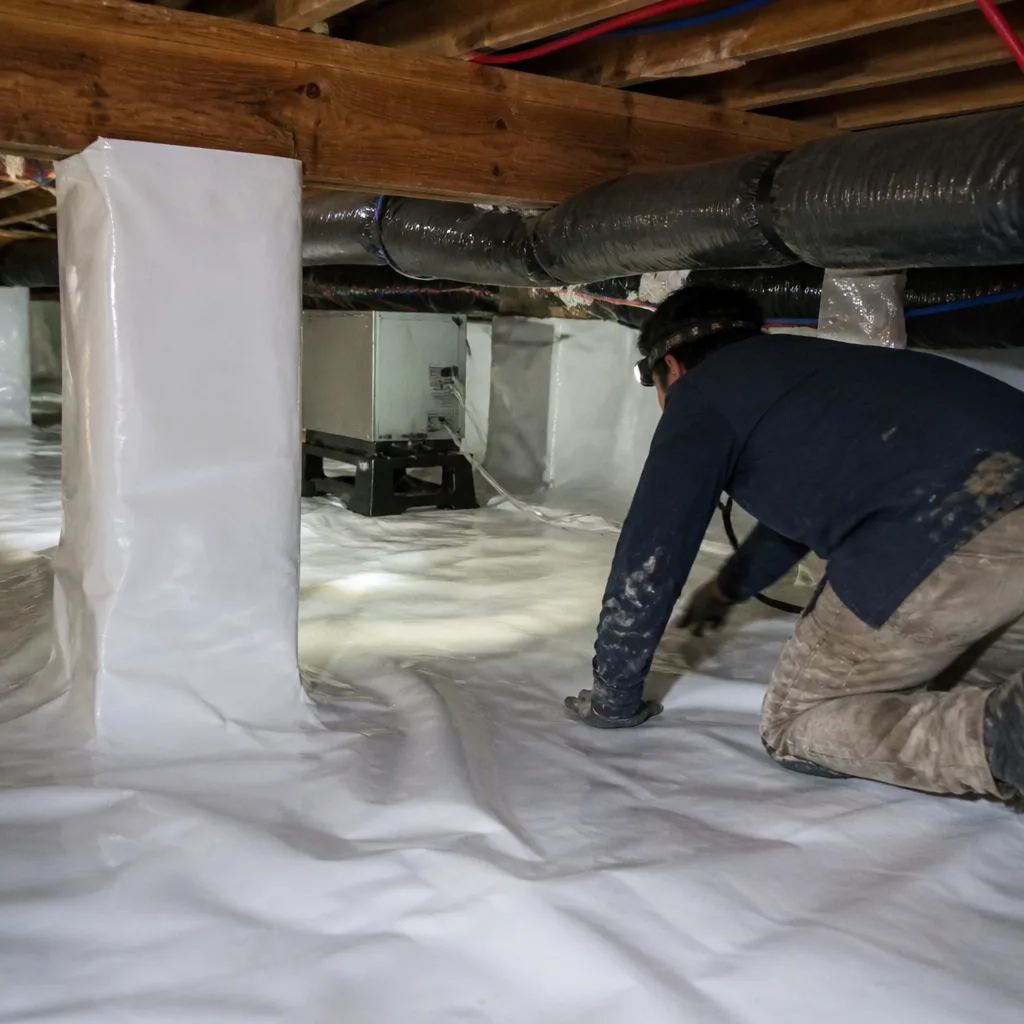
Radiant barrier and added R-value address different heat paths, and the right answer in Las Vegas depends on the roof deck and how the attic is built.
Radiant barrier is a reflective surface that blocks radiant heat from the hot roof deck before it enters the attic air. In our Las Vegas summers, attic air is largely heated by the radiant load from a 160°F roof deck. A properly installed radiant barrier on the underside of the decking can drop attic air temperature noticeably and cut the radiant load feeding convective looping. It’s the right tool when the decking is exposed, the attic has adequate ventilation, and you need to reduce how hot the space gets.
Added R-value is the right tool when the attic floor is thin and conduction is the primary loss. R-value still matters, even in a hot attic, because heat conducts through the ceiling assembly regardless of radiant conditions.
In practice, many Las Vegas attic floors need both: a radiant barrier at the deck to lower attic temperature and suppression of looping, plus compensating installed R-value at the floor with air sealing beneath it. What you should not do is accept radiant barrier as a substitute for sealing and R-value, or vice versa. The two address different physics. When a contractor sells one as a replacement for the other, ask which heat path they’re measuring and how they’ll prove the result.
What Documentation to Request Before You Pay
The difference between a good insulation job and an undocumented one is what you can verify afterward. A written price before any work starts, a written scope, and a written warranty are Haven Standard Clause 1: have it in writing, always, before anyone lifts a tool. Under our 365-Day Done Right Promise, if something isn’t done right within a year we make it right, and the documentation is how we and you both hold that promise honest.
Ask for these specific records and don’t accept substitutes:
- A blower-door report with before-and-after CFM50 readings. Two numbers on a page. That’s the pressurization proof that the sealing actually tightened the envelope.
- A thermal imaging scan. An infrared photo of the attic floor and ceiling plane showing where temperatures still vary, ideally timestamped. This catches missed penetrations a visual walk misses.
- Installed-depth photos with a ruler in frame. A ruler is the only way to prove the insulation depth actually installed. A photo without a scale proves nothing.
- Documented Photo Record on every visit. This is included on every job, not available on request. If a contractor only shows photos when asked, that’s a signal about what they record by default.
- The written scope and warranty: what was sealed, what R-value and depth were installed, and what the Done Right promise covers.
We publish before-and-after blower-door numbers on every applicable job so the performance change is a single figure, not a feeling. If you have a competing written estimate in hand, we’ll read it with you and tell you what it does and doesn’t cover; the second opinion is free.
What Nevada Energy Code Actually Requires in Clark County
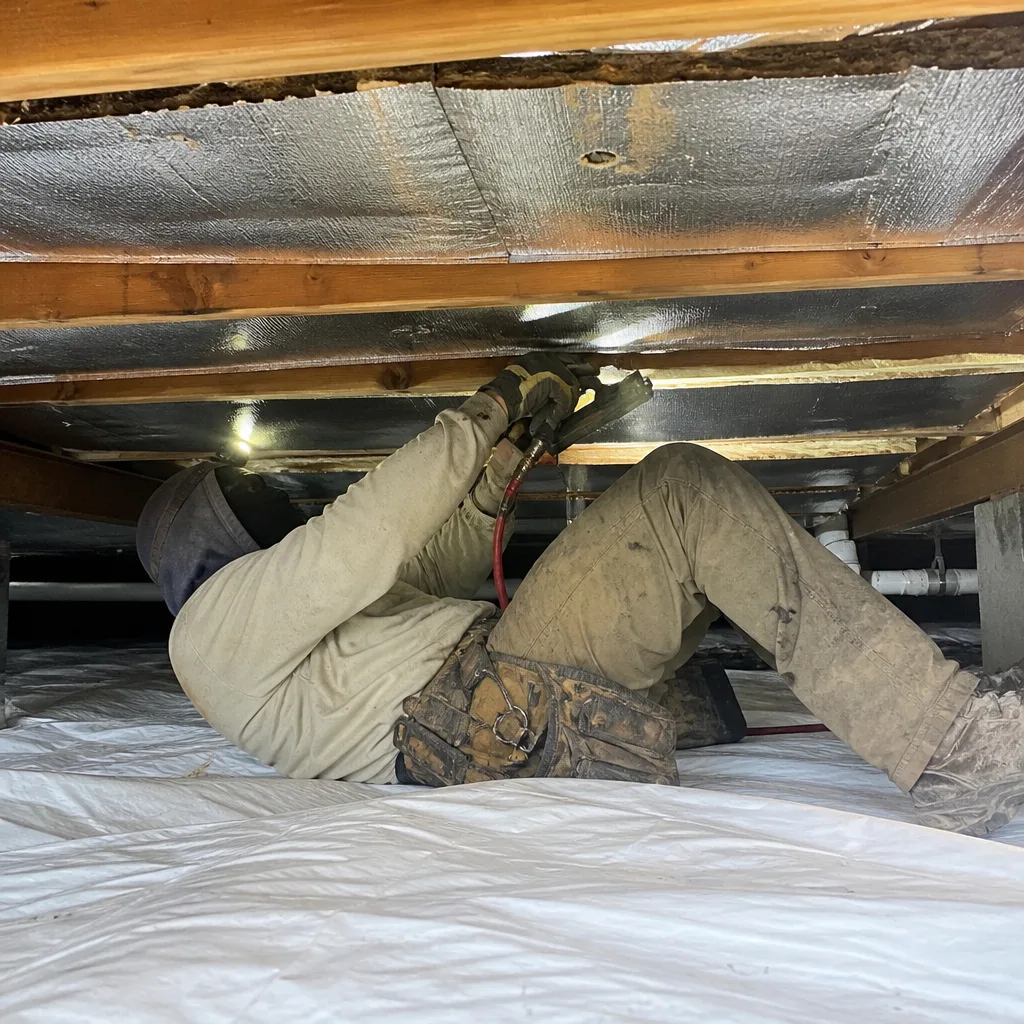
Nevada’s energy code, adopted in Clark County with local amendments, sets a floor for attic insulation in new construction and major renovations. The attic floor minimum in this climate zone has trended toward R-38 to R-49 for new work, and the code treats air sealing as a required part of the assembly, not an optional add-on. That matters for two reasons. First, it means a legal attic job includes sealing. Second, it means a quote for “insulation only” is not the code-compliant job.
Code is a floor, not a target. Because of the desert heat we’ve already covered, we often specify installed R-value at the upper end of the code range and higher in attics with exposed ducts or poor ventilation. What the code doesn’t do is guarantee installed performance. Code doesn’t test your attic after the work is done. That’s why the blower-door reading is the practical compliance proof, and why we include it.
Two Las Vegas code realities worth knowing:
- Radiant barrier and ventilation. Codes in this climate give credit for radiant barrier and require adequate attic ventilation. An attic that’s sealed tight with no venting creates a new problem (moisture, overheating) in a different way.
- Permits for structural change. Insulation and sealing generally don’t require a permit, but if a job adds foam-in-place that changes the roof assembly’s ventilation profile, ask how that’s handled. We scope this on every crawl space encapsulation and vapor barrier in Las Vegas project since the same venting logic applies below the floor.
Common Mistakes to Avoid
- Blowing insulation over an unsealed attic floor. This is the most expensive error on the list because you pay for the insulation and still lose the air. Sealing comes before any insulation, always.
- Installing to the bag’s R-value without a desert-adjusted target. If the quote says “R-38” with no depth and no settling allowance, the attic will likely perform below spec within two summers.
- Skipping the blower-door test. A quote that doesn’t include before-and-after CFM50 readings is asking you to trust a claim instead of verify it. Ask why they’re not testing.
- Ignoring attic duct leakage. In Las Vegas, an unsealed attic duct system can leak 10% to 25% of airflow. Insulating over a leaky duct delivery system recovers less than fixing it.
- Storing heavy items on top of new loose-fill. Anything that compresses the blanket loses R-value quickly. Give the new insulation room to do its job.
- Sealing IC and non-IC can lights the same way. Non-IC cans can’t be sealed with standard materials. This is a fire-safety item and a trained technician handles it correctly.
- Accepting radiant barrier as a replacement for sealing and R-value. Radiant barrier and R-value address different heat paths. One doesn’t substitute for the other in Las Vegas.
When to Call a Professional
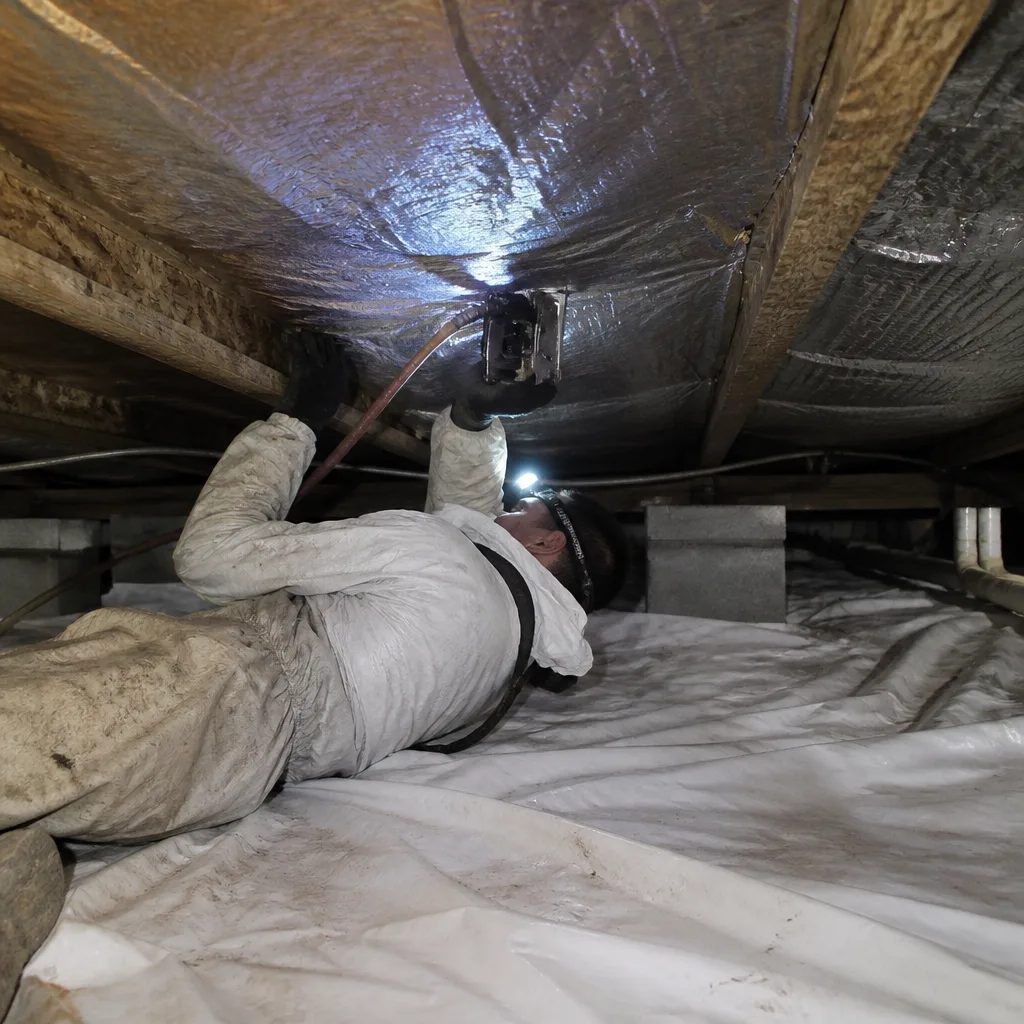
Some attic jobs are fine for a homeowner to understand and still not fine to attempt. This is one. Loose-fill insulation is a low-injury material, but the work around it involves caulk lines at energized wiring, fire-rated materials around can lights, and access to a 150°F attic over a full working day. If your attic has recessed lights you’re unsure about, gas appliances or a flue in the space, visible rodent damage, or existing spray foam that needs removal before new work, that’s a professional job.
It’s also a professional job when you don’t have the measurements to know what you’re actually fixing. Envelope Insulation Las Vegas offers free estimates in Las Vegas and starts every one with a written price, a written scope, and a written warranty before any work starts. If you’re holding a competing written estimate, bring it: we’ll read it with you, no charge. Call (833) 362-4859 and a live person answers, 24/7, no voicemail loop.
Frequently Asked Questions
Most Las Vegas homes need an installed R-value in the attic of R-38 to R-49, but the number that matters is the effective R-value at desert temperatures, which runs roughly 15% below the bag rating. That’s why we specify installed depth with a settling allowance and check the result with a ruler, not just the package. Call (833) 362-4859 for an exact quote on your attic; estimates are free and the price is written before work begins.
Yes. Loose-fill fiberglass rated at R-38 at 75°F performs closer to R-32 at 150°F, and convective looping inside the insulation adds to the loss in a hot attic. Every brand, including Owens Corning and Johns Manville, behaves the same way; the effect is in the physics, not the product. We compensate by specifying a higher installed R-value and by using a radiant barrier at the deck when the attic runs hot.
Because insulation resists conductive heat flow and does nothing to stop air movement. Blowing insulation over an unsealed top plate or open can light leaves the leak in place and hides it, so you pay for insulation that performs poorly. Air sealing closes the paths first; then the insulation holds its rated performance over a sealed floor.
A blower-door test measures how much air your whole building envelope is losing, expressed in CFM50; a duct blaster measures how much air your duct system alone is leaking. Both are pressurization tests and both produce a single figure you can verify before and after work. A home that reads 4,200 CFM50 before sealing and 2,600 after has a documented result; one that only claims “better performance” has no measurement.
They solve different problems and often both are needed. Radiant barrier reduces the radiant heat load from the roof deck and lowers attic air temperature, which also cuts convective looping; added R-value addresses conduction through the ceiling assembly. In a typical Las Vegas attic with an exposed deck and thin floor insulation, the right answer is usually sealing, then compensating R-value, then a radiant barrier if the attic still runs too hot.
Yes, and it’s often the highest-value fix in a Las Vegas home. Attic duct systems commonly leak 10% to 25% of total airflow and dump that conditioned air into a 150°F space. A duct blaster test tells you how much you’re losing, and sealing the joints recovers a large share of it; we scope that alongside the envelope work rather than after it.
The Bottom Line
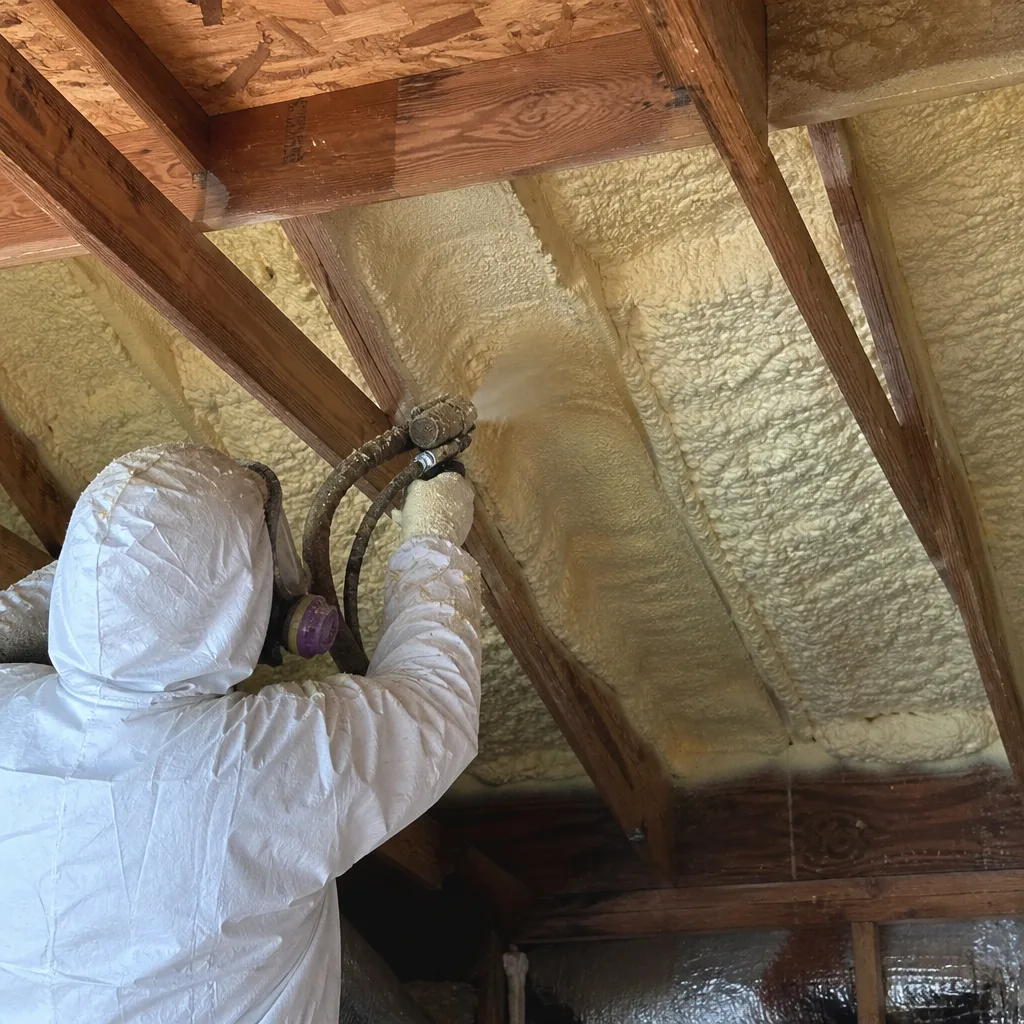
Las Vegas attics don’t behave like the laboratories the R-value labels were written for. Rated performance runs around 15% low at 150°F, convective looping steals more, and insulation over an unsealed floor never delivers what you paid for. The order that works: seal the penetrations, size the R-value for desert heat, prove the result with a blower-door reading before and after, and document installed depth with a ruler in frame. Ask any contractor for their CFM50 numbers and their installed-depth photos, and treat a written price and written scope before work as the baseline, not a courtesy. That’s the difference between a job that performs and a claim you can’t check.
Envelope Insulation Las Vegas starts every job with a written price, seals before insulating, and publishes before-and-after blower-door numbers on applicable work. Call (833) 362-4859 for a free estimate; a live person answers 24/7.
Written by the team at Envelope Insulation Las Vegas.