
Last updated November 17, 2026
The Complete Blown-In Insulation Guide for Las Vegas Homeowners
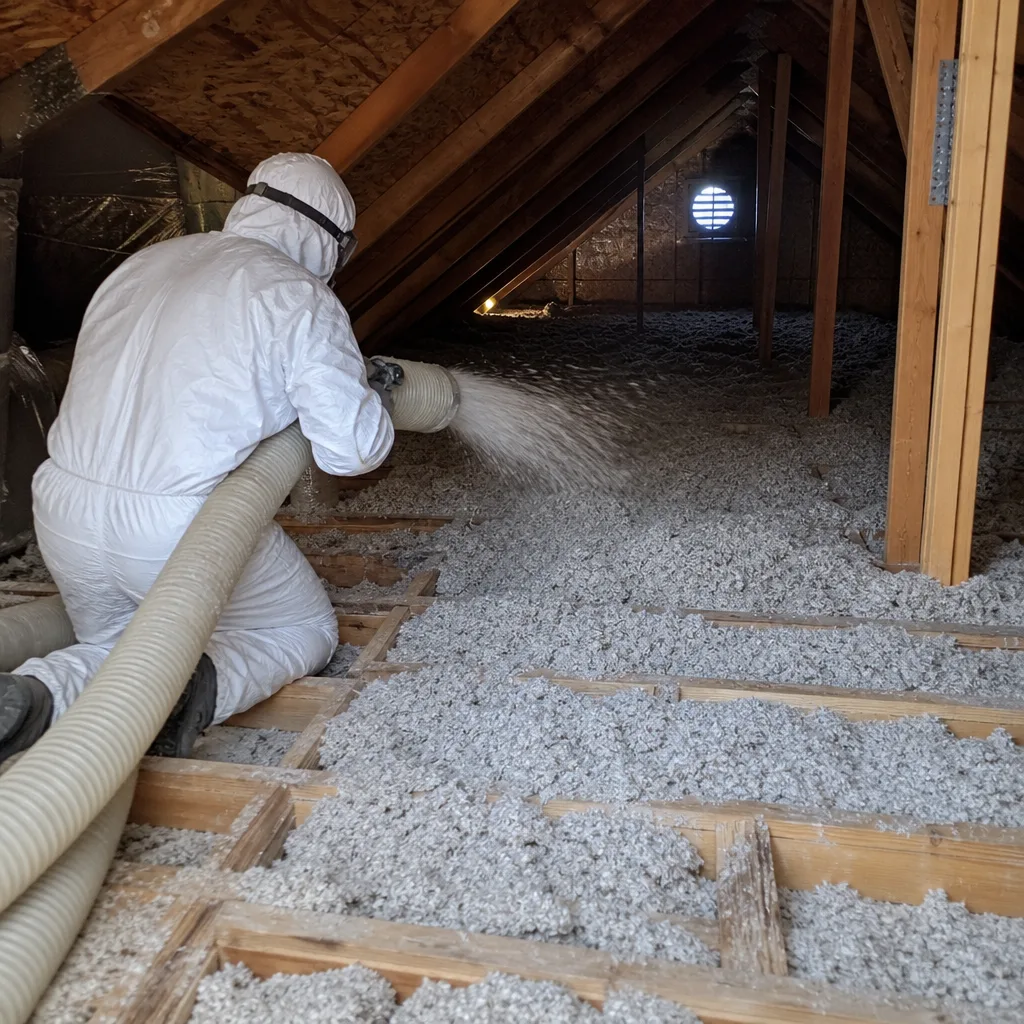
Blown-in fiberglass at R-38 requires 10 inches of installed depth. After three years of Las Vegas attic temperature cycling, measurements at comparable installations show settled depths averaging around 8.2 inches. That is roughly R-30, and it never appeared on a single post-install document. The performance you paid for quietly left the building. This guide covers the two materials worth considering, why air sealing has to come first, the depth-marker system you should verify in person, the duct clearance most crews skip, and the exact paperwork you should walk away with. Las Vegas attics punish shortcuts faster than most climates do.
Quick Answer
Blown-in insulation in Las Vegas works best when the attic floor is air sealed first, then covered to a verified depth of 10 inches for fiberglass or about 8 to 9 inches for cellulose to reach R-38 to R-49. Fiberglass settles predictably but loses R-value faster at extreme attic temperatures, while cellulose holds depth better but carries a borate fire-retardant load that matters in a dry climate. Verified depth, not bag count, tells you what you actually got.
Table of Contents
- Why Blown-In Insulation Behaves Differently in Las Vegas
- Fiberglass vs. Cellulose: Which Blown-In Material Fits a Las Vegas Attic?
- The Air Sealing Prerequisite: Why Insulation Over Leaks Fails
- Depth Markers: How to Verify What You Paid For
- The HVAC Duct Interaction Most Contractors Skip
- The Documentation Set You Should Leave With
- What Blown-In Insulation Costs in Las Vegas
- Installation Walkthrough: Step by Step
Why Blown-In Insulation Behaves Differently in Las Vegas
National guides assume insulation depth holds steady once it is settled. That assumption breaks down here. A Las Vegas attic roof deck can reach 160°F or higher on a July afternoon and drop toward 50°F on a winter night. The fiberglass and cellulose sitting on that floor expand and contract through that cycle, year after year, and the material compacts a little more each season.
We’ve opened attics in Summerlin and Centennial where the installed tag read R-38 and the tape measure read just under 8 inches. The insulation had been blown correctly. It had simply lost depth to thermal cycling, and nobody measured it again. That is the whole problem in one sentence: in Las Vegas, R-value per inch is the wrong number to fixate on. Settled depth retention over time is the number that decides whether your attic holds its rating.
What this means practically:
- A one-time install depth is a starting point, not a warranty of performance.
- Attics that cycle hardest (west- and south-facing roof planes) settle fastest.
- A written settled-R-value clause is worth more than a higher advertised R-value.
- Re-measuring depth every few years is normal maintenance here, not a sign of a bad job.
The good news: this is predictable. A crew that accounts for it, seals the floor first, and documents the depth it actually installed leaves you with insulation that holds its rating far longer. That is the approach we take on every Envelope Insulation Las Vegas home project, and it is the reason this guide exists.
Fiberglass vs. Cellulose: Which Blown-In Material Fits a Las Vegas Attic?
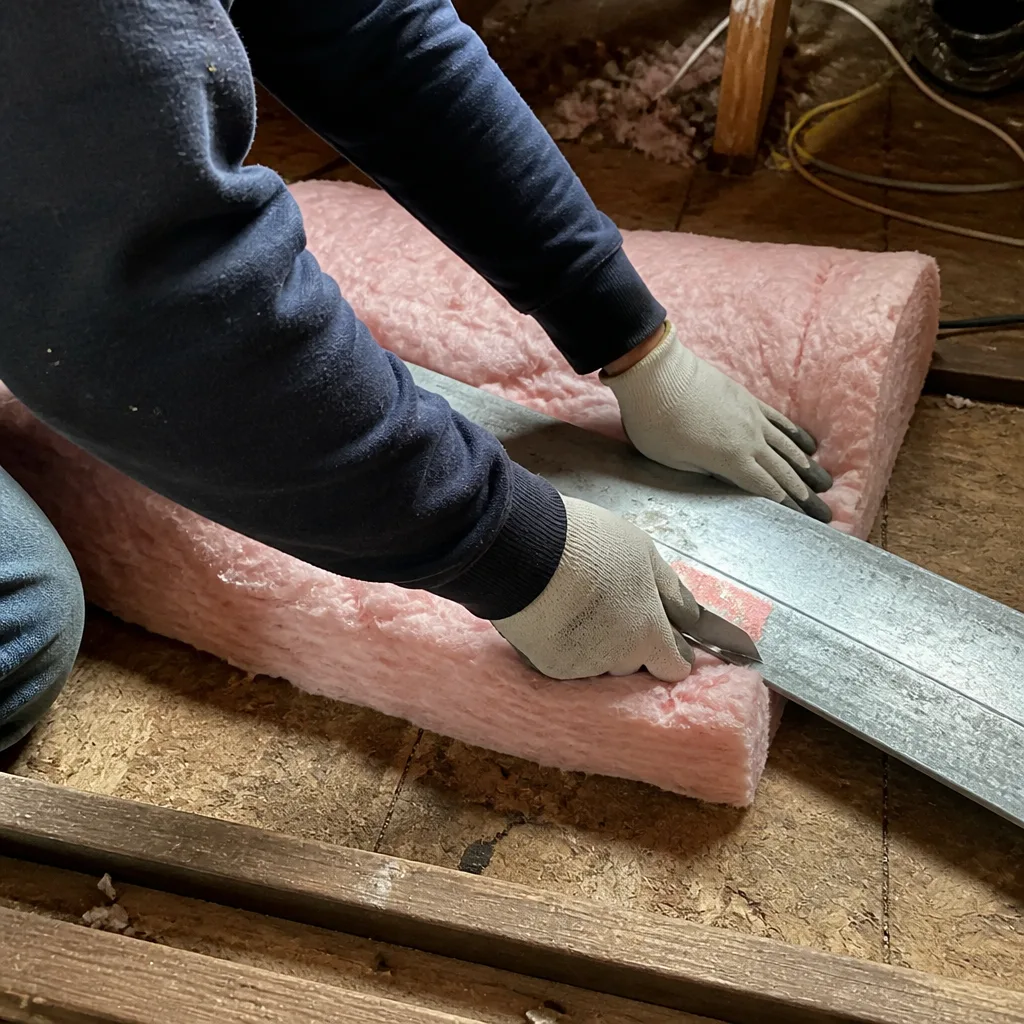
Las Vegas gives you two realistic blown-in choices. They are not interchangeable, and the right pick depends on how much you value depth retention versus temperature stability.
Blown-in fiberglass
Fiberglass (we source from Johns Manville and Knauf, among others) settles more predictably than cellulose and is naturally non-combustible, so it carries no added fire-retardant chemistry. Its weak spot is high-heat performance. As attic temperatures climb past 120°F, fiberglass loses a measurable share of its rated thermal resistance faster than cellulose does. In a Las Vegas attic that lives above 140°F for stretches, that penalty is not theoretical.
Blown-in cellulose
Cellulose holds depth better and performs more consistently at temperature extremes. It is treated with borate-based fire retardants, which do their job in a dry climate but matter for two local reasons: the borate load is what keeps cellulose from smoldering near heat sources, and it must meet flame-spread requirements for attic application. Ask for the product data sheet and confirm the fire-retardant treatment is listed. Loosely stated “fire-rated” is not the same thing.
A quick decision framework:
- If the attic runs very hot and you want stable performance at temperature, cellulose usually edges ahead on R-value retention.
- If you want predictable settle behavior and no added fire-retardant chemistry, fiberglass is the cleaner fit.
- Either way, the depth you verify at the walkthrough matters more than the material name on the bag.
Neither choice wins if the attic floor still leaks air. That is the next section, and it is the one most homeowners underestimate.
The Air Sealing Prerequisite: Why Insulation Over Leaks Fails
Blowing insulation over unsealed top plates, recessed light penetrations, and attic hatch frames delivers a fraction of the calculated R-value. We can put numbers on it. Before-and-after blower-door testing (a pressurization reading that shows, in a single figure, how much conditioned air your building envelope is losing) commonly shows a home leaking 4,000 to 5,000 CFM50 before sealing and closer to 2,000 after. If you blow insulation first and seal never, you keep that leak and insulate around it.
Here is what actually happens. Insulation slows conductive heat flow. It does nothing for air moving through a gap. A recessed can light with an unsealed gap is a chimney: hot attic air in summer, your cooled air out. Covering that gap with fiberglass does not close it. It just hides it under a layer that never performs to spec because air is still moving through it.
Sealed first, then insulated, in that order. On every job we complete, air sealing of top plates, can lights, and penetrations is finished before any insulation is added. We will not blow insulation over an unsealed attic floor. That is a hard line, not an upsell.
The seal points that matter in Las Vegas homes:
- Top plates at the perimeter walls, where the wall meets the attic floor.
- Recessed light fixtures, which need covers rated for contact with insulation.
- The attic hatch frame, a common leak that is easy to miss and cheap to fix.
- Plumbing, electrical, and flue penetrations through the ceiling plane.
- Dropped soffits and any chase that runs from the conditioned space into the attic.
If you want the full scope of what attic work involves, our page on attic insulation in Las Vegas covers the companion measures in detail.
Depth Markers: How to Verify What You Paid For
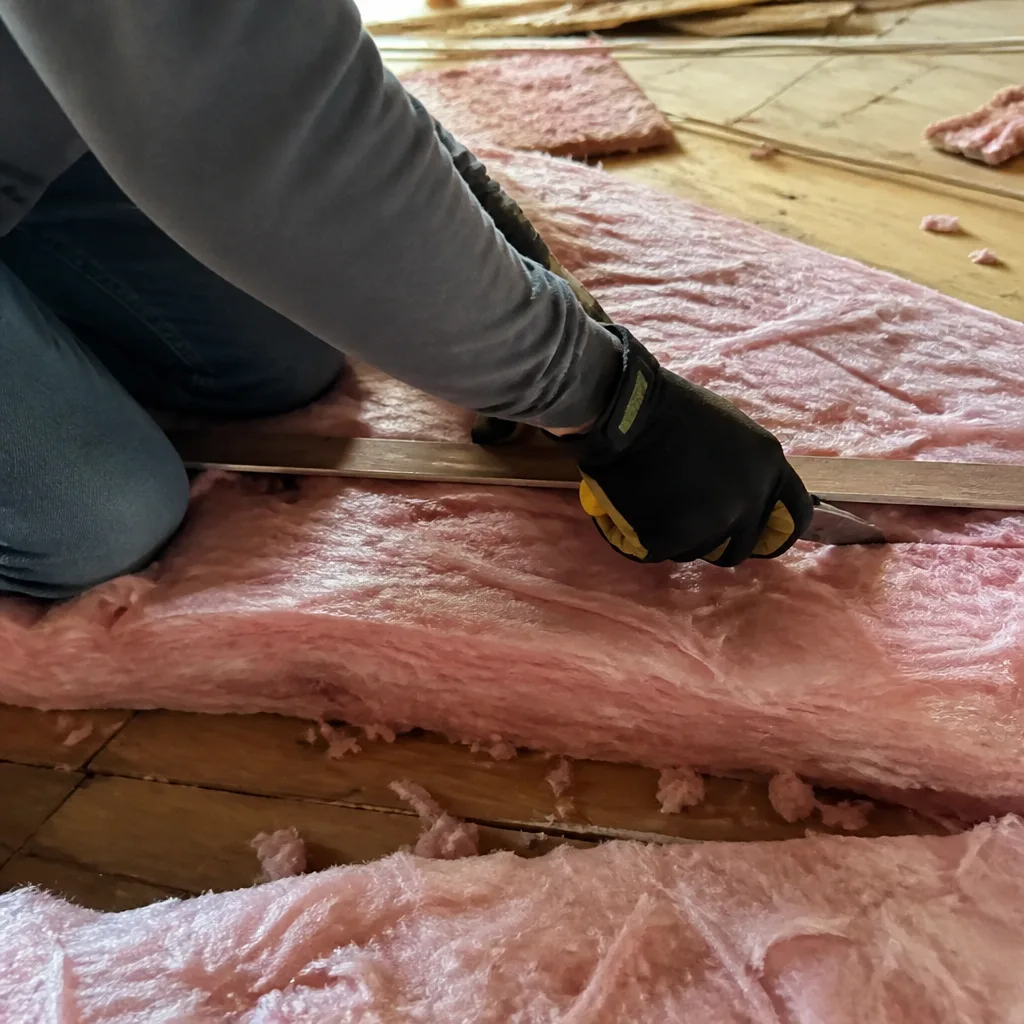
Before any insulation is blown, a good crew installs plastic depth rulers against the joists at multiple points across the attic floor. Each ruler is marked in inches. The installer reads them as the material builds up, and the homeowner should read them too, after the work is done, with the invoice in hand.
Count the markers yourself on a post-install walkthrough. Do not trust a bag count on the invoice. Bag count tells you how much material left the truck, not how deep it landed. Depth markers tell you what you actually got.
- Confirm the markers were installed before blowing, at roughly even intervals across the whole floor.
- After the job, walk the attic and read at least five markers from the hatch to the far end.
- Compare the readings to the target on your written scope (10 inches for fiberglass at R-38, for example).
- Photograph each reading. That photo is your record if depth settles short later.
- Ask the crew to note the markers’ locations so you can re-check in a few years.
This is not paranoia in Las Vegas. Given the thermal cycling we described earlier, a documented starting depth is the only baseline that lets you catch future settling before it costs you on your power bill. If you’d rather a trained crew handle the verification, our spray foam insulation in Las Vegas and blown-in teams measure and photograph on every visit.
The HVAC Duct Interaction Most Contractors Skip
Many Las Vegas homes run ductwork through the attic, and this changes the install. When ducts sit on the attic floor, you cannot simply blow insulation over them. Ducts need clearance and baffles so the insulation does not block airflow or trap heat, and the ducts themselves should be sealed and, where possible, buried under the blown layer to stop them baking in a 150°F attic.
Most contractors skip this. They blow a uniform blanket, bury the flex duct, and move on. The result is a set of hot spots: sections of duct that now run hotter than before because they lost the small air gap they had, and sections of ceiling with thinner coverage because the duct interrupted the blow. The insulation surrounding those hot spots may read correct on a depth marker while the room below it stays warm.
What good work looks like here:
- Ducts sealed at every joint and boot before insulation goes in.
- Baffles at the eaves and around duct runs to keep a clear air channel and full coverage.
- Ducts buried where code and design allow, with the insulation depth read on the surrounding floor, not the duct top.
- Contact-rated materials anywhere insulation touches a heat source.
Ask your contractor how they handle duct clearance before they start. The answer separates crews who understand this market from crews who do not.
The Documentation Set You Should Leave With
The job is not finished when the crew drives away. It is finished when you have paperwork that lets you verify the work and hold anyone accountable later. Under Haven Standard, we deliver a documented record on every visit, and a photo record is included on every job rather than available on request. Here is what a complete set should contain:
- Installed depth measurements at multiple locations, with photos of the depth markers.
- Bag count and the product data sheet, so you know exactly which material went in.
- Blower-door test results, before and after, if air sealing was done concurrently.
- The written scope and written warranty, including the settled-R-value warranty language.
- The written price, fixed and in writing before any work started.
The settled-R-value warranty is the clause to read closely. It should state what depth or rating the insulation is expected to hold, and over what period, given normal settling. A warranty that promises “R-38” without addressing settle is incomplete. The whole point of the clause is to cover the performance you actually paid for, not the number on the bag.
Every job we complete since 2016 (over 9,000 homes) has closed with this kind of record. If you’re comparing estimates, our free second opinion on any written estimate lets you read a competing quote with someone who knows what to look for.
What Blown-In Insulation Costs in Las Vegas
Cost depends on square footage, target R-value, and whether air sealing is included. Here is a realistic Las Vegas range for a typical single-family attic. These are planning figures; your written price is set after we look at the attic.
| Scope | Typical Las Vegas Range |
|---|---|
| Blown-in insulation (fiberglass or cellulose), attic floor | $1,400 – $3,200 |
| Air sealing of top plates, cans, and penetrations | $600 – $1,500 |
| Insulation removal and replacement (old material out) | add $800 – $1,800 |
| Duct sealing and baffle work, where ducts run through attic | $400 – $1,000 |
Homes in older central neighborhoods often carry the higher removal cost because decades of dust and settled material have to come out before new insulation goes in. Newer construction in the outer suburbs tends to land lower on removal and higher on duct work. Either way, you should see a flat price in writing before anyone lifts a tool, and a second opinion on a competing quote is free.
Installation Walkthrough: Step by Step
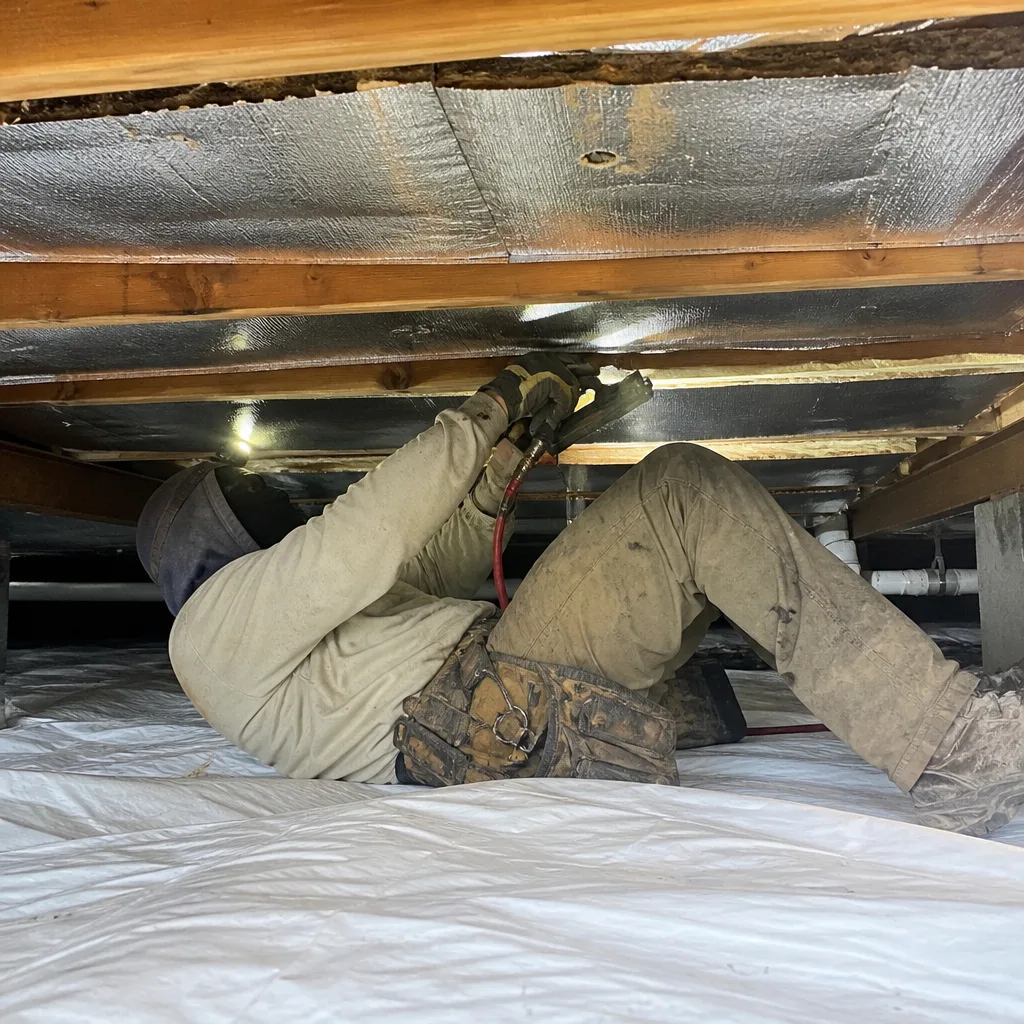
Here is the order a proper blown-in job follows in a Las Vegas home. The sequence matters as much as the materials.
- Written price and scope. Flat price, scope, and warranty in writing before work starts.
- Attic inspection. Depth check, leak mapping, duct review, and any rodent or moisture issues flagged.
- Air sealing. Top plates, recessed lights, penetrations, and the hatch frame sealed first.
- Duct prep. Ducts sealed, baffles set, airflow channels protected.
- Depth markers installed. Rulers set against the joists across the floor.
- Blowing to target depth. Material installed evenly to the target, read against the markers.
- Verification. Depth measured and photographed; blower-door reading taken if air sealing was part of the job.
- Documentation handoff. Photos, bag count, product sheet, readings, and warranty to you.
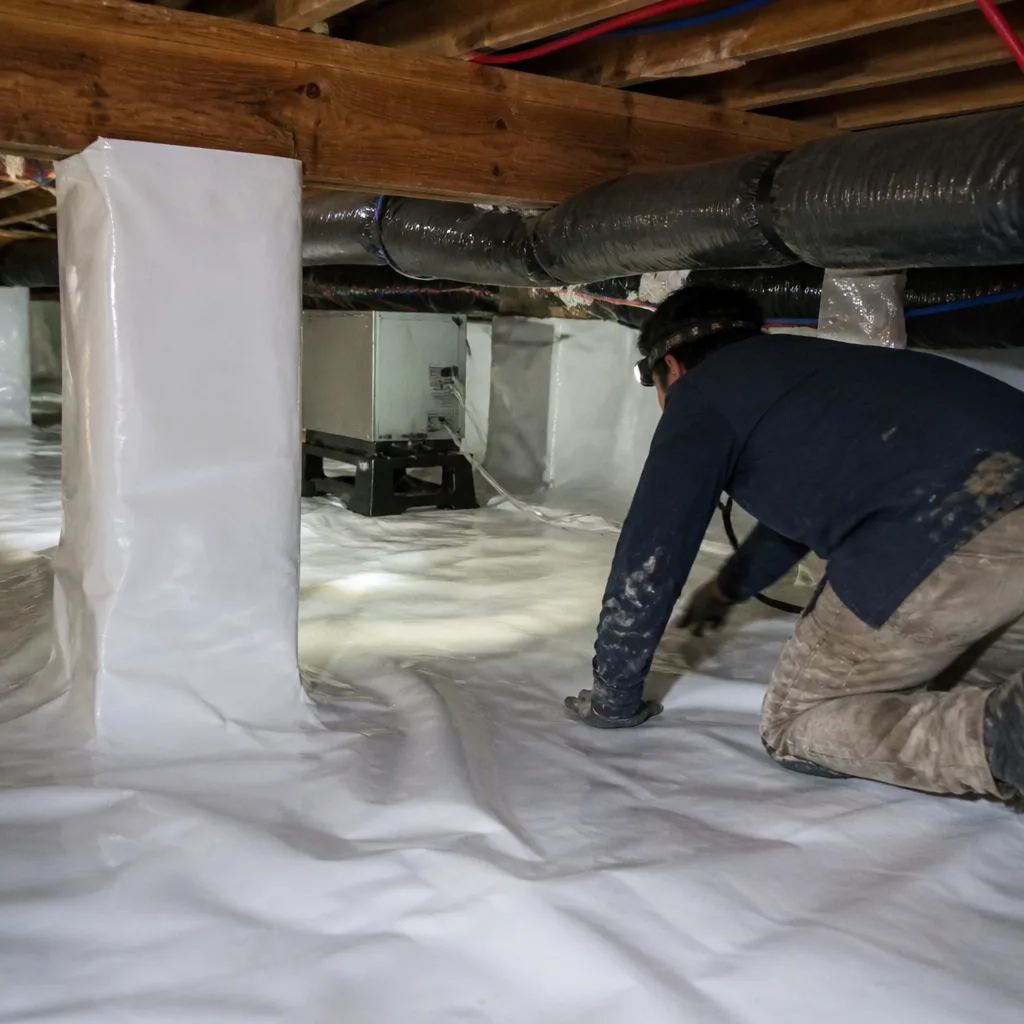
If you’re dealing with a damp or open crawl space feeding the same envelope, the related work on crawl space encapsulation and vapor barrier in Las Vegas belongs in the same conversation, since moisture and air move together.
Common Mistakes to Avoid
- Blowing insulation over an unsealed attic floor. It hides leaks and caps the R-value you actually get. Seal first, then insulate, every time.
- Trusting the bag count instead of the depth markers. Material leaving the truck is not material landing at the right depth. Read the markers.
- Skipping duct clearance and baffles. Buried ducts and missing baffles create hot spots that undercut the insulation around them, a common failure in Las Vegas attic duct runs.
- Choosing a material on advertised R-value alone. In this climate, settled-depth retention over time is the number that holds up.
- Leaving without a settled-R-value warranty clause. A warranty that ignores settling does not cover the performance you bought.
- Forgetting the attic hatch. An uninsulated or loosely fitted hatch is a top-ten leak in Las Vegas homes and cheap to fix.
- Letting old, dusty, or rodent-contaminated insulation stay in place under new material. Remove and replace when contamination is present; new insulation over a problem just buries it.
When to Call a Professional
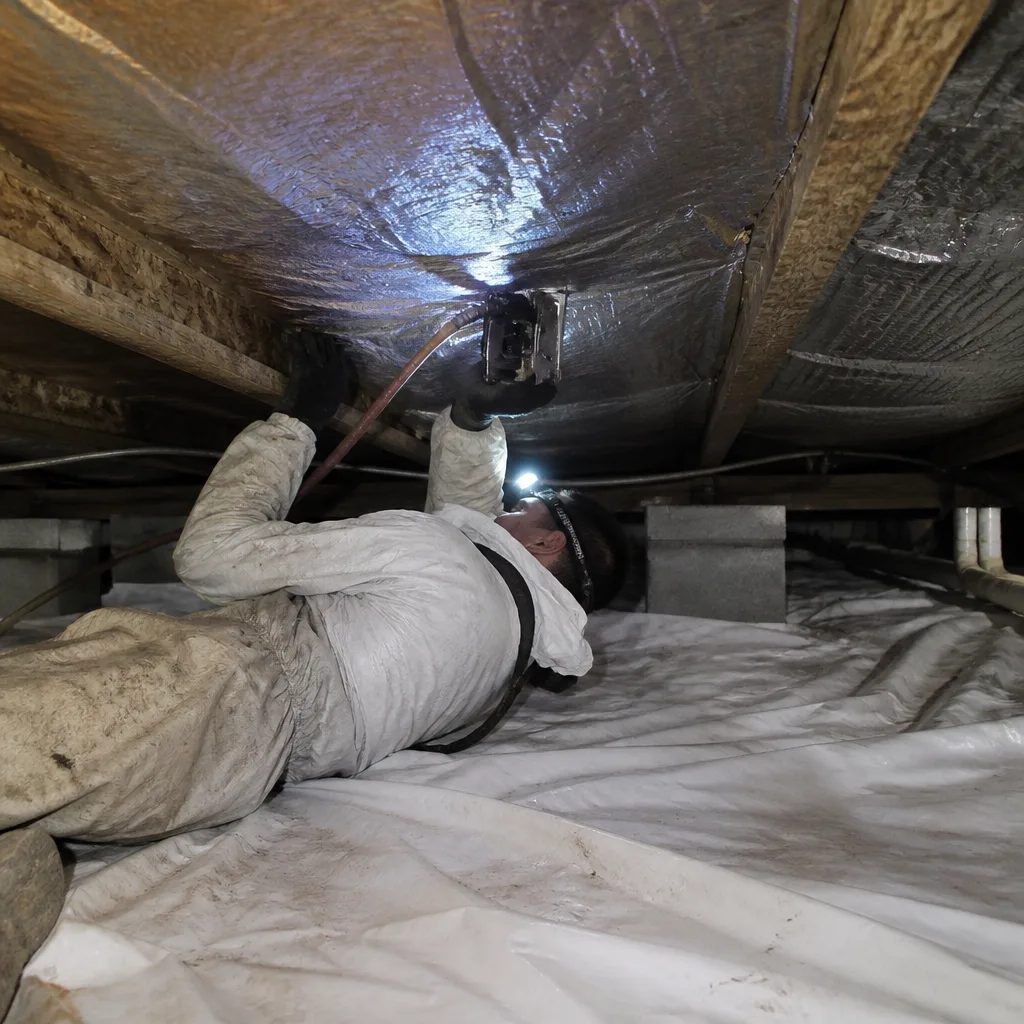
Call a professional when you can’t get a safe, reliable reading of settled depth yourself, when ducts run through the attic and need clearance work, or when you see rodent activity, moisture, or daylight at the attic hatch. Those situations combine insulation with air sealing, duct work, or removal, and doing only part of the job leaves you paying for performance you won’t get. High-heat attic work and anything near recessed lights or heat sources should be handled by a trained crew, not a weekend project. Envelope Insulation Las Vegas offers free estimates in Las Vegas and answers calls with a live person, 24/7. Call (833) 362-4859 to get a written price before any work starts.
Frequently Asked Questions
Plan on about 10 inches of blown-in fiberglass to reach R-38 in a Las Vegas attic, or roughly 8 to 9 inches of cellulose for a comparable rating. Because this climate settles insulation over time, your written scope should state the target depth and the settled-R-value warranty, not just the R-value. Call (833) 362-4859 for an exact figure after we measure the attic.
Yes, mainly through settling. Attic thermal cycling between roughly 160°F and 50°F compacts material year over year, and measurements at comparable installations show settled depths falling meaningfully short of the installed depth. That is why a settled-R-value warranty clause and verified depth markers matter here more than in most markets.
Only with proper clearance and baffles, and only after the ducts are sealed. Simply burying ductwork creates hot spots because the duct loses its air gap and the insulation coverage around it thins out. Ask how the contractor handles duct clearance before work begins; a crew that skips it will leave you with rooms that never cool correctly. Call (833) 362-4859 to have us review your ducts.
Cellulose usually holds depth and performance better at temperature extremes; fiberglass settles more predictably and carries no added fire-retardant chemistry. Both work when the attic floor is sealed first and the depth is verified. The material choice matters less than doing air sealing before insulation and documenting what went in.
Always, and in that order. Blowing insulation over unsealed top plates and penetrations delivers a fraction of the calculated R-value because air keeps moving through the gaps. Sealing first, then insulating, is the only way the number on the bag becomes the number in your attic.
You should leave with installed depth measurements and photos at multiple locations, the bag count and product data sheet, before-and-after blower-door readings if air sealing was done, and the written scope and warranty including settled-R-value language. Under Haven Standard, that documented record comes on every job. Call (833) 362-4859 for a free estimate and a clear picture of what that handoff includes.
The Bottom Line
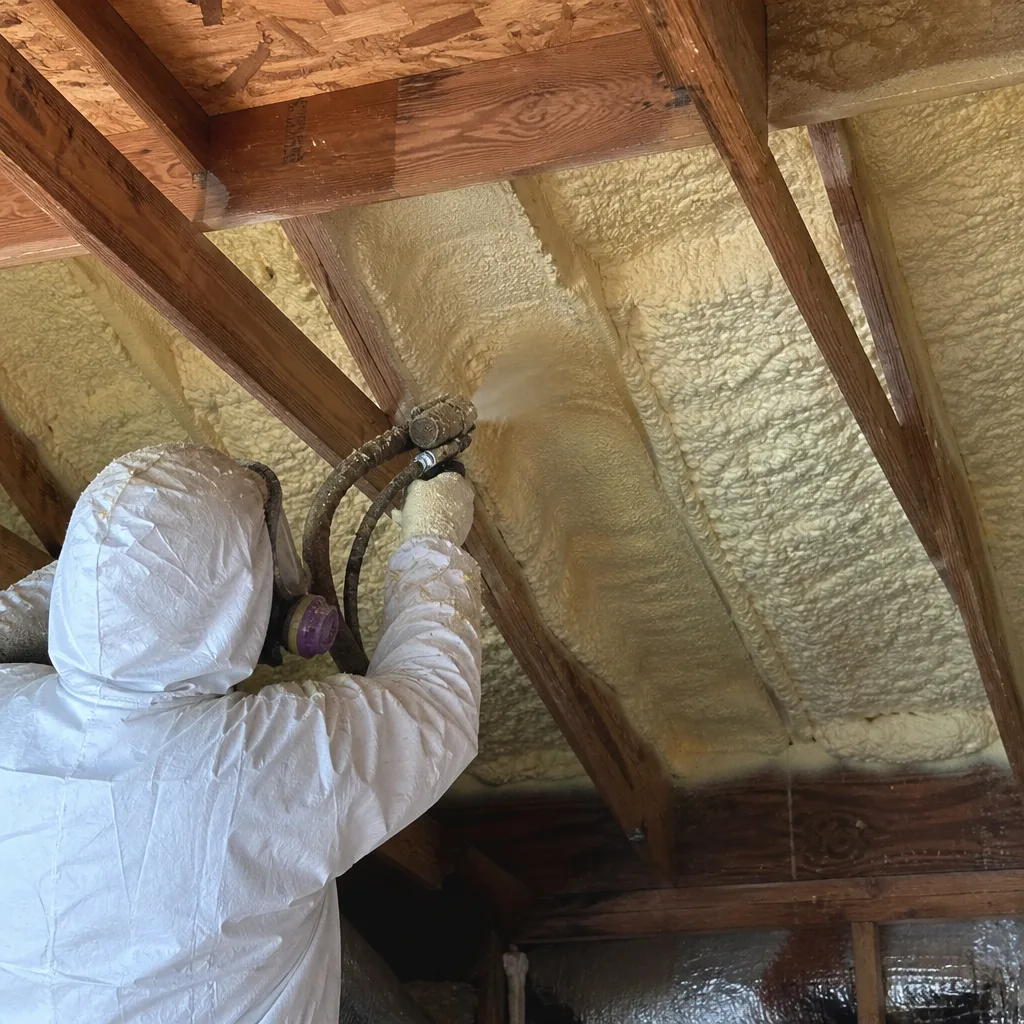
Blown-in insulation in Las Vegas lives or dies on settled-depth retention, not advertised R-value. Seal the attic floor first, then insulate to a verified depth you can read on the markers yourself. Pick the material for your attic’s heat profile, handle the ducts with real clearance, and leave with a documentation set that includes settled-R-value warranty language. That is what separates insulation that still performs in three years from insulation that quietly fell to R-30. Our team has done this on over 9,000 homes under The Haven Standard, with a written price before any work starts and a documented record when we leave. Call (833) 362-4859 for a free estimate in Las Vegas.
Written by the team at Envelope Insulation Las Vegas.