
Last updated November 17, 2026
Attic Insulation Troubleshooting: Common Problems and How to Fix Them
If your upstairs rooms stay 5 – 8°F hotter than the thermostat setting after a re-insulation job, the insulation probably isn’t the problem. Bypassed air leaks at partition walls are the more common culprit, and blowing more insulation over them makes it worse. We’ve seen this pattern repeatedly in Las Vegas homes built between 2015 and 2025: new material, new price tag, same discomfort. This guide maps specific symptoms to specific causes so you can name the actual problem before anyone climbs into your attic. You’ll learn to read a thermal scan, measure settled versus compressed insulation, check duct connections, and know when a blower-door retest is the correct next step.
Quick Answer
Most attic insulation problems in Las Vegas trace back to air leaks that were never sealed, compressed or settled material, or disconnected HVAC ducts, not to the insulation itself. The fix starts with a diagnostic: a blower-door test or thermal scan identifies where the air is actually moving, then air sealing happens before any new material goes in. Adding insulation over an unsealed attic floor hides the problem and rarely changes your bill.
Table of Contents
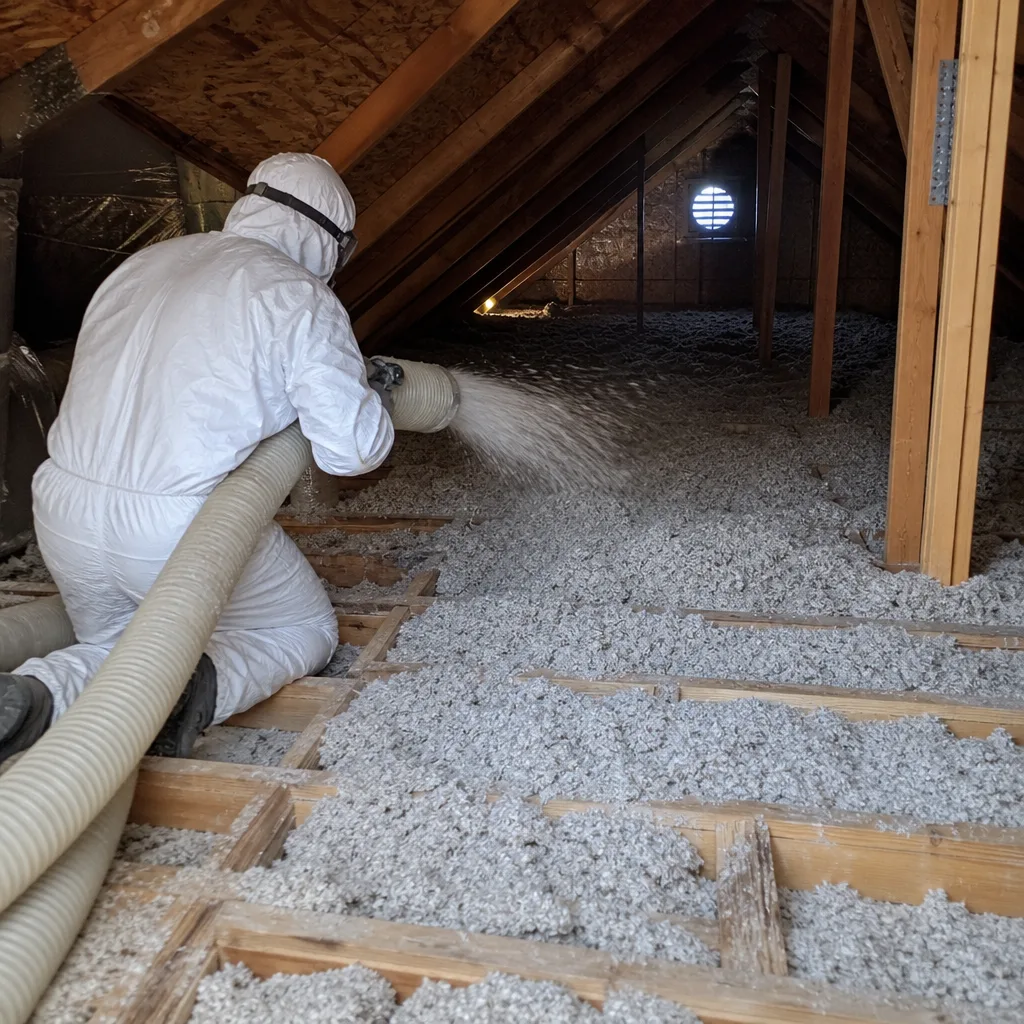
- Symptom-to-Cause Map: What Your House Is Telling You
- How to Read a Thermal Scan of Your Ceiling
- Settled vs. Compressed Insulation: Measuring the Difference
- HVAC Duct Connections: The Misdiagnosed Root Cause
- When a Blower-Door Retest Is the Right Next Step
- Las Vegas Climate Factors That Accelerate Insulation Failure
- Pest Evidence and Musty Odors: What They Signal
Symptom-to-Cause Map: What Your House Is Telling You
Before anyone opens the attic hatch, write down what the house is doing. The symptom narrows the cause faster than any visual inspection. Here’s how we map it:
- Upstairs rooms 5 – 8°F hotter than the thermostat setting: Air bypasses at partition walls, top plates, or can lights. The insulation is being circumvented, not underperforming.
- Utility bills climbed after a re-insulation job: Either the new material was installed over unsealed leaks, or a duct connection was disturbed during the work. Both are common.
- Visible settled insulation: Normal in blown-in fiberglass and cellulose. It loses height over time at a predictable rate. Not automatically a problem.
- Musty odor in upstairs rooms: Moisture is entering through a bypass and condensing on cool surfaces. Often a top-plate gap pulling humid air from a wall cavity.
- Pest evidence (droppings, tunneling, nesting material): Insulation has been displaced or contaminated. Rodent proofing has to come before replacement, or the problem returns.
- A room that won’t cool no matter what: Duct disconnection or a crushed flex run inside the attic. The HVAC system is delivering less air than the room needs.
In Las Vegas, the hottest months push attic temperatures past 150°F, which means any bypass is pulling extreme heat into the envelope with more force than in milder climates. A gap that would be a minor nuisance in the Midwest becomes a significant cooling load here. Our attic insulation in Las Vegas work starts with this symptom map on every job because the fix depends entirely on which cause is active.
How to Read a Thermal Scan of Your Ceiling
A thermal scan of the ceiling, taken from inside the room, reads surface temperature differences. Under summer conditions, hot spots on the ceiling usually mean heat is moving through a concentrated path. Cold spots can mean air is moving. What matters is the pattern.
- Bright, defined hot streaks along a line: A partition wall or top plate is unsealed. Heat rises through the wall cavity and hits the ceiling drywall from behind.
- Circular hot spots: Recessed can lights or other ceiling penetrations. These are classic bypass points and often the single biggest leak in a Las Vegas attic.
- Irregular mottled pattern across a whole room: Insulation coverage is uneven or has been displaced. Rarely a single leak.
- Cold patches only: Duct leakage or a return-air problem pulling conditioned air into the attic. The ceiling is being cooled by air that should have stayed inside.
- No pattern, uniform temperature: Insulation is doing its job. Look elsewhere for the comfort problem.
Interpret the scan as a map, not a verdict. A hot streak tells you where to look; a blower-door test tells you how much air is actually moving and whether sealing changed it. A heat map alone doesn’t quantify the loss, and a contractor who reads it without a pressurization number is guessing at the impact. If your scan shows multiple patterns at once, the home needs a full envelope evaluation, which is what our Envelope Insulation Las Vegas home audit process is built to deliver.
Settled vs. Compressed Insulation: Measuring the Difference
Settled insulation is normal. Blown-in fiberglass and cellulose lose loft at a predictable rate in the first few years after installation, then stabilize. Compressed insulation is different. It has been crushed, packed, or walked over, and compression costs real R-value.
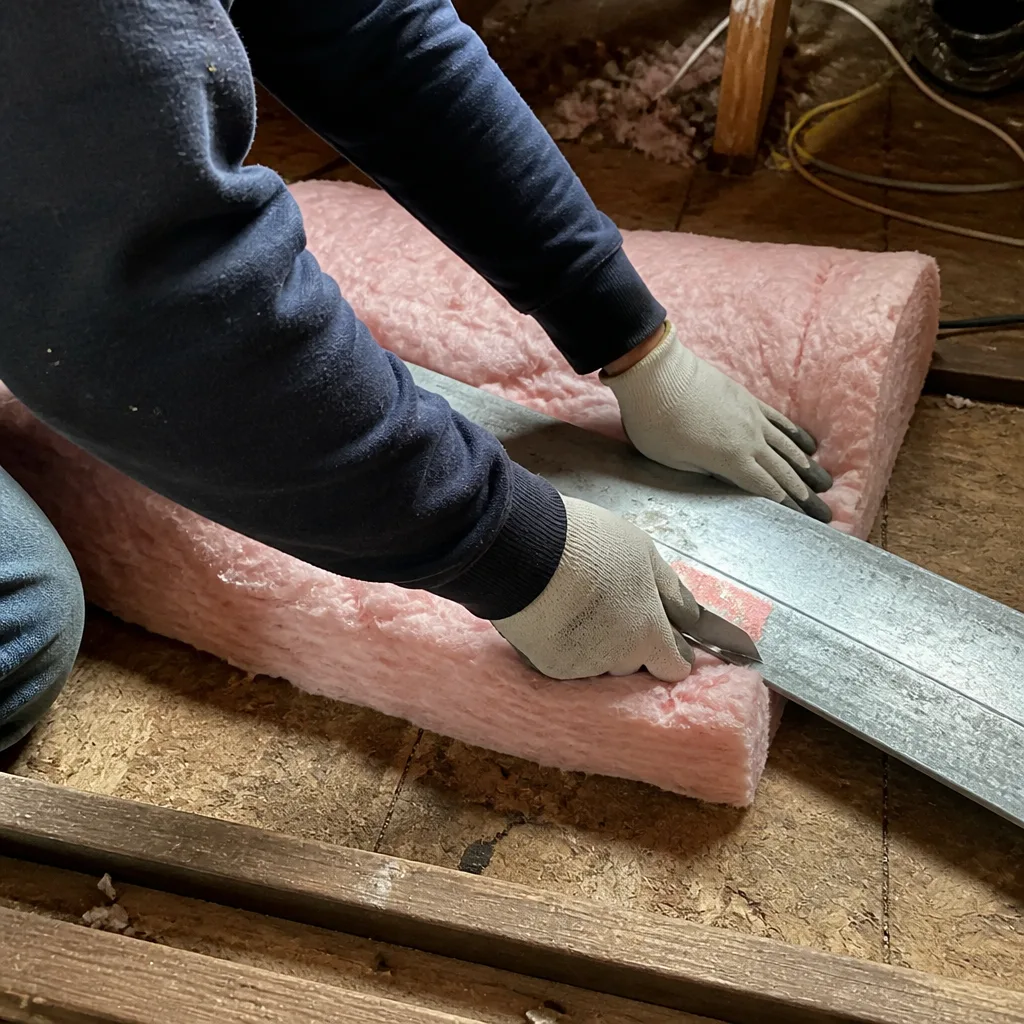
The way to tell which you have is a depth ruler. Push a marked ruler into the insulation at several points across the attic floor, read the depth, and compare it to what the manufacturer specifies for the R-value you paid for. Fiberglass batts at R-38 should sit around 12 inches deep; blown fiberglass at the same rating sits around 13 to 14 inches depending on the product. If you’re measuring 6 inches where 12 should be, you’re looking at roughly half the rated R-value.
Two things to check separately:
- Settled but even: The depth is lower than original but consistent across the attic. This is age, not damage. A top-up is the right answer.
- Compressed in patches: Foot traffic around the HVAC unit, storage, or equipment installation has crushed the material. In Las Vegas, we often see this near attic-mounted air handlers where a technician walked through the field of insulation to service the unit. The R-value is genuinely reduced in that zone.
Compression is a real loss. Settlement is a predictable aging curve. Both can be corrected, but only one indicates something went wrong, and the depth ruler is what tells them apart.
HVAC Duct Connections: The Misdiagnosed Root Cause
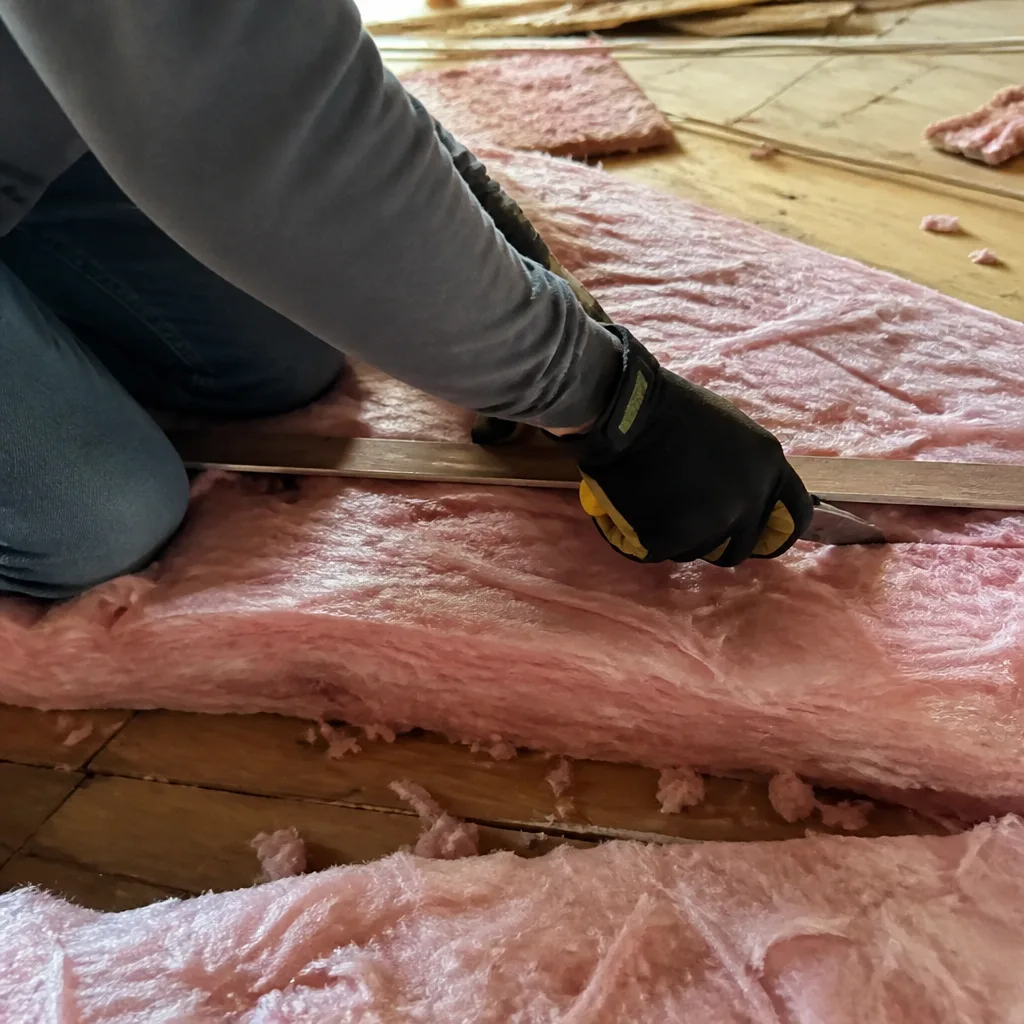
In our experience, the single most misdiagnosed problem in Las Vegas attics is a disconnected or poorly sealed HVAC duct. Homeowners get told the insulation is failing when the real leak is at the plenum, a flex duct collar, or a wye fitting 18 inches from the air handler.
The inspection is simple and doesn’t require disassembly. With the system running, check every junction between flex duct and metal boot, every connection at the air handler, and the collars at the register boots. You’re looking for:
- Flex duct pulled back from the collar so the inner liner doesn’t overlap the metal.
- Junctions held only by a zip tie or a plastic strap, with no mastic seal.
- Torn or crushed flex runs where someone stepped on them or set equipment on top.
- Bare metal sleeves where the duct meets the boot, with visible daylight or dust streaking.
The correct fix is tape-and-mastic: pull the inner liner over the collar, secure it with a mechanical fastener, then coat the joint with mastic and wrap it with approved foil tape. That’s a 15-minute repair per joint that can move a blower-door reading more than $4,000 of new insulation. If you’re in the middle of a re-insulation project and the duct connections are unsealed, seal them before any new material goes down. It’s the same principle we apply on every spray foam insulation in Las Vegas job: air first, material second.
When a Blower-Door Retest Is the Right Next Step
A blower-door test is a pressurization reading that shows, in one number, how much air your building envelope is losing. It’s reported in CFM50: cubic feet per minute of air moving through the envelope at 50 pascals of pressure.
When should you retest instead of re-insulating? When your symptoms point to air movement, not material deficiency. That means:
- Your upstairs rooms run hotter than the rest of the house and the insulation depth is at spec.
- Your energy bill climbed after a re-insulation job, which suggests the new material covered leaks without sealing them.
- A thermal scan showed hot streaks or cold patches, which point to bypasses rather than missing insulation.
- You’re about to spend money on more insulation and you want a documented before-and-after number to verify the result.
What does a meaningful improvement look like? In a typical pre-1980 Las Vegas home, an unsealed attic reads somewhere between 3,500 and 5,500 CFM50 on the initial test. A good air-sealing job brings that down by 25 to 40 percent. If a contractor seals your attic and the number barely moves, the leaks weren’t addressed. If the weatherization work didn’t include a blower-door test at all, you have no way to know what changed.
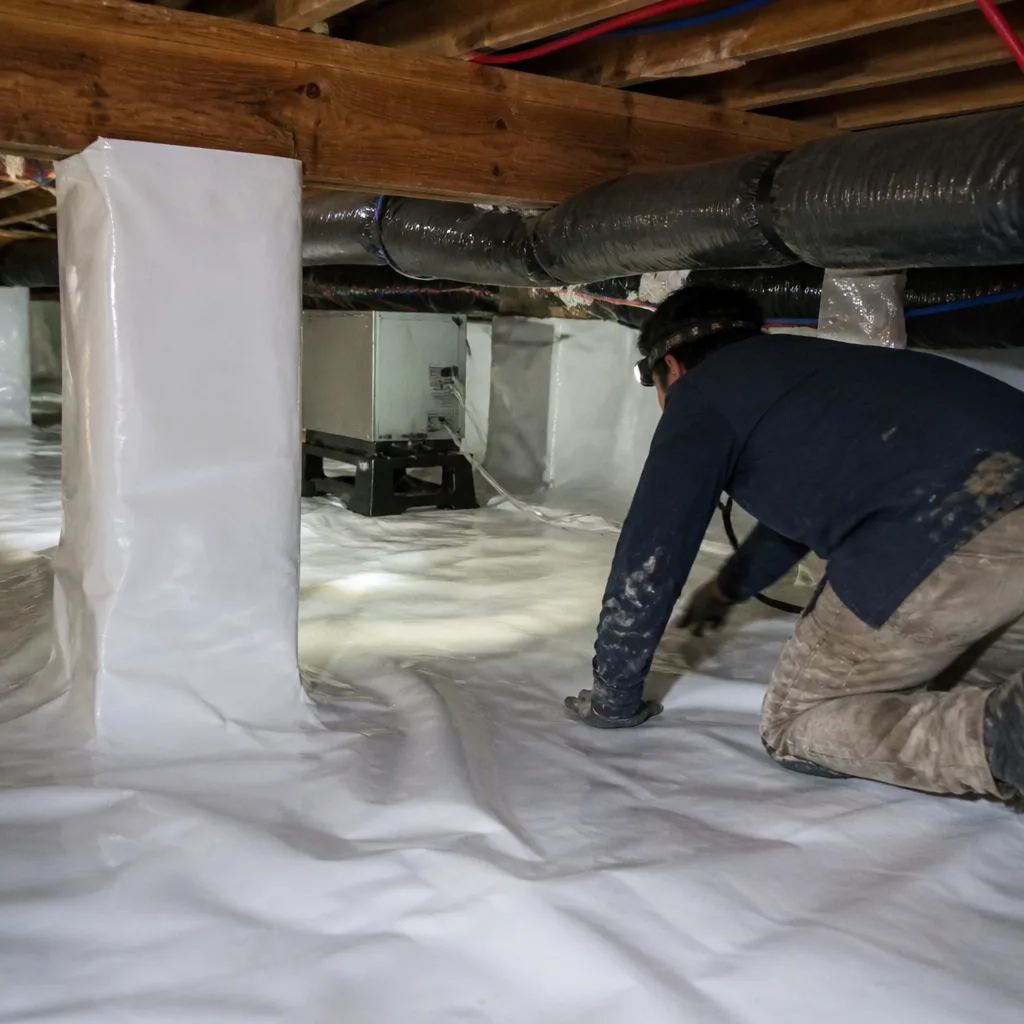
The 365-Day Done Right Promise at Envelope Insulation Co. matters here for a specific reason: a sealed-first, insulated-second scope with a documented before-and-after reading is verifiable. If the number didn’t improve, the work isn’t done. Our crawl space encapsulation & vapor barrier in Las Vegas projects use the same pressure-based verification, and on every applicable job we publish the before-and-after numbers so the homeowner can see what they paid for.
Las Vegas Climate Factors That Accelerate Insulation Failure
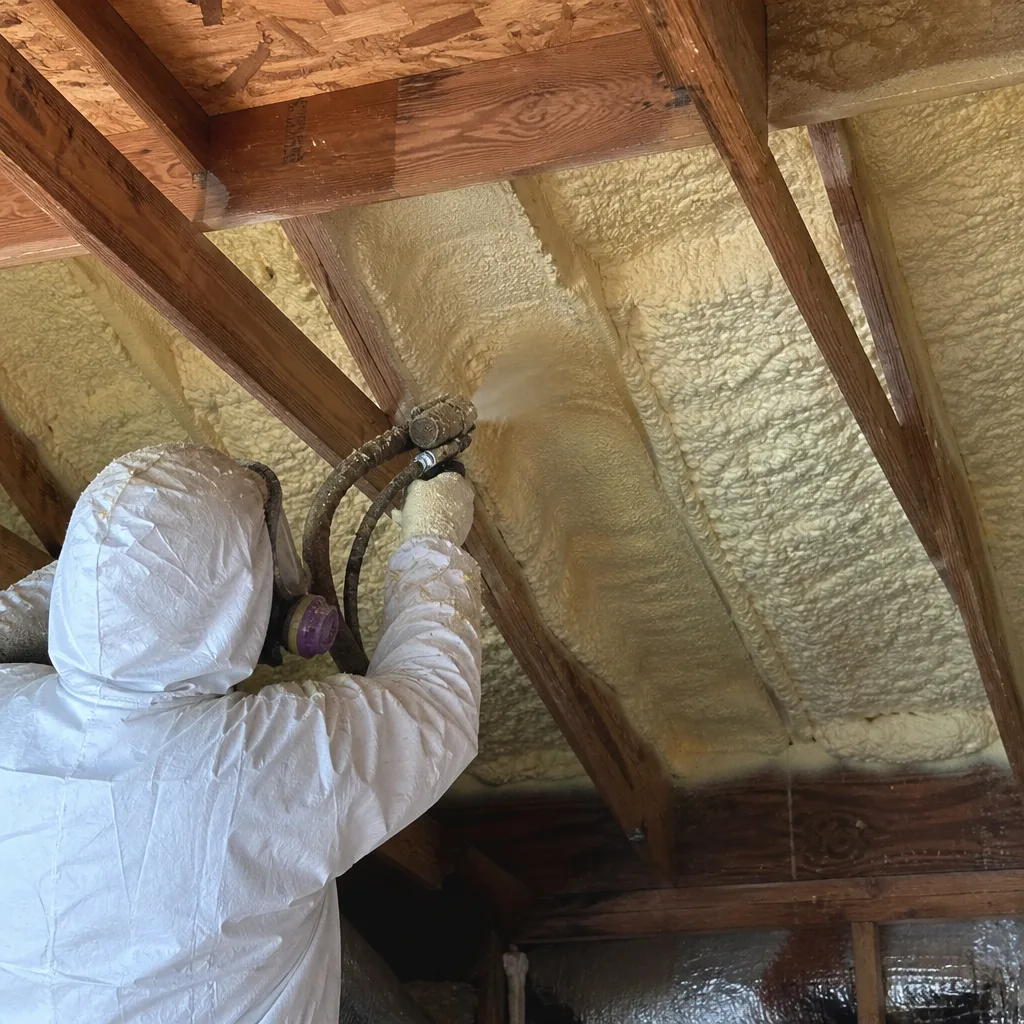
Southern Nevada is hard on attics. The summer attic temperature routinely reaches 150°F and above. That has specific consequences for insulation performance:
- Thermal cycling: Daily swings between overnight lows in the 80s and daytime attic temperatures over 150°F stress materials and accelerate the breakdown of radiant barriers and foil facings.
- Low humidity most of the year: Cellulose performs well in dry conditions but can suffer in the monsoon months when humidity spikes for weeks. If moisture gets trapped under unvented decking, settlement and mold follow.
- Solar load on west- and south-facing roof planes: Homes in Summerlin, Green Valley, and Southern Highlands with west-facing roof sections run hotter attic-side than the same home with an east-facing exposure. The insulation specs look identical on paper; the performance doesn’t.
- Construction era: Homes built in the 2015 – 2025 window typically meet modern code, but pre-1990 homes in older Las Vegas neighborhoods often have R-11 or R-13 in the attic with no continuous air barrier. Those homes benefit most from a sealed-first scope.
When you’re troubleshooting in Las Vegas, check the roof orientation and the construction era before assuming an insulation problem. Two houses on the same street can fail for entirely different reasons. The attic insulation work we do in Las Vegas always accounts for both, because guessing at the climate without checking the structure is how the wrong fix gets applied.
Pest Evidence and Musty Odors: What They Signal
Rodent activity and musty odors are usually the same finding from different directions: the attic isn’t sealed. Rodents enter through gaps that are also air leaks. The smell comes from droppings, nesting material, or moisture condensing where a bypass pulls warm humid air against a cool surface.
What to do:
- Look for entry points before treating the symptom. Roof-to-wall transitions, gable vents, and plumbing penetrations are the usual suspects. Rodent proofing has to close these or the problem returns within weeks.
- Assess contamination. Heavily soiled insulation needs removal, not just top-up. Blowing new material over contaminated insulation traps the problem.
- Check for moisture before adding anything. A musty smell that follows air sealing usually points to a humidity source that needs correction first, especially in older Las Vegas homes with unvented dryer or bathroom exhaust.
- Document what you find. Photos of entry points and the extent of contamination are the difference between a focused repair and a full replacement.
On a job we complete, the Documented Photo Record on every visit captures exactly this: the entry points, the extent of the material, and the sealed state after work. It’s the record a homeowner needs if the problem recurs, and it’s included on every job, not available on request.
Common Mistakes to Avoid
- Blowing new insulation over unsealed leaks. This is the single most common error in Las Vegas attics. The new material buries the leaks and hides the symptom instead of fixing the cause.
- Trusting a visual check that skipped the duct connections. Half of the “insulation failures” in this climate are duct problems. If the inspection didn’t include the plenum, the boot collars, and the flex runs, it’s incomplete.
- Treating settled insulation as compressed insulation. Settlement is normal aging. Compression is damage. Measuring with a depth ruler is how you tell them apart, and knee-jerk replacement is how you waste money.
- Adding R-value without a before-and-after blower-door test. Without a CFM50 baseline and a retest, there’s no number to verify what changed. A receipt isn’t proof of performance.
- Skipping pest proofing on a re-insulation job. Rodents re-enter in weeks through the same gaps. Proofing has to come before material.
- Accepting a written estimate that describes materials but not the sealed scope. Under Haven Standard Clause 1, the written scope has to state what’s sealed, what’s removed, and what’s tested, not just what’s installed.
- Choosing a contractor by years in business instead of by documented readings. A blower-door number from a recent job tells you more about what will happen in your attic than any brand promise does.
When to Call a Professional
Call a professional when the symptom map points to air movement, when a thermal scan shows concentrated hot or cold spots, when you suspect a duct leak you can’t reach safely, or when pest contamination requires removal before any new material goes down. Attic work involves high-tension springs on attic ladders, hot surfaces, and electrical penetrations; a trained technician can inspect without putting you at risk. Call Envelope Insulation Las Vegas at (833) 362-4859 for a free estimate in Las Vegas. Every job begins with a written price before any work starts, a documented photo record, and, where applicable, a before-and-after blower-door reading. Our technicians have up to 10 years of experience, and we’ve sealed and insulated more than 9,000 homes since 2016 with that same documentation standard.
Frequently Asked Questions
Usually not by itself. If the upstairs rooms run 5 – 8°F hotter than the thermostat setting, the cause is almost always a bypass or a duct leak, not missing R-value. Seal the leaks first, then top up the insulation if depth is short. Call (833) 362-4859 for a diagnostic visit with a free estimate.
Use a depth ruler. Settled insulation has a consistent depth across the attic that’s lower than original spec. Compressed insulation has depth missing in patches, usually around foot traffic, storage, or the air handler. Only compression represents a real reduction in R-value beyond normal aging. Call (833) 362-4859 to have it measured properly.
A 25 to 40 percent reduction from your baseline CFM50 is a meaningful result. A typical unsealed Las Vegas attic reads 3,500 to 5,500 CFM50 before work. If the retest moves less than that, the leaks weren’t properly addressed. Call (833) 362-4859 for a free second opinion on any written estimate you’ve received.
Moisture is entering through a bypass and condensing in the attic. Common sources in Las Vegas are unsealed top plate gaps, dryer exhaust, and bathroom vent terminations into the attic instead of outside. Sealing the bypass and venting properly resolves it. Call (833) 362-4859 to have the source identified before any new material goes down.
Yes, and it’s the most common misdiagnosis we see. A disconnected flex duct or an unsealed plenum connection drops delivered airflow and can raise the bill by the same dollar amount as a failing insulation job. The fix is a tape-and-mastic seal at every joint, not new material. Call (833) 362-4859 for a free estimate that includes the duct inspection.
Yes, if the scope is sealed-first. Pre-1990 homes are typically at R-11 or R-13 with no continuous air barrier, so the potential improvement is real. But blowing new insulation without sealing the attic floor first leaves the improvement on the table. Call (833) 362-4859 for a written scope that names both the sealed work and the tested result.
The Bottom Line
Attic insulation failures rarely announce themselves from the hatch. They appear as a bill anomaly, a room that won’t cool, or a blower-door number that didn’t move after new material went in. In Las Vegas, the most frequent root causes are bypassed leaks at partition walls and can lights, disconnected HVAC ducts, and compressed material near the air handler. Read the symptom map, check duct connections, measure depth with a ruler, then verify with a blower-door retest before spending on more R-value. Sealed first, insulated second, and documented every time. That’s the order that produces a number you can verify, and it’s the only scope we’ll write.
Ready to name the actual problem? Call (833) 362-4859 for a free estimate. Every job starts with a written price before any work begins, a documented photo record at close, and a 365-Day Done Right Promise behind the result.
Written by the team at Envelope Insulation Las Vegas.