Last updated November 17, 2026
Attic Insulation Warning Signs Every Homeowner Should Know
A utility bill that climbs 15 to 20% year over year without a rate change is a more reliable insulation warning sign than anything you’ll see from the attic hatch. And it’s the one most homeowners explain away as “the heat got worse this summer.” That’s the trap: the failures that cost the most money are behavioral, not visual. The house tells you in runtime hours, thermostat cycles, and meter readings long before you notice anything wrong with the material itself. This guide translates those behaviors into specific diagnoses, covers which visual signs actually matter in a Las Vegas attic, and shows you how a single blower-door number tells you what you’re really losing.
Quick Answer
The most reliable attic insulation warning signs are behavioral: cooling bills rising 15 to 20% without a rate change, HVAC runtime above 16 hours a day in July, and rooms that cycle the thermostat more than twice an hour in summer. In Las Vegas, a home built before 2006 with the original blown-in insulation has usually lost at least an inch of depth to settling and pest tunneling, and often has R-19 where R-38 is now standard. Visible problems like crushed material or ceiling stains can confirm a diagnosis, but the meter and the thermostat get there first.
Table of Contents
- Behavioral Warning Signs You Can Read From Your Thermostat and Meter
- Visual Warning Signs That Actually Matter (and Ones That Don’t)
- What Pest Activity Does to R-Value
- The Ceiling Stain Test: Air Movement or Roof Leak?
- How to Request a Blower-Door Test and What the Number Means
- What a Las Vegas Home of a Given Vintage Should Score
- Why Sealing Comes Before Insulating
- Common Mistakes to Avoid
Behavioral Warning Signs You Can Read From Your Thermostat and Meter
Start with runtime. If you have a smart thermostat, pull the July report and look at how many hours a day your HVAC system actually ran. In a well-insulated Las Vegas home, a properly sized system runs about 10 to 14 hours a day on a 110°F afternoon. Above 16 hours is a warning. Above 18 means the system is running continuously through the heat of the day and losing ground anyway, which almost always points to either an undersized unit, air leaks, or insulation that isn’t holding its R-value.
Next, count cycles. A system that cycles on and off more than twice an hour in summer is short-cycling, and it’s a specific symptom. In Las Vegas we see this most in two-story homes in neighborhoods like Summerlin and Green Valley where the upstairs is over an unconditioned garage ceiling and the attic gets to 150°F by noon. The upstairs thermostat hits setpoint, the system shuts off, the attic heat bleeds back in within 20 minutes, the system kicks on again. That pattern costs money even when the system is “working.”
Then there’s the bill itself. A 15 to 20% year-over-year increase with no rate increase and no change in your household is the single most reliable indicator that something in your building envelope has degraded. If your bill has climbed steadily over three summers and you’ve replaced nothing, the insulation assembly is the place to look first, before the HVAC.
- Runtime: over 16 hours a day in July is elevated; over 18 is critical.
- Cycle count: more than twice an hour in summer means short-cycling.
- Bill trend: 15% or more year-over-year without a rate change.
- Room differential: upstairs 6°F+ warmer than downstairs at the same setpoint.
Visual Warning Signs That Actually Matter (and Ones That Don’t)
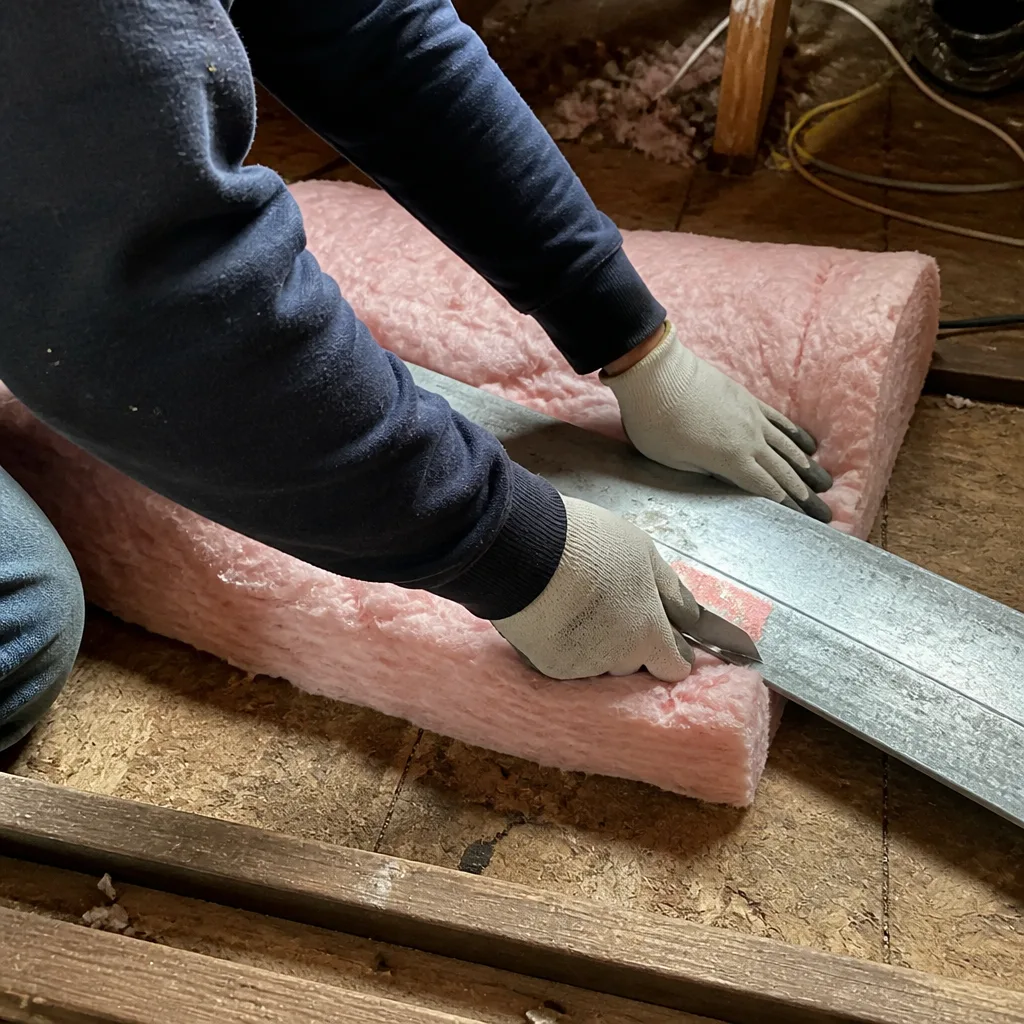
When you do look in the attic, you want to measure depth, not color. Blown-in insulation should be 12 to 16 inches deep in a Las Vegas attic to hit the current R-38 to R-49 recommendation. Under 10 inches is a real problem: your material has settled, been tunneled by pests, or was installed short. Under 5 inches and you’re losing most of the benefit. Take a tape measure, poke it straight down in three spots at least 4 feet apart, and average the readings.
What doesn’t matter much: slight color variation in blown-in material, small areas where material has drifted toward the eaves, or a bit of dust on the surface. Blown-in fiberglass from GreenFiber or Johns Manville settles and shades over years, and a cosmetic difference between where one bag was blown and the next isn’t an insulation failure. Don’t let a contractor sell you a full removal on color alone. What does matter is material that’s clearly compressed (crushed by a technician who walked on the joists, or matted down from a pest problem), visible gaps around top plates and can lights, and any spot where you can see straight down to drywall through what should be a full blanket.
- Matters: depth below 10 inches; visible compression; gaps at top plates, can lights, and plumbing penetrations; tunnel holes from animals.
- Doesn’t matter: color variation in blown-in material; light dusting on the surface; minor drift toward the eaves.
- Matters and gets missed: ductwork in the attic that’s not insulated or has given up its insulation wrap.
What Pest Activity Does to R-Value
Rodents and pigeons don’t just disturb the environment in a Las Vegas attic, they degrade the insulation assembly, often badly. The specific mechanism: rodents tunnel lateral runs through blown-in material, compacting it along the walls of the tunnel and leaving a hollow channel. That channel becomes a thermal bypass: attic air moves freely along it, and the affected strip of attic floor can lose 40 to 60% of its effective R-value even though the average depth looks fine from the hatch.
Pigeons and roof rats pull material to build nests, leaving thin patches. Pack rats in the desert-edge neighborhoods of the northwest valley (Providence, Skye Canyon, and the new builds along the 215) do the same and add the secondary problem of contamination. Once material has been soiled, it has to come out, and the R-value loss is the least of your concerns. A thermal scan picks up pest damage clearly: the tunneled strips show up as warm bands against a cool attic floor in summer, and the diagnostic result is unmistakable. If you suspect pest activity, it’s worth reading through attic insulation in Las Vegas to understand what the removal and replacement path looks like, since you’ll want the pest problem proven closed off before any new material goes down.
The Ceiling Stain Test: Air Movement or Roof Leak?
A brown ring on the ceiling above a room, typically near an exterior wall, is one of the most misread signs in Las Vegas homes. Homeowners assume roof leak and call a roofer. About half the time, the real cause is air movement. Here’s the test: a ring stain, dry to the touch in summer but growing slowly over months or years, with no active drip, is usually the signature of warm interior air leaking up through a gap in the ceiling plane and condensing against the underside of the attic-side surface. The stain is a condensation ghost, not water damage.
A roof leak looks different: it’s active during the rainy season (January through March in Las Vegas), it typically grows quickly, and you’ll often see a corresponding damp area on the attic decking above. If the stain dries out completely in summer and only shows in the rainy months, suspect the roof. If it darkens during the hottest, driest weeks and stops growing after our monsoon season, suspect air movement through the insulation assembly.
- Timing: stains that darken in summer point to air leakage; stains that darken in rain point to roof.
- Location: stains near a ceiling fixture or can light usually trace to an unsealed penetration.
- Attic inspection: look directly above the stain for a gap between drywall and joist, or a can light that isn’t sealed.
- Confirm with a blower-door test: if the assembly is losing air, the reading will reflect it. If it’s sealed, look at the roof.
How to Request a Blower-Door Test and What the Number Means
A blower-door test is a pressurization measurement that shows, in a single figure, how much air your building envelope is losing. A fan seals into a doorway, pulls the house to a set pressure difference (usually 50 Pascals), and the reading comes back in CFM50: cubic feet per minute at 50 Pascals. A lower number means a tighter house. It’s the only diagnostic tool that turns “the house feels drafty” into a number you can compare before and after work.
When you call to request one, ask two specific questions: (1) will you seal the house to a standard baseline (windows closed, all exterior doors closed, HVAC off) before the test, and (2) will you publish both the before and after numbers. Any contractor who hedges on the second question is telling you they don’t want to be measured. The reading isn’t a pass/fail test, it’s a comparison. What matters is that you have the same number, measured the same way, before and after.
In our experience, the homes that start above 5,000 CFM50 in Las Vegas almost always have unsealed top plates and can lights throughout the attic floor, and they usually gain 30 to 50% reduction after full sealing. If you want to see what the diagnostic protocol looks like on a real job, the process we run is described in detail at Envelope Insulation Las Vegas home.
What a Las Vegas Home of a Given Vintage Should Score
Blower-door scores in Las Vegas correlate fairly tightly to build year, because both the code and the material have tightened over time. Use these ranges as a rough guide when you’re interpreting your own test result. The comparison isn’t against a perfect house, it’s against what your house’s vintage should reasonably achieve.
- Pre-1990 (older established neighborhoods, e.g. parts of downtown, Huntridge, and the older sections of Henderson): 4,500 to 6,500 CFM50 is common; anything near 6,500 means the envelope is essentially unsealed.
- 1990 to 2005 (much of the western and southern valley): 3,500 to 5,000 CFM50 is common.
- 2006 to 2015 (code-tightened builds across the newer subdivisions): 2,800 to 4,000 CFM50 is common.
- 2016 and newer: 2,000 to 3,200 CFM50 is typical, and lower is realistic.
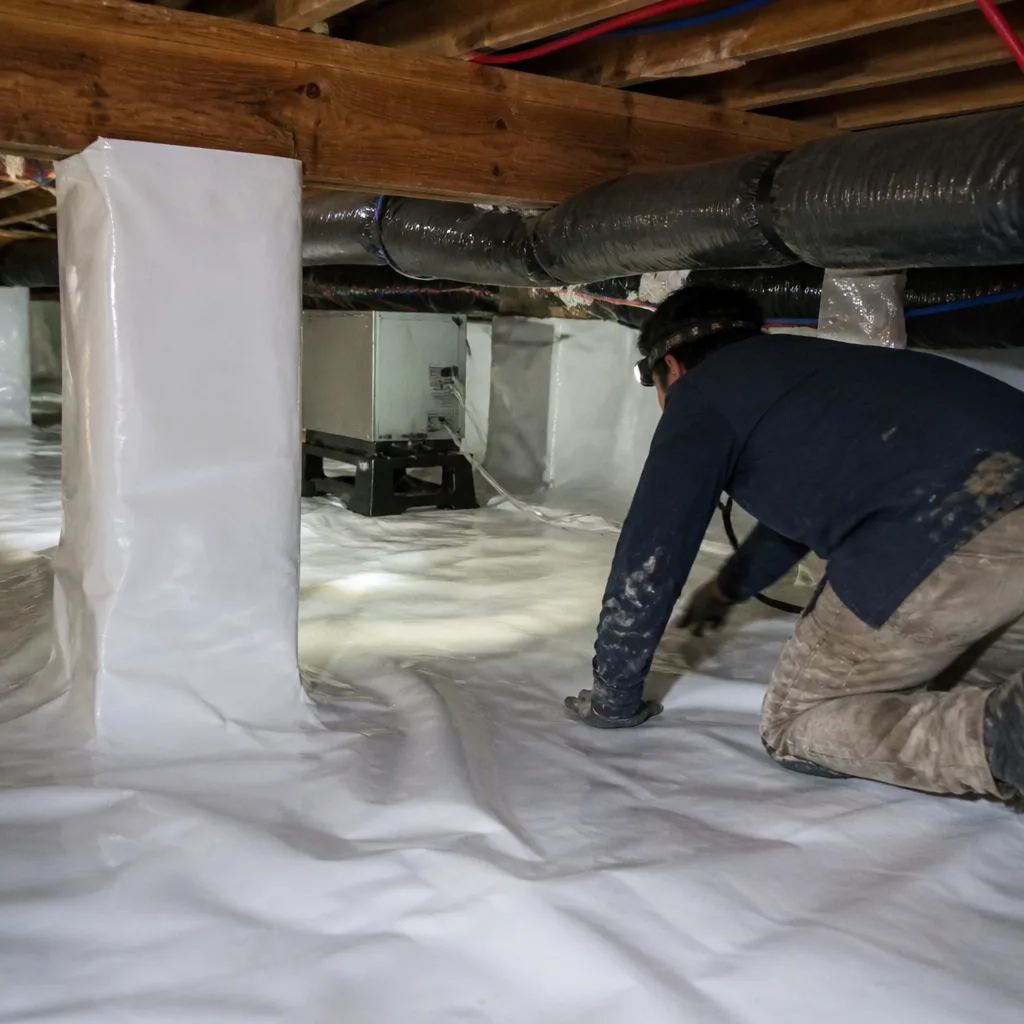
A 20% reduction in blower-door reading translates, in a Las Vegas home during the cooling season, to roughly 12 to 18% off the summer electric bill. On a home that spends $250 a month on cooling from June through September, that’s a real number, in the $120 to $180-per-summer range, and it repeats every year. See our crawl space encapsulation and vapor barrier service in Las Vegas if your attic floor is above a vented crawl space; the envelope has to be addressed top and bottom together.
Why Sealing Comes Before Insulating
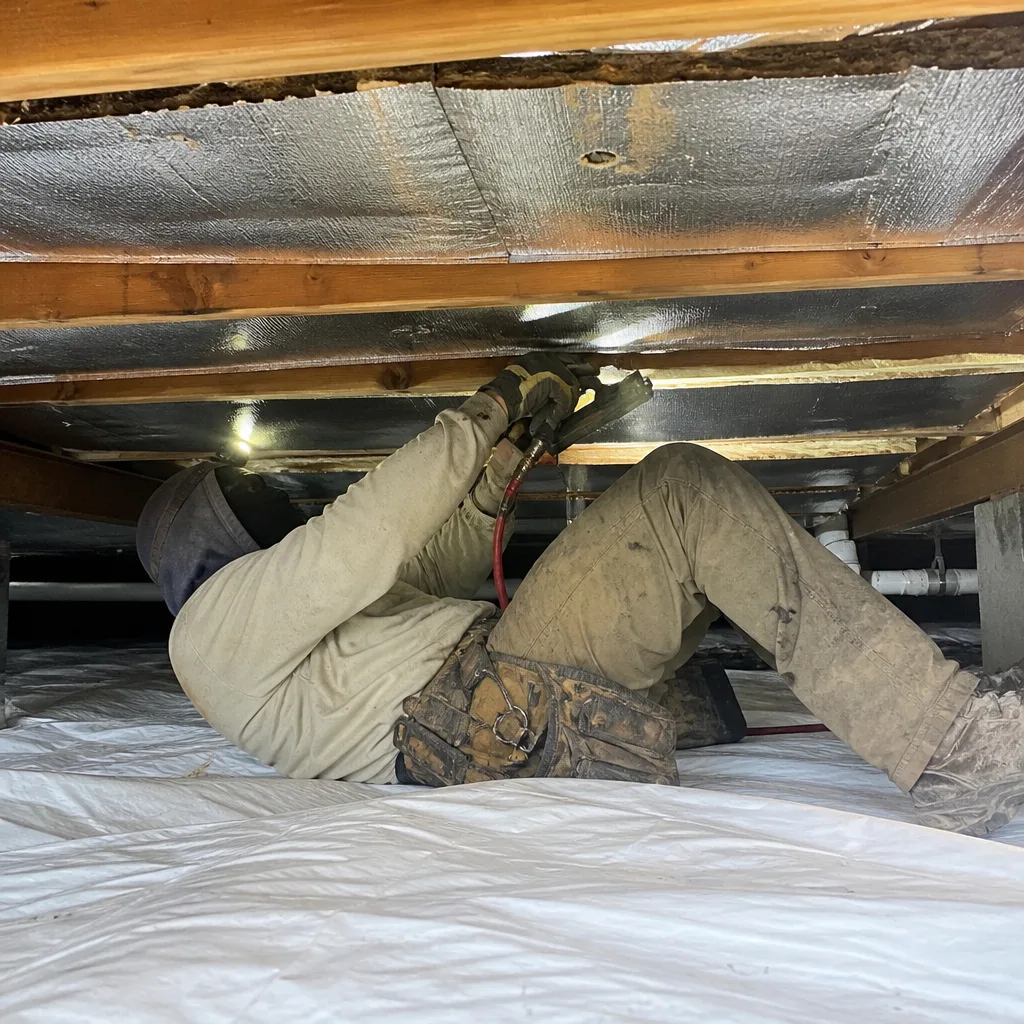
Here’s the diagnostic mistake that wastes more money than any other in this trade: adding insulation over an unsealed attic floor. Blown-in insulation is not an air barrier. It slows conductive heat transfer, but air passes through fiberglass and cellulose almost freely. If you blow 14 inches of new material over unsealed top plates and can lights, you raise the R-value while leaving the holes intact. The house still leaks the same air; you just insulated the leaks.
The right order is seal first, then insulate, and the before-and-after blower-door numbers are what prove it happened. Sealing the top plates (the wood that caps the wall studs), the can lights (with fixtures rated for insulation contact), the plumbing and wiring penetrations, and the duct chases typically costs 25 to 40% of the job total and delivers the bulk of the air-loss improvement. Insulation goes on top of that and does its own job. When we analyze a job with a thermal scan and a blower door test, we often find that 60% of the assembly’s total performance gap is sealing, and only 40% is material depth. Doing it in the wrong order wastes the 60%.
For homes with exposed foam or spray-applied applications at the roof deck, the same principle applies. If you’re considering that route, our spray foam insulation in Las Vegas page covers how the air-sealing step integrates with that specific system.
Common Mistakes to Avoid
- Buying insulation on price per square foot alone. A quote that doesn’t mention air sealing is a quote for half a job, and it will test the same on the blower door as before.
- Trusting a color-difference upsell. Slightly varied blown-in material from CertainTeed or Knauf is normal. Don’t pay for removal because the technician said the color looked “off.”
- Skipping the before-and-after numbers. If the contractor won’t publish both readings, you’ll never be able to verify the improvement you paid for, and the warranty is only as good as the record.
- Assuming a ceiling stain means roof leak. Half of the ring stains in Las Vegas attics trace back to air movement through unsealed can lights and top plates, not to a failing roof.
- Insulating around pest damage without removing the contaminated material. New material blown over the top of tunneled, soiled insulation hides the problem without fixing the R-value loss.
- Ignoring the ducts. Ductwork that has lost its insulation wrap or has unsealed joints can leak 20 to 30% of your conditioned air into the attic. That has to be addressed in the same visit.
- Measuring depth from the hatch. Blown-in depth varies across the attic floor. Poke four or five spots at least 4 feet apart and average the readings before you accept any diagnosis.
When to Call a Professional
Call a professional if your July runtime is over 16 hours a day, if your bill has climbed 15% or more with no rate change, if you’ve found pest tunnels in the attic, or if you’ve seen a slow-growing ceiling stain you can’t confidently attribute. Also call if you’re pre-2010 and you’ve never had a blower-door test, because that single number tells you what nothing else can. Work in the attic itself, especially anything at or above the ceiling plane, should be sealed and handled by an experienced technician; the compressed material and pest contamination on a Las Vegas attic floor are more than a homeowner can safely address with a box of material and a weekend.
Our technicians have up to 10 years of experience. Envelope Insulation Las Vegas offers free estimates in Las Vegas. Call (833) 362-4859 to schedule a diagnostic visit. Under Haven Standard: Written Price Before Any Work Starts (Always), you’ll have a flat price and a written scope in hand before anyone lifts a tool.
Frequently Asked Questions
A visual inspection is usually free. A full diagnostic combining a blower-door test and a thermal scan typically runs $300 to $600 in the Las Vegas market, and many contractors apply that cost toward the job if you proceed. The test is worth it, because it produces the number that tells you whether your money is best spent on sealing, insulation, or a combination of both. Call (833) 362-4859 for a flat price on the diagnostic before you commit, and bring any competing quote to us for a free second opinion.
The blower-door number answers this definitively. A house with low depth and a low blower-door reading needs more insulation; a house with okay depth and a high blower-door reading needs sealing; a house with both problems needs sealing first and insulation on top. Depth tells you what’s on the floor. The blower door tells you what the assembly is doing.
About 12 to 18% off your summer cooling bill, based on the jobs we’ve measured. On a $250-per-month summer bill, that’s $120 to $180 saved per cooling season, and it repeats for the life of the insulation. The important part is that the number is published, so you can compare what we measured on your house to what you actually pay.
Yes. High blower-door readings often trace to a vented crawl space, not the attic floor, and a summer crawl space in Las Vegas can push humid air up into the envelope, adding to cooling load and moisture problems. If your blower-door result is elevated, we check the crawl space before we quote attic work. The crawl space encapsulation and vapor barrier service page explains how the two are addressed together.
Every five to seven years if you live near the desert edges where the pest pressure is highest (Providence, Skye Canyon, the 215 corridor), and every 8 to 10 years in the more established parts of the valley. After 10 years, settling alone typically costs you an inch or two of depth, and that’s a 5 to 10% hit to effective R-value on top of any pest activity or air sealing issues.
You can, but only after air sealing. Adding material over unsealed top plates and can lights raises R-value on paper while leaving the actual air loss unchanged, and the blower-door reading will confirm it didn’t help. Sealing goes in first, insulation goes on top, and both readings get published so you can verify the improvement.
The Bottom Line
The signs that matter most in a Las Vegas attic aren’t the ones you can see from the hatch. They’re the ones that show up in runtime hours, thermostat cycles, and the meter. Start there. If your bill is climbing, your July runtime is over 16 hours, or your thermostat is cycling more than twice an hour, get the blower door test. Treat visual signs (depth under 10 inches, pest tunneling, compression) as confirmation, not as a starting point. And whatever you do, seal before you insulate, because insulating over unsealed holes costs more and delivers less. If you’re ready to put a number on it, call us at (833) 362-4859 for a free estimate, and see our Envelope Insulation Las Vegas home page for what the diagnostic visit looks like.
Written by the team at Envelope Insulation Las Vegas.