Last updated November 17, 2026
The Complete Guide to Insulation in Las Vegas
Attic air temperatures in Las Vegas routinely hit 160°F in July. That single number breaks most of the insulation advice written for the rest of the country, because the R-value charts on every bag of fiberglass were built on a 75°F mean-temperature assumption. Heat like ours degrades batts in ways the label never mentions, and the extreme swing between a 160°F attic afternoon and a 50°F winter night stresses every assembly in the house. This guide covers what that physics means for your attic floor, your walls, your crawlspace, and your energy bill. You’ll learn how thermal drift works, how Clark County code compares to what the data shows, and exactly what documentation to demand when the crew leaves.
Quick Answer
Insulation in Las Vegas works differently than in cold climates: the dominant problem is radiant heat gain from a scorching attic, not heat loss to winter air, and diurnal temperature swings that can span 40°F in a single day punish poorly sealed assemblies. The right approach is to air-seal the attic floor first, then install insulation rated for high-temperature service, and to verify the result with a before-and-after blower-door reading measured in ACH50. R-value alone tells you very little about how a Las Vegas home will actually perform.
Table of Contents
- Why R-Value Charts Don’t Tell the Whole Story in Las Vegas
- What Thermal Drift Means Above 140°F
- Mapping Each Building Assembly to Its Clark County Failure Mode
- Clark County Energy Code: The Minimum and What It Misses
- Radiant Heat Load: The Problem Batts Alone Can’t Solve
- The Blower-Door ACH50 Reading: One Number That Ties It Together
- Matching Materials to Las Vegas Conditions
- What Documentation to Demand at Job Completion
Why R-Value Charts Don’t Tell the Whole Story in Las Vegas
R-value measures thermal resistance, and every published chart measures it at a mean temperature of 75°F. That’s a lab convention, not a desert reality. In a Las Vegas attic in July, the top of an insulation batt might sit at 150°F while the bottom, pressed against a 78°F ceiling, sits far cooler. The temperature gradient across the material is steep, and the performance at the hot face is lower than the number on the bag.
This matters because homeowners shop by R-value. They compare R-38 to R-49 as if those numbers describe a fixed reality. They don’t. What you’re actually buying depends on the material’s behavior across a temperature range that most manufacturers never test for.
A few facts specific to Las Vegas:
- At 160°F attic air, blown fiberglass loses roughly 10 to 20 percent of its rated resistance compared to the 75°F figure, depending on density and settling.
- Loose-fill cellulose holds its value better at high temperatures but compacts over time, so the installed depth and the settled depth are two different numbers you should write down.
- Mineral wool products like Rockwool are engineered for higher service temperatures and hold their resistance more reliably in a hot attic, which is one reason we favor them for roof-deck applications.
- Radiant barriers address a different mechanism entirely, blocking the radiant heat transfer before it reaches the insulation, and can be the highest-value dollar per square foot in a Las Vegas attic.
The practical takeaway: ask what the material’s performance is at the temperatures your attic actually reaches. If the answer is a shrug, you’re talking to someone who reads bags, not buildings. If they name the temperature, you’re talking to someone who works in this climate. For a deeper look at how the attic floor is properly treated, see our guide to attic insulation in Las Vegas.
What Thermal Drift Means Above 140°F
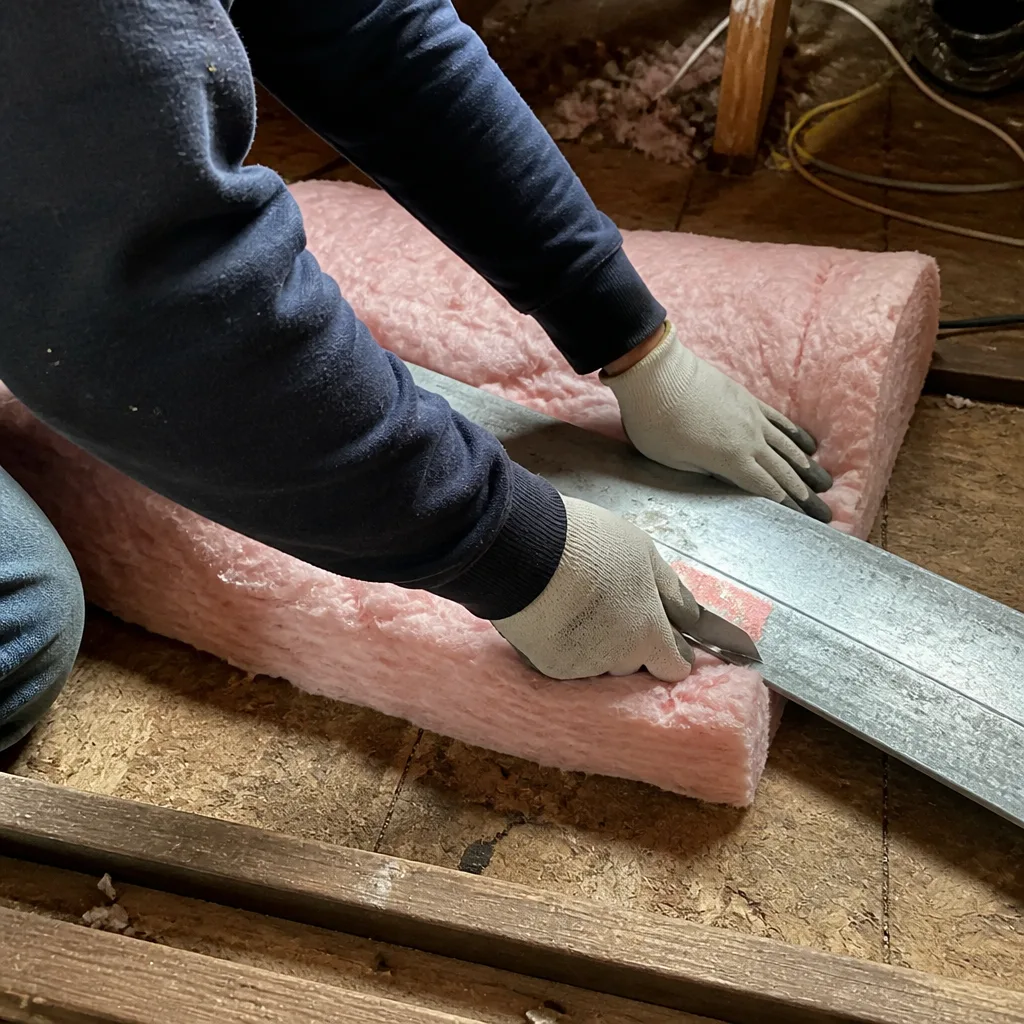
Thermal drift is the loss of insulating performance that happens as a material’s conductivity rises with temperature. Every material drifts. The question is how much, and at what threshold it starts to matter.
Fiberglass drifts most noticeably above 140°F. In a Las Vegas attic, a sunny July afternoon pushes air temperatures well past that mark for four months out of the year. That means a batt rated R-38 at 75°F is performing meaningfully below that for a third of its annual service life. We’ve measured attic air at 158°F in homes in Summerlin and 162°F in older single-story tract homes near the eastern valley, where shallow roof pitches and limited venting trap more heat.
The drift effect compounds with settling. Loose-fill fiberglass settles under its own weight, and once the installed depth drops from the specified 14 inches to 11 or 12, you’ve lost a quarter of your coverage before thermal drift is even considered. Blown cellulose drifts less in temperature but compacts more over time.
This is why we insist on measuring the installed depth and writing it down. The rigid standard we operate under, Haven Standard Clause 1, requires the written scope to include depth and density, not just an R-value figure. If a contractor quotes “R-49 blown” without specifying depth, you can’t verify what you got. You can only hope.
Mapping Each Building Assembly to Its Clark County Failure Mode
Different parts of the envelope fail for different reasons in Las Vegas. A single material strategy applied to the whole house will underperform somewhere. Here’s how each assembly acts in Clark County conditions.
Attic Floor
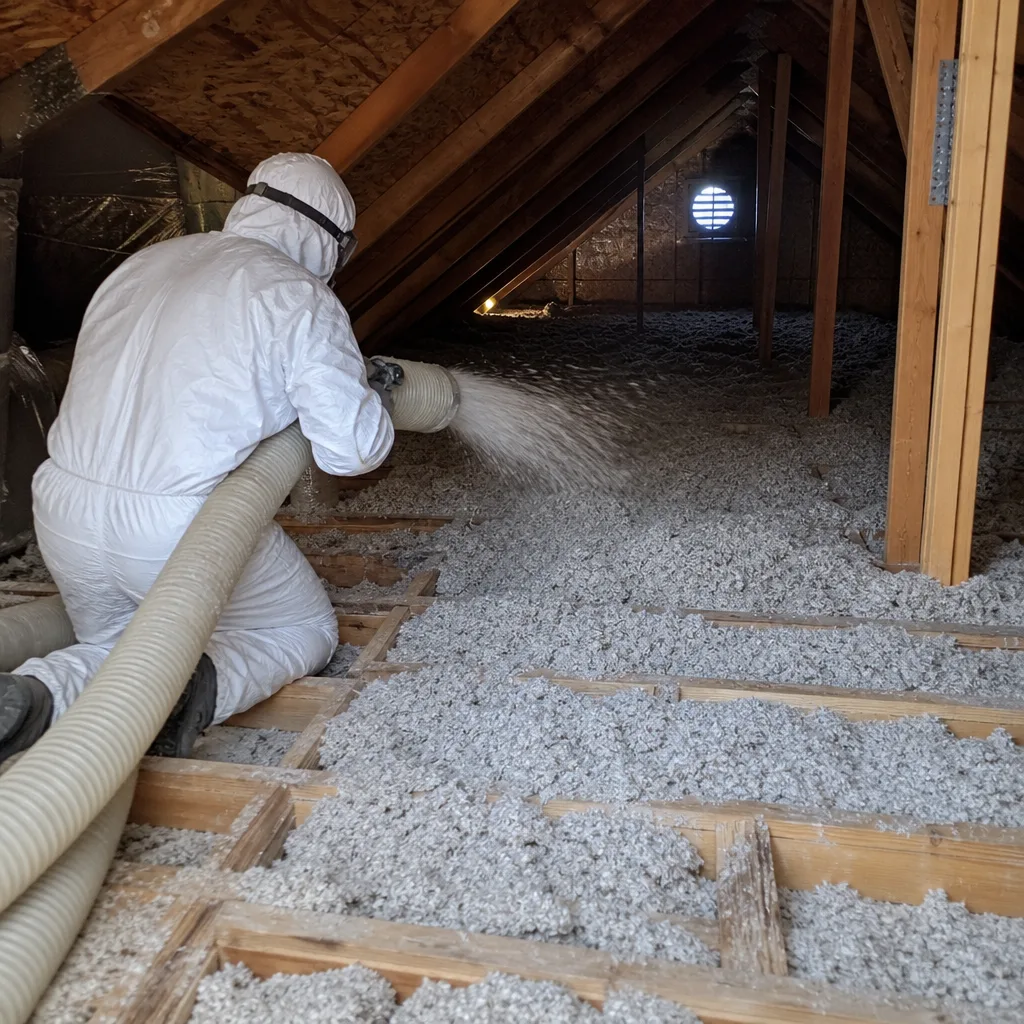
The most common failure is insulation blown over unsealed penetrations. Every can light, top plate, plumbing chase, and electrical feed is a chimney for conditioned air. Blown insulation covers those gaps without closing them. We’ve seen attics where a quarter of the conditioned air was escaping through the ceiling plane before any batts went in. The fix is order-of-operations: air seal first, then insulate. Never the reverse.
Roof Deck
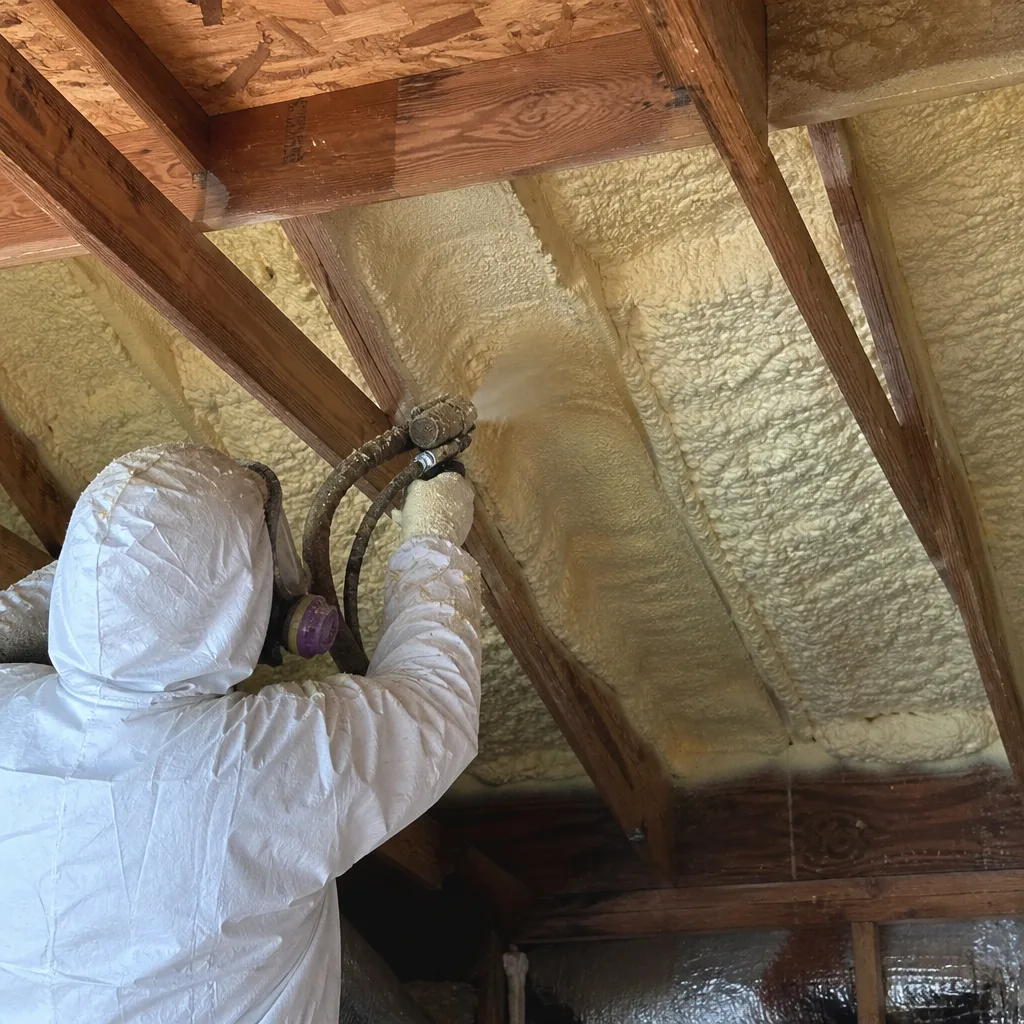
In a vented attic, the roof deck itself reaches 170°F or more on a July afternoon. Insulating at the deck (a “hot roof” assembly) changes the failure mode. The main risk is moisture trapping at the sheathing, which is less of a problem in our dry climate but still requires careful detailing at penetrations. Spray foam at the roof deck keeps the attic within the conditioned envelope and is the right call in certain Las Vegas homes, particularly those with ductwork running through the attic.
Walls
Exterior walls in a Las Vegas home are typically 2×4 framing with R-13 batts in newer construction. The common failure is convective looping in the stud cavity and unsealed gaps where the wall meets the top plate. Wall insulation is seldom worth retrofitting unless the drywall is already open. When it is, this is the cheapest insulation dollar you’ll ever spend. See our page on spray foam insulation in Las Vegas for the assemblies where foam earns its cost.
Crawlspace and Slab
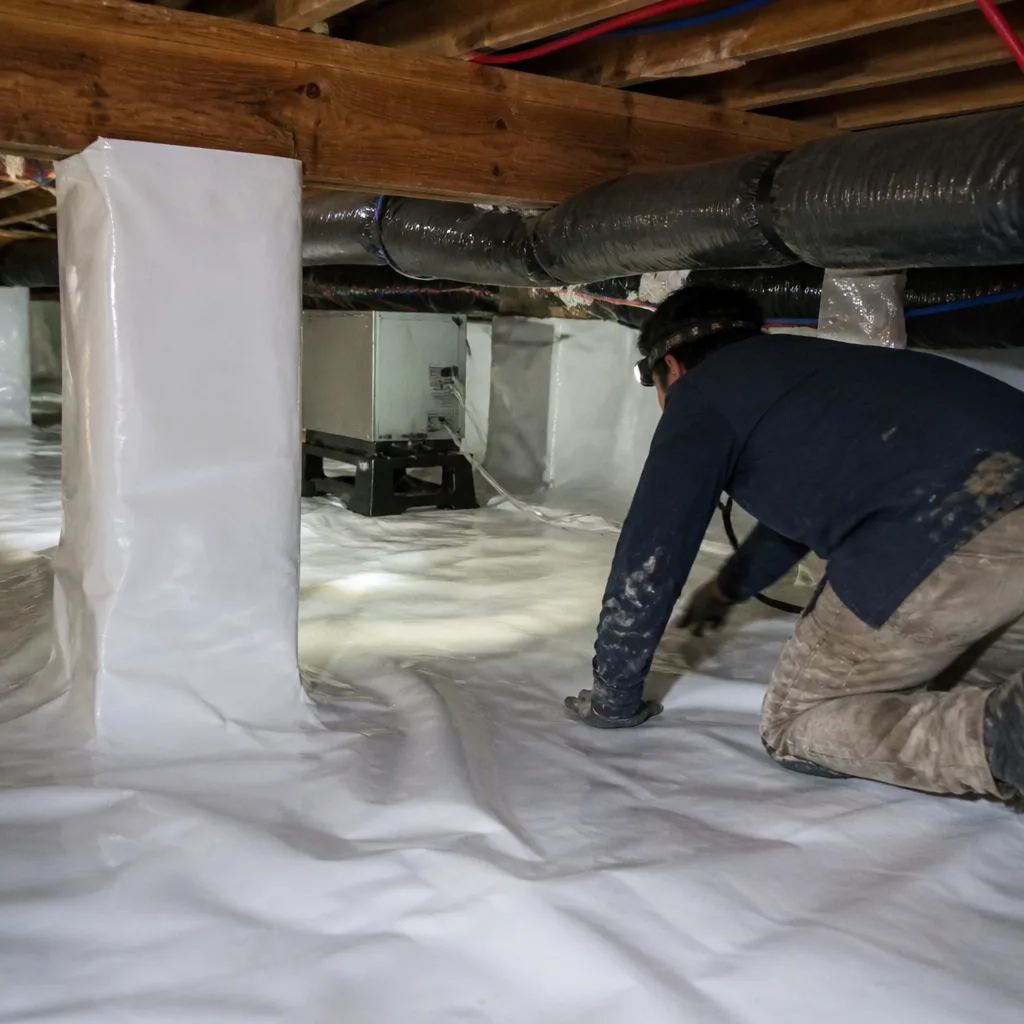
Many Las Vegas homes are on slab, but a meaningful share of older properties have raised foundations or a crawlspace. In those homes, the failure mode is vapor migration from soil up through the floor assembly, which degrades insulation from below and pushes humidity into the living space. The answer isn’t more insulation; it’s a sealed vapor barrier. Our crawl space encapsulation and vapor barrier guide covers the details specific to Clark County soil and the monsoon-season moisture pulses that catch homeowners by surprise.
Clark County Energy Code: The Minimum and What It Misses
Clark County enforces the Nevada Energy Code, and Table 402.1.3 lays out the prescriptive minimums for residential construction. For our climate zone, those minimums run roughly:
- Ceiling/attic: R-38 to R-49 depending on the compliance path
- Wood-frame walls: R-13 plus sheathing or R-20 cavity only
- Floor (over unconditioned space): R-19 to R-30
- Crawlspace walls: R-10 to R-15
These are the floor, not the ceiling. Meeting code gets you a certificate. It does not get you a house that performs well in a 160°F attic.
What code misses is the interaction between air sealing and insulation. The prescriptive path treats them as separate line items. In real buildings, the assembly with R-49 of insulation over a leaky top plate performs worse than the assembly with R-38 over a properly sealed one. The code doesn’t require a blower-door test on a retrofit, so nobody ever measures whether the package as installed works together. That’s the gap.
Why this matters in practical terms: we’ve been called to Las Vegas homes built after 2015 that met code and still had ACH50 readings above 6. The homeowners paid for the insulation. They just never paid for the seal. Fixing that before adding anything is the whole job. For a starting point on where your home sits, our Envelope Insulation Las Vegas home lays out the service range.
Radiant Heat Load: The Problem Batts Alone Can’t Solve
The sun in Las Vegas delivers roughly 6.5 to 7.0 kWh per square meter per day of solar energy on a horizontal surface in June. That energy lands on the roof, converts to heat, and radiates down into the attic. Insulation slows conductive heat transfer. It does very little against radiant transfer across the attic airspace.
This is the single biggest misdiagnosis we see in Las Vegas homes. A homeowner adds R-49 of fiberglass and the bill drops by maybe 8 percent. They expected 25. The missing piece is the radiant barrier, a foil-faced material installed on the underside of the roof rafters or as a sheathing product that reflects radiant heat before it enters the attic air.
In a Las Vegas attic, a properly installed radiant barrier can drop attic air temperatures by 20 to 30°F on a July afternoon. That reduction is what protects the insulation below from thermal drift, and it’s what changes the temperature the ducts pass through. The two systems (radiant control above, sealed and insulated ceiling plane below) work together. Neither works as well alone.
Whether a radiant barrier makes sense for your home depends on the roof assembly, the venting, and the existing insulation. We work through the tradeoffs with each homeowner because the wrong barrier in the wrong attic can worsen moisture issues.
The Blower-Door ACH50 Reading: One Number That Ties It Together
A blower-door test is a pressurization measurement that quantifies how much air your building envelope leaks. The technician mounts a calibrated fan in an exterior doorway, pressurizes the house to 50 pascals, and measures the airflow needed to hold that pressure. The result is expressed as ACH50, or air changes per hour at 50 pascals.
Why this number matters more than the R-value on the bag: it’s the only figure that captures the air-sealing work you paid for, in a way you can verify. A before-and-after reading turns the whole job into a measurable outcome. A typical pre-work reading on a Las Vegas home built before 2010 lands between 5 and 9 ACH50. A well-sealed post-work reading should land between 2 and 4.
A 5.0 ACH50 home that drops to 3.0 has cut its infiltration-driven heat gain roughly in half. That’s the number the homeowner should be holding when the crew leaves, on paper, with the date and the technician’s initials. A pressurization figure can’t be inflated or hand-waved. It either changed or it didn’t.
Matching Materials to Las Vegas Conditions
Materials perform differently in desert heat. Here’s how the main options sort out for Las Vegas homes:
- Mineral wool (Rockwool, Knauf): Highest service-temperature tolerance of the batt products, excellent for roof decks and areas where fiberglass would drift noticeably. Higher upfront cost.
- Blown fiberglass: The budget choice for attic floors. Requires careful depth verification since it settles and drifts. Estimate 10 to 20 percent loss versus rated R-value in a hot attic.
- Blown cellulose: Better temperature stability than fiberglass, denser settling profile, and it fills irregular cavities well. The right call for many attic floor retrofits.
- Closed-cell spray foam (Icynene, Demilec): The best option for roof deck insulation and wall assemblies where air sealing and insulation need to happen in one step. Higher cost per square foot; you pay for the dual function.
- Radiant barrier: Foil-faced products that reduce attic radiant load. Not an insulator in themselves but a critical multiplier for anything below.
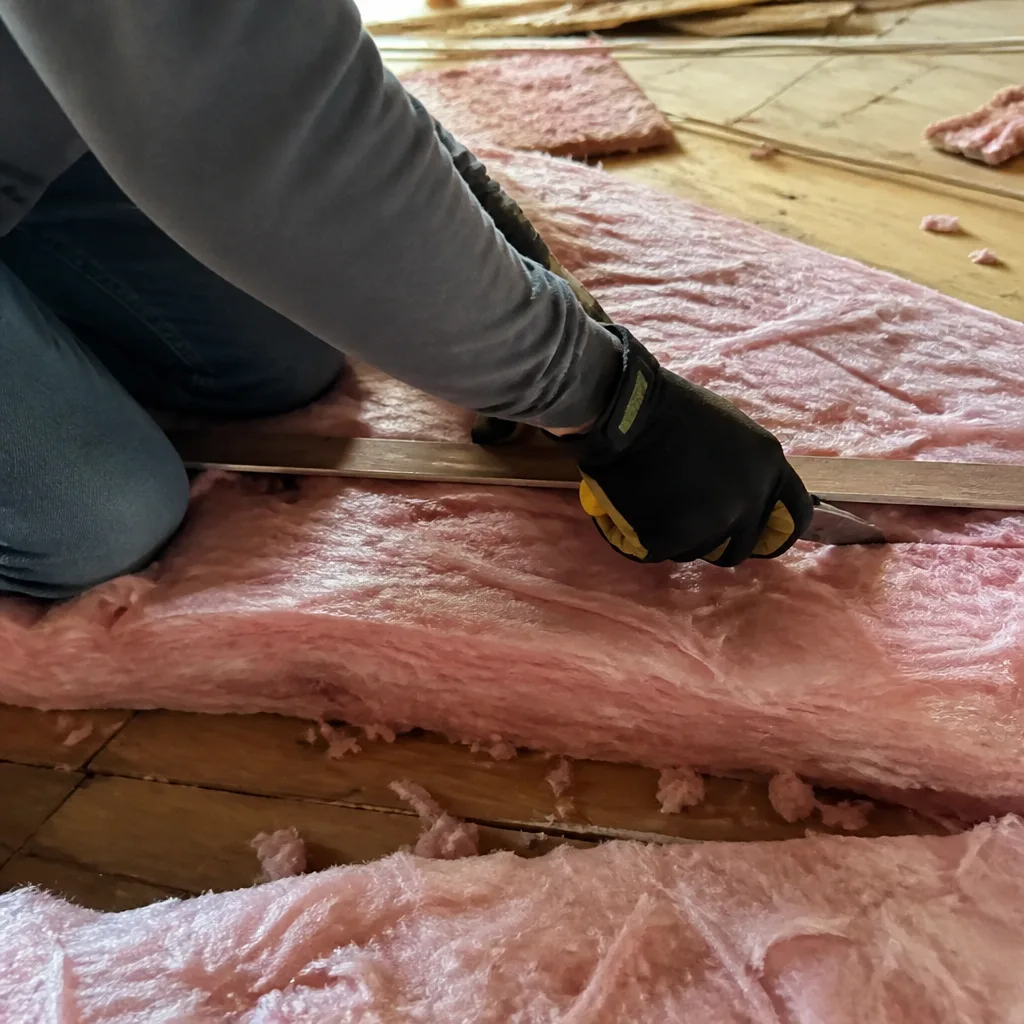
Fiberglass batts still have a role in new construction where cavities are clean and uniform. In retrofits, we favor blown products for the attic floor because they fill the irregular gaps batts cannot reach. What you should never accept is a “one material fits all” approach; a Las Vegas home typically needs at least two materials in different assemblies.
What Documentation to Demand at Job Completion
The work is only half the job. The other half is the record. Here’s what should be in your hands before the crew pulls out of the driveway:
- Material spec sheets: Manufacturer datasheets for every material installed, showing the rated R-value at the mean temperature used, the density, and the product code. Not a summary sheet. The actual spec.
- Install photos: Before-and-after photos of every assembly touched. Air sealing at top plates, can lights, and penetrations should be visible in the before photos. The insulation should be visible in the after.
- Pre- and post-work blower-door readings: Both ACH50 numbers, dated, with the technician’s name and the equipment model. Not a single figure; both ends of the delta.
- Installed depth and density measurements: For blown products, the measured depth at multiple locations, taken after settling (which means waiting one to two weeks or following manufacturer specifications for immediate post-install verification).
- Written warranty and 365-Day Done Right Promise documentation: The 365-Day Done Right Promise means if the work isn’t right, we make it right. That commitment should be in writing on the same document as the warranty.
Our team publishes before-and-after blower-door numbers on every applicable job for exactly this reason. The homeowner gets a record, not a promise. If a contractor can’t produce these items on request, the record doesn’t exist.
Common Mistakes to Avoid
- Insulating over unsealed top plates. The most expensive insulation mistake in Las Vegas. Batts or blown product over a leaky ceiling plane traps conditioned air in the attic and does nothing for the living space below. Seal first, always.
- Trusting the R-value on the bag. That number was measured at 75°F. Your attic isn’t 75°F for four months of the year. Ask what the performance is at 140°F.
- Skipping the blower-door test. Without a before-and-after ACH50 reading, you have no measurable evidence the work changed anything. Claims without numbers are marketing.
- Choosing batt insulation for an irregular attic floor. In older Las Vegas homes with plumbing chases, recessed lights, and non-standard joist spacing, batts leave gaps blown products fill. The wrong format for the assembly costs you the entire benefit.
- Ignoring the crawlspace. In homes with raised foundations, unsealed soil vapor migrates up through the floor. Insulation installed without a vapor barrier underneath will fail within a few cooling seasons.
- Assuming code compliance is optimization. Meeting Table 402.1.3 gets you a certificate. It does not guarantee a house that performs in our climate. The prescriptive path has no air-sealing verification step.
- Accepting an estimate with no written scope. A verbal estimate with a single total figure doesn’t tell you what materials, depth, or sealing work you’re buying. Under Haven Standard Clause 1, a flat written price, written scope, and written warranty come before anyone lifts a tool. No exceptions.
When to Call a Professional
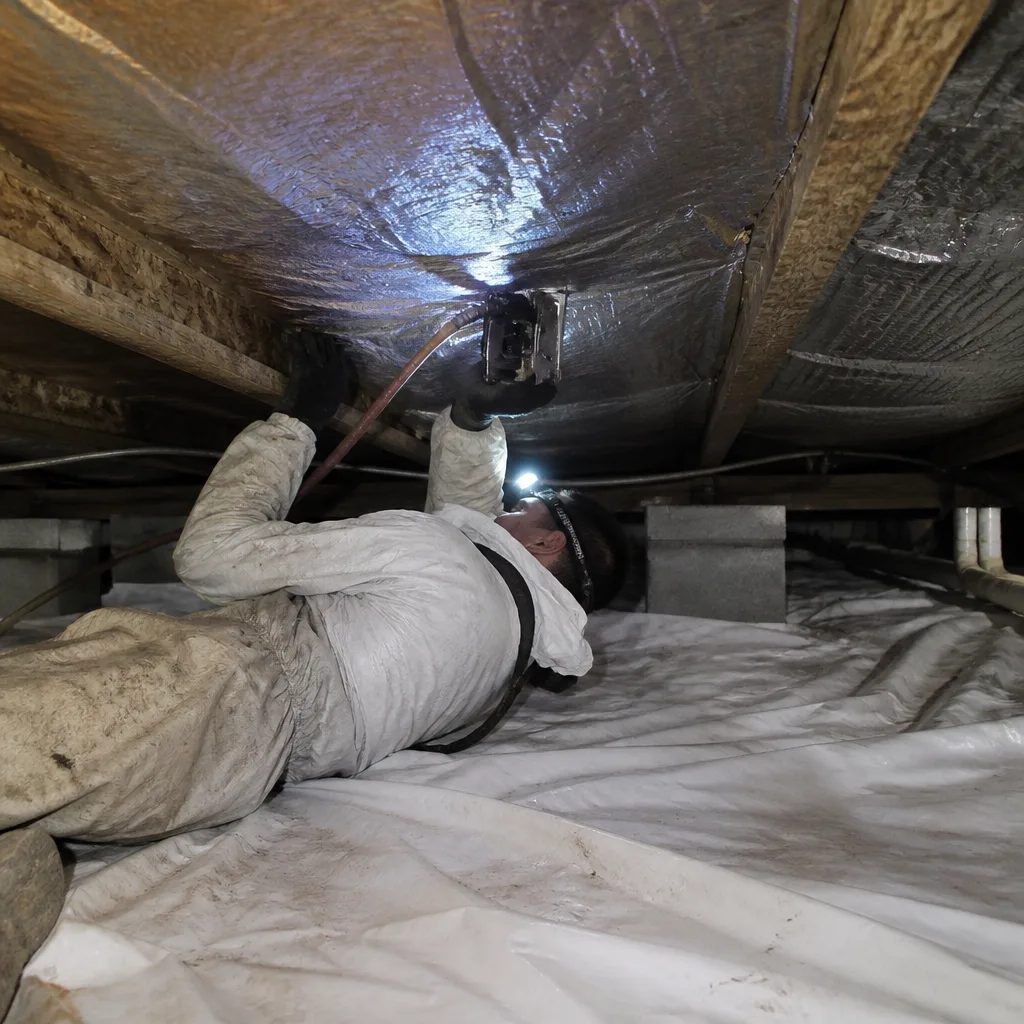
Some insulation work is genuinely safe for a homeowner, like rolling out an additional layer of batts over a clean, already-sealed attic floor. Most isn’t. Any work involving spray foam application, roof-deck assemblies, wall cavity retrofits, or air-sealing around can lights (which involve working near live electrical fixtures in a 160°F attic) should be done by trained technicians. Crawlspace encapsulation involves moisture dynamics and vapor barrier detailing that, if done wrong, traps moisture and worsens the problem. And any job where the goal is measurable performance change needs a blower-door test on both ends, which requires calibrated equipment and someone trained to interpret the result. Our technicians have up to 10 years of experience and work background-checked and uniformed. Envelope Insulation Las Vegas offers free estimates in Las Vegas, every one with a Written Price Before Any Work Starts and a Free Second Opinion on any written estimate you bring us. Call (833) 362-4859 and a live person will pick up.
Frequently Asked Questions
For most Las Vegas attics, R-38 to R-49 is the practical range, aligned with Nevada Energy Code Table 402.1.3 for our climate zone. But R-value is only one input. The assembly with R-38 over a properly sealed ceiling plane outperforms R-49 over a leaky one in our climate. Call (833) 362-4859 to talk through what your specific home needs.
A typical attic insulation job in a Las Vegas home runs between $1,800 and $4,500, depending on square footage, existing insulation condition (removal adds cost), and whether air sealing is included. Blown cellulose and blown fiberglass sit on the lower end; spray foam at the roof deck sits on the upper end. A written price before any work starts is standard on every job we do. Call (833) 362-4859 for an exact figure for your home.
A blower-door test measures how much air your building envelope leaks, expressed as ACH50 (air changes per hour at 50 pascals of pressure). It’s the only metric that captures the air-sealing work as a measurable outcome. A Las Vegas home built before 2010 typically reads between 5 and 9 ACH50 before work; a well-sealed post-work reading should land between 2 and 4. Ask for both readings; if a contractor can only provide one, they haven’t measured the delta.
For most Las Vegas homes, a radiant barrier adds meaningful value because the dominant heat path is radiant, not conductive. Attic air temperatures can hit 160°F, and insulation slows conductive transfer but not radiant transfer across the attic airspace. A properly installed radiant barrier can drop attic air temperatures by 20 to 30°F on a July afternoon. Whether it’s right for your roof assembly depends on venting and existing insulation. Call (833) 362-4859 to walk through it.
Repair is almost always cheaper when the existing insulation is intact but too shallow or covered with dust and debris: you add depth and air-seal around it. Replacement is the right call when the material is degraded by water damage, rodent contamination, or thermal drift past the point of utility, which is more common in attics that have never been sealed. We give you both prices in writing before any work starts. Call (833) 362-4859.
Same-day estimates are often available in the Las Vegas metro, and a live person answers our calls around the clock. A no-insulation attic is an emergency in July, and we treat it that way. Call (833) 362-4859 and we’ll tell you honestly what today looks like and what the alternative is.
The Bottom Line
Las Vegas insulation is a radiant-heat problem, a temperature-drift problem, and an air-sealing problem long before it’s an R-value problem. The charts on the bag were built for a climate we don’t have. What works here: seal the attic floor first, choose materials rated for the temperatures your attic actually reaches, address radiant load at the roof deck, and verify the whole package with a before-and-after blower-door reading. Demand the documentation: spec sheets, install photos, depth measurements, and both ACH50 numbers. If the crew can’t show you the delta, the work wasn’t measured. For a starting point on your specific home, call (833) 362-4859 and get a written price before anything starts.
Contact
Every job we run starts with a flat price in writing and a documented record when the crew leaves. Our technicians have up to 10 years of experience, and calls are answered by a live person day or night. Call (833) 362-4859 for a free estimate and we’ll walk through what your Las Vegas home actually needs.
Written by the team at Envelope Insulation Las Vegas.