Last updated November 17, 2026
Insulation Warning Signs: A Las Vegas Homeowner’s Reference Guide
A Las Vegas home with failing attic insulation and two unsealed top-plate penetrations will show a utility bill increase of roughly 15 – 25% before any interior surface shows staining, sagging, or visible degradation. That’s the counterintuitive part. The thermal failure is happening in the air layer, not in the material. By the time a homeowner sees something wrong with the insulation itself, they’ve already paid for a full cooling season of waste. This guide covers the signs you can actually measure, from normalized bill comparisons to room-to-room temperature gaps to the blower-door number that tells you the whole story in one figure.
Quick Answer
The warning signs of failing insulation in a Las Vegas home are mostly invisible: a 15 – 25% jump in your NV Energy bill that cooling-degree-day normalization doesn’t explain, a room-to-room temperature gap greater than 5°F, wall and ceiling surfaces that feel warm to the touch in June, and rodent tunneling that creates preferential air paths through blown insulation. Visual degradation like staining or sagging is late-stage, not early-stage. A blower-door test measures total envelope leakage in CFM50 and converts it to an estimated annual energy cost under Las Vegas cooling conditions.
Table of Contents
- The Utility-Bill Diagnostic: What Your NV Energy History Is Telling You
- Cooling-Degree-Day Normalization Without Any Special Tools
- The Room-Temperature Differential Test
- Tactile Warning Signs Specific to Las Vegas Homes
- Pest Activity That Signals Insulation Failure
- What a Blower-Door Number Tells You That Nothing Else Can
- Visual Signs: When the Failure Finally Shows
- Common Mistakes to Avoid
The Utility-Bill Diagnostic: What Your NV Energy History Is Telling You
Your NV Energy usage history portal is the cheapest insulation diagnostic available to any Las Vegas homeowner, and almost nobody uses it that way. The portal shows monthly kWh consumption alongside your billing history. Pull the last 24 months. What you’re looking for isn’t a high bill in July, which is normal, but a growing gap between what a given month’s temperatures should produce and what you actually consumed.
A home with a failing attic floor in Las Vegas doesn’t suddenly double its bill. It creeps. One summer the July bill is $240. The next it’s $268. The next it’s $300. Homeowners attribute the increase to a hotter summer, and sometimes they’re right. That’s why the comparison has to be normalized against cooling degree days, which we cover in the next section.
Three things in your usage history deserve a second look:
- Winter heating spikes that match summer cooling spikes. If December consumption is climbing in step with July, the problem is likely envelope leakage rather than a cooling-specific issue like a failing AC coil.
- Baseline consumption that drifts upward all year. Refrigerators, pool pumps, and EV chargers add load, but a slow baseline climb with no new appliance is usually air infiltration plus a degraded thermal barrier.
- Bill variance between similar months. Two Junes that read within a few degrees of each other shouldn’t differ by 18% in kWh unless something in the envelope changed.
We see this pattern often in the older single-story homes across Paradise and Winchester, where the original attic insulation has been compressed by decades of ductwork and foot traffic. Compression is invisible. The bill is not. If your usage history looks like the pattern above, the next step is understanding attic insulation in Las Vegas and what replacement actually involves.
Cooling-Degree-Day Normalization Without Any Special Tools
A cooling degree day, or CDD, is a measure of how much cooling a given day demanded: the average of that day’s high and low temperatures minus 65°F, with a floor of zero. A day that averages 105°F produces 40 CDDs. A day that averages 70°F produces five. Summing CDDs across a month gives you a number that reflects the actual weather, which lets you compare two Junes fairly.
Here’s the calculation, step by step:
- Log into your NV Energy usage history and download or note your monthly kWh for the last two or three summers.
- Look up the historical CDD totals for each of those months. The National Weather Service and the Vegas-specific climate data from NOAA both publish monthly CDD summaries for Las Vegas.
- Divide each month’s kWh by its CDD total. That gives you kWh per cooling degree day, your weather-normalized consumption rate.
- Compare the rates across years. A rising rate month over month means your home is doing more work per degree of outdoor heat, which is what insulation failure looks like on paper.
In our experience, a home that has gained 0.15 to 0.30 kWh per CDD over two summers has lost a meaningful share of its attic R-value or has developed new air paths it didn’t have before. The two usually travel together, which is why we treat sealing and insulation as one job, not two.
One Clark County-specific wrinkle: homes built between 1999 and 2008 in Summerlin and Green Valley frequently have R-19 batts in the attic that have settled to R-13 or lower. The original build-era code allowed it, and 20-plus summers of 165°F attic temperatures have done the rest. The CDD analysis will show their consumption rate climbing well before anyone climbs into the attic to look.
The Room-Temperature Differential Test
Walk into the room directly below your attic during peak afternoon heat, then walk into an interior room that shares no ceiling with the attic. Measure both with any digital thermometer. If the difference exceeds 5°F, you have a finding.
In Clark County construction, that gap is almost always caused by one of four things:
- Unsealed top-plate penetrations. Every wire and pipe that passes through the ceiling plate leaves a gap. A dozen of them adds up to the equivalent of an open window.
- Recessed can lights without airtight housings. Standard cans vent attic air directly into the living space. Hot air pours down through them all afternoon.
- Compressed or missing insulation over the room in question. Ductwork laid across blown insulation flattens the R-value beneath it to almost nothing.
- Duct leakage in the attic. A leaking supply duct dumps cold air into the attic instead of the room, so you pay to cool the space above your ceiling.
The differential test is the single most useful thing a homeowner can do in five minutes. We recommend running it at 4 p.m. on an August day, then again at 9 p.m. after the sun drops. If the gap narrows sharply once the sun goes down, the cause is attic heat gain. If the gap persists after dark, it’s usually duct leakage or distribution imbalance. The Envelope Insulation Las Vegas home page lays out how we test both on a single visit.
Tactile Warning Signs Specific to Las Vegas Homes
Las Vegas puts a load on a building envelope that most of the country never sees: 4,500 cooling degree days a year, attic air that hits 165°F on a routine June afternoon, and a 40°F swing between day and night that works caulk and framing joints like a slow pump. Three tactile signs are worth knowing because each points to something different.
Wall surfaces that feel noticeably warm in June. Put your palm flat on an exterior wall at 3 p.m. If it’s meaningfully warmer than an interior partition, the wall cavity has lost insulation or was never filled properly. Las Vegas has a large stock of homes built before 1990 with no wall cavity insulation at all, plus a healthy number of newer homes where the wall insulation was installed with gaps. That warmth on the interior surface is heat conducting through the assembly because there’s nothing slowing it down.
Door frames that have shifted enough to break caulk beads. Broken caulk around a door frame looks cosmetic, and sometimes it is. In Las Vegas, though, a caulk bead that fails along the entire top of a frame usually means the frame has moved because the door is flexing in the daily heat cycle, and that flex admits air every time it moves. Check the bead along the top and the strike side, not just the bottom.
An attic hatch cover that’s warm on the living-space side. This is the cleanest single test in the whole guide. Touch the attic hatch from below in the afternoon. It should be roughly room temperature. If it’s hot, you’re looking at a 30-year-old piece of drywall with zero insulation behind it, and every bit of that heat is dumping into your hallway. A properly insulated and weatherstripped hatch is a small, cheap fix that shows up on the next bill.
The tactile signs all point to the same conclusion: the thermal failure is in the air layer, not the material. Heat is moving through and around, not through-and-through, which is why spray foam insulation in Las Vegas is often the right answer for wall cavities that batts can’t fill completely.
Pest Activity That Signals Insulation Failure
Rodents and insulation have a relationship most homeowners misunderstand. A nest is the end state. The useful diagnostic signal comes earlier, when tunneling starts creating preferential air paths through the blown insulation, and those paths show up as thermal anomalies long before anyone finds a nest.
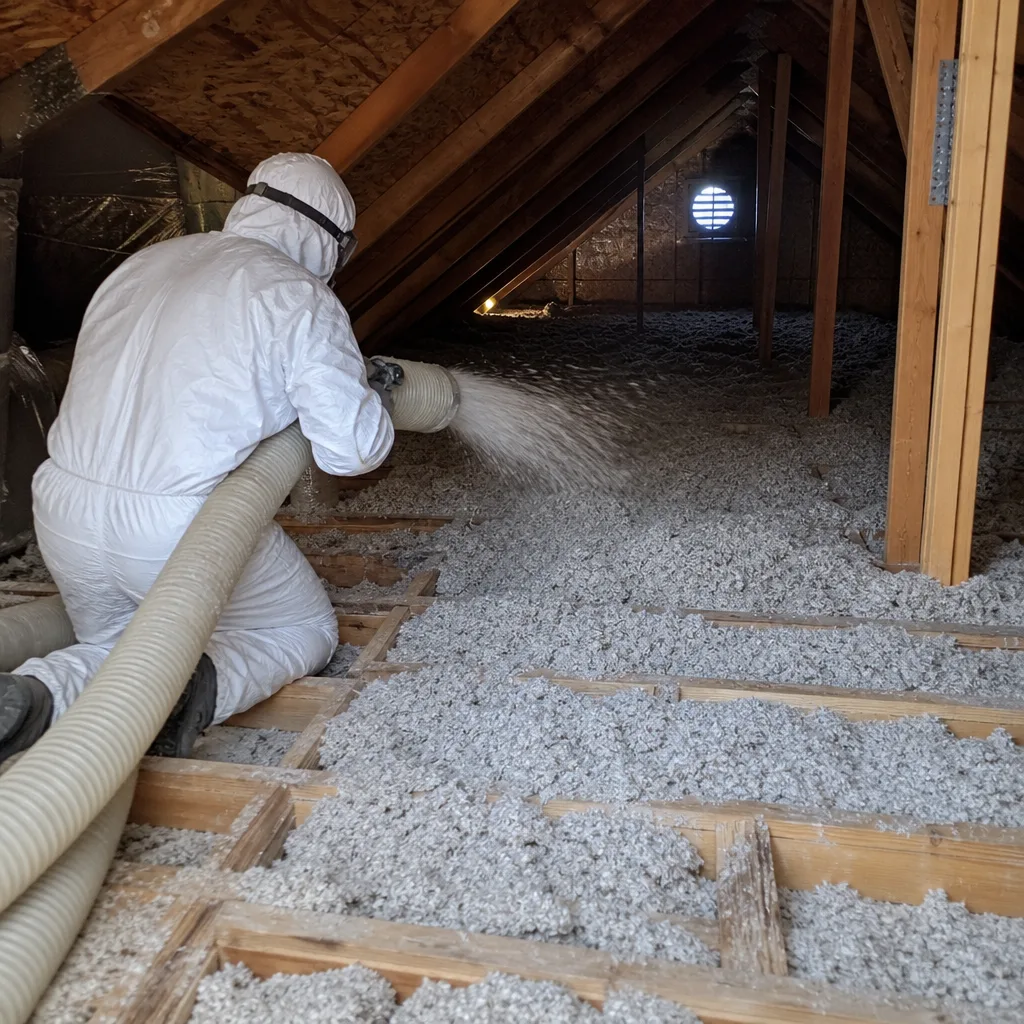
Here’s what that looks like in practice. Rodents tunnel through blown fiberglass and cellulose, leaving low-density channels where air moves almost freely. On an infrared scan of the attic floor, those channels read as warmer or colder than the surrounding field, depending on the season. In a Las Vegas crawl space or attic, the same tunneling creates a direct path for hot attic air to reach the ceiling plane. We start seeing 8°F to 12°F thermal striping in attics where the homeowner had no idea animals were present.
Other pest-related insulation signals:
- Compressed or mounded insulation in one area. Nesting and travel routes compact the material, lowering R-value and creating a mass that holds moisture.
- Droppings or rub marks on insulation facing. Both indicate ongoing activity, not a one-time visit.
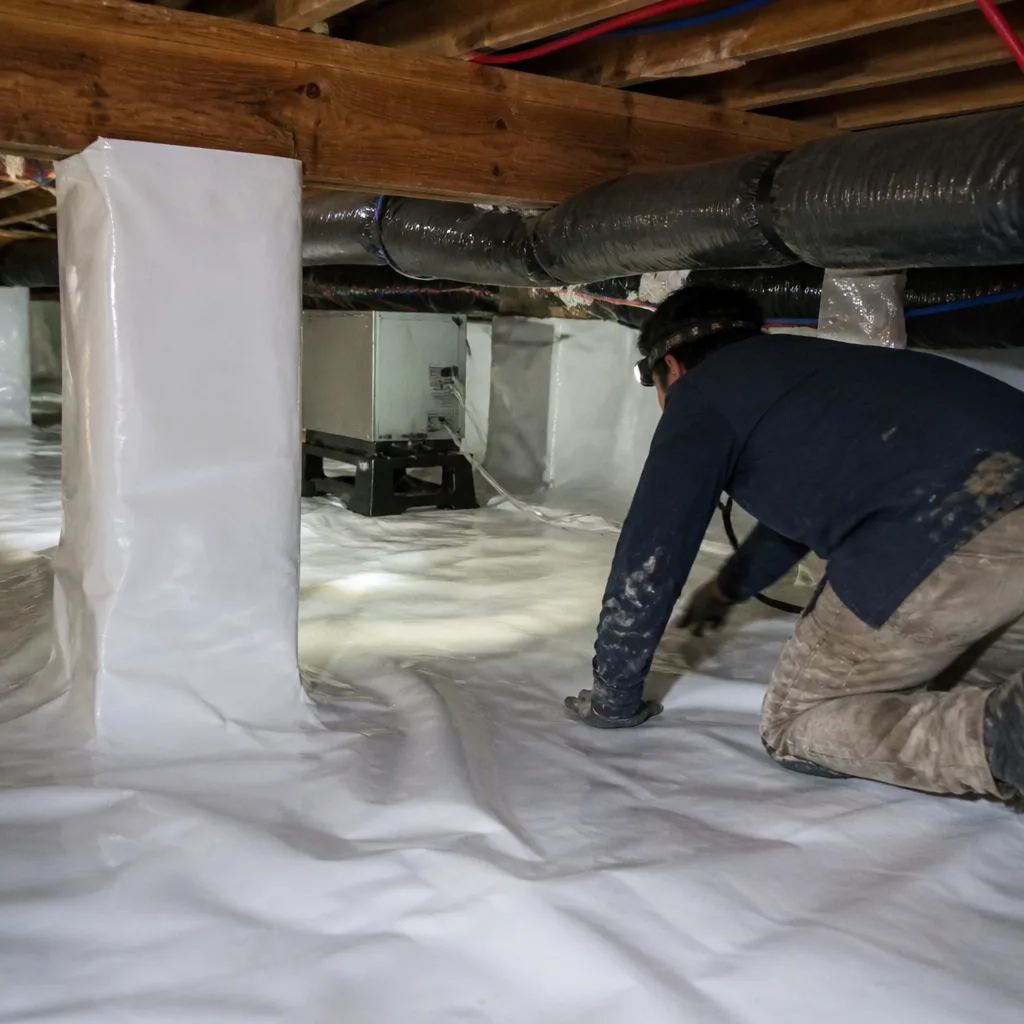
- Chewed vapor barriers in crawl spaces. A compromised vapor barrier in a Las Vegas crawl space lets soil moisture migrate upward, which collapses insulation performance from below. That topic is covered fully in crawl space encapsulation and vapor barrier in Las Vegas.
We handle rodent proofing as part of the removal-and-replacement scope wherever it’s needed, because reinstalling insulation over active entry points is wasted money. GreenFiber cellulose treated with borates is our usual material in these situations, since the additives deter resettlement better than fiberglass. If you suspect activity, the first step is a proper insulation removal and replacement assessment, not a pest spray.
What a Blower-Door Number Tells You That Nothing Else Can
A blower-door test is a pressurization measurement that shows, in one number, how much air your building envelope is losing. A calibrated fan temporarily seals into an exterior door, depressurizes the house to 50 pascals, and measures the airflow needed to hold that pressure. The result is reported in CFM50, cubic feet per minute at 50 pascals of pressure difference.
What you get from that figure that no visual sign can give you is the total. A visual inspection can find a missing batt over a bedroom, but it can’t tell you how much that missing batt costs you relative to the two dozen smaller leaks scattered around the rest of the envelope. The blower door gives you one number that represents all of them together. We publish before-and-after readings on every applicable job for exactly this reason: a single figure that shows the performance change the homeowner actually paid for.
Rough translation for Las Vegas conditions: a home reading in the 3,500 – 5,000 CFM50 range is losing conditioned air at a rate that typically adds $180 to $400 a year in cooling cost versus a tightened envelope, depending on square footage and equipment efficiency. Homes above 5,000 CFM50 are frequently in the $400 to $700 range. We’ve seen Clark County homes close to 6,000 CFM50 before sealing and 2,600 after, and the couple hundred dollars a year is only part of the return. The rooms get comfortable. The AC stops short-cycling. Those are harder to put a number on but easier to feel.
We treat the blower door as a starting point, not a sales tool. Under Haven Standard: Written Price Before Any Work Starts, you see the flat price, the written scope, and the written warranty before anyone lifts a tool. If you’ve never had a blower-door test run on your Las Vegas home, it’s the one measurement that makes the rest of this guide concrete.
Visual Signs: When the Failure Finally Shows
Everything above describes signs you measure. This section covers signs you see, which arrive late in the failure sequence. If you’re seeing any of these, the cost of waiting has already been paid.
- Staining or dark patches on ceiling drywall. In Las Vegas this is usually either a roof leak or condensation at an unsealed penetration. Both mean the insulation beneath is wet or compromised.
- Sagging attic insulation below the joist tops. Blown insulation should sit above the top of the ceiling joists. Once it sags below, R-value has dropped by a third or more.
- Cracked or peeling paint on interior wall corners. Envelope failure lets conditioned air soak into drywall assemblies, and the paint is the first thing to show it.
- Visible gaps at the attic hatch or pull-down stair. A thumb-sized gap around a hatch is worth more leakage than most homeowners would guess.
- Insulation that crumbles or turns to powder on contact. That’s material degradation from heat cycling, common in Las Vegas attics over 20 years old.
None of these appear early. That’s the point of the rest of this guide.
Common Mistakes to Avoid
- Blaming the AC first. Homeowners in Las Vegas replace a functioning unit every summer because the rooms are still uneven afterward. Run the differential test before you authorize a replacement.
- Adding insulation without sealing first. Blowing new material over an unsealed attic floor covers the leaks instead of stopping them, and the air path stays open underneath. Sealed first, then insulated, in that order, is not negotiable.
- Trusting the R-value stamped on the packaging. Blown insulation can settle 20% to 30% within a few years in a Clark County attic. The installed depth matters more than the label.
- Skipping the pre-work blower-door test. Without a starting number there’s no way to prove the job improved anything. Ask for before-and-after readings in writing.
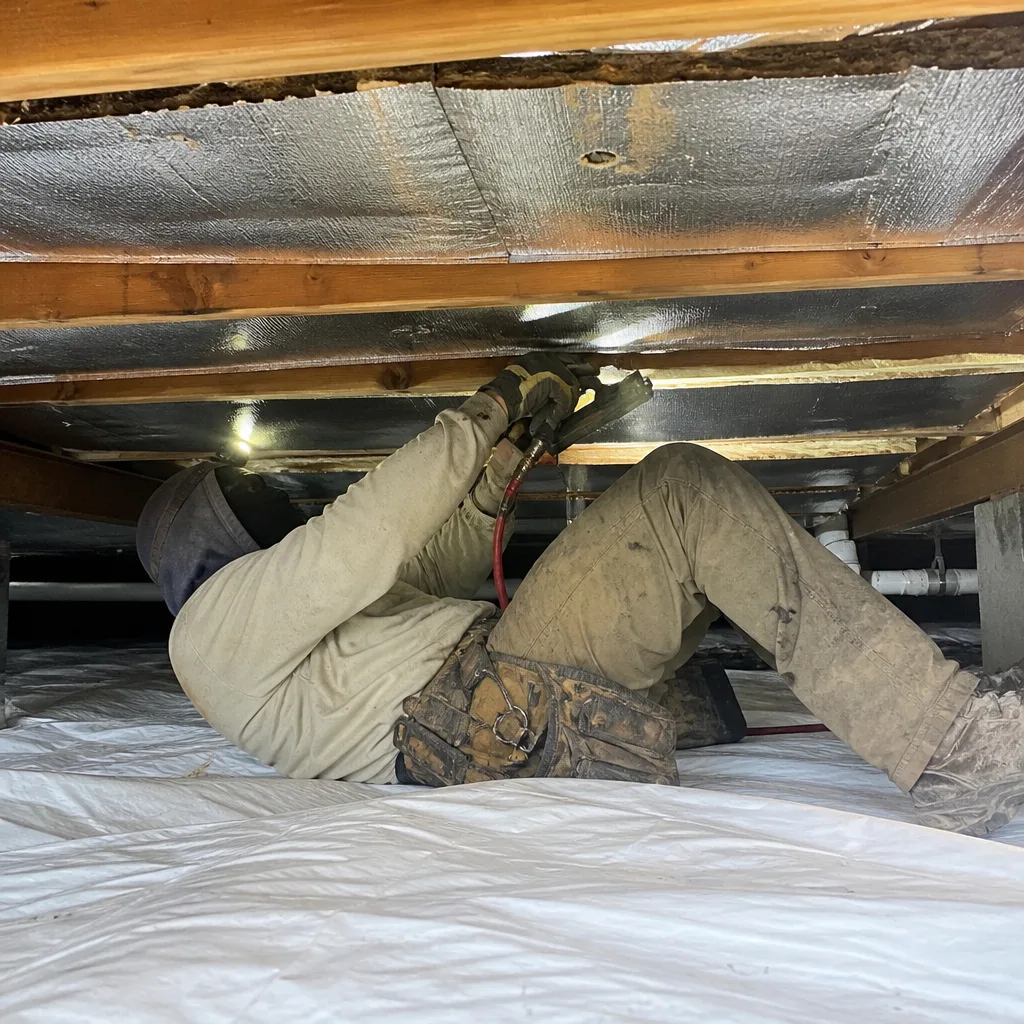
- Ignoring the crawl space. A Las Vegas home with a vented, unsealed crawl space loses more through the floor than most homeowners would believe. Get the vapor barrier assessed alongside the attic.
- Hiring without a written scope. “Blow some insulation up there” is not a scope. You want the R-value target, the sealing list, and the warranty in writing before work starts.
- Treating a rodent problem as a pest issue only. If animals have tunneled through the insulation, the thermal path is compromised even after the animals are gone.
When to Call a Professional
Call a professional if your normalized kWh per CDD has climbed 0.15 or more over two consecutive summers, if any room reads more than 5°F warmer than an interior reference room in the afternoon, if any of the tactile signs above show up on your walls or attic hatch, or if you’re buying a Las Vegas home built before 1990 and haven’t seen an attic inspection report. Fifteen minutes with the NV Energy usage portal will tell you whether any of this applies. If it does, Envelope Insulation Las Vegas offers free estimates in Las Vegas, and every job begins with a written price, a written scope, and a written warranty before work starts. Call (833) 362-4859 to schedule.
Frequently Asked Questions
Start with your normalized utility bill and the room-temperature differential test, because visible degradation is almost always a late-stage sign. Pull two years of NV Energy usage history, divide each summer month’s kWh by that month’s cooling degree days, and compare the rates. A rising rate plus a 5°F or larger gap between the room below the attic and an interior room points to envelope failure nearly every time. Call (833) 362-4859 for a blower-door test that gives you the exact CFM50 figure.
Most Las Vegas homes we test land between 3,000 and 5,000 CFM50, with newer construction trending lower and pre-1990 homes trending higher. Anything above 5,000 CFM50 is typically costing $400 or more per year in excess cooling. Call (833) 362-4859 and we’ll run the test and show you the number before any work is discussed.
Usually because the room sits below an attic section with compressed insulation, unsealed top-plate penetrations, or a leaking supply duct dumping cold air into the attic. In Clark County construction, the culprit is most often recessed can lights without airtight housings venting attic air directly into the room. A blower-door test plus a photo record of the attic finds it in one visit. Call (833) 362-4859 to schedule.
Not much. Blown insulation over an unsealed attic floor leaves the air paths open, and the new material typically settles into the same gaps. Envelope never blows insulation over an unsealed attic floor. Sealing comes first, then insulation, then a second blower-door reading. Call (833) 362-4859 to get a written scope that reflects that order.
Attic air sealing typically runs $800 to $1,800, and attic insulation replacement runs $1,500 to $4,500 depending on square footage and R-value target. Crawl space work is quoted separately. Under Haven Standard, you get a flat price and a written scope before any work starts, and a free second opinion on any competing written estimate. Call (833) 362-4859 for an estimate on your home.
Sometimes, but not usually where rodents have tunneled extensively. Contaminated or heavily tunneled insulation has lost its thermal integrity and needs removal followed by sealing of entry points and fresh material. We carry Owens Corning and Johns Manville products alongside borate-treated cellulose for these jobs. Call (833) 362-4859 and we’ll scope removal, sealing, and replacement in a single written estimate.
The Bottom Line
Insulation failure in a Las Vegas home is a measurement problem, not a visual one. The bill moves first, usually 15 – 25% above what cooling-degree-day normalization predicts. The room-temperature differential follows. Tactile signs like warm walls and a hot attic hatch arrive next, then pest tunneling, and only at the end do staining and sagging show up. A blower-door test converts all of it into one CFM50 figure that tells you what the whole envelope is costing you. If anything in this guide matched your home, get the number measured before another cooling season goes by. Envelope Insulation Co. has sealed and insulated more than 9,000 homes under The Haven Standard, each one with a written price before work started and a documented record when the crew left. Call (833) 362-4859 for a free estimate with a written price, a written scope, and a documented photo record. Our technicians have up to 10 years of experience, and the 365-Day Done Right Promise backs every completed job.
Written by the team at Envelope Insulation Las Vegas.