
Last updated November 17, 2026
How Long Does Radiant Barrier Installation Take? Timelines and What to Expect
A 2,000-square-foot attic with standard rafter framing takes an experienced two-person crew roughly four hours to foil. The solar-noon temperature verification that confirms the installation is actually working takes one more hour the following day – and most contractors skip it entirely. That gap between installation and verification is the story here. In our experience installing radiant barriers across Las Vegas, homeowners ask how long the crew will be in the attic and rarely ask when they’ll know the foil is oriented and gapped correctly. This guide covers both: the realistic timeline for the work, the Las Vegas scheduling constraints that push jobs before sunrise in summer, and the documentation you should walk away with.
Quick Answer
Radiant barrier installation in a typical Las Vegas home takes four to six hours for the install itself, plus roughly one to one-and-a-half hours for measurement and a separate one-hour solar-noon verification the next day. Attics with truss framing and cross-members run 30 to 50 percent longer than open-rafter attics, and summer jobs in Las Vegas are usually scheduled before 9 a.m. to keep crew conditions safe – which can split a larger job across two mornings.
Table of Contents
- The Job Broken Into Four Named Phases
- Square-Footage Time Estimates by Attic Type in Las Vegas
- Why Summer Jobs in Las Vegas Start Before 9 a.m.
- The Job Conditions That Add Measurable Time
- The Solar-Noon Verification Most Crews Skip
- What You Receive at Job Completion, and When
- Common Mistakes to Avoid
- Frequently Asked Questions
The Job Broken Into Four Named Phases
Every radiant barrier job we’ve scoped in Las Vegas follows the same sequence, and each phase has a predictable duration range. Knowing these four phases is how you sanity-check any contractor’s estimate against the work you’re actually paying for.
- Attic measurement and obstacle mapping (30 – 60 minutes). The crew measures accessible square footage, maps the truss layout, and marks every penetration – can lights, HVAC registers, plumbing stacks, the air handler platform. On a Las Vegas tract home with a single central air handler, this phase runs closer to 30 minutes. On a larger custom build with two air handlers and a maze of flex duct, it can push an hour.
- Material staging and cutting (30 minutes). Rolls are staged outside the attic access, the foil is cut to bay widths, and the crew confirms the material is perforated. Perforated radiant barrier matters in Las Vegas – the regular air movement through the perforations keeps moisture from condensing on the underside of the foil. Most of the products we install come from Johns Manville or CertainTeed, and both are cut and staged the same way.
- Installation (2 – 6 hours depending on attic type). Foil is laid across the underside of the rafters with a consistent air gap between the foil and the roof deck. The gap is the working part of the product – no gap, and the radiant barrier becomes a conductive blanket that reheats the attic. This is where the bulk of the labor lives, and where truss framing and HVAC cut-arounds eat the time.
- Next-day solar-noon verification (1 hour). We return the following day around solar noon, when the sun is highest and the temperature difference across the foil is largest, and take surface readings on the foil side and the roof-deck side. A correctly oriented, gapped installation shows a measurable delta. If the readings don’t support the installation, we’ve caught it before the homeowner is told the job is done.
Total on-site time, including verification, runs five to eight hours spread across two visits. This is one of the reasons we treat radiant barrier as part of a full Envelope Insulation Las Vegas home assessment rather than a piece of work quoted over the phone.
Square-Footage Time Estimates by Attic Type in Las Vegas
Three attic types cover almost every Las Vegas home we see, and each carries a different labor profile. Below are the ranges we’ve logged across thousands of attics in Las Vegas, and they’re the most reliable predictor of time on the truck before the crew climbs up.
- Open rafter attic. Exposed rafters, no cross-bracing between them, easy walking. Roughly 500 – 550 square feet installed per crew-hour. A 2,000-square-foot attic runs about 4 hours. This is the fastest configuration and it’s more common in older Las Vegas neighborhoods like Paradise and the streets around the University District.
- Truss-framed attic with cross-members. Pre-engineered trusses with web members every 24 inches or so, which the crew has to weave foil around. Adds 30 – 50 percent, so the same 2,000-square-foot attic takes 5.5 – 6 hours. Most homes built in Henderson and Summerlin within the last twenty years fall into this category.
- Attic with HVAC air handlers and duct runs. Common in newer Las Vegas construction where equipment is attic-located. Every air handler platform, every flex-duct run, and every register plenum has to be cut around cleanly. Add 20 – 30 minutes per HVAC penetration, with most attics carrying three to six penetrations. A 2,000-square-foot attic here runs 6 – 7 hours.
If your home has a mix – truss framing with two air handlers – expect the job to push toward the top of the daylight window. In summer, that’s the case where the job splits across two mornings. Radiant barrier typically pairs with Attic Insulation in Las Vegas because the two work on different problems: foil handles radiant heat gain, insulation handles conductive and convective loss. Doing both during the same mobilization usually saves a return trip.
Why Summer Jobs in Las Vegas Start Before 9 a.m.
Attic temperatures in Las Vegas hit 140°F to 155°F by early afternoon in July and August. That’s not an inconvenience – it’s a work-safety limit. OSHA and common sense both put hard caps on how long a crew can stay in that heat, and the practical answer is to be in the attic before the sun is high enough to cook it. We start summer jobs between 5 and 6 a.m. so the attic is still in the 80s and 90s when the crew climbs in.
The tradeoff for homeowners: a job that runs six hours in a Las Vegas September doesn’t fit in one pre-9 a.m. window. Those jobs split across two mornings. The first morning covers measurement, staging, and as much foil as the crew can lay before the attic heat becomes unsafe. The second morning finishes installation. The solar-noon verification still lands the day after the second morning, because that timing is fixed by the sun, not the crew.
Winter changes the math. From November through March, a full-day installation is realistic – attics in Las Vegas stay workable through late morning and are almost comfortable by afternoon. Homeowners planning a radiant barrier around a larger insulation project often schedule it for the cooler months specifically to avoid the two-morning split. If you’re layering in Spray Foam Insulation in Las Vegas on the same mobilization, cooler months are the right season for the combined work.
The Job Conditions That Add Measurable Time
Once square footage and attic type are set, the remaining variables are the small obstacles that don’t show up in a phone quote. These are the items a thorough measurement phase catches and a rushed estimate misses. Each number below comes from our own time logs on Las Vegas jobs.
- Each HVAC penetration: 20 – 30 minutes. The foil has to be cut, folded, and taped around the penetration without leaving a conductive path or a gap that the radiant heat can bridge. On homes with two air handlers and four supply plenums, that alone adds nearly three hours across the job.
- Each attic access hatch requiring a foil cutout: 15 minutes. This is a small number, but it’s a signal – a home with four attic hatches (some Las Vegas builds have a main hatch plus pull-down panels for HVAC access) carries an hour of extra detailing.
- Existing insulation that requires a raised foil plane: doubles installation time. A radiant barrier works best when the foil sits against the underside of the roof rafters with an air gap below. If loose-fill insulation in the attic is high enough that the foil plane has to be raised on standoffs, the install time roughly doubles because every bay is being built up off the floor joists rather than laid flat against the rafters. If a contractor quotes you the same price they quote for a clean attic, ask whether they’ve actually measured the existing insulation depth.
- Attic attic access door foil cutout: another 15 minutes if the door itself gets wrapped. This is often skipped, and skipping it leaves a hole in the thermal plane. If you’re also encapsulating the space below, the door needs to work with the Crawl Space Encapsulation & Vapor Barrier in Las Vegas strategy for the lower envelope.
Larger attics compound all four. A 3,200-square-foot Las Vegas home with truss framing, two air handlers, high existing insulation, and a secondary attic hatch can legitimately run ten hours of installation labor. That’s the difference between a four-hour quote and a two-day job, and it’s knowable before anyone climbs a ladder.
The Solar-Noon Verification Most Crews Skip
Foil radiant barrier works by reflecting radiant heat before it reaches the attic floor. The product only does that if it’s oriented reflective-side down (in most installations), perforated, and installed with the air gap intact. None of those three conditions are visible from the ground, and none of them are confirmed by a crew member who finished the install at 3 p.m. and left. The only honest way to confirm is to go back into the attic when the sun is directly overhead and measure the temperature on both sides of the foil.
What the verification looks like in practice: we return the day after installation, typically an hour or so before solar noon in Las Vegas (which in summer is around 12:30 p.m., in winter closer to 11:30 a.m.). We take surface readings on the exposed roof-deck side of the foil and on the attic-air side. A working installation shows a clear, repeatable delta. If the delta is missing, or the readings look inconsistent across the attic, the cause is almost always one of three things: a foil bay that slipped during install and closed the air gap, a section installed reflective-side up, or perforations blocked by dust from an adjoining workspace. All three are fixable, and all three are caught by the verification reading.
Everything we install in Las Vegas is documented with before-and-after blower-door numbers on jobs that include air sealing, and the temperature-delta log lives in the same record. A homeowner can read either one and see what the work actually did, rather than take a brochure’s word for it.
What You Receive at Job Completion, and When
What you walk away with is the clearest measure of a contractor’s confidence in the work. Here’s the timeline of what we deliver, and when, on a radiant barrier installation in Las Vegas.
- Same day as install: a signed installation record with the square footage covered, the material lot number, and a photo log of the attic showing foil placement, vent cuts, and obstacle cut-arounds. The Documented Photo Record is included on every job, not something you request.
- Same day as verification (next-day visit): the temperature-delta log from the solar-noon verification, listing surface readings across the attic. If the install failed any check, the log notes it and the remedy before the homeowner ever sees the report.
- Same day as any air-sealing work, if the radiant barrier was part of a larger envelope job: before-and-after blower-door readings – a pressurization test that shows, in a single figure, how much conditioned air the home was losing before and after the work.
- After one full billing cycle: the utility comparison data. This is the only honest performance claim for a radiant barrier. A single billing cycle isn’t enough to prove an energy improvement because weather shifts between months, but a full cycle in comparable conditions is a real signal. We don’t publish performance claims from a single hot week in August.
Under the Haven Standard, a written price and written scope are delivered before anyone lifts a tool – that’s Clause 1, and it applies to radiant barrier the same as it applies to a full insulation replacement. The 365-Day Done Right Promise covers the work afterward. If the verification reading doesn’t reflect a working installation, we make it right. That’s the whole point of publishing the reading rather than describing the job as “completed.”
Common Mistakes to Avoid
- Quoting from square footage alone. Two 2,000-square-foot attics in Las Vegas can differ by four hours of labor if one is truss-framed with two HVAC cut-arounds and the other is open-rafter. Insist on an attic-type walk-through before any price is given.
- Skipping the perforated material. Solid foil traps moisture against the roof deck, and in Las Vegas monsoon season (June through September) that’s a real risk. Perforated products cost a few cents per square foot more and vent the moisture.
- Laying foil directly on top of existing insulation. This eliminates the air gap that makes a radiant barrier work and turns the foil into a hot surface sitting on the insulation. The gap is the product. No gap, no performance.
- Scheduling a summer install for 10 a.m. A Las Vegas July attic at 10 a.m. is already above 120°F. A crew working against that heat either has to leave early or works slower than you paid for. Jobs scheduled before 9 a.m. are the ones that finish in one visit.
- Accepting a finished job with no verification. Without a next-day solar-noon reading, there’s no evidence the foil is oriented correctly or that a bay didn’t slip. Ask before signing the scope how the installation will be confirmed in the days after.
- Installing radiant barrier over an unsealed attic floor. Foil handles radiant heat, not air leakage. Can lights, top plates, and plumbing penetrations leak conditioned air regardless of how good the foil is. Air sealing first, then foil – in that order. We won’t foil over a floor we haven’t sealed.
- Choosing a contractor by price alone. The single cheapest radiant barrier quote in Las Vegas is almost always a same-day, single-visit install with no verification. The $300 you save is likely the verification you didn’t get.
When to Call a Professional
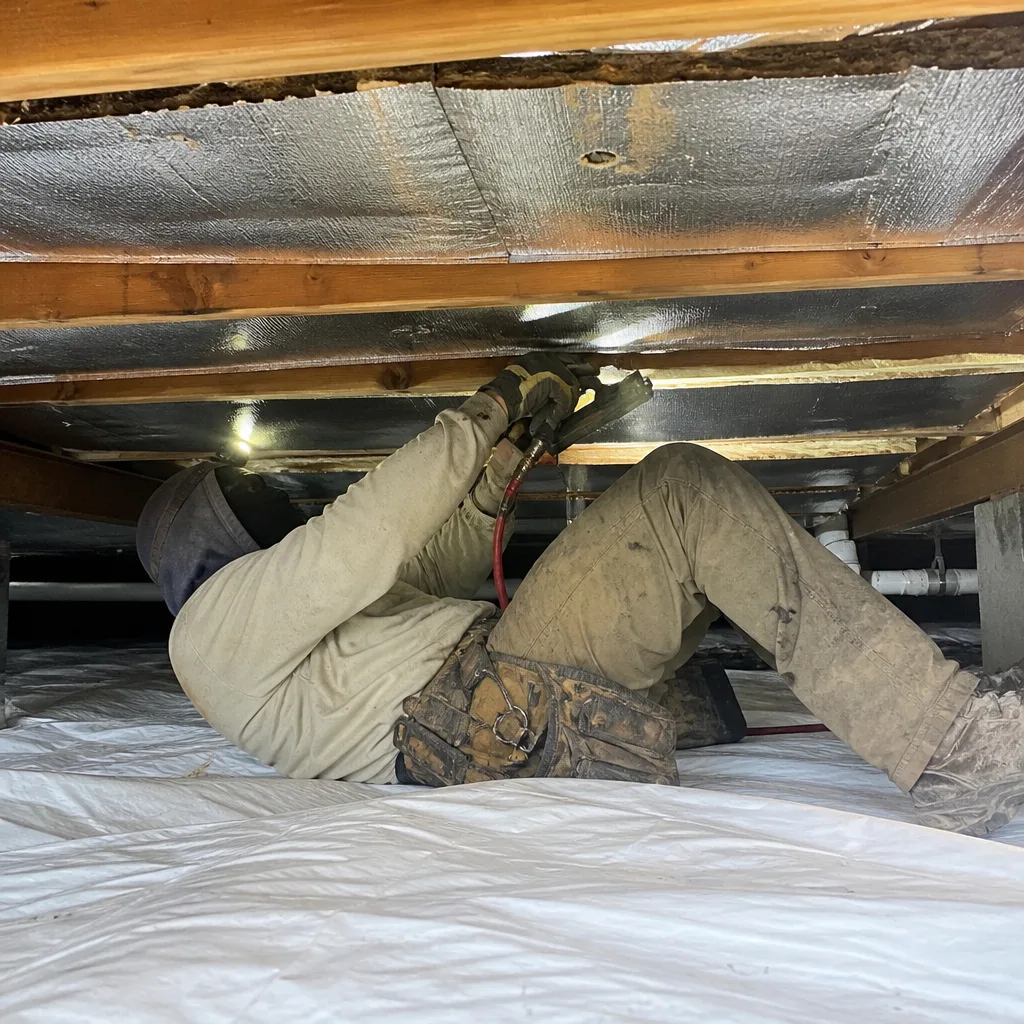
Radiant barrier is one of the few attic upgrades that looks simple and isn’t. Foil placement along rafters, HVAC cut-arounds, and vent detailing are all work you can physically do, but the failure modes are installation-sequence problems that aren’t obvious until summer. A bay that slipped in a corner fills the attic with a conductive hot spot. A cut that left a gap at an HVAC plenum gives a path around the intended thermal break. If your attic has any HVAC equipment, any existing loose-fill insulation that would need a raised foil plane, or any wet or damaged insulation around penetrations, that’s a professional job – and the safety matter of attic temperatures in Las Vegas makes it a professional job even in a clean attic during summer. If you’re also considering a full envelope upgrade, an Envelope Insulation Las Vegas home assessment is the right starting point because it maps the whole picture at once. Envelope Insulation Las Vegas offers free estimates in Las Vegas – call (833) 362-4859. A written price is delivered before any work starts, and that’s not a courtesy – it’s the way every job begins.
Frequently Asked Questions
Four to six hours of installation labor, plus about one hour for measurement and one hour for next-day solar-noon verification. Open-rafter attics run on the low end. Truss-framed attics with an HVAC air handler run on the high end, and a job like that often splits across two summer mornings because attic temperatures in Las Vegas are unsafe for a crew after mid-morning. Call us at (833) 362-4859 for a free estimate – the walk-through will confirm which category your attic falls into.
Two visits in summer, one visit possible in winter. The install itself is a single-day job for attics up to about 2,200 square feet in cooler months. In summer, jobs that would run past 9 a.m. need a second morning for the crew’s safety, and the solar-noon verification always follows the day after install. The second visit is one hour and required for the completion record. Call (833) 362-4859 to schedule – we’ll book a summer install for a 5 to 6 a.m. start.
Perforated foil lets moisture vapor pass through instead of trapping it against the roof deck. Las Vegas monsoon season brings humid weeks from June through September, and a solid foil sheet in a humid stretch traps moisture where it can’t escape. Perforated products from Johns Manville and CertainTeed are the standard we install. Free second opinion on any written estimate if you’ve been quoted solid foil – bring it to us and we’ll read it with you.
Sometimes, but only if the foil plane can be established with an air gap between the foil and the insulation. Foil laid directly on top of loose-fill insulation loses the reflective function and doubles as a conductive hot layer. When existing insulation is too high for a clean install, the job is either a raised foil plane (roughly doubling install time) or removal and reset. We’ll measure your existing insulation depth during the attic walk-through and give you the price before any work starts – call (833) 362-4859.
Usually not on its own. Radiant barrier addresses radiant heat gain through the roof deck, which is a real and significant part of a Las Vegas attic’s heat load – but air leakage through can lights, top plates, and penetrations is a separate problem that foil doesn’t touch. If blower-door readings show meaningful envelope leakage, sealing first and foiling second is the sequence we follow on every applicable job. Every installation with air sealing gets published before-and-after blower-door numbers. Call (833) 362-4859 for a free estimate with a walk-through that measures both.
Most single-family Las Vegas radiant barrier jobs land in the $1,200 to $2,800 range depending on attic square footage, framing type, and HVAC cut-around count. Truss-framed attics with two air handlers run toward the top of that range. A raised-foil-plane job over deep existing insulation can land above it. Free second opinion available on any competing written estimate – bring it to us and we’ll read the scope line by line. Call (833) 362-4859.
The Bottom Line
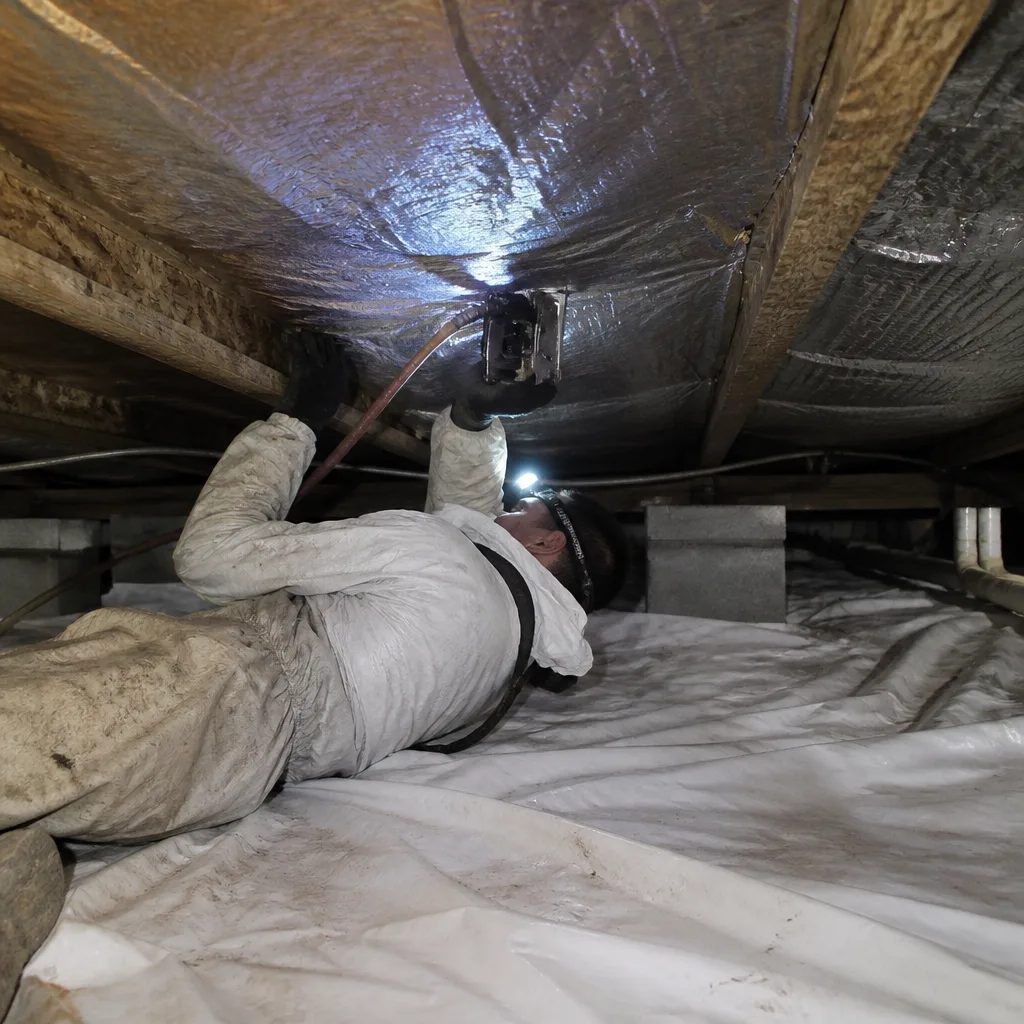
Radiant barrier installation time in Las Vegas is predictable once you know three things: attic accessible square footage, rafter versus truss framing, and the HVAC cut-around count. That gets you to a real labor figure – four hours for a clean open-rafter attic, six or more for a truss-framed attic with air handlers. What most written quotes leave out is the next-day solar-noon verification, and without it you have no evidence the foil is oriented and gapped correctly. Air sealing first, then foiling, then measuring. Call Envelope Insulation Las Vegas at (833) 362-4859 for a free estimate. A written price before any work starts, a documented photo record at completion, and a 365-Day Done Right Promise behind the work.
Written by the team at Envelope Insulation Las Vegas.