
Last updated November 17, 2026
The Complete Crawl Space Encapsulation & Vapor Barrier Guide for Las Vegas Homeowners
Las Vegas averages 4.2 inches of rain per year, yet crawl space moisture readings in homes near irrigated landscaping routinely read 70-80% relative humidity at the soil surface. The water isn’t falling from the sky. It’s coming up through the ground. That single fact changes how encapsulation works in the desert and why so many Las Vegas homeowners get it wrong. This guide covers what encapsulation actually does in a hot-dry climate, what it doesn’t do, and how to read your own crawl space before spending a dollar on it.
Quick Answer
Crawl space encapsulation in Las Vegas seals the ground and walls with a reinforced vapor barrier so that soil moisture stops feeding humid air into your home. In most Las Vegas homes the driver isn’t rain but irrigation-wetted soil, so even at 4 inches of annual precipitation a barrier is warranted. Real encapsulation runs 20-mil reinforced membrane, sealed seams, sealed vents, and usually rim-joist air sealing, not a 6-mil sheet laid loose on the dirt.
Table of Contents
- Why Ground Moisture, Not Rain, Drives Crawl Space Humidity in Las Vegas
- How to Take a Soil Moisture Reading Before You Decide
- 6-Mil Poly Versus 20-Mil Reinforced Membrane
- Conditioned Crawl Space vs. Vapor Barrier With Sealed Vents
- Rim Joist Air Sealing Is Not Optional
- What a Completed Job’s Documentation Should Include
- Common Mistakes to Avoid
- When to Call a Professional
Why Ground Moisture, Not Rain, Drives Crawl Space Humidity in Las Vegas
Las Vegas gets a lot of water, just not from the sky. Per capita, the valley uses more irrigation water on residential lots than almost any metro in the country, and every gallon that hits landscaping, planters, and lawn drains into the soil under the slab line. In older neighborhoods like Paradise Palms and John S. Park, where lots run full of mature ficus and palm, that irrigation water saturates the soil to depths of several feet. The crawl space sits under it, pulling moisture up through the dirt floor by capillary action and evaporation.
Then monsoon season arrives in July and August. Two or three real rain events drop half an inch or more in a single afternoon, sheet the water across hard caliche soil, and push it straight into foundation walls. The annual number looks tiny. The actual water table under your house doesn’t care about the annual number.
Here’s what that looks like in practice:
- Soil surface humidity above 60%. Any crawl space sitting at 60% or more at the soil surface is actively feeding moisture into the home above it.
- Damp or soft wood at the floor joists. The subfloor and joists pick up moisture from below, especially near the foundation perimeter.
- Musty smell inside the house. That smell is a sign, not an inconvenience. It travels up through the floor assembly and into living space.
- Higher cooling bills. Humid air takes more energy to cool. A Las Vegas crawl space running 75% relative humidity is a hidden cost on your summer bill.
- Ductwork condensation. Cold supply ducts in a humid crawl space sweat, drip, and rust. We’ve pulled ductwork out of Las Vegas crawl spaces that was water-stained on the outside from condensation alone.
The desert doesn’t make encapsulation unnecessary. It changes what the barrier is doing. It’s not handling rain intrusion. It’s stopping upward migration from irrigation-wetted soil, and holding that soil moisture out of your conditioned space year-round.
How to Take a Soil Moisture Reading Before You Decide
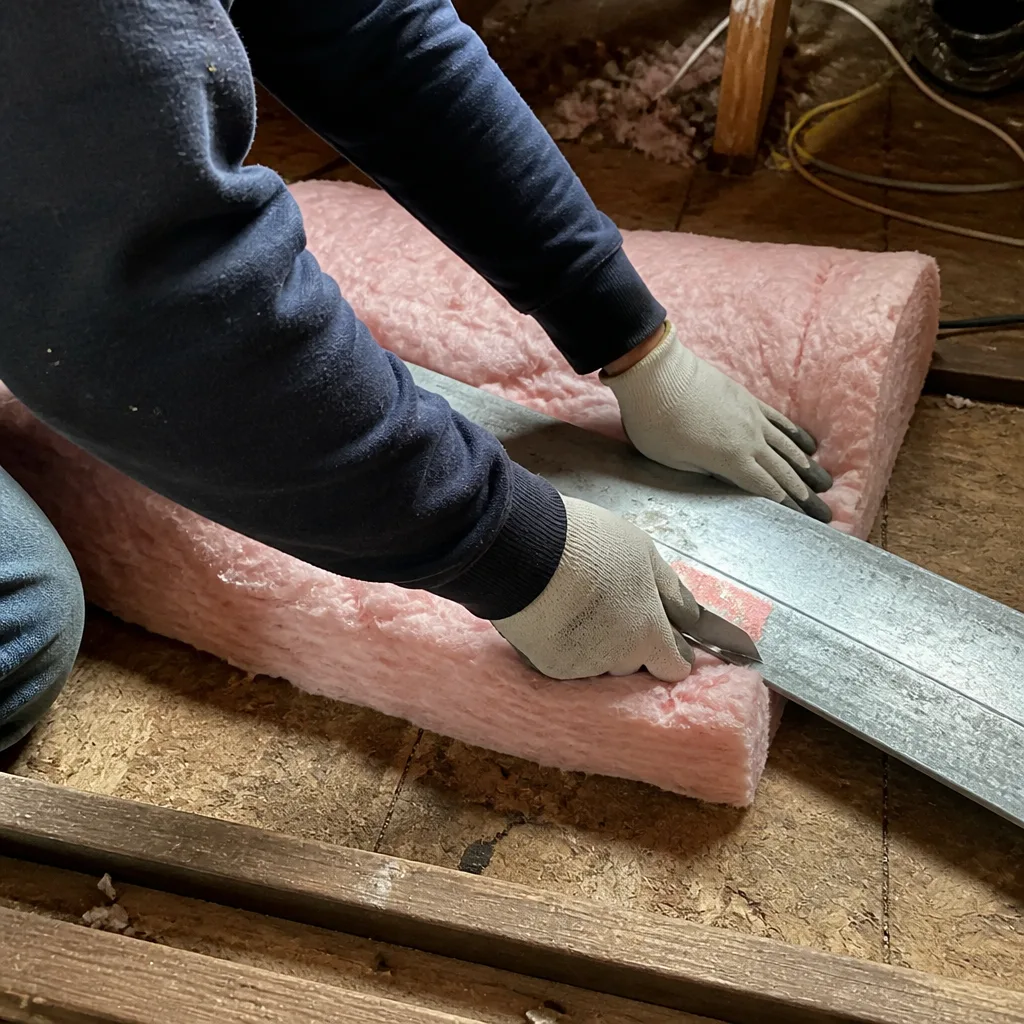
You don’t need a contractor to tell you whether your crawl space has a moisture problem. You can measure it yourself in about ten minutes with a $30 moisture meter from any hardware store. Here’s the process:
- Pick a dry day. Twenty-four hours without rain or irrigation gives you a cleaner reading.
- Access the crawl space safely. If the access is small or the floor has standing water, stop and call a professional. We’re serious about this one.
- Take four readings across the soil. One at the center, three at points roughly two feet in from each wall of the foundation. Aim for a spot with bare soil, not existing poly or gravel.
- Use a pin-type moisture meter on wood too. Push the pins into the floor joists at the base near the foundation and at mid-span. You want wood moisture under 20%. Anything above 25% is active moisture damage.
- Record the numbers. Date, location, reading. You’ll want to compare against post-installation numbers if you decide to encapsulate.
Soil-surface relative humidity of 60% or more, or wood moisture above 20% at the joist base, is a compelling reason to encapsulate. Below that, you may have a simpler venting or drainage problem that a vapor barrier alone can solve. Take the reading before you shop for anything.
6-Mil Poly Versus 20-Mil Reinforced Membrane
This is where most Las Vegas homeowners get fleeced, and I want to be blunt about it. A 6-mil poly sheet from the home center is the code-minimum vapor retarder in most jurisdictions. It is not encapsulation. These are two different products doing two different jobs.
Here’s the comparison that actually matters:
- 6-mil poly: roughly 6 thousandths of an inch thick. Punctures on contact with gravel, tears at corners, ultraviolet-degrades if exposed, and has a service life often measured in months when laid loose over rough soil. It’s designed to retard vapor, not to stop ground contact. In a Las Vegas crawl space with active irrigation moisture from below, standard 6-mil poly in direct contact with wet soil can degrade inside of 3-5 years.
- 20-mil reinforced membrane: roughly 20 thousandths of an inch thick, with a woven reinforcing scrim in the middle. It handles puncture from aggregate without tearing, resists degradation from occasional standing water, and is designed to hold up for 20-30 years with proper installation. It’s the product encapsulation systems actually use.
The performance specs matter because the Las Vegas market has one specific stressor: caliche soil. It’s hard, crusty, and riddled with sharp edges. A 6-mil poly laid directly on caliche punctures as you walk across it during install. A 20-mil reinforced membrane takes that same abuse without creating a hole that lets moisture through for the next five years.
What’s underneath matters too. A proper encapsulation install will lay a drainage mat or pea-gravel bed before the membrane on homes with active water intrusion, and a professional will seal the seams with manufacturer-approved tape, not duct tape. If anyone quotes you encapsulation with 6-mil poly and standard duct tape, they’re quoting a vapor retarder install at encapsulation pricing.
Conditioned Crawl Space vs. Vapor Barrier With Sealed Vents
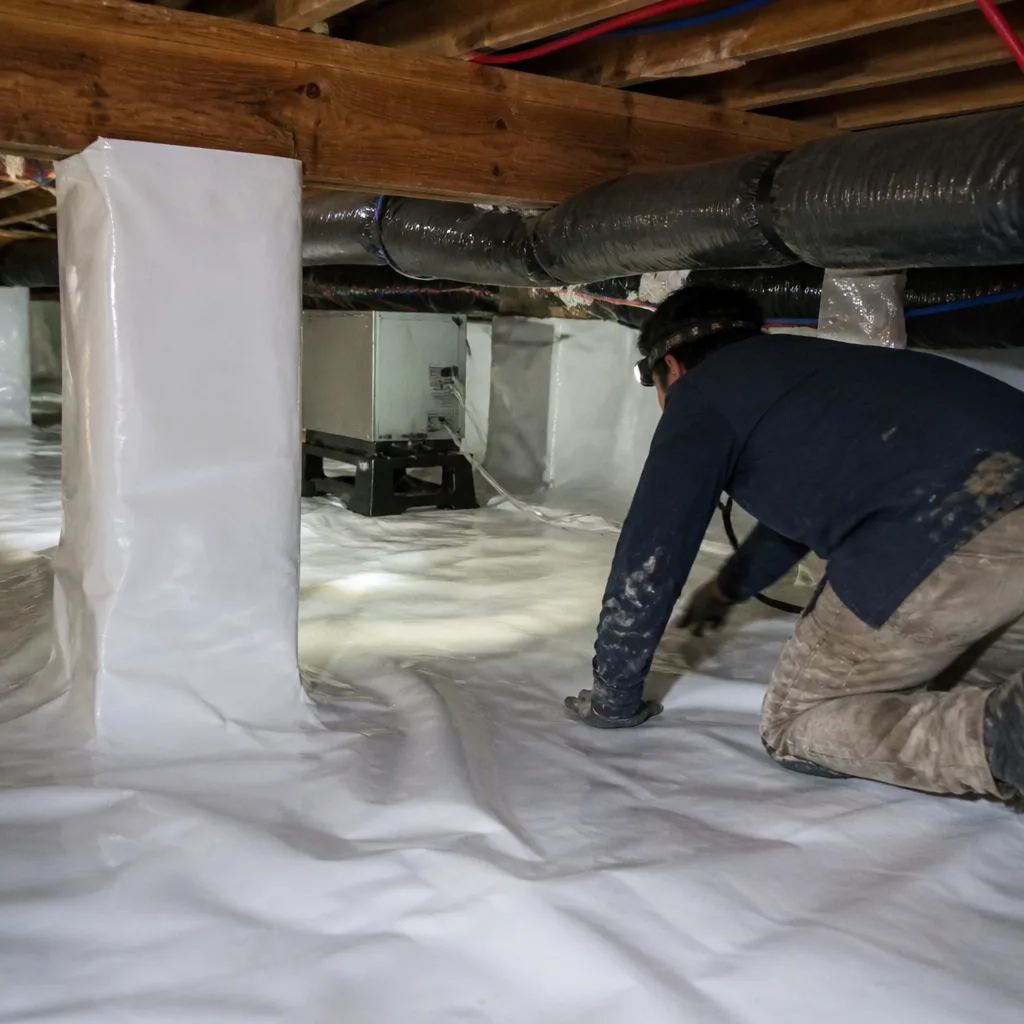
Not every Las Vegas crawl space needs mechanical dehumidification. Most don’t. But there are real cases where a simple barrier with sealed vents won’t do the job, and a conditioned crawl space is warranted.
The simple barrier route works when the soil moisture is moderate, the foundation walls are dry, and there’s no active groundwater intrusion. Here’s the process:
- Cover the soil with a 20-mil reinforced membrane, overlapped 12 inches at seams and taped.
- Run the membrane up the foundation walls at least 6 inches and mechanically fasten with batten strips.
- Seal all foundation vents with rigid foam board and spray foam. This is the critical step that gets skipped. An open vent in a Las Vegas crawl space during winter pulls in cold air that meets warm interior floor assembly and creates condensation. During summer, it pulls in 110°F air that carries vapor it deposits on the cooler floor system. Sealed vents stop that cycle.
- Seal the rim joist as part of the same day’s work. More on this in the next section.
A conditioned crawl space is a different build. It’s worth considering when:
- Soil moisture readings stay above 80% even after a full membrane install.
- There’s a history of standing water during monsoon season.
- The home has HVAC equipment or ductwork in the crawl space that needs a conditioned envelope to perform correctly.
- You live in a low-lying neighborhood where the water table is unusually high for the area.
A conditioned crawl space adds a dedicated dehumidifier (typically $1,200-$2,000 installed), a supply-air connection from the home’s HVAC to the crawl space, and rigid foam board insulation on the foundation walls. It costs more, but for the right house it prevents moisture from ruining the encapsulation membrane within a decade. The right question isn’t which is better; it’s which your soil readings justify. If you’re not sure, our Crawl Space Encapsulation & Vapor Barrier in Las Vegas page walks through the decision in more detail.
Rim Joist Air Sealing Is Not Optional
You can install the best encapsulation system on the Las Vegas market and still have a humid house if the rim joist is unsealed. The rim joist is where the wood framing meets the foundation wall, and it’s the single largest air bypass in most homes built in Las Vegas between 1995 and 2015. Every joist cavity creates a small gap where conditioned air escapes and unconditioned air enters. Multiply by 40 joist bays and you have a substantial hole.
We measure this with a blower-door test, a pressurization reading that shows in one number how much air your building envelope is losing. We’ve seen homes in Las Vegas where encapsulating the crawl space alone dropped the blower-door reading from 4,800 CFM50 to 3,900. Good, but the rim joist was still wide open. After sealing the rim joist in the same crawl space, the same home read 2,600 CFM50. That’s a 46% reduction in whole-house air leakage compared to the starting point, and it happened in the crawl space.
The rim-joist seal is not a caulk job. It’s a two-inch closed-cell spray foam application into every joist bay, combined with sealing the top plate where the floor system meets the foundation. That’s why we treat the crawl space and the rim joist as one system. If you look at a contractor’s scope and see encapsulation without rim-joist sealing, they’re leaving the biggest piece of the job on the table. This is also why our Attic Insulation in Las Vegas work starts with air sealing before any insulation goes in. Same logic, different floor.
What a Completed Job’s Documentation Should Include
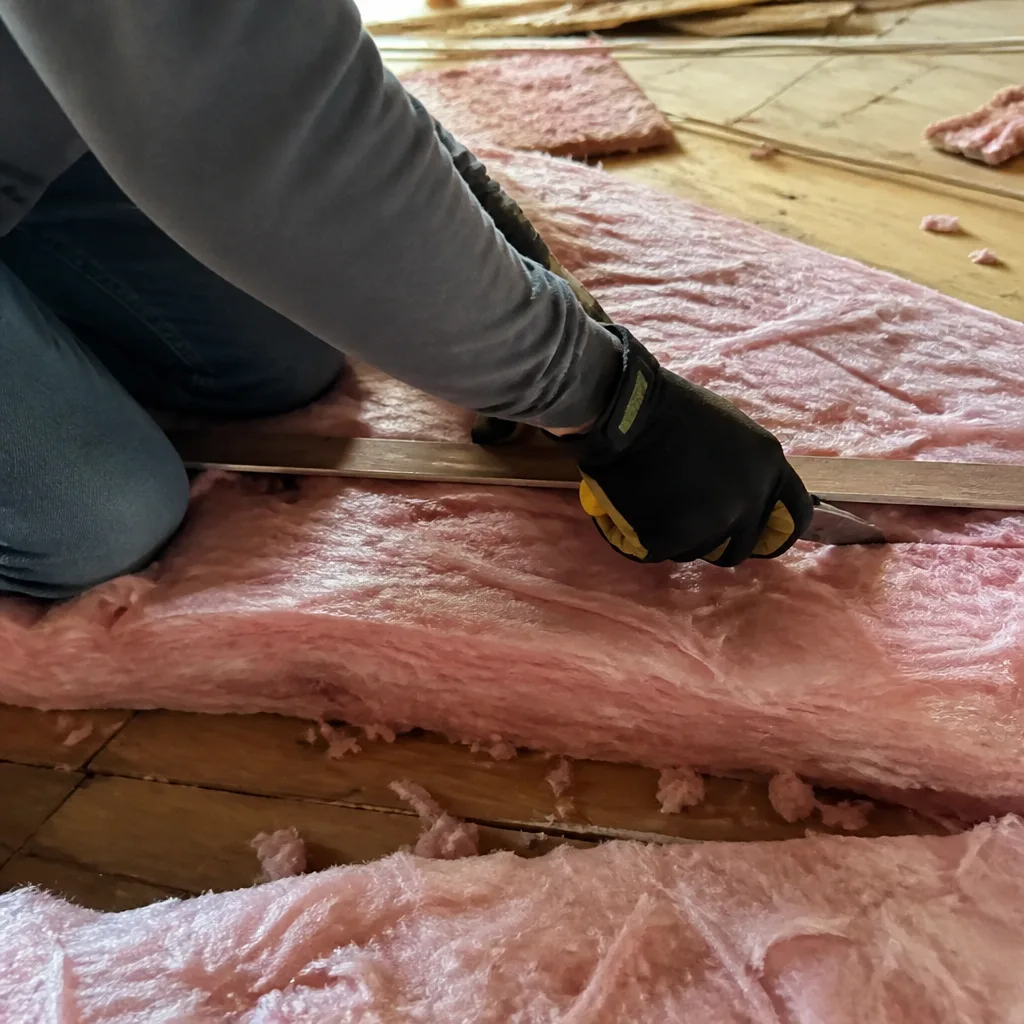
When a crew leaves your home, you should be holding a written record of what they did and what the numbers were before and after. This is the difference between a contractor who can be trusted and one who can’t. Here’s the minimum documentation a completed encapsulation job should include:
- Pre-installation moisture readings. Date, location, soil-surface relative humidity, and wood moisture content at the joists. If a contractor can’t produce pre-install readings before doing the work, they’re not measuring, which means they’re not proving anything.
- Post-installation moisture readings at the same locations. Same test points, same meter. If pre wasn’t taken, post is meaningless.
- Vapor barrier product spec sheet. Manufacturer name, product name, mil thickness, and installation method (loose-lay, wall-fastened, drainage mat underlay). If they can’t tell you the product, they can’t prove the spec.
- Photos of taped seams and wall terminations. Every seam, every wall termination, every pipe penetration. Not a single hero shot of a neat corner. A documented photo record of the actual, complete installation.
- Any mechanical equipment installed. Dehumidifier make, model, capacity, and install date. For a conditioned crawl space, include the HVAC supply connection spec and the condensate drain line routing.
- Blower-door numbers before and after if air sealing was part of the scope. This is where a homeowner can verify the performance they actually paid for.
- Written warranty terms. In writing, before work begins, matching the scope that was written.
Any decent contractor should be able to produce all seven items without a phone call. Our crews generate a Documented Photo Record on every visit, and we publish before-and-after blower-door numbers on every applicable job. That’s not a marketing feature; it’s what the customer pays for. If you’re comparing estimates and one of them comes without documentation, the other estimate is worth the difference. The same approach applies to any Spray Foam Insulation in Las Vegas project, where the application thickness and where the foam was placed matter as much as the material itself.
Common Mistakes to Avoid
- Laying a 6-mil poly sheet and calling it encapsulation. It’s a code-minimum vapor retarder, and on Las Vegas caliche soil it will perforate inside a few years. Ask specifically for 20-mil reinforced membrane and check the product spec sheet before signing.
- Skipping rim-joist air sealing. Encapsulation without rim-joist sealing leaves the biggest air bypass untouched. On a Las Vegas home, this can mean 30-50% of the potential blower-door improvement never happens.
- Leaving the foundation vents open. Sealing the vents is not optional in a Las Vegas crawl space; it’s the step that stops the winter condensation cycle and the summer vapor-deposit cycle. If the scope doesn’t include it, ask why not.
- Not taking a moisture reading first. Encapsulating a crawl space without any measurement of the problem is guessing. You should have pre-install numbers, or you shouldn’t write the check.
- Fastening the membrane to the foundation wall with no batten strip. The wall termination is where moisture wicks in from the exterior. A proper wall termination uses a mechanically fastened batten strip and sealant, not free-standing poly against the wall.
- Ignoring irrigation. In Las Vegas, the crawl space moisture problem is fed by landscaping irrigation. If the homeowner doesn’t reduce irrigation near the foundation after encapsulation, they’re re-wetting the ground the barrier is meant to seal off. A proper contractor will tell you this on the day of the work.
- No post-installation documentation. If the crew that installs the job leaves without photos, spec sheets, and moisture readings, you can’t verify what was actually done.
When to Call a Professional
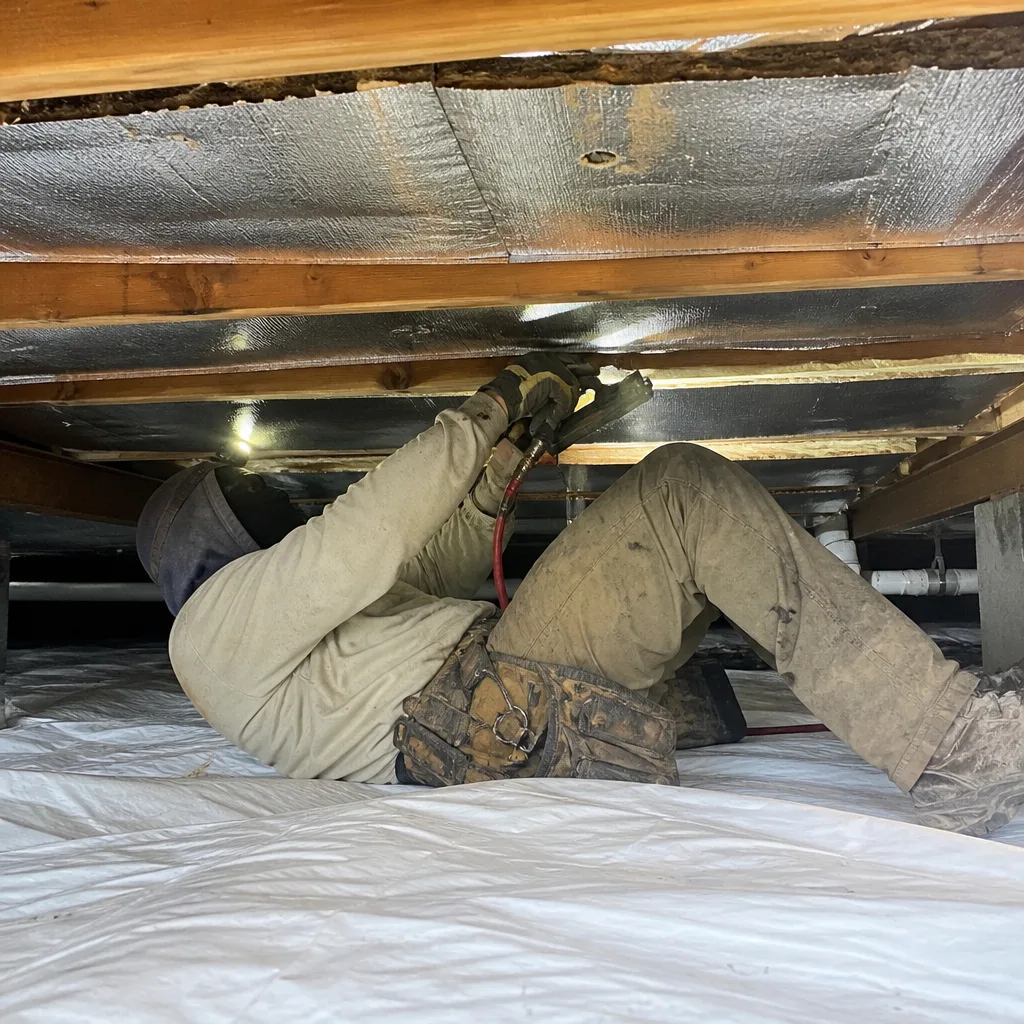
Some crawl space work is safe to check yourself. Little of it is safe to install yourself. Call a professional for any of the following: standing water under the home, wood moisture above 25% at the joists, visible mold growth, a crawl space with an existing poly sheet that’s torn or perforated, any home with HVAC equipment or ductwork in the crawl space, or any home built before 1990 that hasn’t had a moisture assessment. Crawl spaces combine electrical, humidity, sharp terrain, and often tight clearance. The risk isn’t worth saving the labor. Envelope Insulation Las Vegas offers free estimates in Las Vegas with a written price before any work starts, an inspection on the day of the visit, and a free second opinion on any written estimate you already have. Call (833) 362-4859.
Frequently Asked Questions
Most Las Vegas crawl space encapsulation jobs run $2,200 to $6,500 depending on square footage, whether a drainage mat or gravel bed is needed, and whether the scope includes rim-joist air sealing and a conditioned crawl space setup. A simple 20-mil barrier with sealed vents for a 1,000 square foot crawl space is typically at the low end; a conditioned system with a dehumidifier and full rim-joist sealing on a 2,000 square foot home runs toward the top. Call (833) 362-4859 for an exact quote – estimates are free and we bring a written price before any work starts.
Yes, if your soil moisture readings show it. Rain isn’t the driver in Las Vegas; irrigation-saturated soil and monsoon-season groundwater seepage are. We routinely measure soil-surface relative humidity of 70-80% in crawl spaces on Las Vegas properties with heavily irrigated landscaping, even in a year with below-average rain. Below 60% with dry joists, you may not need it. Call us and we’ll take a reading before you decide.
A vapor barrier is a retarding sheet (typically 6-mil poly, code minimum) laid over soil to slow moisture migration. Encapsulation is a complete system: a 20-mil reinforced membrane, sealed seams and wall terminations, sealed foundation vents, and usually rim-joist air sealing, all installed as one job with documented moisture and blower-door numbers before and after. The terminology gets blurred by less careful contractors. Ask for the product spec sheet and you’ll know which one you’re buying.
Most Las Vegas crawl space encapsulation jobs are completed in one working day. A 1,000-2,000 square foot crawl space with a full scope (membrane, vent sealing, rim joist) is typically a single full day for a crew. Conditioned crawl space conversions can run into a second day depending on dehumidifier and HVAC work. Call (833) 362-4859 to schedule a walkthrough and get a written timeline.
Yes, if the encapsulation is paired with rim-joist air sealing. Blower-door data from Las Vegas homes shows that crawl space encapsulation plus rim-joist sealing typically drops whole-house air infiltration by 30-50%, which shows up on your summer cooling bill as reduced runtime. A vapor barrier alone (no air sealing) delivers most of the moisture benefit but far less of the energy benefit. Call us for a free second opinion on any written estimate that doesn’t include rim-joist air sealing.
On a shallow, dry crawl space with no HVAC equipment and no standing water, a 6-mil vapor barrier can be a homeowner job. True encapsulation at 20-mil with sealed seams, wall terminations, and vent sealing should be professional work, and any crawl space with moisture readings above 70% or with electrical or HVAC components needs a licensed contractor to scope it safely. Call (833) 362-4859 if you’re not sure which side of that line you’re on.
The Bottom Line
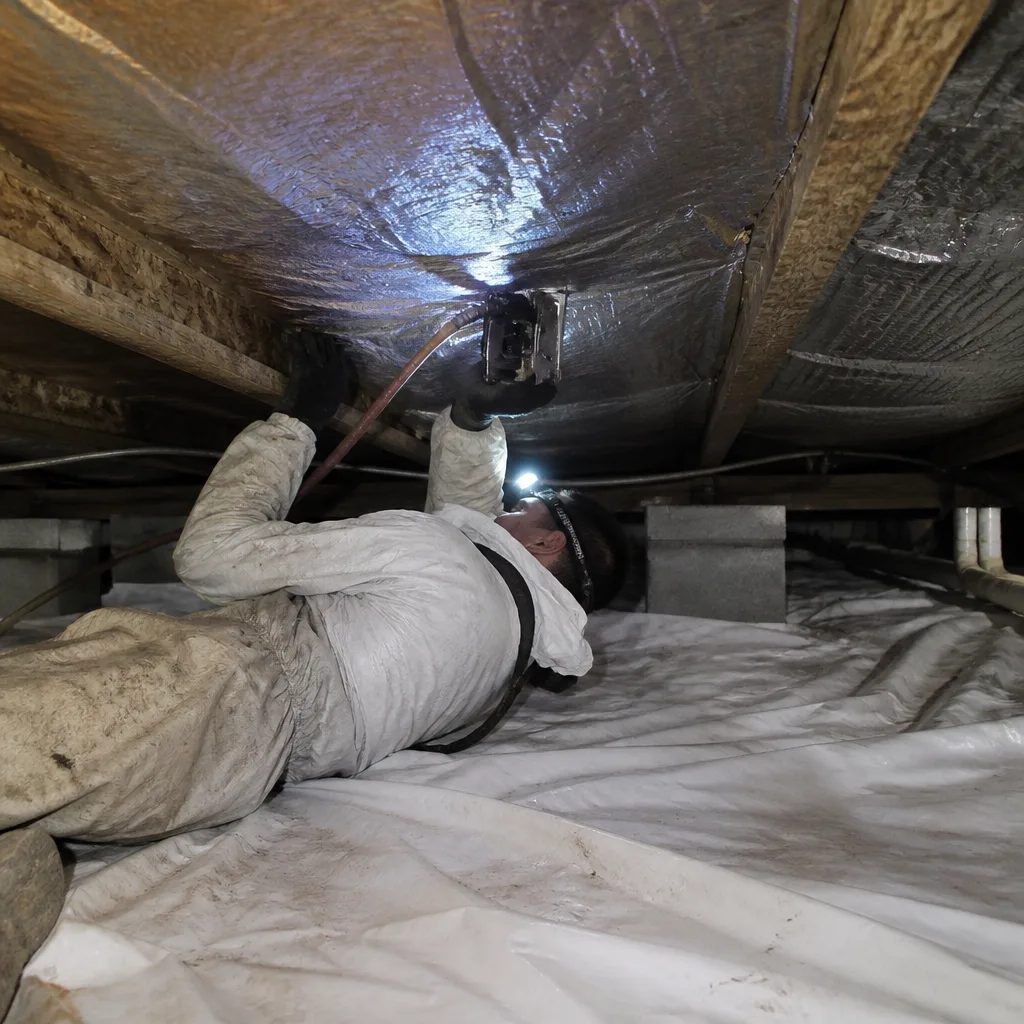
Las Vegas crawl space moisture is real, and the fix is not a sheet of plastic on the dirt. Ground moisture from irrigation-saturated soil, monsoon-season seepage, and unsealed rim joists are the actual drivers in this climate, and a proper encapsulation job addresses all three. You want a 20-mil reinforced membrane, sealed vents, sealed wall terminations, rim-joist air sealing, and documentation that proves the before-and-after numbers. Anything less is a code-minimum vapor retarder at encapsulation pricing. If you’ve got a crawl space and want to know whether it needs the work, take a soil reading or call us. We’ll measure what’s actually there. Envelope Insulation Las Vegas offers free estimates in Las Vegas with a written price before any work starts.
Ready to have your crawl space assessed? Call (833) 362-4859 for a free estimate. We’ll bring a moisture meter, a written scope with a written price before any work starts, and a documented record of what we actually found. Visit our Envelope Insulation Las Vegas home page to see the full service line, or call and ask for a walkthrough.
Written by the team at Envelope Insulation Las Vegas.