
Last updated November 17, 2026
Attic Insulation Maintenance Schedule: What to Do and When
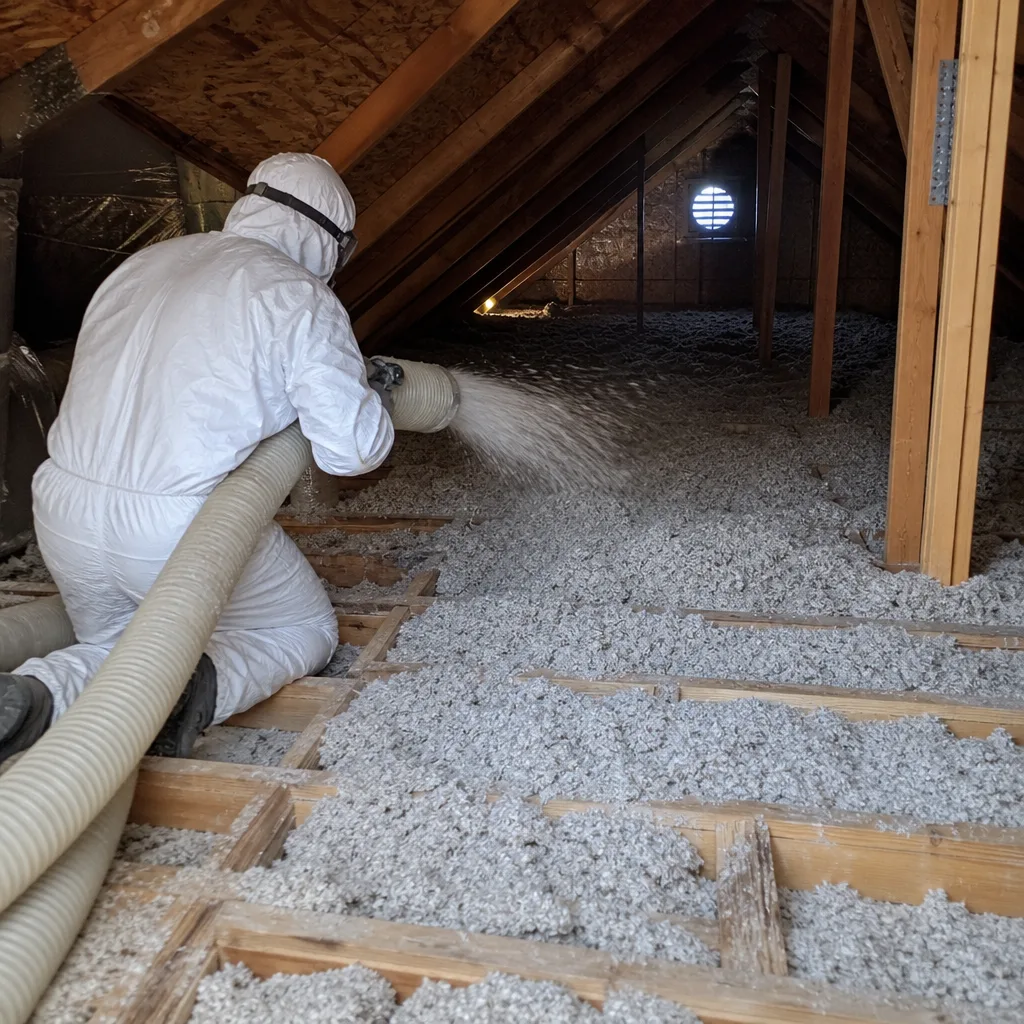
Blown-in insulation in a Las Vegas attic will lose roughly 1 to 1.5 inches of depth in the first two years as fibers settle. That’s normal, and it’s already priced into the installed depth we spec for a Las Vegas home. What isn’t normal is finding 4 inches missing in a corner where a pest entry point was left unsealed, or a wet batt field under a roof repair nobody told you about. Attic insulation doesn’t need annual servicing the way a furnace does. It needs inspection at the three moments that actually change its condition: after roofing work, after pest treatment, and after any HVAC service that required attic access. This guide gives you a calendar built around those triggers, plus the one task that genuinely does belong on a yearly list.
Quick Answer
Attic insulation in Las Vegas does not need scheduled maintenance. It needs a depth and condition inspection at three trigger points (after roofing work, after pest treatment, and after HVAC service that required attic access), an annual check of the attic hatch weather-strip seal, and a written record of depth readings at four corners and center each time. Skipping the trigger inspections is what turns a $40 seal repair into a $3,000 removal and replacement job. If you can hold a tape measure and take a photo, you can run this schedule yourself. We’ll show you how below.
Table of Contents
- Why Attic Insulation Doesn’t Need Annual Maintenance
- The Three Inspection Triggers That Actually Matter
- How to Do a Depth-Ruler Check Yourself
- Moisture: Rare in Las Vegas, Catastrophic When It Happens
- The One Genuinely Annual Task: The Attic Hatch Seal
- What to Document on Every Inspection
- When Maintenance Becomes Replacement
- Common Mistakes to Avoid
- When to Call a Professional
- Frequently Asked Questions
Why Attic Insulation Doesn’t Need Annual Maintenance
Insulation is a passive material. It has no moving parts, no filters, and nothing to lubricate. The R-value you paid for comes from trapped air in fiberglass, cellulose, or foam, and those structures don’t degrade on a schedule. What degrades them is a physical event: a roofer walking the deck, a pest tech dragging a hose, a compressor swap that pulled a plenum apart, water getting into the assembly. That’s why a calendar built on seasons is the wrong tool. A calendar built on triggers is the right one.
There’s a second reason the “annual service” model doesn’t fit here. In a Las Vegas attic, the fiber itself faces almost no biological pressure. Relative humidity sits low most of the year, so mold growth on fiberglass or cellulose is uncommon. The failure modes we actually see are mechanical (compression, displacement, gaps) and thermal (depth lost to settling, or batts that were undersized from the start). Neither of those shows up as a slow annual decline. They’re event-driven, which is exactly why the trigger calendar matters more than a seasonal one.
Settling, though, is real and worth understanding. Most blown-in products settle a predictable amount in the first 24 months and then essentially stop. When we install attic insulation, we account for that by blowing to a settled depth that meets your target R-value after compaction. On a Las Vegas home, code-minimum attic R-value sits around R-38, and we often go higher because attic temperatures here routinely push past 140°F in July. Whatever depth was installed, the fiber that remains is doing its job year after year. It doesn’t wear out. It gets disturbed, compressed, or wet. That’s the whole maintenance story.
If you want the deeper context on how depth and R-value translate to your specific home, our guide to attic insulation in Las Vegas walks through the numbers and how they’re spec’d for this climate.
The Three Inspection Triggers That Actually Matter
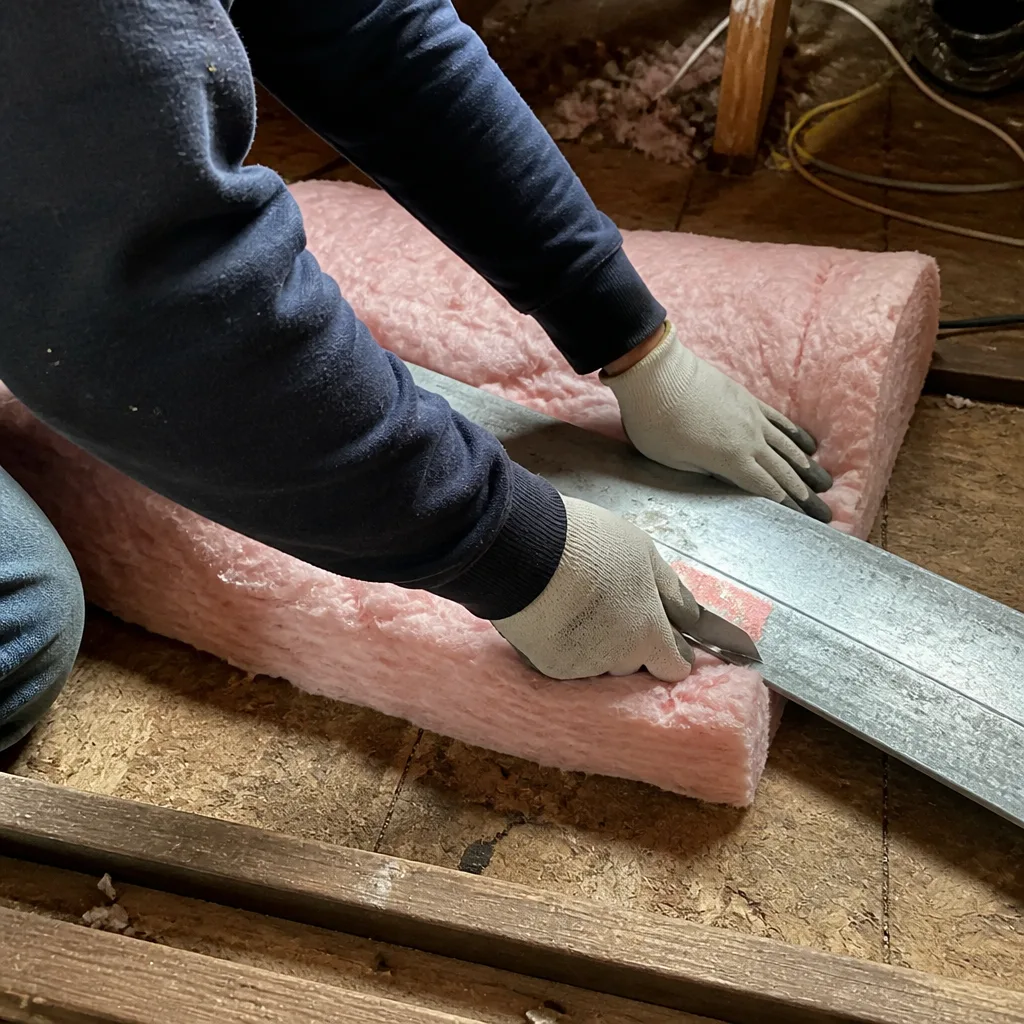
Three events should send you into the attic with a tape measure, a flashlight, and a phone camera. Each one is a known disturbance that a homeowner wouldn’t otherwise notice.
Trigger 1: After any roofing work. Roofers move insulation to get access to the deck, and it rarely goes back the way it came out. We’ve found batts folded over themselves in corners, blown fiber pushed into a pile against the ridge, and entire areas left bare under a new shingle run. Higher-end jobs use batts and rolls from CertainTeed or Rockwool, and displaced batts are easy to spot. Check for compressed or bunched areas, bare spots under the deck, and anything that looks like it was moved and not restored.
Trigger 2: After a pest treatment. Pest control crews sometimes pull insulation back to access the wall plates, or vacuum out material to treat. The bigger risk is what the pest activity left behind: unsealed entry points, chewed vapor barrier, or a displaced piece of attic air sealing that was covering a top plate. Rodent activity that goes unnoticed will also compact fiber wherever animals bed down.
Trigger 3: After HVAC service that required attic access. Any technician who went into the attic to reach air handler equipment, replace a compressor, or re-run flex duct has walked across the insulation. The trouble spot is where the equipment sits. We routinely see a 3-foot circle around an air handler where the insulation is compacted to half depth from repeated service visits.
- Roof replaced, patched, or repaired
- Pest treatment involving attic access or rodent control
- HVAC service where a technician entered the attic
Every one of those events is worth an inspection within two weeks. A 4-inch depth loss in a 200-square-foot corner translates into real heat gain in summer, and in Las Vegas that shows up on your bill long before it shows up in the room.
How to Do a Depth-Ruler Check Yourself
You don’t need a contractor to measure insulation depth. You need a tape measure or a marked ruler, a flashlight, and a phone. The rule that makes the measurement honest is that you measure to the settled surface, not the fluffed top. Push the ruler down until it stops on the ceiling drywall (or the top of the bottom chord), then read the depth of the fiber.
Before you go in: wear a long-sleeve shirt, gloves, a dust mask (N95 or better), and safety glasses. Bring a bright light, and walk only on the joists or a laid board. Never step between joists. In a Las Vegas attic, also go up early in the morning in summer. Attic temperatures climb past 140°F by midday, and that’s a heat hazard, not just an unpleasant one.
- Take a tape measure or ruler marked in inches, plus a flashlight and your phone.
- Measure the depth of the loose fiber (or batt thickness) at four corners of the attic and the center.
- Read to the settled surface, not the loose top, and press down to the drywall to establish the zero point.
- Photograph each reading with the ruler in the frame, all five locations.
- Note anything visibly bare, compressed, or displaced and photograph it too.
- Log the date and all five readings so you have a baseline for next time.
Ballpark numbers: a settled depth of 12 to 14 inches of blown fiberglass or cellulose generally corresponds to roughly R-38 to R-44, depending on the product and its settled density. If your readings land significantly below the depth that was originally installed, something disturbed the fiber. The measurement, not the appearance, is what tells you. If you find yourself wondering whether you’re within spec, a free second opinion on any written estimate is available. We’ll read the numbers with you.
Moisture: Rare in Las Vegas, Catastrophic When It Happens
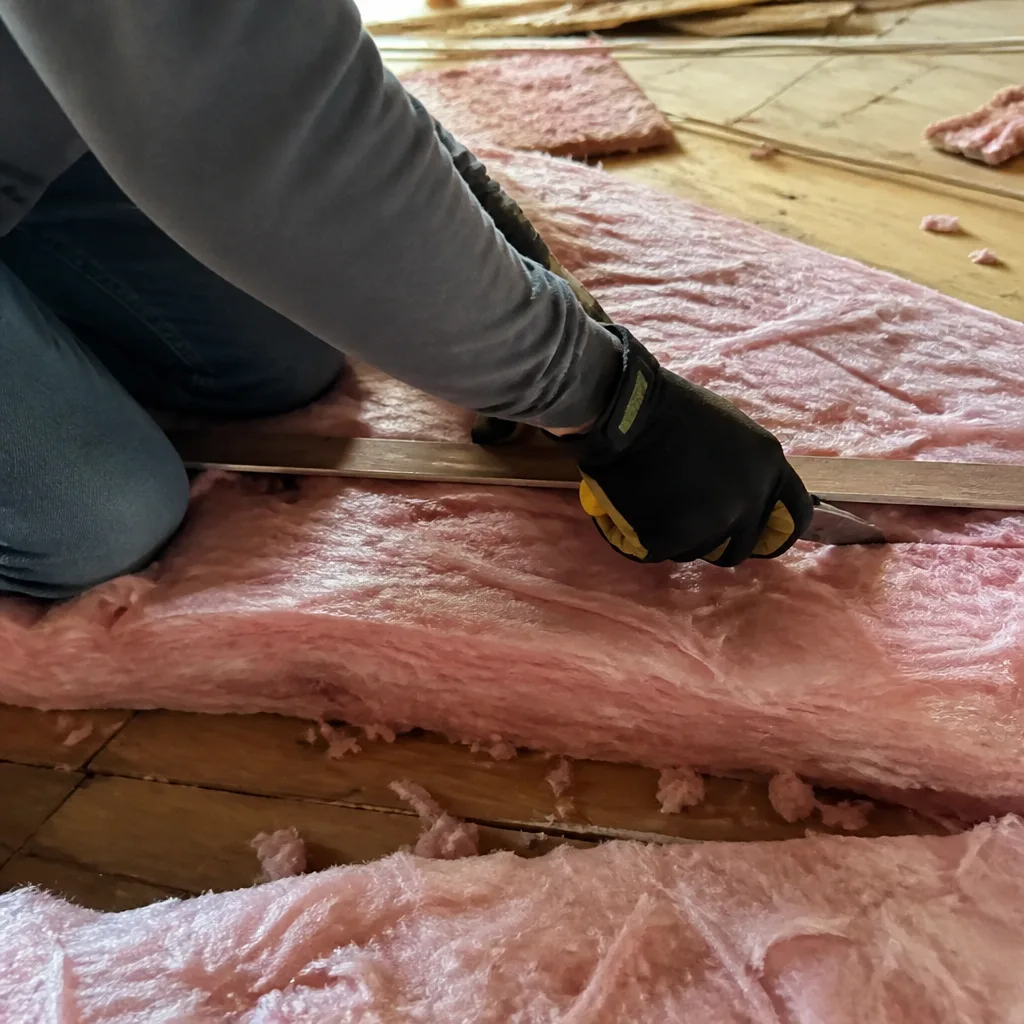
Las Vegas averages under 5 inches of precipitation a year, so widespread attic moisture problems are uncommon. But the flip side is that when moisture does get in, nobody expects it and it goes unnoticed for months. That’s the failure mode worth taking seriously. The usual culprit is a rare roof event: a monsoon downpour that catches the deck before a repair is complete, a wind-driven rain through a ridge vent, or a plumbing leak that seeps into the attic from above.
What makes moisture dangerous in a Las Vegas attic is the thermal environment. Summer attic temperatures of 140°F to 160°F can bake moisture into building materials and then trap it against the deck. Cellulose insulation is especially sensitive here because it’s treated paper and clumps when wet. Wet or compressed fiberglass loses much of its R-value, and a moist patch creates a rust risk on any metal in the assembly. Compressed fiber loses performance even after it dries, which is a key point: you can’t just wait for it to dry and assume you’re back to spec.
What to look for:
- Dark staining on rafters or the underside of the roof deck
- Soft, clumped, or matted insulation (cellulose clumps are an obvious red flag)
- Any sign of rust on fasteners, truss plates, or duct straps
- A musty smell near the attic hatch or in upstairs rooms
- Water stains on ceiling drywall below the attic
If you find any of those, don’t add insulation over the top. Insulating over a wet assembly traps the problem. The right move is to remove and replace the affected section after the moisture source is confirmed fixed. If it involves plumbing or a wide roof area, work with a roofer or plumber first, then have the insulation remediation done.
The One Genuinely Annual Task: The Attic Hatch Seal
If there’s one task that belongs on a yearly list, it’s the attic hatch weather-strip. The hatch is the single most common air bypass in a home, and it’s often a top contributor to your blower-door test reading. On a pressure test, a leaking hatch can add hundreds of CFM50 to the number, which means conditioned air escaping into the attic all year. In Las Vegas, that shows up as a bedroom that won’t cool down no matter how low you set the thermostat.
The check takes minutes and requires no tools beyond a flashlight and your hand.
- With the HVAC running on a hot or cold day, hold your hand around the perimeter of the closed hatch and feel for air movement.
- Look at the weather-strip gasket where it meets the frame. It should be pliable and continuous.
- Check that the hatch seats flush and that the frame isn’t warped.
- Replace a worn or missing gasket, and add a rigid cover box if the hatch has none.
Rarely, a homeowner finds the gasket torn, missing entirely, or a hatch frame that no longer meets the drywall cleanly. That last case needs a repair, not just new weather-strip. When we air seal an attic under The Haven Standard, sealing is completed before any insulation is added. The hatch, the top plates, and the can lights get sealed first because blowing insulation over an unsealed floor just hides the leaks.
What to Document on Every Inspection
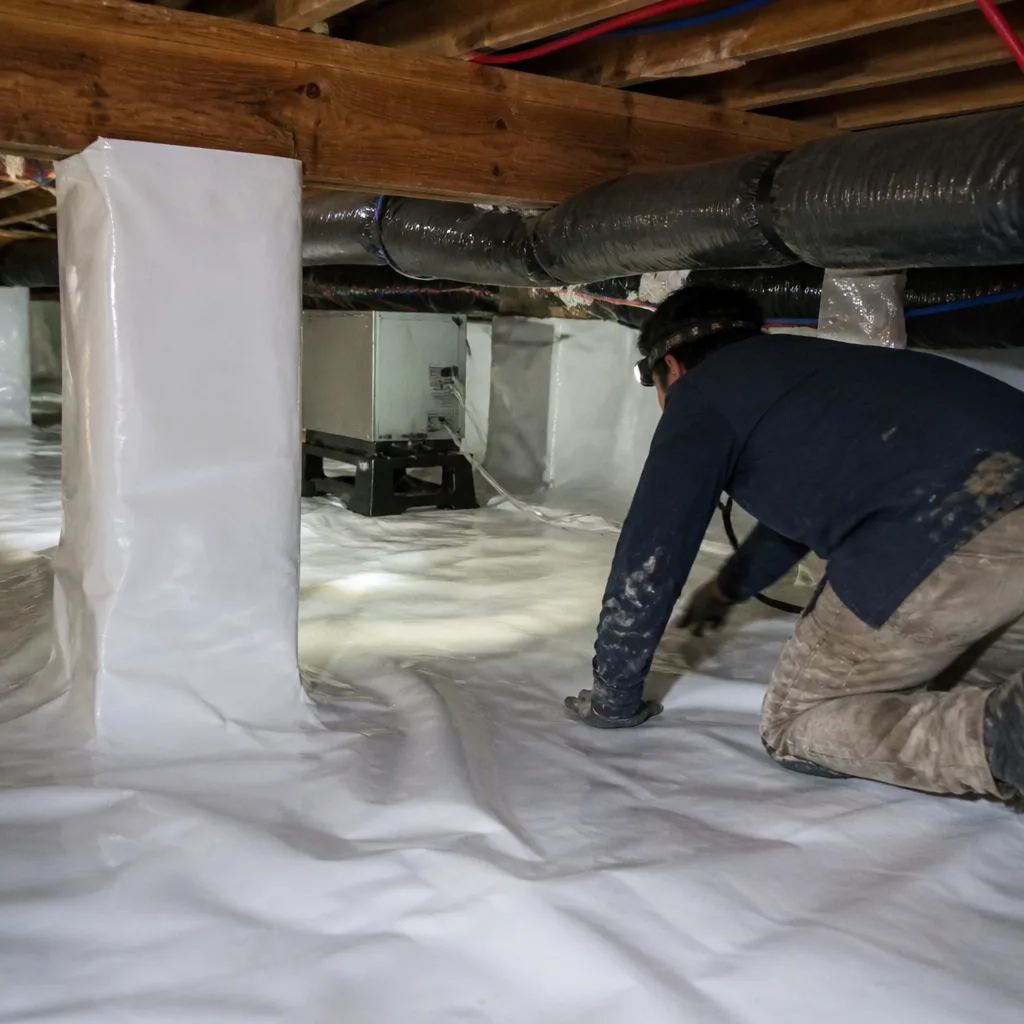
The reason to document isn’t neatness. It’s that you may need a baseline for an insurance claim or a warranty conversation, and memory doesn’t survive a roofer’s walk-through or a pest event. If a roof repair caused water damage to insulation and you file a claim, the adjuster will want to see before-and-after depth readings and photos. If you’re contacting a contractor about a warranty, having the original spec on paper settles the question fast.
What to keep on each inspection:
- Date and trigger: note which event prompted the check (roofing, pest, HVAC, or annual hatch)
- Depth readings at four corners and center, in inches, to the settled surface
- Photos with a ruler in frame at each measurement point
- A note on any bare, compressed, or displaced areas, with photos
- Any moisture or staining observed
- The condition of the hatch gasket and whether it was replaced
A simple folder on your phone or a cloud document works, or a paper log tucked in the attic door. If you hire an inspection, ask what you’ll get in writing. Every visit we make carries a Documented Photo Record, and on applicable jobs we compare before-and-after blower-door readings so the homeowner can see what changed. A written price comes before any work, always. That’s Haven Standard Clause 1.
When Maintenance Becomes Replacement
Maintenance is the right plan until it isn’t. There’s a threshold where the math flips from “top it up” to “remove and replace,” and it’s usually a mix of age, depth, and condition rather than any one factor.
The case for replacement over topping off usually involves one of these:
- You already paid for a top-off and lost the depth again within a couple of years
- Pest activity has compromised a significant share of the material
- Moisture damage is spread over more than a small area
- The original insulation was undersized for Las Vegas heat and a top-off wouldn’t reach the target
- The attic floor was never air sealed and the fiber is doing little good against bypass leaks
That last point is the one most homeowners miss. If your attic floor has unsealed top plates, gaps around can lights, and open penetrations, adding fiber on top won’t fix the air loss. The air is going the same way it always did. When we look at an attic for replacement, the first question is whether it was ever sealed properly. Our spray foam insulation in Las Vegas work is another option for the right application, and the choice between blown fiber and foam depends on the assembly, not on preference. A blower-door test, a pressurization reading that shows in one number how much air the envelope is losing, tells you whether the gap is thermal or air leakage. Most replacement decisions come down to that.
Common Mistakes to Avoid
- Skipping the inspection after roofing work. A roofer who moved fiber and didn’t restore it leaves you with bare spots you’ll only find by measuring. Two weeks after the job is the window.
- Adding insulation over the existing without checking for moisture. In Las Vegas, this is the biggest avoidable mistake. Trapping a wet section against the deck turns a small repair into a full assembly problem.
- Treating the attic hatch as unimportant. Hatch bypass is a consistent contributor to the blower-door reading, and a $30 gasket fixes it. We check the hatch on every job we do.
- Ignoring pest events. A rodent problem you didn’t fully address will compact fiber and turn it into a nest. Check the depth and the entry points together.
- Topping off without a written spec. “Add a few bags” without knowing the target R-value means nobody can say whether the job hit it. Ask for the settled depth in writing.
- Believing annual service is required. Insulation doesn’t wear out on a schedule. You may be paying for inspections you don’t need while missing the trigger events that matter.
- Not keeping a written record. If a warranty claim comes up, you want the original depth readings and photos. Ten minutes of logging saves a lot of arguing later.
When to Call a Professional
Some of this schedule you can run yourself: the hatch check, the depth readings, the photos. The moments to call a professional are specific. Call us if you find moisture, staining, or matted material in the attic. Call if the pest problem hasn’t fully resolved and entry points are still open. Call if your five depth readings are more than an inch or two below the depth that was originally installed and you can’t identify why. And call if you find an unsealed attic floor, because air sealing before insulation is a professional job and it’s the difference between a job that performs and one that doesn’t. Call if HVAC equipment has compacted the fiber around it and the system isn’t keeping up.
We provide free estimates in Las Vegas. Under The Haven Standard, you get a written price before any work starts, a free second opinion on any written estimate, and a Documented Photo Record on every visit. Call (833) 362-4859 to get started.
Frequently Asked Questions
No. Insulation is a passive material and doesn’t require annual servicing. What it needs is inspection after three trigger events (roofing work, pest treatment, and attic-access HVAC service) plus one genuinely annual task: checking the attic hatch weather-strip seal. Skipping the trigger inspections is how minor issues become full replacement jobs.
Inspect after every roofing job, pest treatment, or HVAC service that required attic access, and do the hatch-seal check once a year. Las Vegas’ dry climate means moisture problems are rare, but the trigger inspections catch the events that actually disturb insulation. There’s no reason to inspect on a seasonal schedule otherwise.
Take a tape measure, a flashlight, and your phone into the attic, and measure the settled depth of the fiber at all four corners and the center. Press down to the drywall to establish zero, read to the settled surface, and photograph each reading with the ruler in frame. Log the date and all five readings so you have a baseline.
A blower-door test measures air leakage in one number (CFM50), while a depth check only measures the thermal layer. If your depth is fine but your home still won’t hold temperature, the issue is air bypass, not the fiber. Sealing before insulating fixes that; adding fiber on top of an unsealed floor doesn’t.
Sometimes yes. Topping off works when the existing fiber is dry, uncontaminated, evenly distributed, and only slightly below target. It doesn’t work when pest activity, moisture damage, or repeated compression has compromised the material, or when the attic floor was never air sealed. A blower-door reading tells you which situation you’re in.
Don’t add insulation over it. Find and fix the water source first (a roof event or a plumbing leak), then have the affected section removed and replaced. Wet cellulose clumps and loses performance permanently. Call (833) 362-4859 for an inspection after the source is repaired.
The Bottom Line
Attic insulation in Las Vegas is a permanent, passive layer that doesn’t wear out on a calendar. Maintain it by inspecting at the three triggers that actually disturb it (roofing work, pest treatment, and attic-access HVAC service), by running an annual hatch-seal check, and by keeping written depth readings at four corners and center with photos each time. That record is what protects you if a warranty or insurance question comes up. It’s also what tells you, honestly, whether your attic still performs or has drifted out of spec. If the readings are off and you can’t explain why, that’s the moment to bring in someone with a blower door.
If you’d like a professional read on your attic, or if a crawl space was part of the picture and you want to understand how the envelope fits together, crawl space encapsulation and vapor barrier in Las Vegas is the companion guide. For a free estimate and a written price before anything starts, call (833) 362-4859. You can also start at our Envelope Insulation Las Vegas home to see the full service line. We’ll show you the numbers, and we’ll put them in writing.
Written by the team at Envelope Insulation Las Vegas.