
Last updated November 17, 2026
Insulation Permits, Codes & Inspections in NV: What You Need to Know
Here’s a fact that surprises almost every homeowner we talk to in Las Vegas: a new attic insulation job can pass a county inspection and still deliver roughly half the thermal performance the label promises. Clark County adopted the 2018 IECC with local amendments, which sets attic insulation minimums at R-38 for Climate Zone 3B. But the checklist field inspectors actually carry does not require a blower-door test. That means the inspection confirms the material is present and the depth looks right, not that the building envelope is sealed. This guide walks through the real code requirements, when a permit is required, what an inspection does and doesn’t catch, and how to protect yourself.
Quick Answer
In Nevada, insulation permits and code enforcement happen at the county level, and the requirements vary by county. Clark County (Las Vegas) and Washoe County (Reno) both fall in IECC Climate Zone 3B for most inhabited areas, which drives attic minimums to R-38 and wall minimums to R-13 plus. A permit is generally required for new insulation installation and for alterations to a building’s thermal envelope, but not for a straight like-for-like replacement of existing insulation in many cases. Critically, a passing inspection confirms material presence and depth, not air-sealing continuity, so the permit alone does not prove your home performs to the rated R-value.
Table of Contents
- Nevada Climate Zones: Clark County vs. Washoe County and What R-Values Each Requires
- When Is a Permit Actually Required for Insulation Work in Clark County?
- What a Clark County Insulation Inspection Covers – and What It Misses
- Your Liability If Unpermitted Insulation Work Is Discovered Later
- How Contractor Documentation Closes the Performance Gap
- The Step-by-Step Permit and Inspection Process for Las Vegas Homeowners
- Common Mistakes to Avoid
- When to Call a Professional
Nevada Climate Zones: Clark County vs. Washoe County and What R-Values Each Requires
Nevada looks like one climate on a map. In code terms it isn’t. The IECC assigns climate zones by county heating and cooling degree days, and those designations determine the minimum R-value for every part of the building envelope. This matters because a contractor who works in Reno or Elko and pulls the same spec sheet into Las Vegas can install the wrong assembly for the local zone.
Clark County is overwhelmingly Climate Zone 3B – hot and dry. Washoe County, including the Reno-Sparks metro, is mostly Zone 4B or 3B depending on elevation, with mountain pockets drifting into colder zones. The residential provisions of the 2018 IECC with Clark County amendments set these ceilings, walls and slab minimums for Zone 3B:
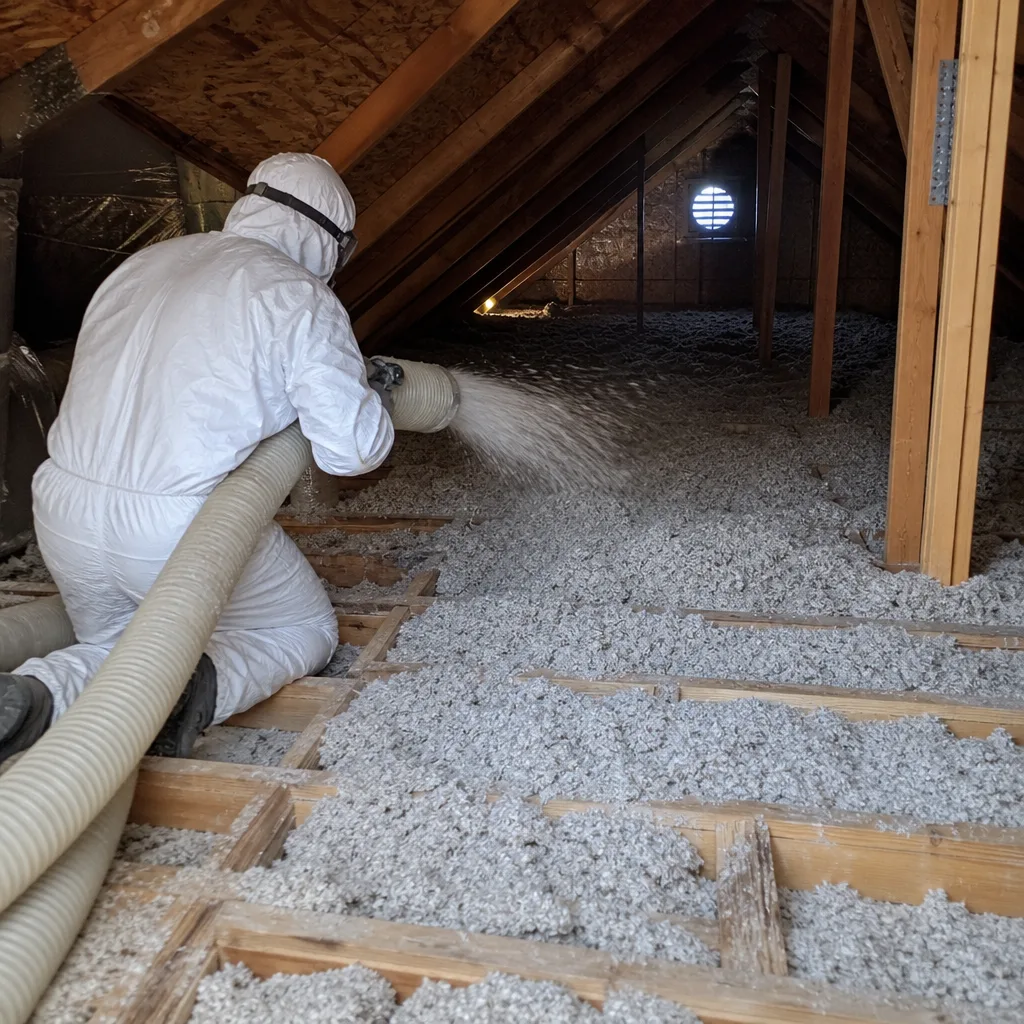
- Attic (ceiling) insulation: R-38 minimum in Zone 3B. Many Las Vegas homes built before 2010 have R-11 to R-19, which is why attic performance is the most common upgrade we see.
- Above-grade wood-frame walls: R-13 plus R-5 continuous or R-20 cavity depending on the compliance path chosen.
- Mass walls: R-7 minimum.
- Slab-on-grade floors: R-0 in Zone 3B by the prescriptive path, though many Las Vegas homes have no slab insulation at all.
- Crawl space walls: R-13 or a sealed, conditioned crawl space equivalent.
In Zone 4B portions of Washoe County, the attic minimum rises and the wall requirement changes. If you’re reading a permit spec pulled from a Reno job and applying it to a Las Vegas home, the R-values may be conservative enough to pass, but the moisture control assumptions will be wrong. Clark County’s dry desert air behaves nothing like Reno’s snow loads. The attic insulation in Las Vegas needs to account for summer attic temps that routinely exceed 150°F.
When Is a Permit Actually Required for Insulation Work in Clark County?
This is where Las Vegas homeowners get tripped up, because the answer isn’t uniform. Clark County’s building department and the City of Las Vegas, Henderson, and North Las Vegas each issue their own permits, and each interprets the same code sections. The general rule comes down to whether the work alters the building’s thermal envelope.
Permits are generally required for:
- New construction of any insulated assembly.
- Addition of insulation to previously uninsulated walls, floors, or ceilings.
- Alterations that change the thermal envelope – converting a garage, finishing an attic into conditioned space, adding a bump-out.
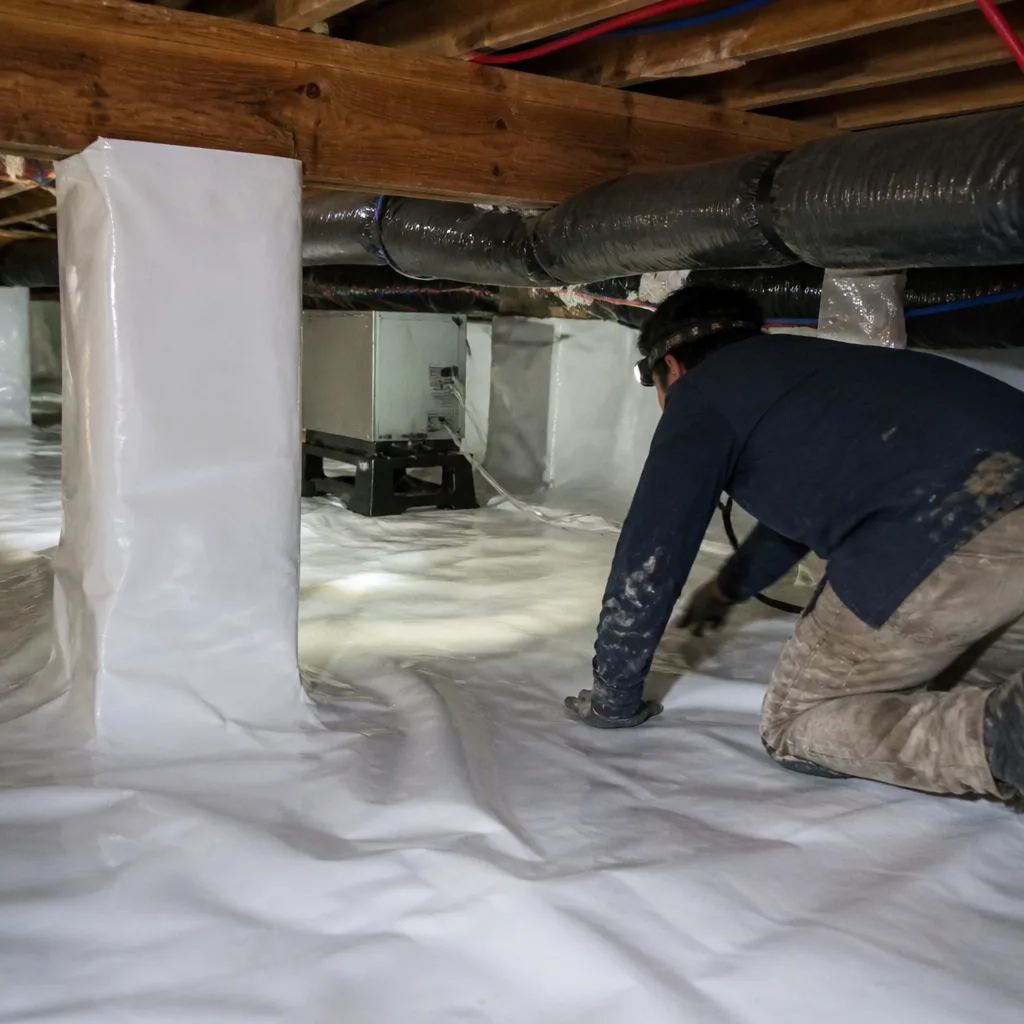
- Spray foam installation in a new assembly or where it changes the classification of a space (for example, encapsulating a vented attic to an unvented assembly).
- Insulation work tied to a larger permitted project – a re-roof with new attic insulation on the same permit, a kitchen remodel that adds wall insulation.
Permits are typically not required for:
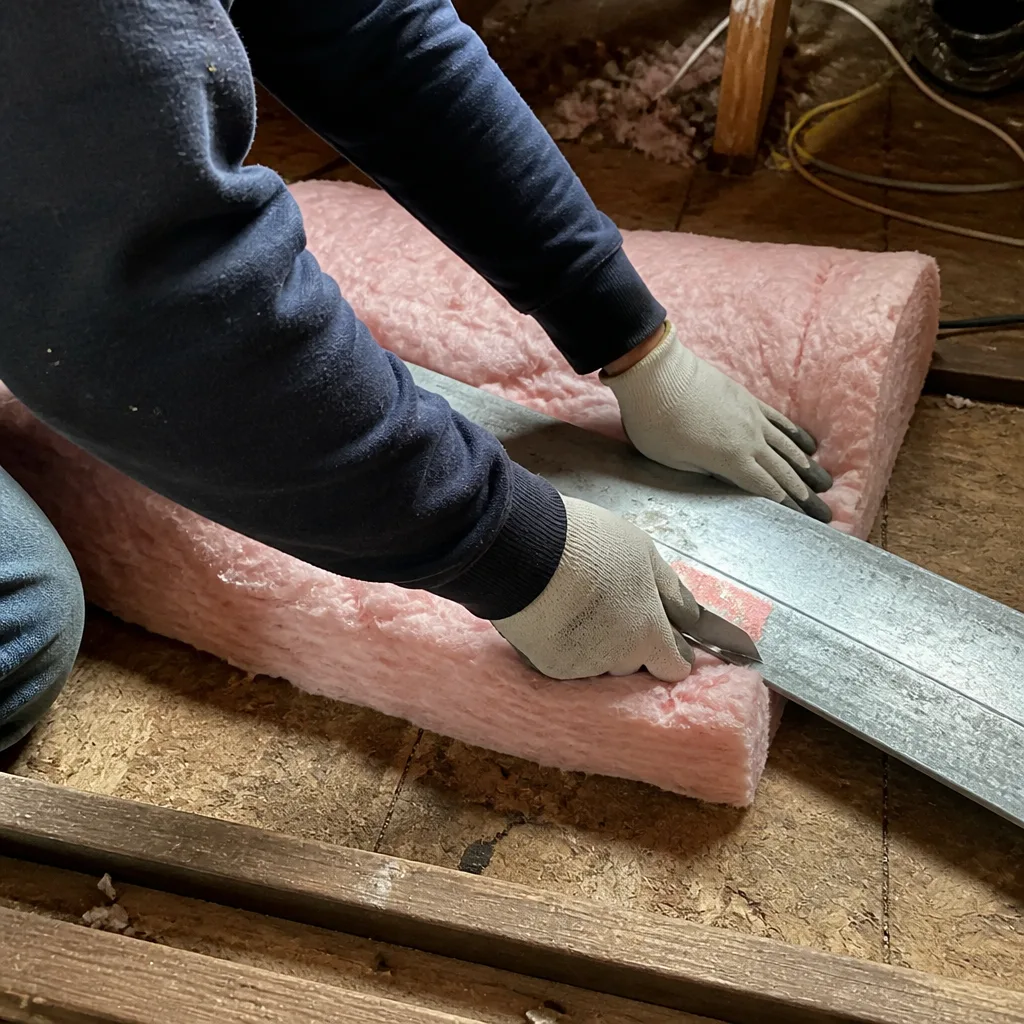
- Like-for-like replacement of existing attic insulation to the same or lower R-value.
- Adding blow-in insulation on top of existing attic insulation to reach the current code minimum when no other envelope work is being done, though some jurisdictions require a permit once you cross a threshold of square footage. Check with the specific jurisdiction before assuming.
For homeowners in Las Vegas who just want to top off a thin R-11 attic to R-38, a permit often isn’t the hurdle. For anyone encapsulating a crawl space or converting a vented attic to spray foam, it usually is. That’s the difference between a routine job and a permitted job, and the documentation burden is very different. You can read more about how spray foam changes assembly requirements on our spray foam insulation in Las Vegas page.
What a Clark County Insulation Inspection Covers – and What It Misses
Here’s the gap that the code itself acknowledges. A Clark County insulation inspection is a visual inspection against a checklist. The inspector verifies that the material being installed matches the permit application and that it’s installed to the specified depth and coverage. That’s the checklist.
What the inspector verifies:
- Material type and manufacturer match the permit.
- Installed R-value and depth meet the code minimum for the applicable zone and assembly.
- Clearance from heat-producing fixtures – recessed lights rated IC, chimney chases, flue penetrations.
- Vapor barrier placement in the correct location for the climate zone.
- Access to mechanical equipment in the attic (the code requires a service pathway).
- Baffles installed at the eaves to preserve venting.
What the checklist does not test:
- Air-sealing continuity. The single largest source of thermal loss in a Las Vegas attic is the top-plate and penetration leakage that blows conditioned air straight into the attic before the insulation does anything. The inspection does not require a blower-door test to confirm this was sealed.
- Installed density versus stated R-value. Fiberglass and cellulose both lose R-value when installed at sub-spec density. The inspector checks depth, not density.
- Effective R-value after thermal bridging. A nominal R-38 with short stud bays and no continuous insulation performs closer to R-22 in practice.
- Duct leakage in the attic. In many Las Vegas homes, 20 – 30% of the air from the air handler escapes into a 150°F attic before it reaches a room. No insulation inspection catches this.
This is why we publish before-and-after blower-door numbers on every applicable job. A blower-door test – a pressurization reading that shows, in one number, how much air the building envelope is losing – is the only field measurement that catches what the inspection misses. When we worked through a 1978-built home in the northwest Las Vegas valley last spring, the pre-sealing reading was 4,200 CFM50. Post-sealing and post-insulation, it dropped to 2,100. The inspection passed both times. Only the second number reflects the performance the homeowner actually paid for.
Your Liability If Unpermitted Insulation Work Is Discovered Later
Unpermitted insulation work is not a paperwork problem. It’s a liability problem, and it surfaces at the worst possible times – during a sale, during an insurance claim, or when the next contractor pulls a permit for an adjacent project and the previous work is on record.
Where this shows up in Las Vegas specifically:
- Sale disclosure. Nevada requires sellers to disclose known unpermitted work. If a buyer’s inspector finds spray foam in a vented attic with no permit, the buyer can demand remediation, price reduction, or walk. The remediation usually means full removal and re-installation to a permitted standard, which is 2 – 3 times the cost of doing it once correctly.
- Insurance claims. If a fire, moisture event, or structural failure traces back to an unpermitted assembly, the carrier can deny the claim on the basis that the loss occurred in a non-conforming assembly. This is not theoretical in foam-insulation disputes.
- Appraisal and lending. Some lenders require permitted work for the appraised value to include the improvement. An unpermitted $8,000 insulation job doesn’t raise the appraisal number it was supposed to.
- Title and refinance. Unpermitted work can trigger a title exception or a refinance condition, which delays closing by weeks or months depending on the county’s ability to retroactively permit the work.
The fix, if unpermitted work is discovered, is usually a retroactive permit. That requires a site inspection, a report from a licensed contractor confirming the assembly meets current code, and occasionally the removal of work that can’t be verified. In our experience, the retroactive permit process in Clark County is slower and more expensive than permitting the work upfront. Homeowners who walked into the process thinking they’d save money by skipping it usually spent more.
How Contractor Documentation Closes the Performance Gap
The code’s checklist isn’t going to change this year. What fills the gap today is documentation – the paper trail a contractor hands you at the end of the job that shows what was actually done, not just what passed visual inspection.
Under The Haven Standard, every job we complete ends with a Documented Photo Record, and on applicable jobs, before-and-after blower-door readings. That’s what a homeowner walks away with:
- Written scope and flat written price before any work starts.
- Material invoices matching the R-value specified in the scope.
- Photographs of the air-sealing work at the top plates, can lights, and penetrations – before the insulation went in.
- Before-and-after blower-door readings showing actual envelope leakage (CFM50) change.
- Written warranty covering the completed work under the 365-Day Done Right Promise.
That packet is what proves performance. If you ever sell the house, it’s what you hand the buyer’s inspector. If you ever file a claim, it’s what your carrier reads. The permit file alone won’t show air-sealing continuity because the permit file was never designed to. The materials we source – Owens Corning for fiberglass batts, GreenFiber for stabilized cellulose blow-in, Icynene for spray foam – come with spec sheets and invoices that back up the R-value claim, and we keep those with the job record. Since 2016 we’ve delivered this documentation set on more than 9,000 homes, and it exists on every job regardless of whether the inspection even looks at the assembly. For a full walkthrough of how crawl space work triggers similar documentation, see our crawl space encapsulation and vapor barrier in Las Vegas page.
The Step-by-Step Permit and Inspection Process for Las Vegas Homeowners
If you’re doing the work yourself or managing a contractor, here’s the sequence that actually plays out in Clark County, Henderson, and North Las Vegas. Timing varies by jurisdiction, but the order is consistent.
- Confirm whether the job needs a permit. Call the jurisdiction’s building department or have your contractor do it. Ask the specific question: “Does adding R-19 to an existing attic to reach R-38 require a permit if no other envelope work is being done?” Get the answer in writing if you can.
- Submit the permit application with a drawing and R-value specification. The application needs the scope, the assembly being altered, the R-value by assembly, and the climate zone designation. Most applications in Clark County reference 2018 IECC Zone 3B.
- Schedule the pre-inspection (if required). Some jurisdictions require a pre-cover inspection for spray foam before the assembly closes. Attic blow-in typically does not.
- Complete the installation. This is where air sealing happens – before insulation, not after. If the contractor wants to blow insulation over an unsealed attic floor, the inspection will still pass and the performance won’t.
- Request the final inspection. The inspector walks the site, checks the checklist items above, and signs off. The permit is closed.
- Collect your documentation. Final inspection card, material invoices, install photos, and blower-door readings if applicable. Put them in a folder with the permit number on it. You’ll want it during any future sale or claim.
Common Mistakes to Avoid
- Skipping the permit on a “small” job that alters the envelope. Converting a vented attic to unvented spray foam is never a small job from the code’s perspective, even if the square footage looks modest. It changes the assembly classification and always requires a permit.
- Assuming the inspection guarantees performance. The inspector verifies what’s visible. In a Las Vegas home, air leakage through can lights and top plates can waste more conditioned air than the missing R-value will ever recover.
- Blowing insulation over an unsealed attic floor. This is the single most common failure we see on re-do jobs. It’s faster, and it passes inspection. It also hides the leaks and makes the next fix more expensive because the insulation has to be removed first.
- Pulling a Reno or Elko spec sheet into a Las Vegas job. Zone 4B and Zone 3B assemblies handle moisture very differently. Wall assemblies that work in Washoe County can trap moisture in Clark County’s dry heat cycling.
- Not asking for the blower-door numbers. Any contractor claiming performance improvement should be able to show the before-and-after CFM50 reading. If they can’t, they’re selling material presence, not performance.
- Letting a contractor file the permit and keep the paperwork. The permit file belongs to the property, not the contractor. Get copies of everything before the crew leaves.
- Not documenting the work for future resale. Nevada’s disclosure requirements mean you’ll be asked about permits when you sell. Have the file ready.
When to Call a Professional
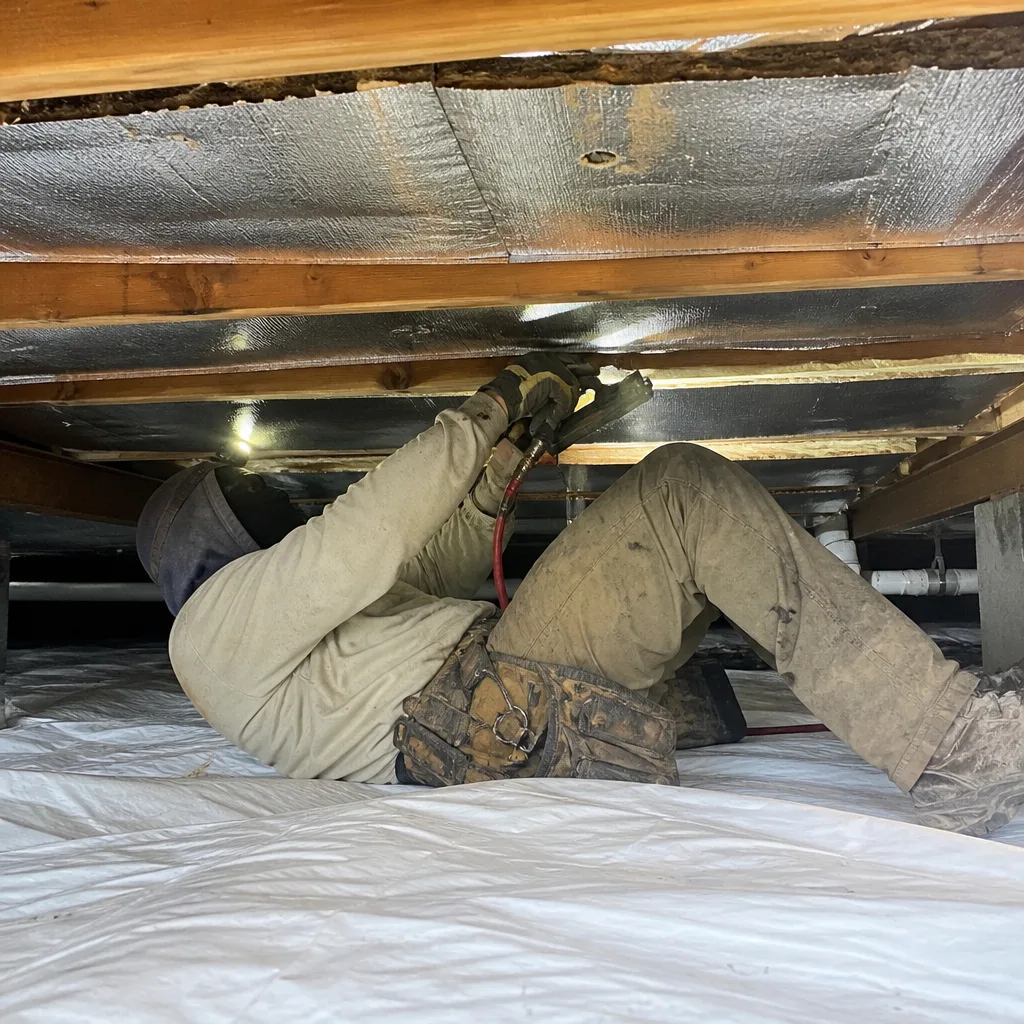
Some insulation work is a homeowner-managed permit plus a weekend of blow-in. Most of what we see in Las Vegas is not. If your attic has recessed can lights, a complex roofline, knee walls, a spray foam assembly, or a crawl space conversion, the code requirements and the assembly details get specific enough that a mistake is expensive. If you’re buying a home that was insulated between 2015 and 2025 and you can’t find a permit record, a professional assessment before closing is cheaper than a retroactive permit after. If you’re renovating and pulling a permit for anything else – a re-roof, a kitchen, an addition – bundled insulation work on the same permit is almost always the right move. Envelope Insulation Las Vegas offers free estimates in Las Vegas and a free second opinion on any written estimate you’ve already got in hand. Call (833) 362-4859 and a live person will pick up.
Frequently Asked Questions
It depends on what “add” means. A straight like-for-like replacement of existing attic insulation to the same or lower R-value typically does not require a permit in Clark County. Adding insulation to a previously uninsulated assembly, altering the thermal envelope, or converting a vented attic to unvented spray foam does require one. Confirm with the specific jurisdiction (Las Vegas, Henderson, North Las Vegas, or unincorporated Clark County) before assuming, because interpretations vary. Call (833) 362-4859 if you want us to read your scope and tell you which side of the line it falls on – the second opinion is free.
R-38 is the 2018 IECC minimum for attic insulation in Climate Zone 3B, which covers Clark County. That’s roughly 10 – 14 inches of blown fiberglass or 10 – 12 inches of stabilized cellulose, depending on installed density. Many Las Vegas homes built before 2010 have R-11 to R-19, well below the current minimum. Meeting the code minimum isn’t the same as performing at the code minimum, though – a sealed attic at R-38 outperforms an unsealed attic at R-49 in most Clark County homes. Call (833) 362-4859 for a written price on your specific attic.
No. The Clark County insulation inspection is a visual checklist – material type, depth, clearances, baffles, vapor barrier placement. It does not require a blower-door test, which means an assembly can pass inspection while still leaking the same amount of conditioned air it was losing before. A blower-door test – a pressurization reading that shows how much air the envelope is losing – is the only field measurement that catches air-sealing continuity. We publish before-and-after numbers on every applicable job. Call (833) 362-4859 to schedule a blower-door test on your home.
Repair is almost always cheaper if the existing insulation is intact and meets or comes close to the current R-value – topping off a thin R-19 attic to R-38 costs less than a full replacement. Replacement makes sense when the existing material is contaminated, compressed, mold-affected, or installed over an unsealed floor that needs air sealing anyway. Removing 30-year-old insulation to seal the attic floor and reinstall fresh material usually costs more upfront but delivers measurably better performance. Call (833) 362-4859 for a written price on both paths – we’ll show you the numbers side by side.
You must disclose known unpermitted work on the Nevada seller’s disclosure, and the buyer can demand remediation, a price reduction, or walk from the deal. Unpermitted work can also complicate insurance claims and refinancing. The fix is usually a retroactive permit, which requires a site inspection and a report from a licensed contractor confirming the assembly meets current code. That process is slower and more expensive than permitting the work upfront. If you’re in this situation, call (833) 362-4859 and we’ll walk through what the retroactive path looks like for your assembly.
In most cases, yes. Spray foam that changes the classification of an attic assembly (vented to unvented) and crawl space encapsulation that alters the thermal or moisture envelope both typically require a permit in Clark County and the surrounding jurisdictions. The permit triggers a pre-cover inspection in some cases. Insulation blow-in to an existing attic often doesn’t. When in doubt, permit it – the retroactive path costs more. Call (833) 362-4859 for a scope review and written price on your spray foam or encapsulation project.
The Bottom Line
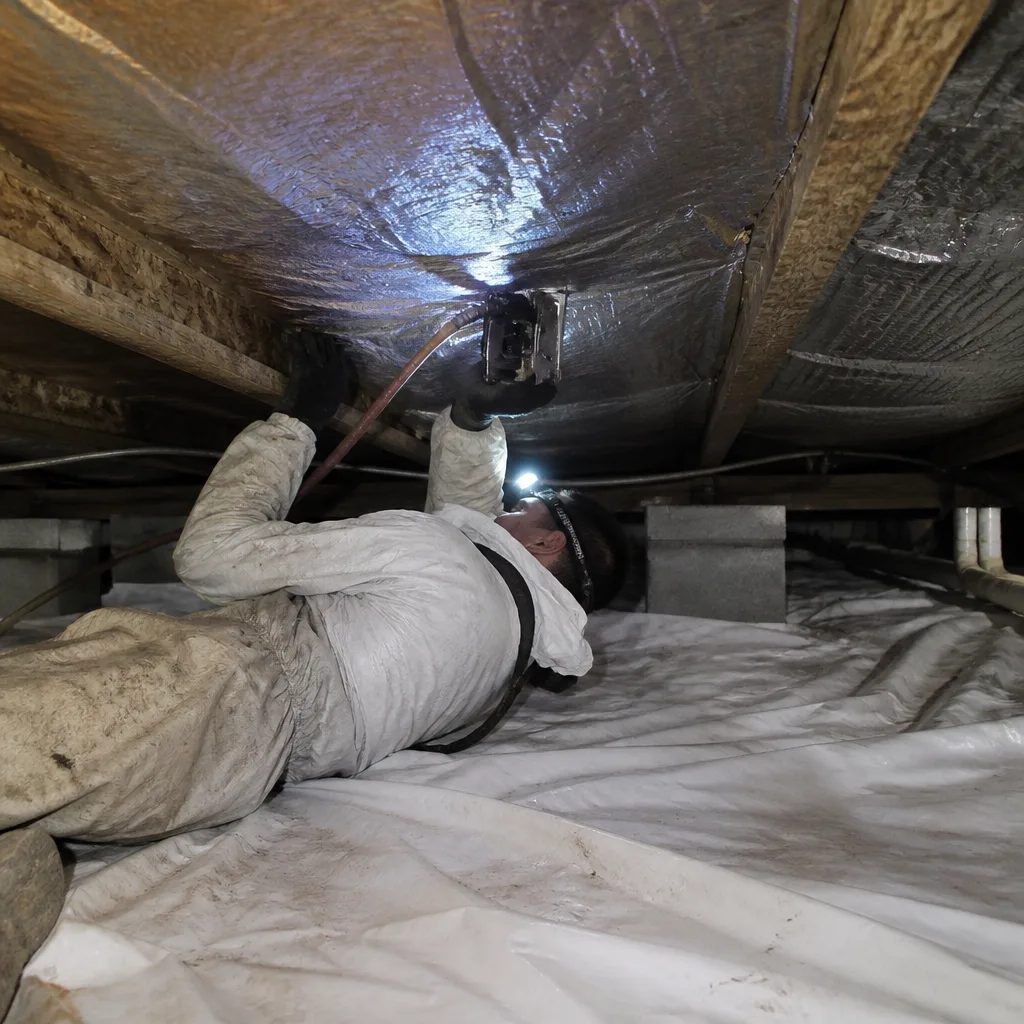
Nevada’s insulation code is real, county-specific, and enforced – but the inspection process verifies material presence, not envelope performance. Clark County’s Zone 3B designation under the 2018 IECC with amendments sets attic minimums at R-38, wall minimums at R-13 plus 5, and slab at R-0 for the prescriptive path. Permits are required for new installations and envelope alterations, not for like-for-like replacement. The most important thing to walk away with is the documentation that closes the gap the inspection leaves open: air-sealing photos, material invoices, and before-and-after blower-door readings. If you’re planning insulation work in Las Vegas, get the written price, get the permit if it applies, and get the numbers that prove the work performed. That’s what we do on every job.
To get a flat written price before any work starts, a free second opinion on an estimate you already have, or a documented assessment of what your Clark County home actually needs, call Envelope Insulation Las Vegas at (833) 362-4859. Live person answers, 24/7, and every job ends with a Documented Photo Record and a written warranty under the 365-Day Done Right Promise. Start with our Envelope Insulation Las Vegas home page or call us today – the estimate is free.
Written by the team at Envelope Insulation Las Vegas.