Last updated November 17, 2026
How to Hire an Insulation Contractor in Las Vegas: A Step-by-Step Guide
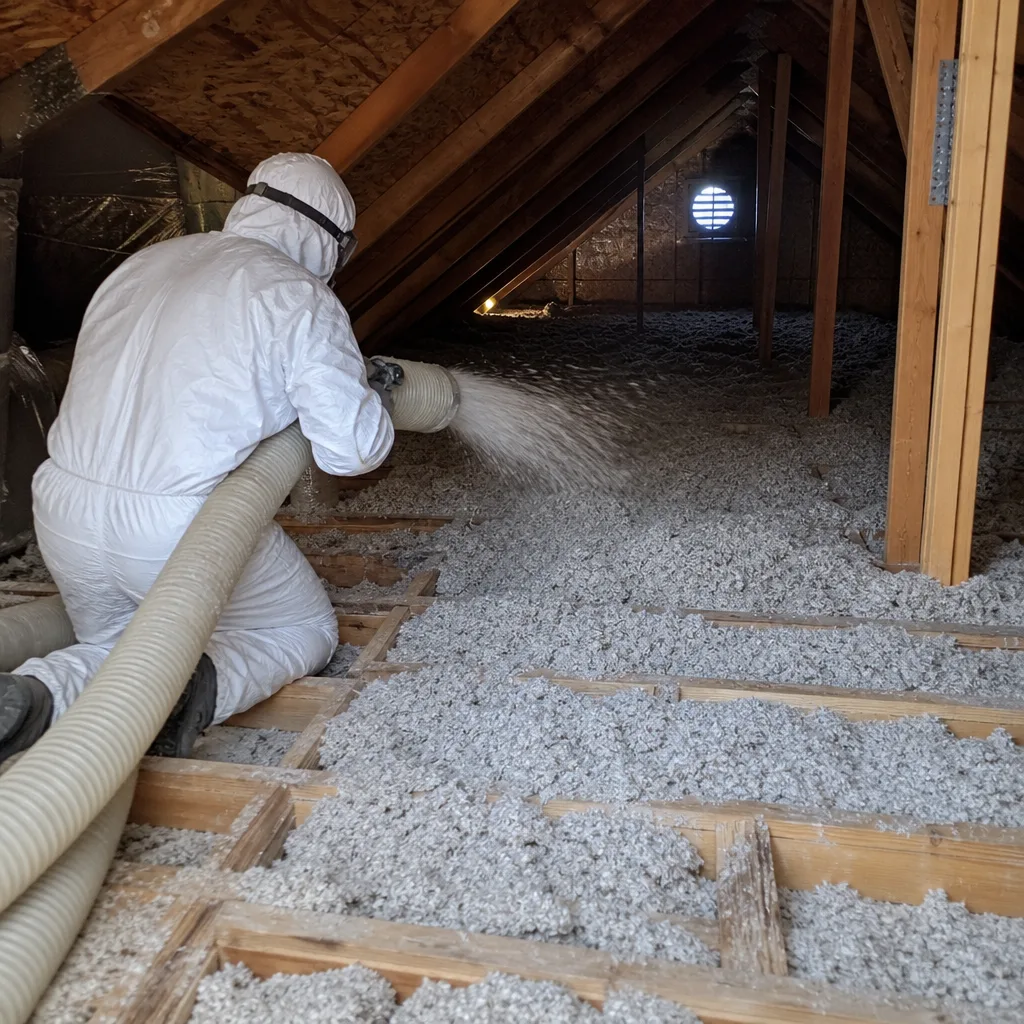
Nevada requires insulation contractors to hold a C-2 license. Here’s what that exam doesn’t test: blower-door methodology, air-sealing sequencing, or thermal bridging. A fully licensed contractor can blow R-49 over unsealed top plates, fail nothing, and leave you with the same leaky attic you started with. That’s why the real vetting in Las Vegas happens before the quote, with one diagnostic question most homeowners never think to ask. This guide walks through the licensing gap, the exact question that separates building-science contractors from material salespeople, how to read a written scope, and three red flags we see repeatedly in this market.
Quick Answer
Hire an insulation contractor in Las Vegas by verifying a current Nevada C-2 license, then asking every bidder one diagnostic question: “What is your air-sealing protocol before insulation goes in, and how do you document it?” A serious contractor answers with a specific sequence and a commitment to blower-door readings. An evasive one quotes footage and R-value only. Never accept a phone quote without an attic inspection, and never sign a scope that doesn’t itemize material type, stated R-value, install method, and testing.
Table of Contents
- What Nevada’s C-2 License Does and Doesn’t Certify
- The One Question That Separates Contractors
- What a Written Scope of Work Must Contain
- How to Read Before-and-After Blower-Door Results
- Three Red Flags Specific to the Las Vegas Market
- Why Las Vegas Climate Makes Sequencing Non-Negotiable
- Common Mistakes to Avoid
- When to Call a Professional
What Nevada’s C-2 License Does and Doesn’t Certify
Nevada’s C-2 license is a contractor classification covering insulation and acoustical work. To get it, a contractor must pass the state trade exam, carry the required insurance, and register with the Nevada State Contractors Board. That’s a real bar, and you should confirm the license number is active before anyone sets foot in your attic. The NSBC publishes license lookups online, and a legitimate contractor will hand you the number without hesitation.
What the C-2 exam does not do is test whether the contractor understands building performance. There is no requirement to demonstrate blower-door competence, no section on air-sealing sequencing, and no penalty for installing insulation over a floor assembly that leaks conditioned air into the attic. A contractor can hold a clean C-2, install a technically code-compliant R-49 batts over unsealed top plates, pass municipal inspection, and leave your home exactly as leaky as it was before. The license proves the contractor is bonded and insured. It does not prove the work will lower your energy bill.
That gap is the reason this guide focuses on diagnostics rather than paperwork. In Las Vegas, the paperwork is the easy part. Any licensed contractor can produce a certificate. The harder question is whether the person holding it understands that insulation is a material and air sealing is the system that makes the material work. Those are different skills, tested by different things, and only one of them shows up in a state database.
One more note on licensing: ask whether the person doing the diagnostic walk-through is the same person who writes the scope. When a salesperson measures square footage and a separate crew installs, nobody owns the performance outcome. Under our own Haven Standard, the walk-through, the written price, and the installation plan come from the same conversation, in writing, before any work starts.
The One Question That Separates Contractors
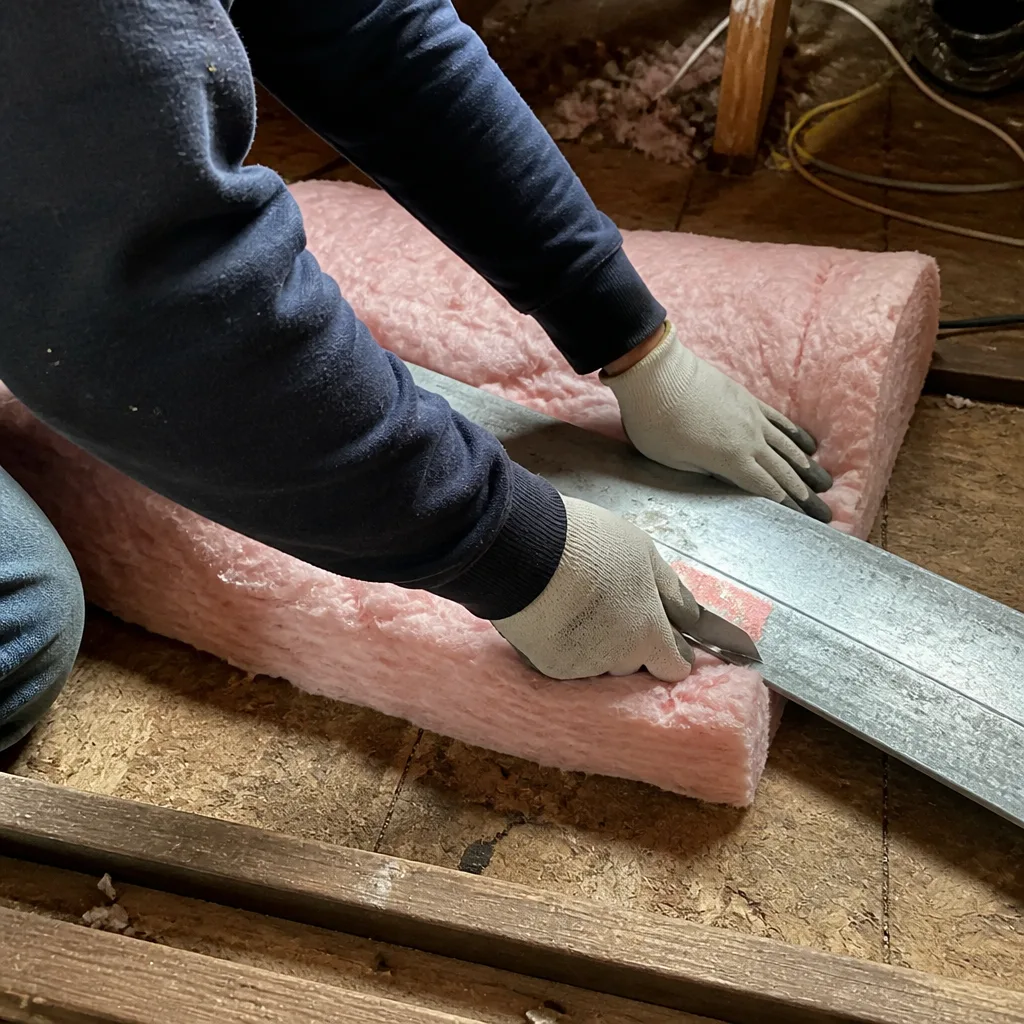
Ask every bidder the same question, in the same words: “What is your air-sealing protocol before insulation goes in, and how do you document it?” The answer tells you in about thirty seconds whether you’re talking to a building-performance contractor or a material installer. You don’t need technical training to hear the difference. You need to know what a complete answer sounds like.
A strong answer names a sequence. It should reference sealing top plates, wiring and plumbing penetrations, can lights, and the attic hatch or knee-wall access before any insulation goes down. It should describe the specific materials used for each. It should mention documenting the work with photos or a written checklist. Ideally, it references a blower-door test, before and after, so the air-sealing result is measured rather than assumed.
An evasive answer is usually shorter than you’d expect. Watch for these:
- “We seal as we go” – no sequence, no documentation, no measurement.
- “Our insulation is dense enough that air sealing isn’t necessary” – this is a tell. No batt or blown product seals a penetration.
- “We’ll do whatever the inspection requires” – the code minimum, not the performance outcome.
- A pivot to price or brand before answering the question – the contractor is selling material, not performance.
- Confusion about what a blower door does – a working contractor in this field tests homes or works alongside someone who does.
The question is designed to surface the difference between the two business models. Some contractors sell insulation as a product and install it to the code minimum. Others treat the building envelope as a system and measure the result. Both can be licensed. Only one of them will lower your energy bill in a Las Vegas summer. Our own position is that we won’t blow insulation over an unsealed attic floor, ever – it’s the sequencing that determines whether the R-value you paid for means anything.
Ask this question of every bidder before you discuss price. Contractors who answer it well will already have priced the air-sealing labor separately in their scope, which is the next section.
What a Written Scope of Work Must Contain
A written scope is the document you sign and keep. It’s not the estimate, not the proposal, and not the brochure. It’s the page that says what will be done, to what standard, with what materials, and how anyone will know it was done right. If a contractor can’t produce one before you sign, you’re handing over money against a promise. Four things must appear in writing, without exception.
- Material type, by manufacturer and product. “R-49 blow-in” is not a spec. “CertainTeed InsulSafe SP fiberglass blown-in, installed to 16 inches settled depth” is. On foam, name the product and the application. On mineral wool, name Rockwool or the comparable product. If the product name is missing, ask for it in writing.
- Stated R-value at settled depth. R-value is the thermal resistance of the finished assembly, not the bag. R-49 means R-49 after settling, not R-49 at install. The scope should state the target R-value and the installed depth that achieves it.
- Install method. Attic insulation should specify blown, batt, or spray application, and where. Air sealing should list the penetrations sealed and the sealant used. If the crew plans to dam around can lights, recessed fixtures, or the attic hatch, the scope should say so.
- Blower-door test commitment. The scope should state whether the contractor will test, when (before and after), what equipment, and whether the readings will be provided to you in writing. “We use a blower door” is not a commitment. “We will provide before-and-after CFM50 readings with the completion documentation” is.
A quote that skips any of these four items is a liability, not a low bid. It leaves you with no documented baseline, no standard to measure against, and no way to prove the work delivered what it promised. If the contractor declines to add these items in writing, that’s your answer. Our written price comes with a written scope and written warranty before anything starts – that’s the core of how we operate, not a nice-to-have.
If you’re evaluating an existing home and want the diagnostic layer before you choose a contractor, start with a home energy audit in Las Vegas – the audit produces the baseline numbers a scope should reference.
How to Read Before-and-After Blower-Door Results
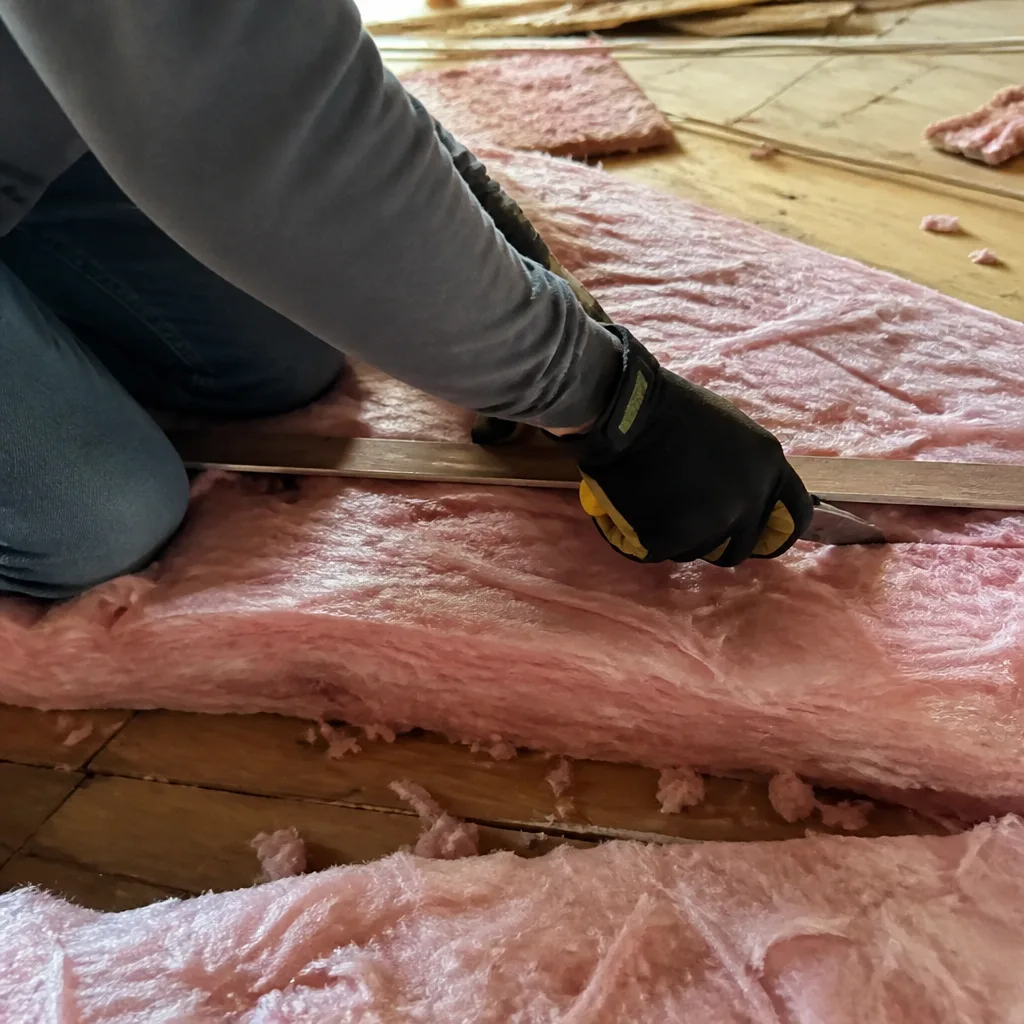
A blower door is a pressurization test – a calibrated fan mounted in an exterior doorway that depressurizes the house and measures the air leaking in from the outside. The result is reported in CFM50 (cubic feet per minute at 50 pascals of pressure) or ACH50 (air changes per hour at that same pressure). For leak-conscious homeowners, the second number is the one to track, because it normalizes for home size.
Here’s what a realistic result looks like. A 2,000 sq ft Las Vegas home built to typical 2000s-era construction standards often tests at 6 to 9 ACH50 before any work. After a proper air-sealing and insulation job, that same home should land between 2.5 and 4 ACH50. A well-air-sealed home can reach the low 2s, though that depends on window and door condition, duct sealing, and the complexity of the building. A drop of roughly half, and often more, is the realistic target for a 2,000 sq ft home in this climate.
When a contractor publishes before-and-after numbers, read them in this order:
- Are both readings shown? A before reading without an after (or vice versa) tells you nothing about the work performed.
- Is the home size and age listed? ACH50 is normalized, so different-sized homes with similar ACH50 are comparable. CFM50 without size is not.
- Is the improvement consistent with the scope? A 6.8 to 3.1 improvement on a 2,000 sq ft home with full air sealing is credible. A 7 to 2.5 jump on the same home with no air-sealing line item in the scope should make you ask how that happened.
- Is the reading signed and dated? A documented result is attached to a job record. A vague “we improved it by 40%” in marketing copy is not.
If a contractor doesn’t test at all, ask why. There are legitimate reasons – very small jobs, ceiling-limited attics, homes with unusual construction – but “we don’t test” as a blanket policy usually means the contractor isn’t set up to measure, which means they’re not set up to verify. When we do an attic insulation job in Las Vegas, the before-and-after blower-door numbers are part of the completion record, not a marketing claim.
Three Red Flags Specific to the Las Vegas Market
The Las Vegas market has its own failure patterns. Summer attic temperatures routinely exceed 150°F, and the combination of intense heat and low humidity creates conditions that reveal bad work quickly. These are the three flags we see most often.
- Quoting over the phone without an attic inspection. A contractor who will quote you by square footage alone is quoting the wrong thing. Attic condition, existing insulation, ventilation, ductwork, and access all change the scope. A phone quote is a guess dressed up as a price. Insist on a walk-through, and insist on a written price after it.
- Bids that don’t itemize air-sealing labor separately. If air sealing is bundled into the insulation line, you can’t tell what you’re paying for, and you can’t compare two bids fairly. A bid that lists air sealing as its own line with its own price tells you the contractor considers it a distinct step. A bid that doesn’t tells you it’s an afterthought.
- Warranties that exclude thermal performance. A warranty that covers installation labor but excludes energy performance is a warranty on attendance, not outcome. Ask directly: “Does this warranty cover what happens if the home doesn’t hit the tested performance target?” A contractor confident in the work will put it in writing.
We also see a fourth pattern worth mentioning: contractors who leave old insulation in place because removal “isn’t necessary.” Sometimes that’s true. Sometimes the old material is contaminated with rodent droppings, moisture damage, or degraded fiberglass that will compromise the new work. If a contractor doesn’t discuss removal as a possibility during the walk-through, they haven’t looked closely enough to know.
When a crawl space is involved, similar logic applies. Vapor barrier work and air sealing interact, and a contractor who treats them as separate jobs may leave gaps. Our crawl space encapsulation and vapor barrier service in Las Vegas approaches the envelope as one system for this reason.
Why Las Vegas Climate Makes Sequencing Non-Negotiable
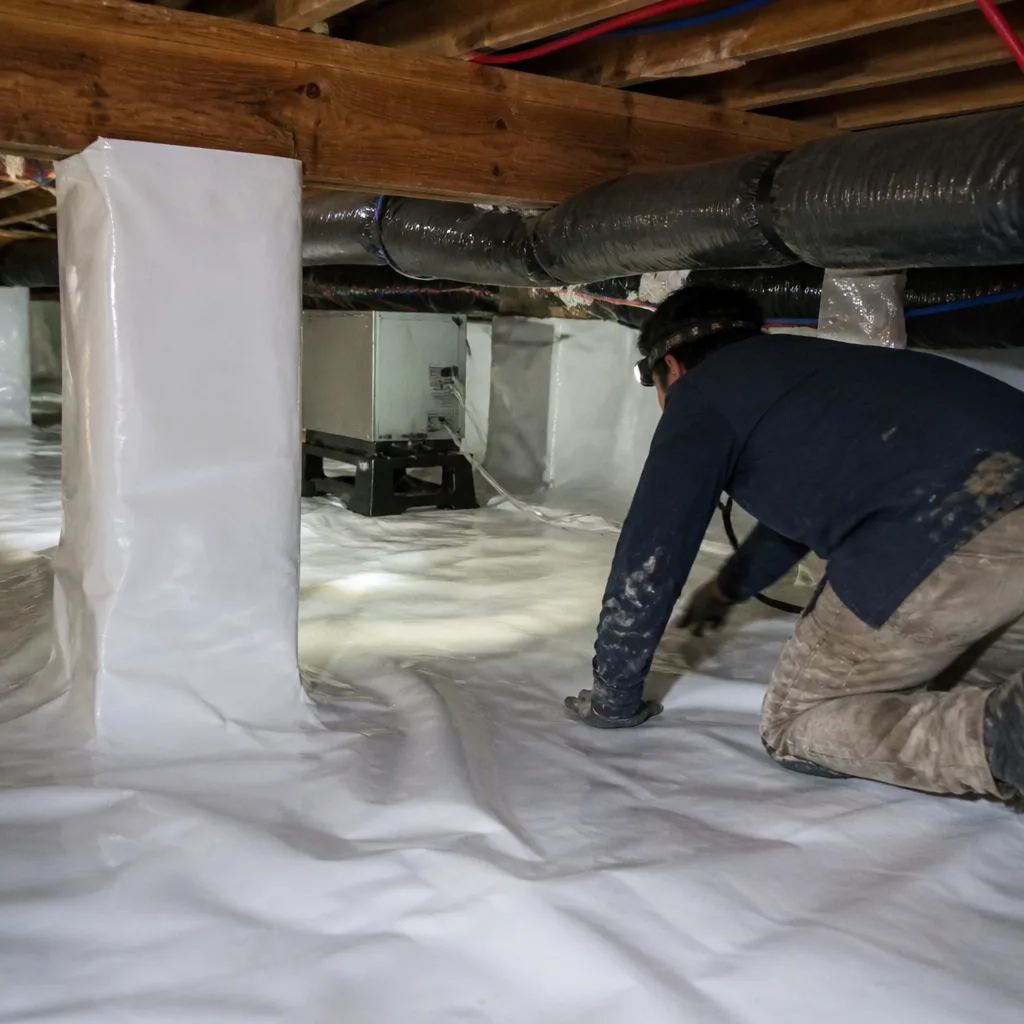
Las Vegas attic temperatures hit 150°F or higher on a July afternoon. When a hot attic sits above a conditioned ceiling with unsealed penetrations, the stack effect pulls that heat down through the leaks. Insulation slows conductive heat transfer. It doesn’t stop air movement. A 1″ gap around a can light is roughly equivalent to leaving a window cracked year-round. Multiply that by a dozen penetrations and you’ve built a heat pump in reverse.
This is why air sealing has to happen first. When we seal the top plates, can lights, and penetrations, we’re stopping the convective loop that moves conditioned air between the living space and the attic. Only then does the R-value of the insulation actually do the work it’s rated for. On a Las Vegas home, the sequencing isn’t a building-science nicety. It’s the difference between a $3,500 insulation job that lowers your summer bill and a $3,500 insulation job that doesn’t.
The same logic drives spray foam decisions. Closed-cell foam in an attic assembly on a Las Vegas home has to account for the intense radiant heat load, which is why radiant barriers often pair with it. If you’re considering spray foam insulation in Las Vegas, ask the contractor how the foam strategy accounts for the local attic temperature profile. The answer will tell you who has worked in this climate and who has worked from a textbook.
The material choice follows the sequencing, not the other way around. Rockwool, CertainTeed, Icynene, and Demilec products all perform well when installed correctly. None of them compensate for an unsealed attic floor. The best contractors in Las Vegas pick the product to fit the assembly, not the other way around.
Common Mistakes to Avoid
- Getting three quotes without knowing what you’re comparing. Three prices for three different scopes aren’t quotes, they’re noise. Get three scopes, then get prices.
- Accepting a phone quote. No attic has ever been inspected through a phone. Insist on a walk-through and a written scope before any price is discussed.
- Skipping the air-sealing line item. If it’s not broken out, it’s probably not happening. Ask for it as a separate price.
- Trusting the R-value on the bag, not on the install. R-49 at install depth isn’t R-49 at settled depth. The scope should state both.
- Ignoring the blower-door baseline. If you don’t take a before reading, you’ll never know what the after reading proves. Bring your own test or ask for one in the scope.
- Choosing on warranty length alone. A 20-year warranty on a low-quality install is a 20-year reminder. Read what the warranty covers, not just how long it runs.
- Forgetting the attic access. A poorly sealed attic hatch or kneewall access door can undo a good air-sealing job. The scope should include it.
When to Call a Professional
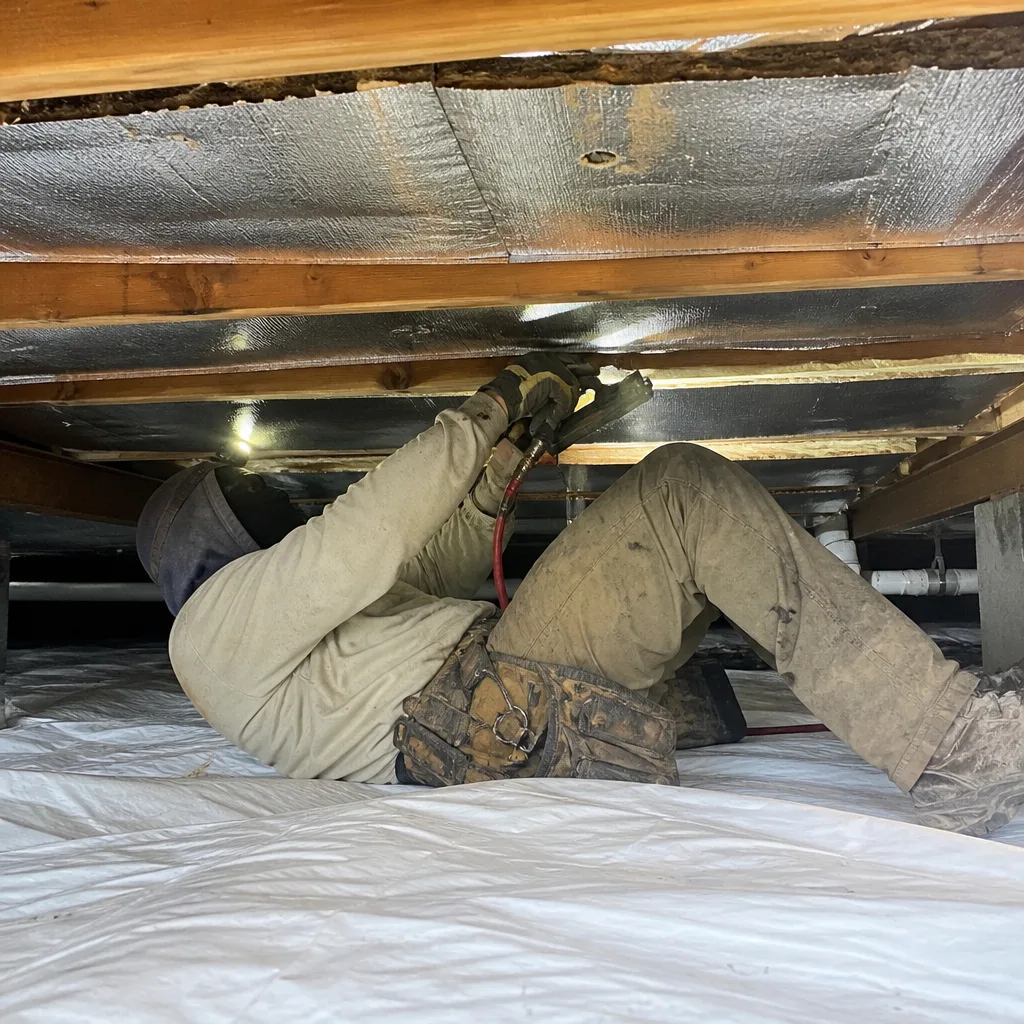
Call a professional if your attic has visible gaps around plumbing, wiring, or can lights before insulation goes in. Call one if your summer energy bill has climbed year over year without a rate change. Call one if you’re buying a home built before 2010 and the seller can’t produce a blower-door reading. Call one if a contractor has quoted you insulation without inspecting the attic first. Call one if you suspect rodent activity in the attic or crawl space, since removal and rodent proofing have to precede new insulation. Call one if you’ve had a flood, roof leak, or HVAC replacement that disturbed the insulation or the air barrier. For homes in older Las Vegas neighborhoods where the building envelope has never been tested, a professional diagnostic is the only way to know what you’re starting from. Envelope Insulation Las Vegas offers free estimates in Las Vegas – call (833) 362-4859 for a written price and a written scope before anything starts.
Frequently Asked Questions
Yes. Nevada requires insulation contractors to hold a C-2 license, which you can verify through the Nevada State Contractors Board. The license confirms bonding, insurance, and trade exam passage. It does not confirm the contractor understands air-sealing sequencing or blower-door methodology, so ask the diagnostic question on top of the license check.
A well-air-sealed 2,000 sq ft Las Vegas home typically reaches 2.5 to 4 ACH50 after a proper air-sealing and insulation job. If the home tested at 6 to 9 ACH50 before the work, cutting that figure roughly in half is a realistic result. Ask for both readings in writing, and check them against the scope of work you signed.
Air sealing goes first, always. Insulation slows conductive heat transfer, but it doesn’t stop air from moving through unsealed penetrations. On a Las Vegas home with 150°F summer attic temperatures, blowing insulation over unsealed top plates lets the heat loop straight back down. Seal first, test, then insulate. Call (833) 362-4859 if a contractor tells you otherwise.
A written scope should include the material by manufacturer and product name, the stated R-value at settled depth, the install method, and a blower-door test commitment with before-and-after readings provided in writing. Any scope missing those four items leaves you with no standard to measure against. Ask for the additions in writing or walk away.
Phone quotes are easier to produce than walk-throughs, and square footage alone is a fast proxy for price. The problem is that attic condition, existing insulation, access, ventilation, and ductwork all change the scope. A quote without a walk-through is a guess, not a price. Insist on an inspection and a written scope after it.
Repair is usually cheaper when the existing material is intact, dry, and uncontaminated – adding depth and air sealing on top is a legitimate approach. Replacement makes sense when the material is degraded, compressed, contaminated by rodents, or wet. A blower-door baseline and an attic inspection will tell you which situation you’re in. Call (833) 362-4859 for a free second opinion on any written estimate you’ve already received.
The Bottom Line
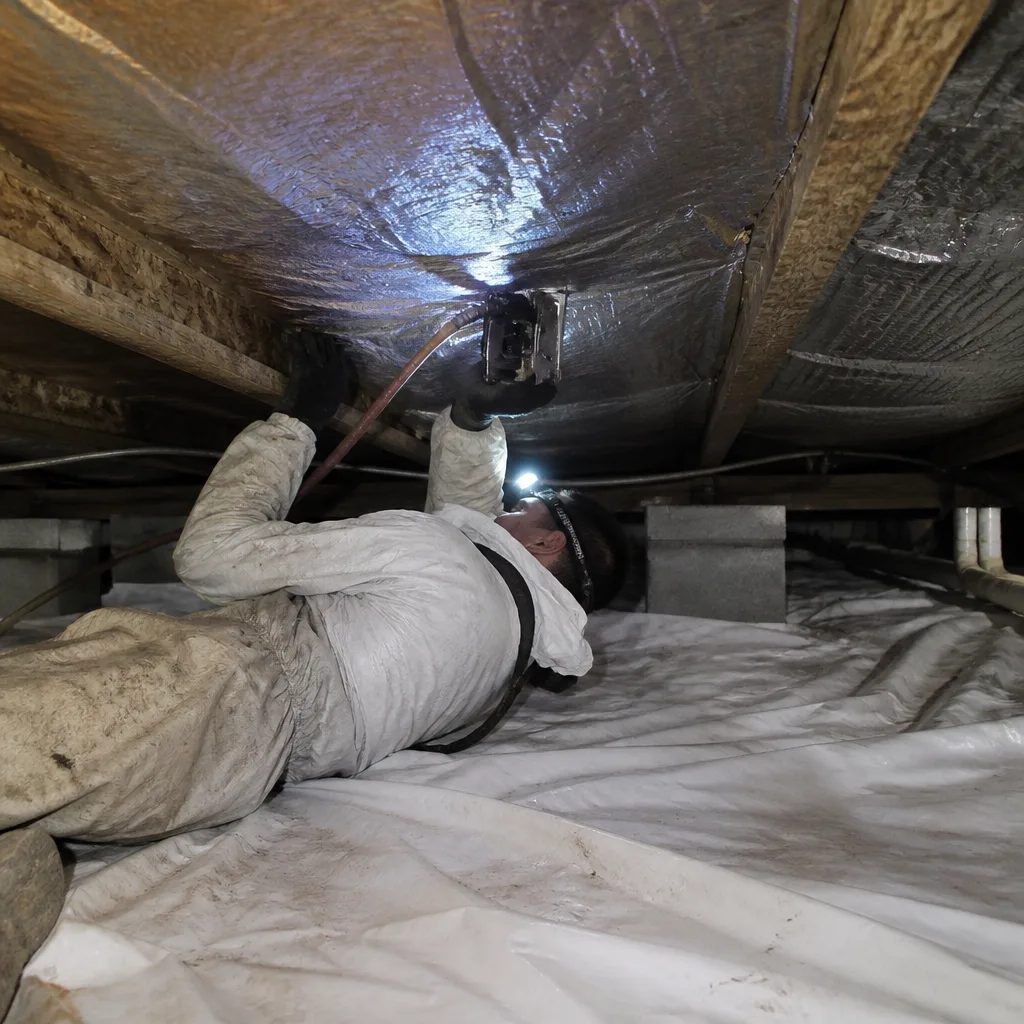
Hiring an insulation contractor in Las Vegas comes down to one test, applied before you discuss price: ask what the air-sealing protocol is and how it gets documented. A licensed contractor who answers with a sequence and a blower-door commitment is a building-performance contractor. One who answers with footage and R-value is a material installer. The license matters, but it doesn’t tell you which one you’re talking to. Get a written scope with all four required items, read the before-and-after blower-door results, and treat the red flags as the final word on the decision. Documented evidence beats marketing every time.
Ready to see the numbers first? Call Envelope Insulation Las Vegas at (833) 362-4859 for a free estimate. You’ll get a written price before any work starts, a free second opinion on any written estimate you’ve already received, and a documented photo record on every visit. Our technicians have up to 10 years of experience, and every applicable job ends with before-and-after blower-door numbers you can read for yourself.
Written by the team at Envelope Insulation Las Vegas.