
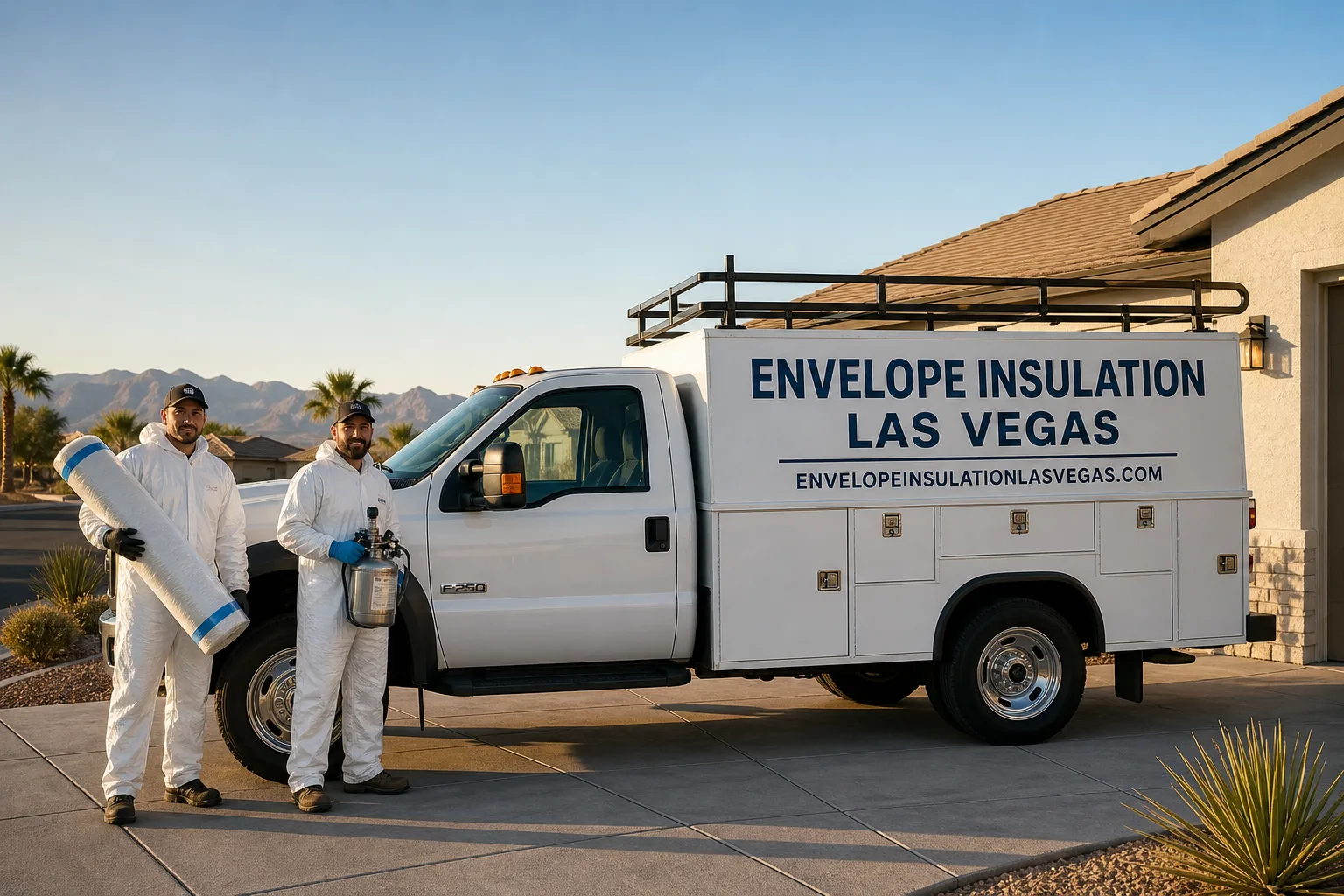
Fast, Reliable Radiant Barrier Installation Across Whitney
If you live in one of Whitney‘s older east-valley tracts and your west-facing bedrooms turn into an oven by 2 p.m., the attic above them is probably working against you. We install radiant barriers across Whitney, ZIP code 89122, with a firm focus on homes built between the 1980s and early 2000s, where builder-grade insulation has had decades of dry heat and dust to settle, compress and blow back from the vents. We know these floor plans and rooflines well, and we understand why a foil barrier alone won’t fix a Whitney attic that also needs its batts re-leveled and its ventilation corrected first. Call (833) 362-4859 for a free estimate; a written price comes before any work starts.
Why Envelope Insulation Las Vegas Is Whitney’s Preferred Radiant Barrier Installation Company
Whitney homeowners read the three-star reviews as carefully as the five-star ones, and we write our estimates the same way: plainly, with the numbers on the page. Our technicians have up to 10 years of experience installing radiant barriers in desert-edge attics, and every applicable job closes with before-and-after blower-door readings, a pressurization measurement that shows in a single figure how much conditioned air the home was losing before and after the work. That record, plus a Documented Photo Record on every visit, is what you walk away with.
Under The Haven Standard, which we’ve operated under since 2016, no work starts without a Written Price and written scope, and the 365-Day Done Right Promise means if it isn’t done right, we make it right. We’ve sealed and insulated more than 9,000 homes. Calls are answered by a live person 24/7. Bring us any competing written estimate and we’ll read it with you, free, before you decide. Our Radiant Barrier Installation team works across the Whitney area regularly, so scheduling is straightforward and the crew knows the local roof decks.
Our Radiant Barrier Installation Services in Whitney
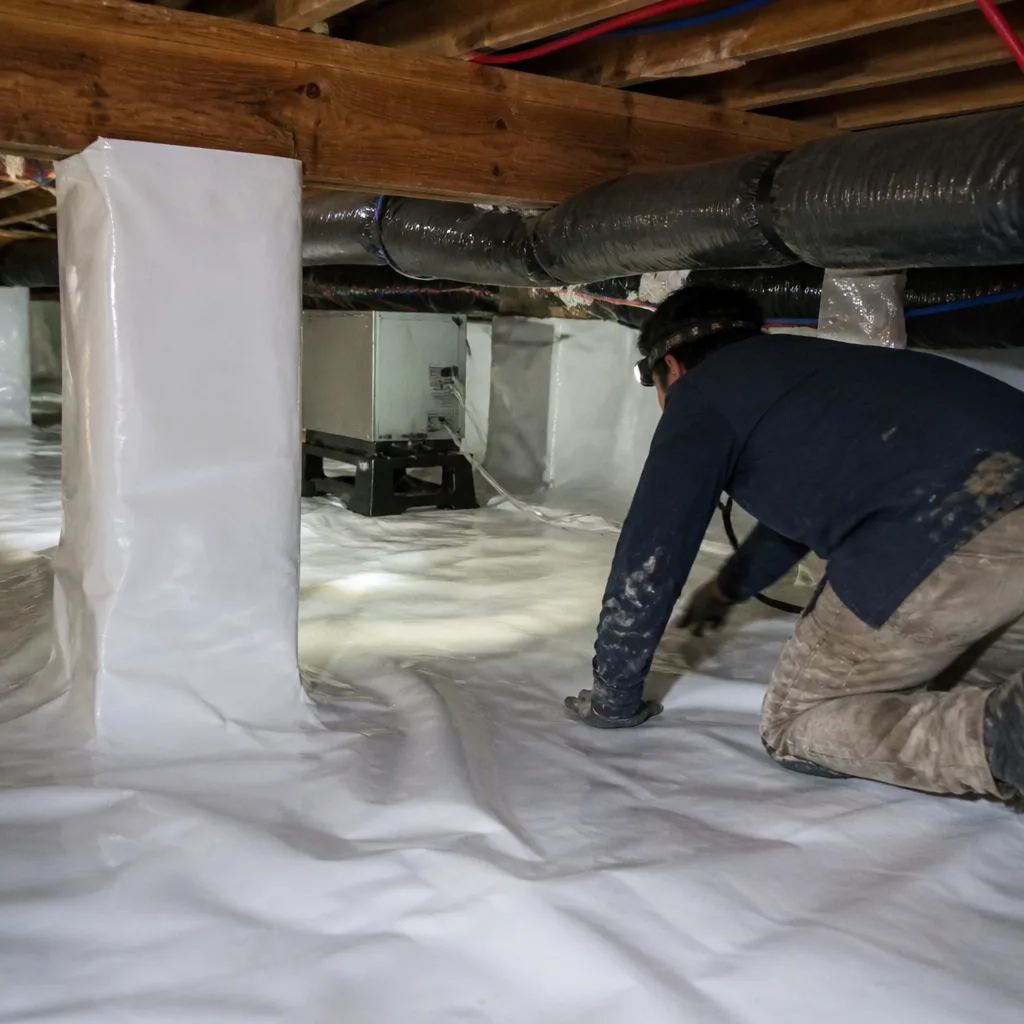
Attic Radiant Barrier
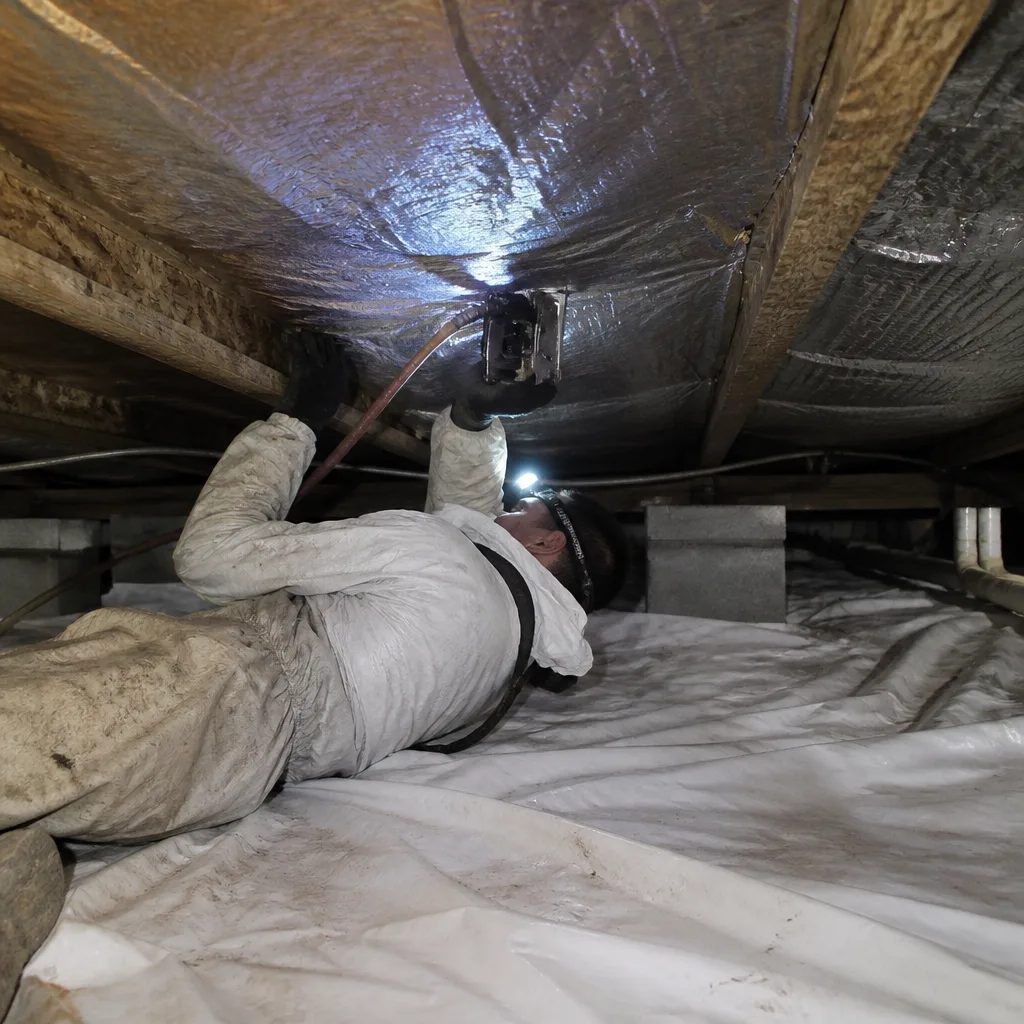
Stapled to the underside of the roof rafters with the required air gap, not laid flat on the decking, an attic radiant barrier in Whitney reflects the solar load before it cooks the attic air. In Whitney’s stucco-on-frame tracts, this is almost always paired with clearing and re-leveling those degraded R-11 to R-19 batts at the same time.
Radiant Barrier Foil
We use foil-faced radiant barrier products from manufacturers like CertainTeed and Rockwool, installed so the reflective surface faces the open attic space with a gap behind it. On a Whitney low-pitch roof, that gap is the whole point; foil laid directly against the decking conducts heat straight through and you’ve paid for nothing.
Radiant Barrier Roof Deck
Where deck-mounted barrier makes sense on a Whitney home, we spec the right product and mounting detail for the roof pitch and existing ventilation. On the low-pitch tile and composition roofs common in Whitney’s 1980s-2000s tracts, the deck configuration matters more than the foil itself.
Radiant Barrier & Ventilation
Trapped attic air past 160°F cooks the foil and the insulation below it, so in an older Whitney tract we check that soffit and ridge vents are open, correctly sized and actually moving air before we call the job finished. Whitney’s extreme desert summers make this step non-negotiable, not optional.
Trusted Brands We Service in Whitney
We install radiant barrier materials from Knauf, CertainTeed and Rockwool, matched to your Whitney roof type and attic layout. We source standard products rather than locking a home into a proprietary system, so future repairs stay simple. We don’t carry stock on a truck; materials are ordered to the written scope, which keeps turnaround tight on most Whitney jobs. Every material decision is written into the scope before work starts.
Common Radiant Barrier Installation Problems We See in Whitney Homes
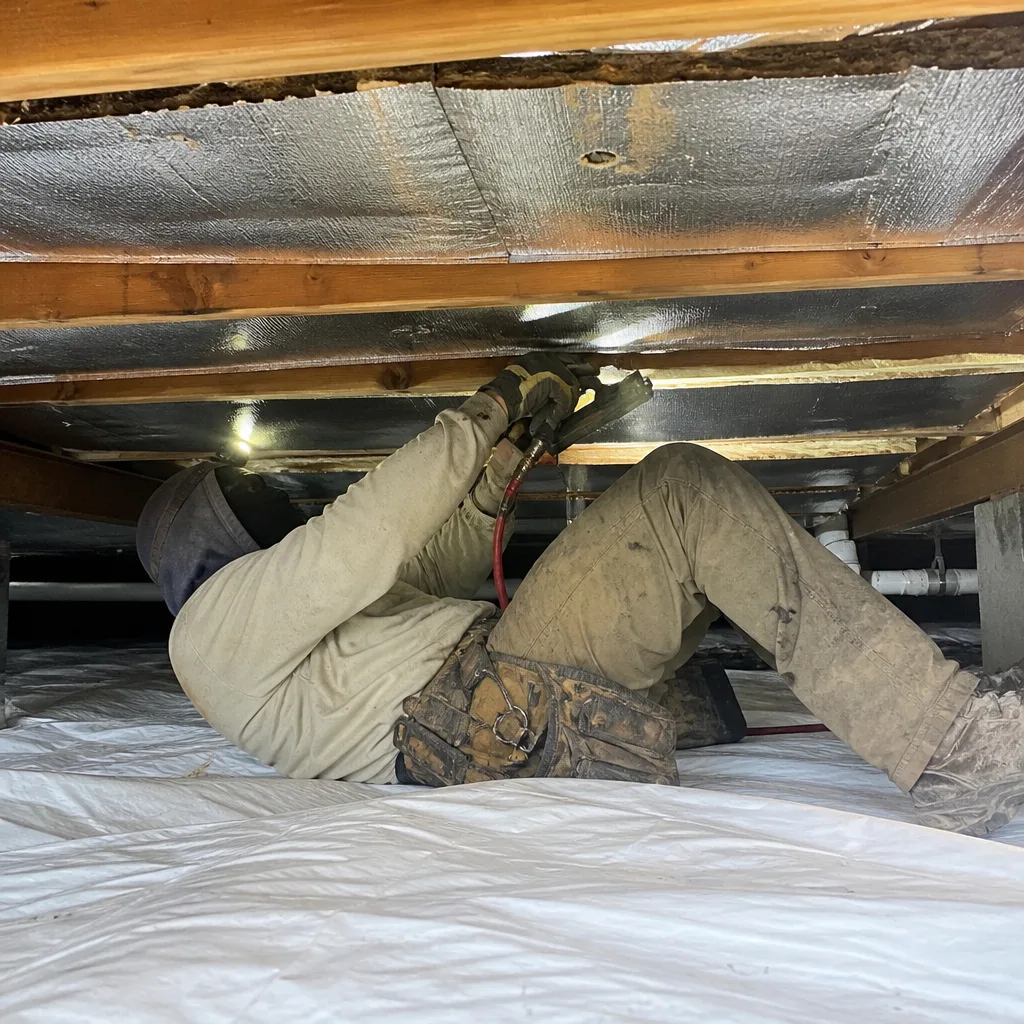
- Foil laid directly on low-pitch decking. On Whitney’s shallow tile and composition roofs, foil pressed to the deck conducts heat straight through. It needs to be stapled with an air gap to reflect anything.
- Blocked or undersized soffit and ridge vents. In 1980s-2000s Whitney tracts, these vents are frequently clogged or too small, and trapped 160°F-plus attic air bakes the new foil from below.
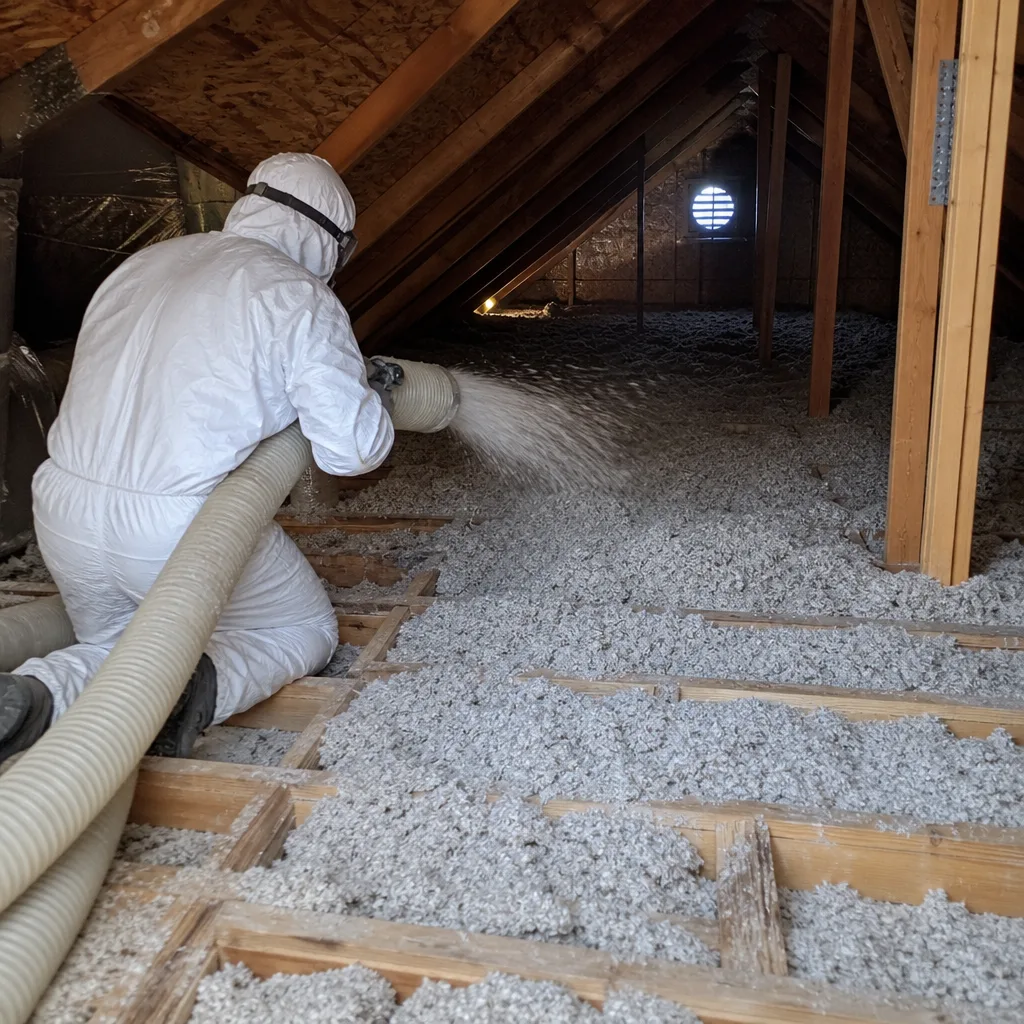
- Old batts left under a bright new barrier. When the settled R-11 to R-19 fiberglass stays in place, the conductive ceiling loss never gets addressed and the radiant gain never shows up.
- Wind-scoured batts pulled back from the soffits. Decades of dry desert heat and dust leave gaps at the vent bays, so several Whitney homes end up with hot west-side ceilings by mid-afternoon even after a foil install.
Pricing for Radiant Barrier Installation in Whitney, NV
Radiant barrier foil installs in Whitney generally run $1.40 to $2.20 per square foot of attic area, and most single-family Whitney homes land between $1,600 and $3,400 for the barrier alone. Adding ventilation correction typically adds $350 to $900 depending on how many soffit and ridge vents need to be opened or replaced. When the old batts also need clearing and re-leveling, that runs $1,200 to $2,800. Every Whitney estimate is a Written Price before any work starts, with a written scope. Bring a competing written estimate and we’ll give you a free second opinion.
We Also Serve Cities Near Whitney
We install radiant barriers and insulation across the east valley, including Sunrise Manor, Winchester, Paradise and Las Vegas. If you’re in a neighboring community and want the same attic-first approach, our team for Radiant Barrier Installation in Whitney and the surrounding areas can schedule a visit. Call (833) 362-4859 to get on the schedule.
Serving Whitney, NV – Our Local Coverage Area
We serve Whitney and nearby communities. Use the map below to see the area we cover. If you’re nearby, we can almost certainly help.
FAQs – Radiant Barrier Installation in Whitney
A radiant barrier alone usually won’t do it in a Whitney tract home with original builder-grade batts. The barrier blocks radiant heat, but if that R-11 to R-19 fiberglass has settled or been blown back from the soffits, the conductive ceiling loss stays and the west-side rooms stay hot. Most Whitney jobs correct the insulation, the ventilation and the barrier together.
Yes, but the installation detail has to match the low pitch. On a shallow Whitney tile or composition roof, the foil is stapled to the underside of the rafters with the required air gap rather than pressed directly to the decking. Foil in direct contact conducts heat through and defeats the reflective surface.
By 2 p.m., the sun has baked your west-facing roof deck and the attic above those rooms has likely gone past 160°F, and if the batts are compressed, that heat reaches the ceiling below. In most Whitney homes, an inspection finds the original batts scoured back from the vents and the low-pitch deck loaded with solar heat. Correcting both is the fix.
Often yes, because the soffit and ridge vents in these 1980s-2000s Whitney tracts are blocked or undersized. A barrier that can’t reflect effectively into 160°F-plus trapped air is only doing part of the job. We check that the vents actually move air before the job is closed out.
The clearest sign is the west-side ceiling running hot in mid-afternoon even with the AC working hard, which usually means the original builder-grade batts have settled or been blown back. Our technicians have up to 10 years of experience reading attics like these, and a free estimate will tell you exactly what you have and what needs correcting. Call (833) 362-4859 to schedule, or come see Whitney coverage on our site.
Written by the team at Envelope Insulation Co.