How a Radiant Barrier Actually Works in a Las Vegas Attic
A radiant barrier doesn’t insulate – it reflects. In a Las Vegas attic that reaches 160°F, roughly 93% of the heat arriving at your insulation surface got there by radiation off the superheated roof deck, not by conduction through the tiles. That single physics fact is why a foil barrier with low emissivity outperforms an equivalent R-value of added insulation in this climate, and why the install detail under a low-slope tile roof looks nothing like the “staple it to the rafters” diagram you’ll find online. If your attic cooks your AC all summer, call (833) 362-4859 and we’ll tell you what’s actually happening up there.
The Three Ways Heat Moves, and Which One Owns Your Attic
Heat moves in exactly three ways, and each behaves differently in a Mojave summer attic.
- Conduction – heat passing directly through solid material, molecule to molecule. It’s the slow one, but it’s relentless.
- Convection – heat carried by moving air. In an attic, that’s hot air rising and pooling against the deck.
- Radiation – heat moving as infrared energy across empty space, no contact required. The sun heats your roof, the roof re-radiates that energy downward into the attic.
In most of the country, radiant heat is a secondary concern. Here it’s the main event. On a July afternoon in Las Vegas, when the outside air is 108°F and your roof surface is far hotter, the deck radiates infrared straight down at your ceiling. Roughly 90% or more of the heat load arriving at the insulation surface comes by radiation. Conduction through the tile is a small slice of the total.
That’s why foil works so well in this climate. A foil with 0.05 emissivity re-emits only about 5% of the infrared that hits it and reflects the rest back toward the deck. You’re not fighting the sun with thickness. You’re interrupting the path the heat was already taking.
Why a Tile Roof Changes the Whole Calculation
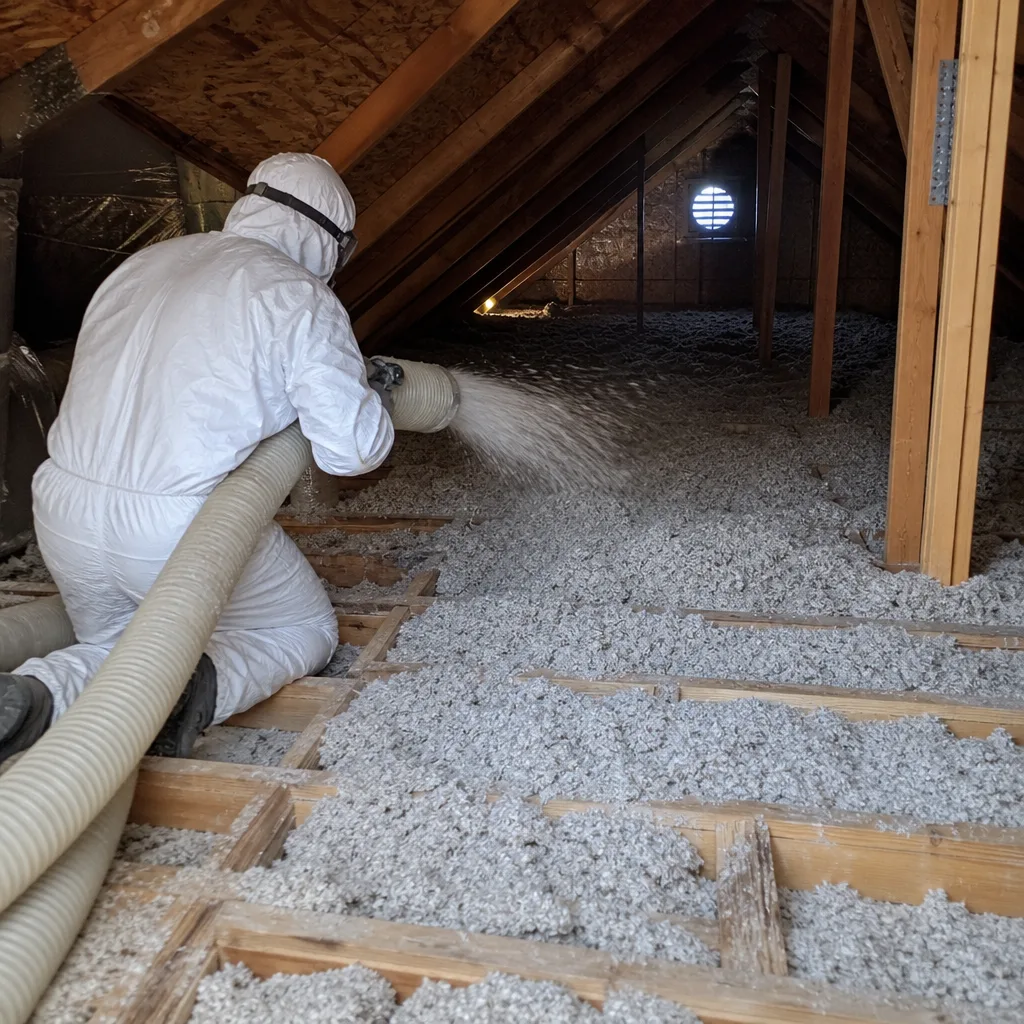
Here’s the part most explanations skip. Under a tile roof – which is what the vast majority of Las Vegas valley homes have, from Summerlin subdivisions to older Henderson tracts – the heat crosses two air gaps before it ever reaches your insulation.
Follow the path. Sun hits the tile. Heat conducts through the tile to its underside. Then it crosses the air gap under the tile into the rafter bay. That bay air gets brutally hot, and the rafter framing and roof deck re-radiate downward toward the ceiling below. The radiant barrier intercepts that radiation at the rafter-bay stage, before it converts to conducted heat in the fiberglass mass sitting on your ceiling.
This matters for two reasons. First, the barrier has to be positioned to catch the radiation at the right point in that chain – not slapped anywhere convenient. Second, low-slope tile roofs give you less room to work with than the steep, deep attics the internet diagrams assume. So installation geometry becomes a real design decision, and a written scope should state which method is being used and why.
How We Install It Differently Under a Tile Roof
On the low-slope tile roofs common across the valley, the “staple foil to the underside of the rafters” approach often doesn’t create the clear, uninterrupted air gap the physics depends on. When the gap collapses, you’ve paid for foil and gotten a heat trap.
Depending on the roof geometry and how the attic is framed, we install the foil one of two ways:
- Tensioned between rafters – the foil is pulled taut so a consistent air space stays open on the deck side, which keeps the reflective surface aimed at the radiant source.
- Laid over the attic floor joists – in some configurations, running the foil horizontally across the joists over the existing insulation catches the downward radiation before it reaches the ceiling, without needing a full rafter-by-rafter install.
Which method wins depends on roof pitch, framing, and how much headroom the attic gives us. That’s a decision we make on site and put in writing before anyone starts. For the full picture on moisture control alongside reflective barriers, see our page on moisture & radiant barriers in Las Vegas.
Emissivity Is the Number That Matters, Not Shine
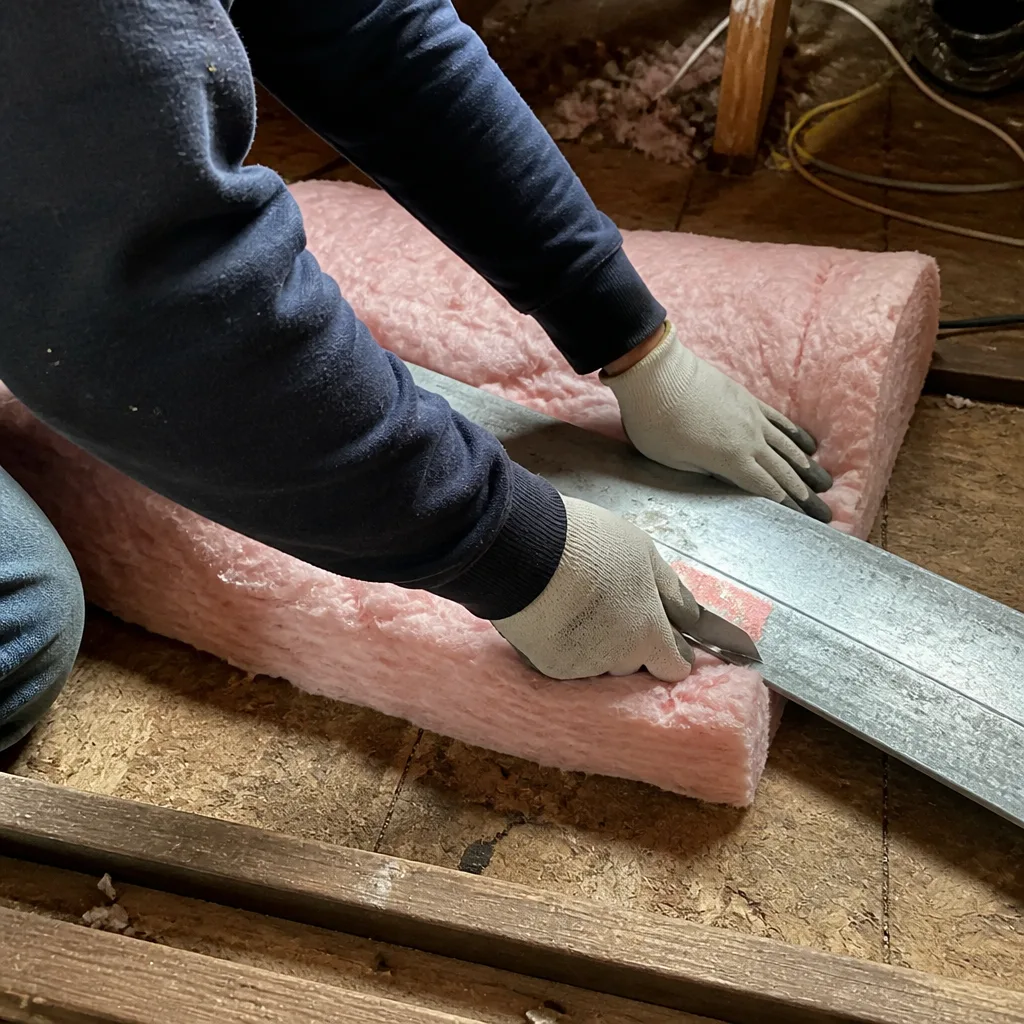
A foil’s performance is set by its emissivity rating – how little infrared it re-emits – not by how bright it looks in the box. A barrier rated at 0.03 emissivity beats one rated at 0.10 by a measurable margin in a 160°F attic. The difference is real heat staying up in the rafter bay instead of raining onto your ceiling.
That number should appear on the product spec sheet inside any written scope. If it doesn’t, ask for it. We source barrier materials alongside insulation from names like Owens Corning and Johns Manville, but the spec sheet is what tells you whether you’re getting 0.03 or something closer to a decorative sheet of foil.
| Spec / Item | What to Look For |
|---|---|
| Emissivity rating | 0.03-0.05 (lower is better) |
| Reflectivity | 95%+ of arriving infrared |
| Install method | Stated in writing: tensioned rafters or floor joists |
| Air gap integrity | Confirmed on the documented photo record |
A Radiant Barrier Doesn’t Replace Insulation
This is the misconception that costs people money. A foil barrier reduces the radiant load arriving at the insulation surface. It does not add R-value on its own, and it won’t fix an attic floor packed with settled, dusty builder-grade fiberglass.
What it does is lower the peak temperature that insulation has to handle, so the insulation performs closer to its rating. The two work together. In Sun City Summerlin and other 55+ communities, we regularly find 1990s blown-in fiberglass compacted down toward R-10 and laced with desert sediment, under a tile roof with no barrier at all. Adding a reflective layer and re-blowing to R-49 is one of the highest-payback fixes we do – and out-of-state crews routinely skip the barrier because they’re not used to this radiant load.
When we combine a barrier with R-49 blown-in, the job record documents the attic temperature drop so you can see what changed. Under the Haven Standard, we seal first, then insulate – the barrier is part of a system, not a standalone sticker. Our technicians have up to 10 years of experience reading these attics, and every applicable job includes before-and-after blower-door numbers – a pressurization reading that shows, in one figure, how much air the home was losing before and after. Start from our home page to see the full building-envelope service line.
Common Local Scenarios
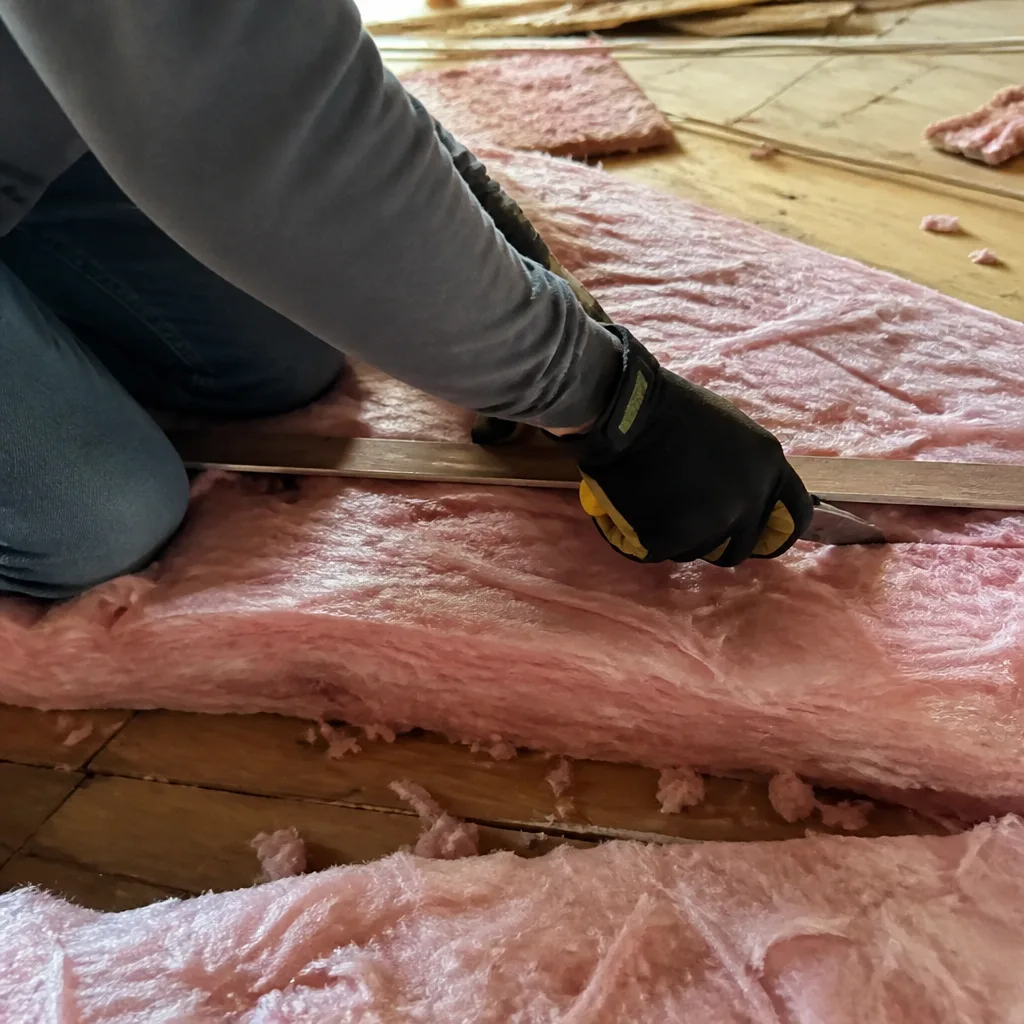
These come up often enough that they’re worth naming.
- The 2003 Henderson tract home – low-slope tile, R-30 batts settled to less, no barrier. The AC runs flat out by 2pm. Foil over the joists plus air sealing plus R-49 is the standard fix.
- The Summerlin home with a hot back bedroom – one side of the roof gets full afternoon sun. The barrier cuts the radiant load on that half, but a barrier alone won’t fix a ceiling with air leaks. Sealing comes first.
- The Sun City Summerlin attic – original fiberglass compacted and dusty, tile roof bare. Re-blow plus barrier, documented with photos and readings.
FAQs
Yes, and it works better here than in most climates because radiation is the dominant heat path – roughly 90%+ of the load arrives as infrared in a Mojave summer attic. A low-emissivity foil reflects that energy back toward the deck instead of letting it convert to heat in your insulation. Call (833) 362-4859 to get an exact read on your attic – estimates are free.
Usually both, and the order matters. More insulation helps, but if you’re loading it with radiant heat it runs hotter than its rating suggests. A barrier lowers the peak temperature the insulation sees, so the insulation does its job. We look at air sealing first, then barrier and insulation together, and document the result. Call (833) 362-4859 for a written scope.
It comes down to roof pitch, framing, and attic clearance, which is why it’s decided on site and stated in the written scope. Low-slope tile roofs often need the foil tensioned between rafters or laid over the floor joists rather than stapled to the rafter underside. A quote that doesn’t name the method isn’t telling you what you’re buying. Call (833) 362-4859 and we’ll explain which one fits your attic.
The emissivity rating, and it should be 0.05 or lower – lower re-emits less infrared. Reflectivity of 95%+ is the companion number. If a quote shows neither, ask before signing. Call (833) 362-4859 and we’ll read a competing estimate with you, free.
If you’d rather have it looked at, Envelope Insulation Las Vegas offers a no-pressure assessment in Las Vegas – call (833) 362-4859. Every job starts with a written price and ends with a documented photo record.
Written by the team at Envelope Insulation Las Vegas, serving Las Vegas, NV.