What It Actually Costs to Insulate a House in Las Vegas, NV
Whole-house insulation in Las Vegas usually runs $3,200 to $7,800 for a typical 1,800 to 2,400 sq ft tract home, and the attic alone accounts for 60 to 75 percent of that spend. The reason is straightforward Mojave physics: a tile roof baking at 160°F over a 78°F living space drives more heat gain through the ceiling than every exterior wall combined. A national cost calculator won’t tell you this. It also won’t tell you the order to spend in. Call (833) 362-4859 for a free written estimate – it’s the fastest way to see your own numbers.
Here’s a plan built for a cooling-dominant climate, sequenced by payback.
Why National Averages Mislead Las Vegas Homeowners
Most cost-to-insulate calculators blend heating and cooling markets. That blend favors wall insulation because conductive loss through studs matters more where winter drives the bill. In Las Vegas, cooling runs the meter year-round and radiant roof gain dominates. Spending $4,000 drilling and filling wall cavities in a Summerlin stucco house while leaving a settled R-19 attic floor untouched is worse than spending the same $4,000 in the attic twice.
There’s a housing-stock wrinkle too. Most Las Vegas homes built in the 1990s and 2000s are stucco-over-wood-frame tract houses with low-slope tile roofs and shallow attics. Those wall cavities are hard to retrofit – more on that below – and many attics still hold builder-grade fiberglass that’s compacted down to an effective R-10. In Sun City Summerlin and similar 55+ communities, we routinely find original blown-in fiberglass laced with desert sediment and no radiant barrier on the tile at all. Re-blowing to R-49 and adding a reflective layer is usually the highest-payback work on the property, and out-of-state crews skip it because their playbook is wall-heavy.
The Las Vegas Insulation Sequencing Framework
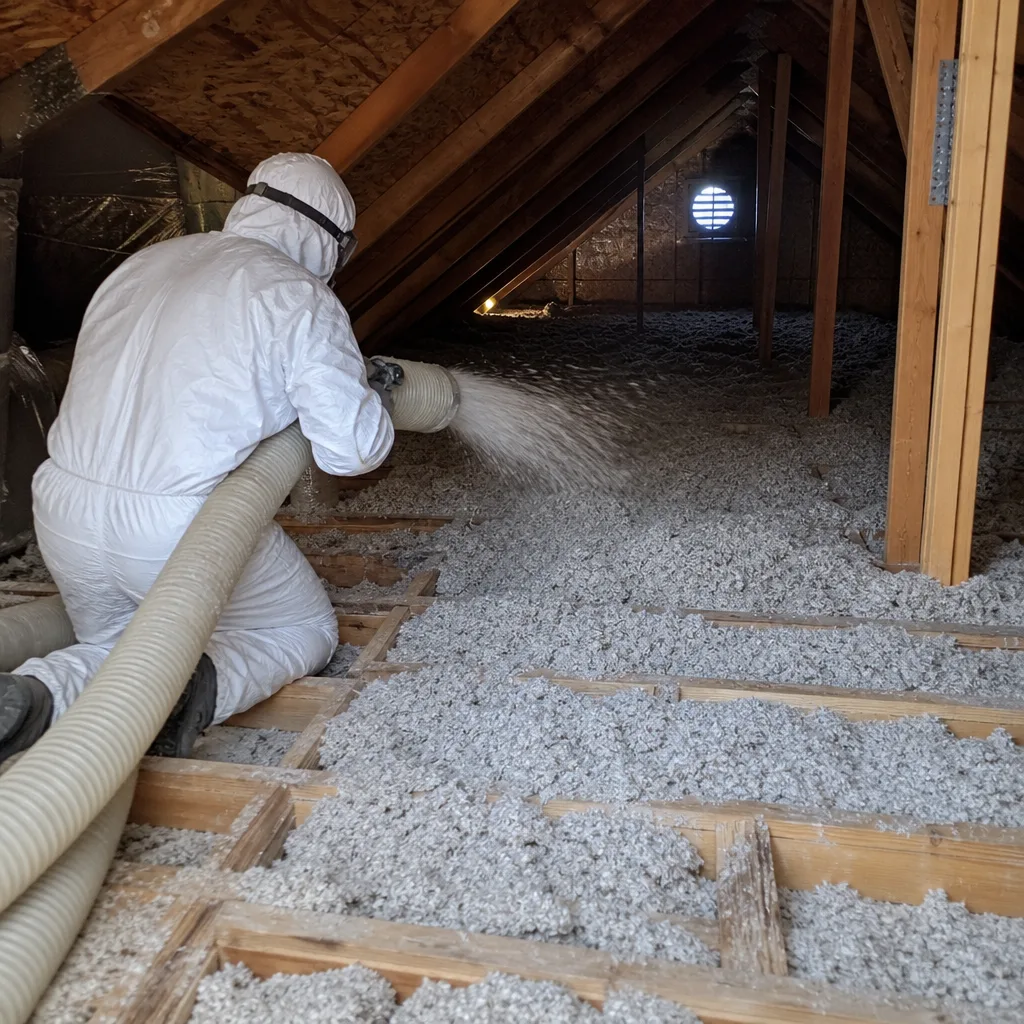
Spend in this order. Each phase makes the next one cheaper and more effective, which is why the written price before any work starts covers the whole house as a phased plan rather than one lump sum – you can run phase one now and lock pricing for phases two and three without a fresh estimate.
Phase 1: Attic Air Sealing
Seal top plates, can lights, plumbing and electrical penetrations before any insulation is added. This is the step that turns a guess into a measurement, and it’s why we won’t blow insulation over an unsealed attic floor. Typical range: $450 to $1,100 depending on penetrations and attic access.
Phase 2: Attic Insulation to R-49
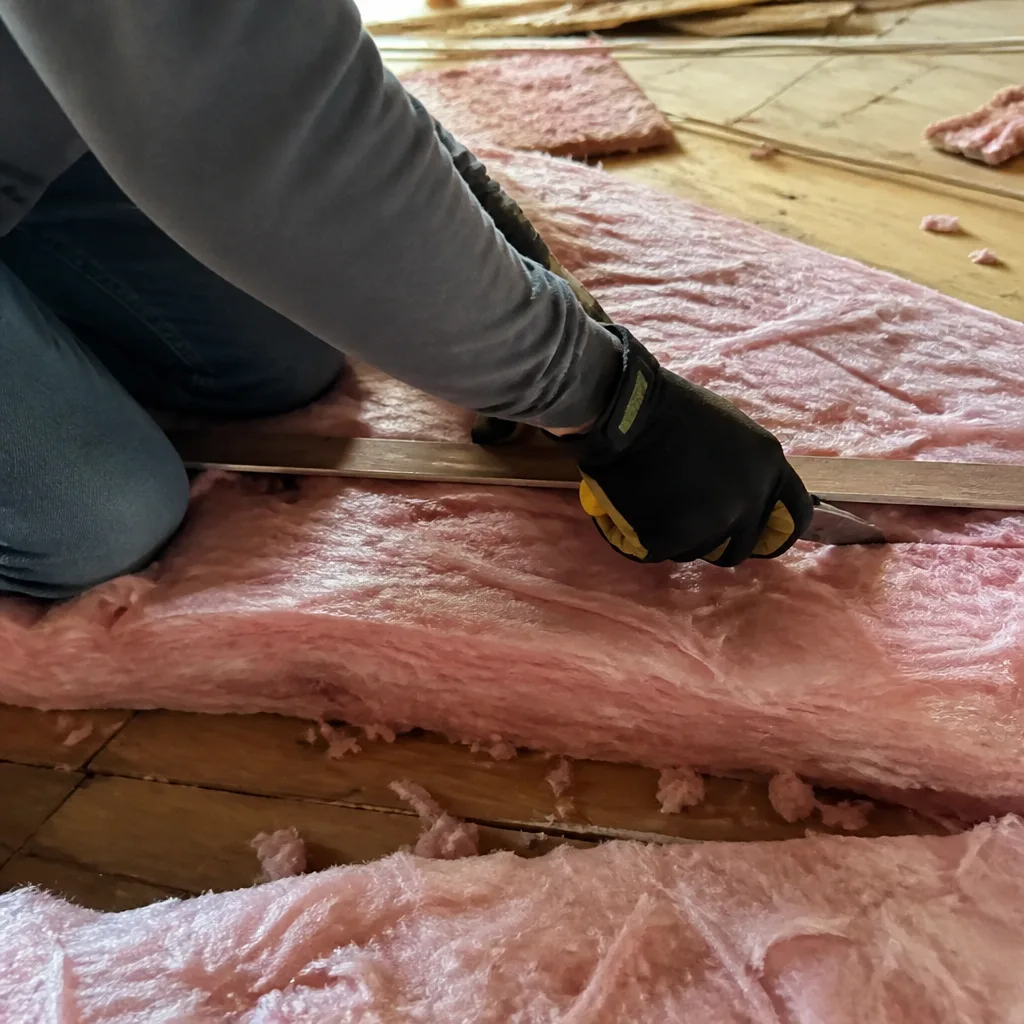
Bring the attic floor to R-49, the level that holds up through a 105°F+ summer without heat cycling it into dust. We use Owens Corning and GreenFiber products here, sized to the settled depth your roof pitch allows. Typical range: $1,600 to $3,400.
Phase 3: Radiant Barrier (if no low-e roofing exists)
If your tile roof lacks a factory low-e underside, a UV-rated radiant barrier does the job a wall cavity cannot – it reflects heat before it enters the attic. Ask before you buy; standard foil laminates degrade under our solar load. Typical range: $900 to $2,200.
Phase 4: Wall and Rim Joist Sealing
Rim joist and top-plate sealing around the wall line, plus targeted wall cavity work only where the blower-door data says it pays. Typical range: $600 to $2,800, and often the last dollars you should spend.
Line-Item Cost Table for a Las Vegas Whole-House Job
| Scope item | Typical cost range |
|---|---|
| Standalone blower-door test | $150 - $300 |
| Attic air sealing (top plates, can lights, penetrations) | $450 - $1,100 |
| Attic insulation upgrade to R-49 | $1,600 - $3,400 |
| Radiant barrier installation | $900 - $2,200 |
| Wall cavity insulation (drill-and-fill, stucco) | $1,800 - $4,500 |
| Rim joist and wall-line air sealing | $600 - $2,800 |
| Insulation removal and rodent proofing (if needed) | $1,200 - $3,000 |
Those wall numbers are why the sequence matters. In a desert where conductive wall loss is dwarfed by radiant roof gain, $1,800 to $4,500 in wall work rarely returns what the same money does in the attic. Insulation Installation in Las Vegas walks through the material options behind each line.
Start With a Blower-Door Test, Not a Quote
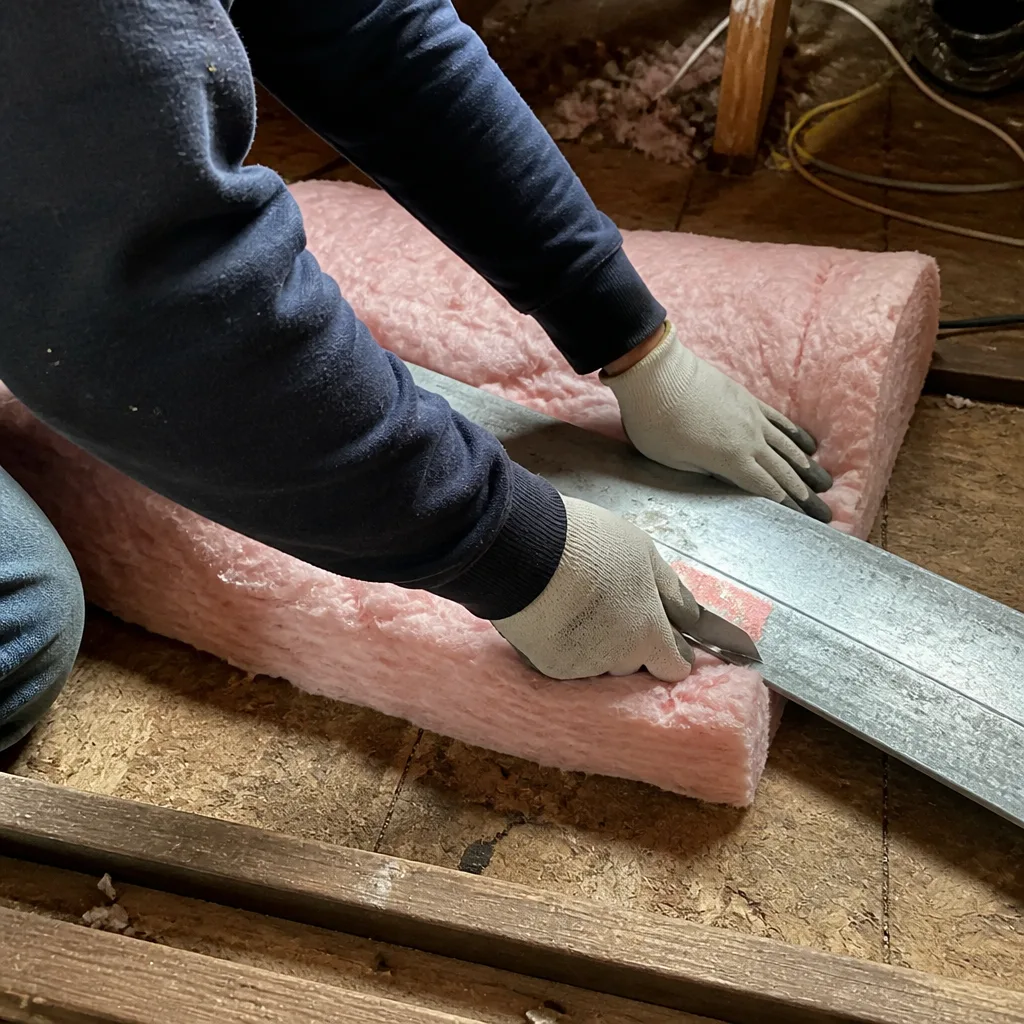
A blower-door test – a pressurization reading that shows, in one figure, how much air your building envelope is losing – is what separates a prioritized budget from a whole-house guess. Standalone, it runs $150 to $300. On our scoped jobs it’s included, and we publish the before-and-after readings: we’ve seen a Henderson home read 4,200 CFM50 before sealing and 2,100 after. That single number tells you which envelope failures are costing the most energy, so you spend on those first.
Phase one now doesn’t mean a new estimate later. Because the written price covers the whole-house scope as a phased plan, you execute what fits your budget this year and keep phases two and three at locked pricing. Under The Haven Standard, every job starts with that written price, written scope and written warranty – and each visit closes with a Documented Photo Record, included on every job, not on request. The 365-Day Done Right Promise covers the finished work: if it’s not done right, we make it right.
What “Done Right” Looks Like Across a Whole House
The proof isn’t an R-value sticker on the attic hatch. It’s a final blower-door number, stated in ACH50 – air changes per hour at 50 pascals – that quantifies total envelope improvement across every phase. We don’t blow insulation over an unsealed floor, our technicians have up to 10 years of experience, and materials come from Owens Corning, GreenFiber, Icynene and Knauf with no proprietary lock-in. If you have a competing written estimate, we’ll read it with you as a free second opinion before you decide.
If you want the bigger picture on how a phased plan fits with our full service line, start at our home page. The detail on warm-climate products worth knowing: Icynene spray foam seals penetrations in one pass, and Demilec closed-cell foam handles the rim joist where desert dust infiltrates. Both are options inside phase four, not the first thing we recommend.
FAQs
Whole-house insulation in Las Vegas typically runs $3,200 to $7,800 for a 1,800 to 2,400 sq ft home, with the attic making up most of it. Attic-only work usually lands between $2,000 and $4,500. Call (833) 362-4859 for an exact quote – estimates are free and written before anything starts.
The attic first, nearly every time. In Las Vegas’s cooling-dominant climate, radiant roof gain outweighs wall loss by three to five times per dollar, so attic air sealing and R-49 insulation return more than $1,800 to $4,500 in stucco wall work. Call (833) 362-4859 and we’ll confirm it with a blower-door reading on your home.
Yes if you want a budget you can trust – a blower-door test tells you which envelope failures cost the most energy. Standalone it runs $150 to $300 and is included in our scoped jobs, with before-and-after CFM50 numbers published so you can verify the result. Call (833) 362-4859 to schedule one.
Yes, and we recommend it. Your written price covers the whole-house scope as a phased plan, so you can run phase one now and lock in pricing for phases two and three without a new estimate. Call (833) 362-4859 to build your phased plan – the price is in writing before any work starts.
Get Your Written Whole-House Price
Before you spend on insulation, know what each phase returns in your home. We’ll test, show you the numbers, and hand you a written price with a phased scope, a written warranty and a documented photo record – all before anyone lifts a tool. Free second opinion on any competing estimate. Call (833) 362-4859 today. Calls are answered by a live person, 24/7.
Written by the team at Envelope Insulation Las Vegas, serving Las Vegas, NV.
What Our Customers Say
"The winter gas bill dropped by about a third. They had estimated a quarter, so they under-promised."
- Genevieve R."They air-sealed the attic floor before insulating and showed me the blower-door number before and after. The upstairs is finally the same temperature as downstairs."
- Marisol D."Crawl space encapsulation done properly. Photographs of the vapour barrier at every seam, and the damp smell in the hallway is gone."
- Ainsley P.