Fast, Reliable Blown-In Insulation Across Enterprise
If you live in Enterprise and your cooling bills climb every July while the upstairs bedrooms never quite get comfortable, the attic is usually where the answer is. Homes in Enterprise, NV went up fast in the 2000s, and many share the same builder-grade insulation and the same attic problems. We’re Envelope Insulation Co., and we work Enterprise attics every week, from the 89139 subdivisions off the 215 and Blue Diamond corridor to the newer infill pockets nearby. We seal first, insulate second, and put the blower-door numbers in writing. For a written price on your Enterprise attic, call (833) 362-4859 and a live person picks up.
Why Envelope Insulation Las Vegas Is Enterprise’s Preferred Blown-In Insulation Company
Our reputation in Enterprise comes down to documentation. Every applicable job closes with before-and-after blower-door readings – a pressurization measurement that shows, in a single number, how much conditioned air the home was losing before and after the work. Homeowners here research thoroughly, so we lead with evidence, not adjectives. Enterprise customers get a written scope, a written warranty, and a Documented Photo Record before we leave. Response into Enterprise is quick: we schedule around the home’s layout and the season, and calls are answered by a live person 24/7, not a voicemail loop. Our technicians have up to 10 years of experience, and each one carries the same trade vocabulary and the same Haven Standard. That’s 9,000+ homes sealed and insulated since 2016, each one starting with a written price. We bring you a free second opinion on any competing estimate – we’ll read it with you.
Our Blown-In Insulation Services in Enterprise
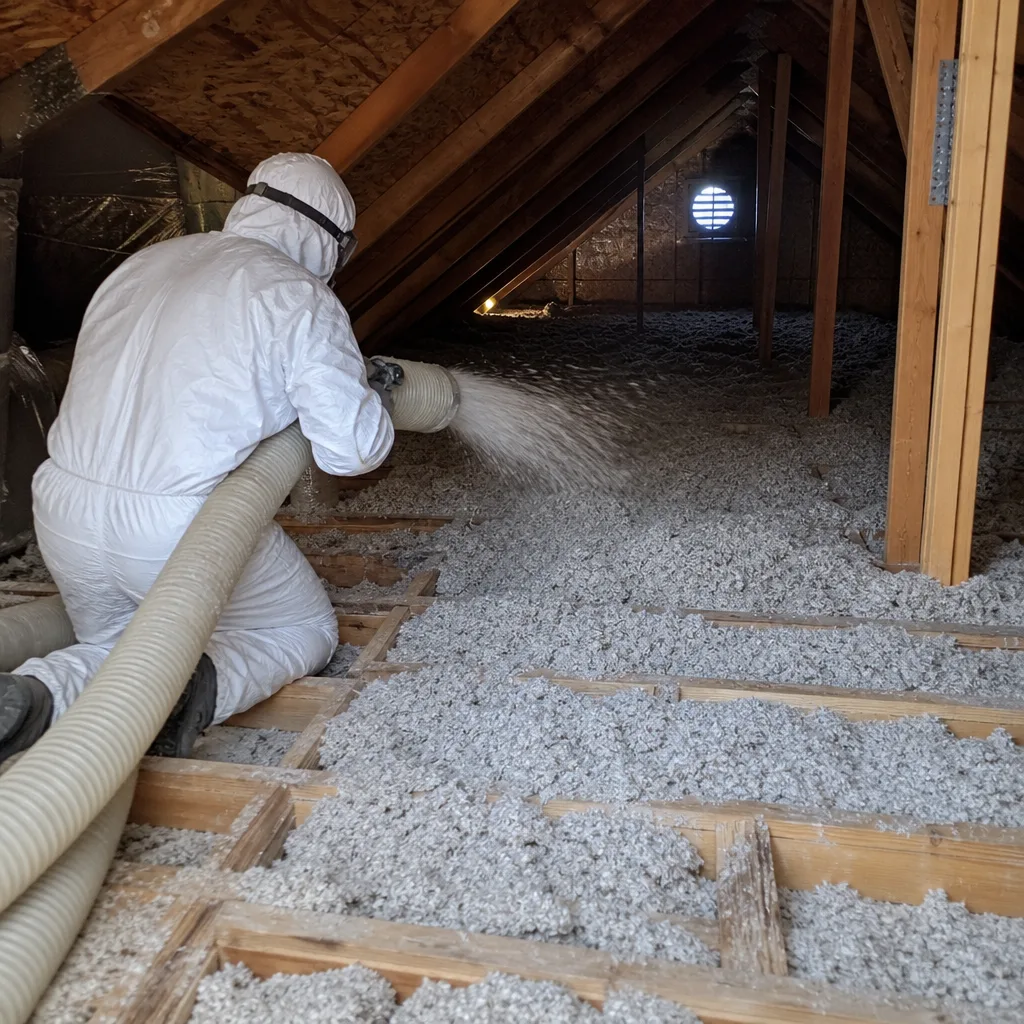
Blown-In Fiberglass in Enterprise
For a typical Enterprise two-story stucco-over-frame home with a low-slope tile roof, fiberglass is often the practical choice. It’s installed to a uniform depth, won’t settle into voids the way loose batts do, and handles the thermal cycling that pushes enterprise attics well past 150°F in July. We source from Owens Corning and Johns Manville and blow to a measured R-value, not a guess.
Blown-In Cellulose in Enterprise
Cellulose is denser and naturally resists air movement, which makes it useful in Enterprise homes where the original insulation was thin and ventilation is weak. It’s treated for fire and pest resistance and packs the small framing gaps that fiberglass sometimes bridges over. If your attic has caught monsoon dust through a roof leak, we clear it before blowing anything in.
Dense-Pack Wall Insulation in Enterprise
Most Enterprise homes are frame-and-stucco, so the wall cavities are fixed – we can’t add depth without a retrofit. Dense-pack wall insulation fills those cavities at high density, closing the convection loops that make west-facing walls radiate heat into a room long after sundown. It’s slower work than an attic blow, but it’s often the difference on an upstairs wall that won’t cool.
Blown-In Top-Up in Enterprise
Plenty of Enterprise homes don’t need a full removal – they need depth. A top-up adds fresh material over settled fiberglass to reach the target R-value. We always air-seal first: top plates, can lights, and penetrations get sealed before any insulation is added, because blowing over an unsealed attic floor is money that leaks through the ceiling. The main Blown-In Insulation team can help you decide top-up versus full replacement.
Trusted Brands We Service in Enterprise
We work with the materials Enterprise homeowners ask for by name: Owens Corning, Johns Manville, Knauf, and Rockwool. There’s no proprietary product lock-in, so you’re not stuck with one brand just because a contractor happens to stock it. We don’t hold parts locally – materials are ordered to your job’s printed specification. That means turnaround stays tight even during the busy spring and summer months, when Enterprise attics are too hot to work in the middle of the day.
Common Blown-In Insulation Problems We See in Enterprise Homes
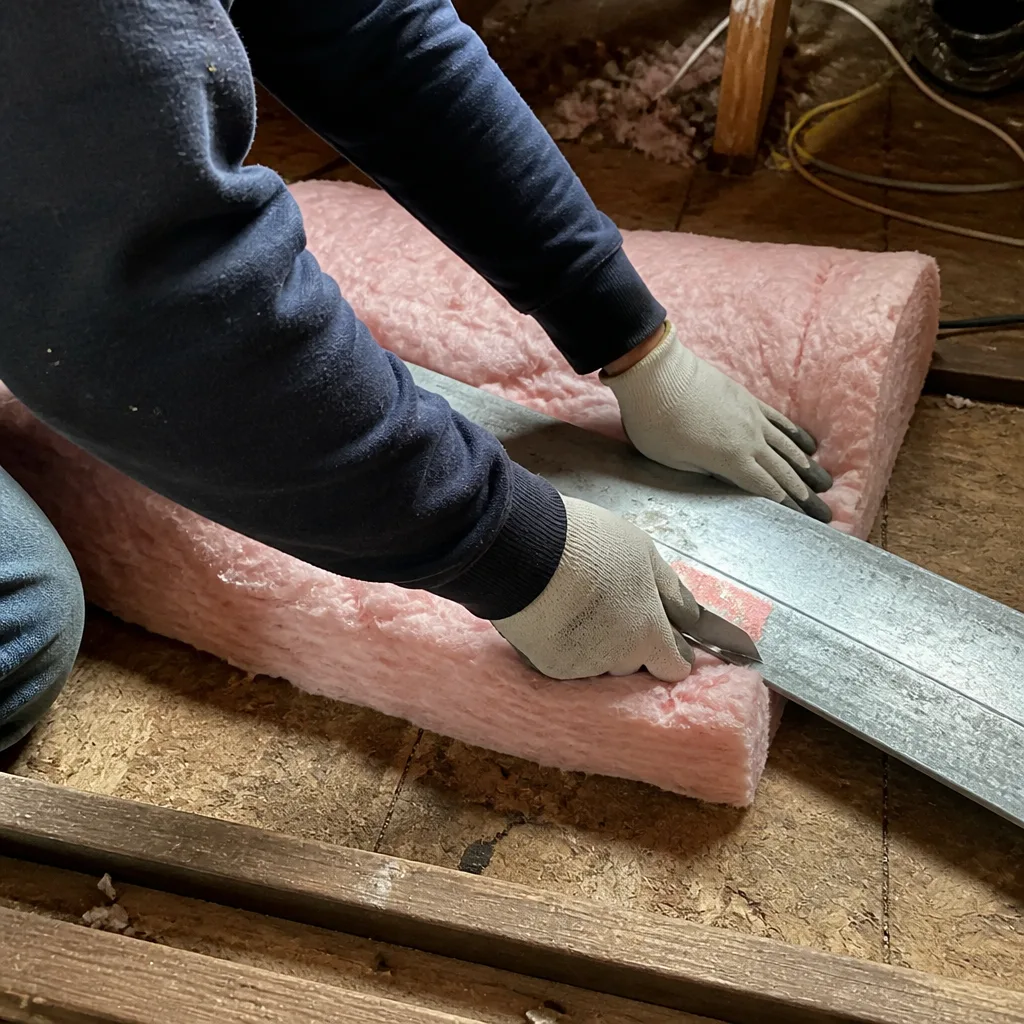
- Builder-grade fiberglass settled well below its original R-value. Fifteen to twenty years of 150°F+ attic cycling compresses loose fiberglass until it no longer performs like it did on day one. In Enterprise, this is the single most common finding in a home from that build era.
- Missing or dislodged baffles at tops plates and eaves. Baffles keep intake ventilation open at the roof edge. When they’re missing, the attic can’t breathe through the desert thermal cycle, and heat builds in the summer with no escape.
- Roof-penetration and vent leaks washing out blown-in material during monsoon season. The July – September monsoon pushes wind-driven rain and dust through roof penetrations, compacting insulation and going undetected until the cooling bill jumps. We photograph what we find.
- Shared template defects that repeat street-wide. Because so many Enterprise homes came from the same handful of production builders, one attic often tells you the story of the whole street – a shortfall in one house usually repeats in every home the same production phase built.
That last point is the real Enterprise outlier. Because the 2000s boom built tens of thousands of homes in a short window from a few templates, a tech can often diagnose a whole street by inspecting one attic. A missing baffle detail or a blown-in depth shortfall in one house usually shows up in every home the same builder phase completed. That’s why we ask neighbors about their cooling bills before we ever climb into the attic. It’s a neighborhood-pattern diagnosis, not a one-off assessment.
Pricing for Blown-In Insulation in Enterprise, NV
You deserve a real number, so here’s the Enterprise market range. A typical blown-in top-up in an Enterprise attic runs $1,100 – $2,400, depending on square footage and how deep the target R-value is. A full blown-in fiberglass job with air sealing usually lands $1,800 – $4,200. Cellulose runs a little higher for the material density, often $2,000 – $4,600. Dense-pack wall work is quoted by the cavity and starts around $1,600 for a small wall section. What moves your number: attic size, existing R-value, how much air sealing is required, baffle repairs, and whether old material has to come out first. Every Enterprise quote is a flat written price before any work starts – none of it moves afterward. Call (833) 362-4859 for a free estimate, or bring us a competing quote for a free second opinion.
We Also Serve Cities Near Enterprise
We also work nearby, so the same sealed-first, documented approach is available across the southwest metro. If you’re scheduling in Blown-In Insulation in Enterprise or want the same service in Spring Valley, Paradise, Winchester, or Las Vegas proper, the process is identical: written price, blower-door readings, photo record.
Serving Enterprise, NV – Our Local Coverage Area
We serve Enterprise and nearby communities. Use the map below to see the area we cover. If you’re nearby, we can almost certainly help.
FAQs – Blown-In Insulation in Enterprise
Because most Enterprise homes were built in the 2000s and their builder-grade fiberglass has simply settled thin and compressed – the framing and roof are still solid, so there’s no reason to pull existing material out. A top-up seals the attic floor and adds depth back to the target R-value at a fraction of replacement cost. Call (833) 362-4859 for an exact top-up quote – it’s free.
Yes, and it’s one of the more common problems we see in Enterprise attics. Wind-driven rain and dust push through compromised roof penetrations and vents during monsoon season, either compacting the blown-in material or washing it out entirely. It goes unnoticed until the cooling bill spikes in August. A documented inspection catches it.
It compresses the diagnosis to a set of predictable problems. Because tens of thousands of Enterprise homes came from the same handful of production builders, a shortfall in one house – missing baffles, thin coverage, gaps at the top plates – usually repeats in every home the same build phase produced. So we check the whole street’s pattern before we climb in.
For most Enterprise attics, blown-in fiberglass is the sensible default: it installs to a uniform depth, handles the 150°F+ cycling, and stays cost-effective. Cellulose makes more sense when the original material is thin and ventilation is weak, since its density resists air movement better. We’ll quote both on the written estimate so you can compare.
Enterprise’s desert climate wants a deeper target than a mild-climate home – we generally aim for R-49 to R-60 in this attic style, deeper than the R-30 to R-38 most 2000s-era tract homes were built to. The right target depends on your roof assembly and ventilation. Call (833) 362-4859 for the exact spec on your home – the estimate is free.
Typically within a day or two for a scheduled inspection, and faster for active leaks or water intrusion during monsoon season. Enterprise is on our regular route, so we’re rarely more than 24 hours out on a normal call. A live person answers 24/7.
Get a Written Price for Your Enterprise Attic
If your Enterprise home is past its builder-grade insulation and the cooling bills keep climbing, the next step is a written price and a look inside the attic. We measure before we quote, seal before we insulate, and you leave with a written scope, a written warranty, and a Documented Photo Record – every visit. Under The Haven Standard, every job ends with something you can read and verify, not just a promise. Call (833) 362-4859 for a free estimate, and a live person will pick up.
Written by the team at Envelope Insulation Las Vegas.
Blown-In Insulation in Nearby Areas