
What R-Value Do You Need for Attic Insulation in Las Vegas, NV?
The short answer for most Las Vegas homes is R-49, not the R-38 the Department of Energy’s climate zone map lists for our region. The DOE number assumes a vented attic with a code-compliant air barrier already in place. In the shallow, poorly sealed attics of 1990s Summerlin and Henderson tract homes, air leakage strips roughly 20 to 30 percent off whatever R-value you install, so you have to start higher to land where code intended. Call (833) 362-4859 if you want a technician to measure your attic and set a site-specific target.
Why the DOE Says R-38 and We Usually Specify R-49
The DOE zone map puts Las Vegas in Climate Zone 3 and calls for R-38 to R-49 in an attic. That range was calculated for a vented attic with an intact air barrier. Most Las Vegas housing stock does not meet that second condition. The typical home here is a stucco-over-wood-frame tract house built between 1990 and 2010, with a low-slope tile roof and an attic shallow enough that a technician moves through it on hands and knees. Builder-grade R-19 or R-30 batts, if they were installed at all, have usually settled and compacted over twenty-plus summers.
When we run a blower-door test on one of these homes, we commonly read around 8 ACH50. That is air changes per hour at 50 pascals of pressure, and it tells you how leaky the envelope is. In a home reading 8 ACH50, convection moves conditioned air through and around the insulation, and roughly a quarter of the thermal resistance you paid for never shows up at the ceiling plane. Install R-38 over an unsealed attic floor and the house performs like R-28 or R-30. Install R-49 and it performs closer to the R-38 the map intended.
Effective R-value vs. installed R-value
The number printed on the bag is the installed R-value. The number your air conditioner actually feels is the effective R-value, and it is always lower when air can move. Two forces cause the gap in a Las Vegas attic: air leaking through the ceiling plane from the house below, and wind washing across the top of the insulation where the attic vents pull outside air through. Sealing the top plates, can lights, and penetrations before any insulation goes down is what closes that gap. Our protocol is sealed first, then insulated, in that order. We will not blow insulation over an unsealed attic floor, because doing so hides the leak and locks in the problem.
Why Every R-Value Point Counts More in Las Vegas Than Almost Anywhere
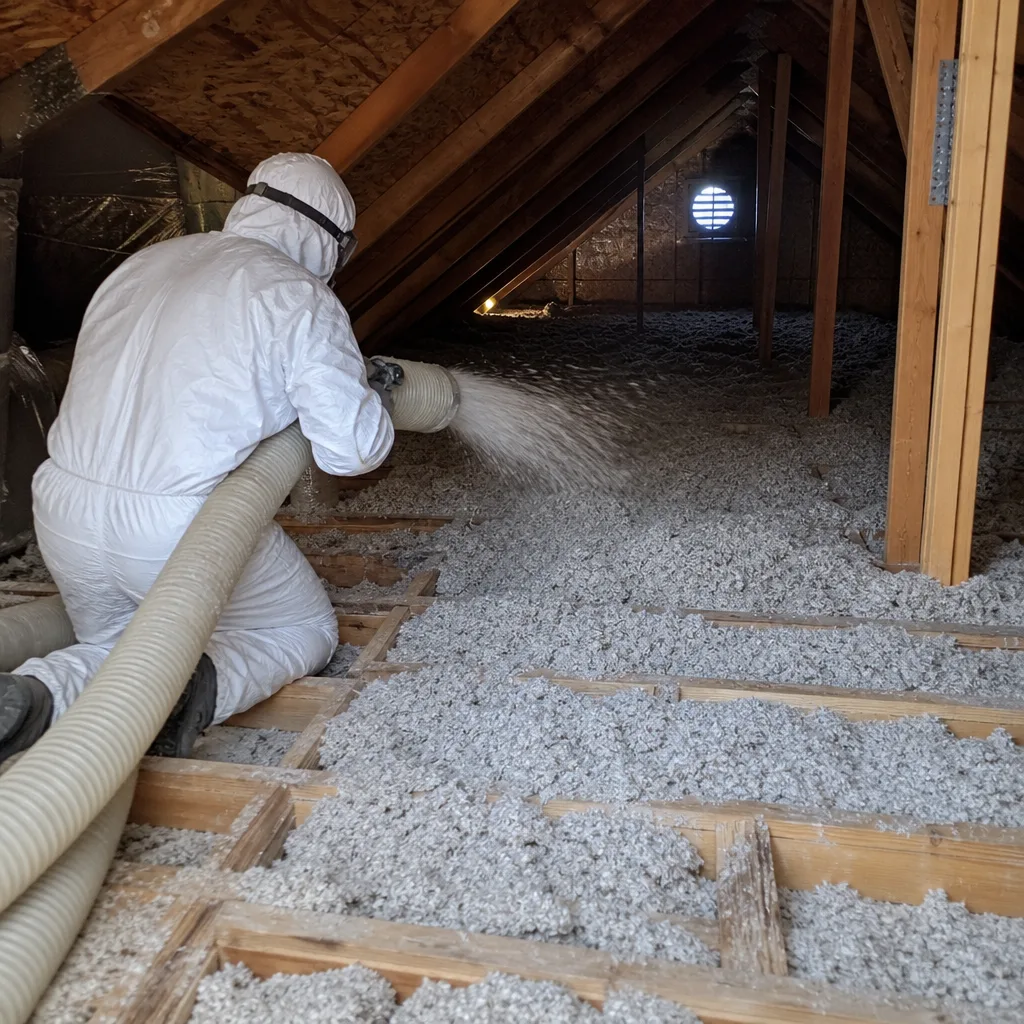
Summer attic temperatures here run past 160°F, which creates a temperature difference across the insulation layer of 80°F or more. Heat flow through a ceiling follows a simple relationship: heat flux equals the temperature difference divided by the R-value, measured in BTU per hour per square foot. At a delta-T of 80°F, R-30 passes about 2.7 BTU/hr/sq ft and R-49 passes about 1.6. That difference is not academic. It is the difference between a cooling system that keeps up in July and one that runs until midnight and still loses ground. In a milder climate, R-30 and R-49 feel closer together. Here they don’t.
The Mojave Desert adds two more stresses. Solar radiation is intense, and the very low humidity means wind-blown dust settles into fiberglass over time. That dust load, combined with heat cycling, is why original blown-in insulation in older Las Vegas homes loses performance faster than the same product in a damp, moderate climate.
What we find in Sun City Summerlin and other 55+ communities
In Sun City Summerlin and similar 1990s communities, we regularly measure the original blown-in fiberglass at R-10 or below, compacted and laced with desert sediment, under a tile roof with no radiant barrier. Adding R-30 on top to reach a nominal R-40 is not the same as a fresh R-49 install. The old material has lost its air retention, so it behaves as a denser, less effective layer, and the unsealed ceiling plane below still leaks. In those homes the calculation changes: remove the compromised material, air seal the attic floor, then install fresh R-49. The number you need depends on what is already up there and how well it’s holding.
How We Set the Number for Your House
We don’t default to a zone average. A blower-door pre-test gives us an ACH50 reading on your home, and a thermal scan shows where the ceiling plane is losing heat. Together those two measurements let the technician specify a target R-value for your attic rather than for the map. The written scope states the target, the measurement method used to set it, and the material specified. You get a flat written price before any work starts, and the before-and-after blower-door numbers when the crew leaves, so you can see the performance change in a single figure.
| Item | Typical Las Vegas range |
|---|---|
| Blower-door pre-test + thermal scan | $350-$550 |
| Air sealing (top plates, can lights, penetrations) | $600-$1,400 |
| Insulation removal (compromised material) | $1.50-$2.50 per sq ft |
| Blown-in fiberglass to R-49, typical 1,500 sq ft attic | $2,200-$3,800 |
| Radiant barrier added to tile roof | $1,200-$2,400 |
| Post-test with published readings | $250-$400 |
Materials come from Owens Corning, Johns Manville, GreenFiber, and Knauf, so there’s no proprietary lock-in on the spec. Every job closes with a Documented Photo Record, and the 365-Day Done Right Promise applies to the completed work. When you are ready to schedule, our Insulation Installation in Las Vegas page lays out the full service.
R-49 Alone or R-49 Plus a Radiant Barrier?
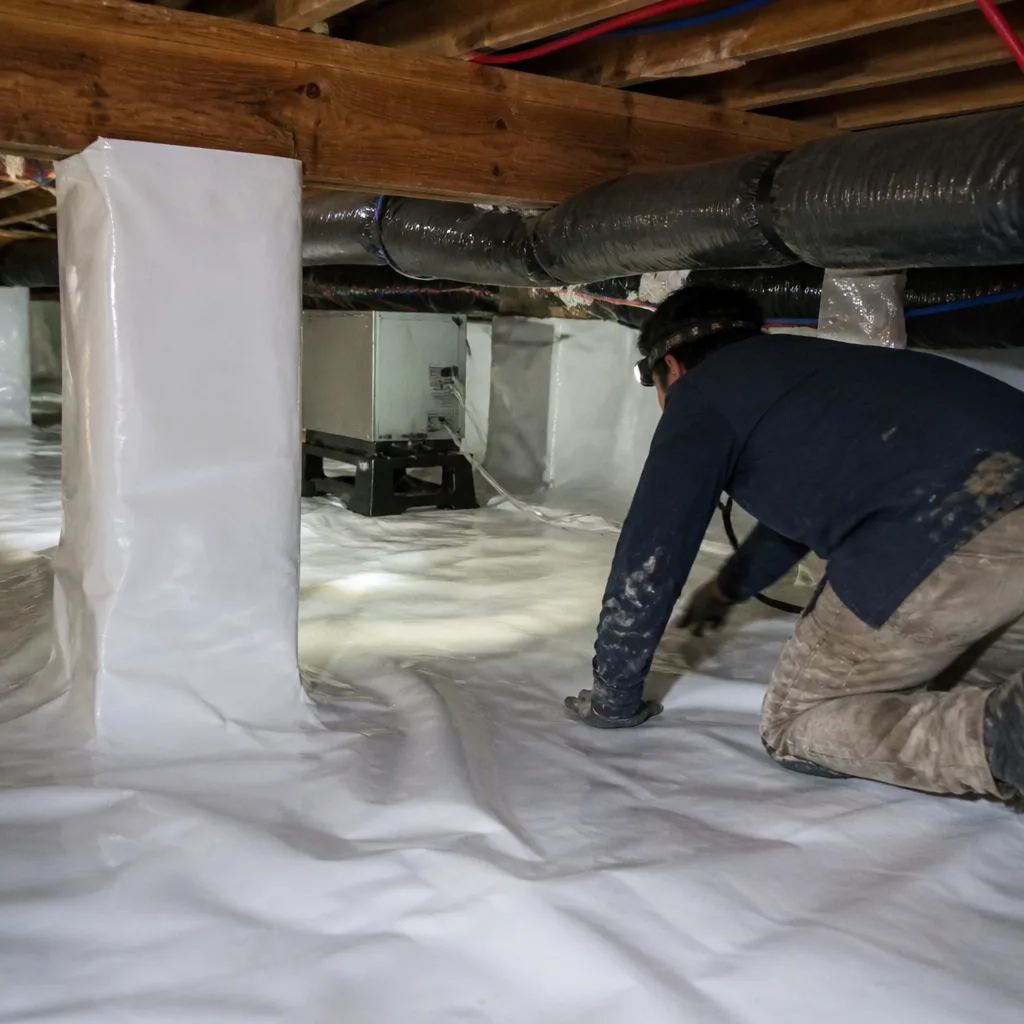
A properly installed foil radiant barrier on the underside of a tile roof cuts the radiant heat load the insulation has to handle, which means a combined approach can beat chasing R-60 on its own. Here’s the reasoning. Above roughly R-49, each additional R point buys diminishing cooling savings, because the dominant heat path in a Las Vegas attic at 160°F is radiant, not conductive. Block that radiant path and the R-49 you already have works harder. That’s why some Envelope jobs specify R-49 blown-in plus a reflective layer rather than R-60 fiberglass alone. The cost per unit of cooling reduction is better with the combined approach, and the barrier also takes the worst of the load off the insulation so it degrades more slowly. In Sun City Summerlin homes with no barrier and compromised fiberglass, this combination is one of the higher-payback fixes we install.
The barrier has to be UV-rated and wind-resistant to survive here. Standard foil products tear and lift under the same sun and dust that wear out everything else in a Las Vegas attic, so we spec materials built for the conditions.
Key Takeaways
- The DOE map says R-38 for Las Vegas, but leakage in a typical unsealed attic means R-49 is what delivers that performance in practice.
- At an 80°F attic delta-T, R-30 and R-49 pass meaningfully different heat loads through the ceiling.
- Compacted R-10 fiberglass in older Summerlin-area homes changes the math: removal, re-seal, then fresh R-49.
- Sealing comes before insulation, always. The blower-door reading sets the target, and we publish it before and after.
- A radiant barrier plus R-49 often beats R-60 fiberglass alone on cooling reduction per dollar.
FAQs
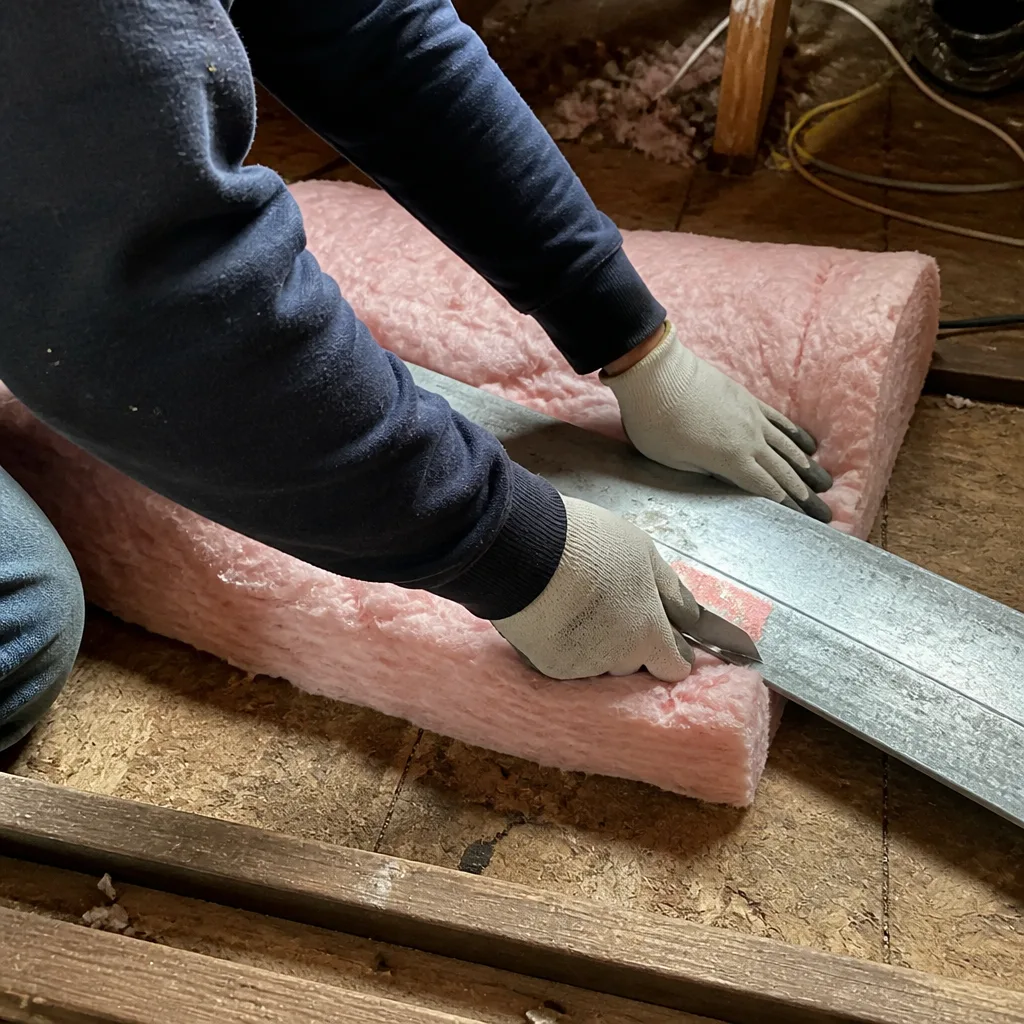
Most Las Vegas homes need R-49 installed, because air leakage in a typical unsealed attic reduces the effective R-value by roughly 20 to 30 percent. The DOE lists R-38 for our zone, but that assumes a code-compliant air barrier the house may not have. Sealing first, then insulating to R-49, gets you to the performance the code figure was meant to deliver.
Sometimes, yes, but only if the existing material still holds its R-value and the attic floor is already sealed. In Sun City Summerlin and other 1990s homes, we often measure the original fiberglass at R-10 or below with compromised air retention, and in those cases removal and re-seal is the honest path. A blower-door test and thermal scan tell you which situation you’re in.
In a well-sealed attic in this climate, R-38 can work. In a typical unsealed Las Vegas tract home, R-49 is the minimum that produces the same performance R-38 was designed to give, because the leakage degrades whatever you install. If your technician can’t show you an ACH50 reading, the number is a guess.
Blown-in fiberglass to R-49 in a typical 1,500 sq ft attic runs about $2,200 to $3,800, with air sealing at $600 to $1,400 and a blower-door pre-test at $350 to $550. Removal of compromised material adds $1.50 to $2.50 per sq ft. Call (833) 362-4859 for a written price before any work starts – estimates are free.
If you’d rather have it looked at, Envelope Insulation Las Vegas offers a no-pressure assessment in Las Vegas – call (833) 362-4859 for a free estimate and a written scope that names your target R-value and how we set it.
Written by the team at Envelope Insulation Las Vegas, serving Las Vegas, NV.