
What Crawl Space Insulation Costs in Las Vegas (And Why Most Quotes Get It Wrong)
Crawl space insulation in Las Vegas runs $1,800 to $5,500 for most jobs, with encapsulation and rigid foam board at the higher end and simple vapor barrier replacement on the lower. Call (833) 362-4859 for a written price before any work starts. If a contractor quotes your crawl space using the same approach they’d use in Atlanta or Seattle, the job is already wrong. Here’s what desert-climate crawl space insulation actually requires, and what it should cost when it’s built for the Mojave, not the mid-Atlantic.
Key Takeaways
- Nearly all Las Vegas homes sit on slab. The small share with true crawl spaces are mostly older Henderson and North Las Vegas builds, and they get priced from national templates that assume chronic moisture.
- Your risk isn’t bulk water. It’s the rare monsoon-season humidity spike hitting an unconditioned space, and vapor barrier spec should be chosen for that event, not for year-round damp.
- Extreme thermal cycling, with ground temperatures swinging around 40°F seasonally, breaks standard batts. Mechanically fastened rigid foam board holds.
- Air sealing at the rim joist happens before any insulation goes in, and a blower-door reading proves the difference.
Why Las Vegas Crawl Spaces Are a Different Job Entirely
Start with a fact that shapes every crawl space estimate here: most Las Vegas homes don’t have one. The overwhelming majority sit on slab foundations, poured during the 1990s and 2000s tract buildout across master-planned communities. The crawl spaces that do exist cluster in older pockets of Henderson and North Las Vegas, built decades before the slab became standard.
That scarcity is exactly why pricing goes sideways. A contractor who does two crawl spaces a year in Las Vegas defaults to a national playbook written for humid climates, where the crawl space’s enemy is persistent groundwater and year-round damp air. In the Mojave, that enemy doesn’t exist. What exists instead is a dry, dusty space that heats and cools with the seasons and then, three or four weeks a year during monsoon season, gets hit with a burst of humidity it was never designed to handle. A vapor barrier spec built for Seattle overbuilds the wrong thing and underspecs the right one.
What Crawl Space Insulation Costs in Las Vegas: Line by Line
Here’s what the line items actually run in this market. Ranges reflect the size of the space, access difficulty, and whether old material has to come out first.
| Item | Typical Las Vegas Range |
|---|---|
| Vapor barrier (6-mil, ground cover, lapped and sealed) | $1,200 - $2,400 |
| Vapor barrier upgrade for monsoon humidity (heavier mil, taped seams, wall turn-up) | $1,800 - $3,200 |
| Rigid foam board on stem walls, mechanically fastened (per linear foot) | $8 - $16 |
| Fiberglass batt replacement on crawl space walls | $900 - $1,800 |
| Rim joist air sealing (plumbing and electrical penetrations) | $400 - $900 |
| Full encapsulation (sealed barrier, sealed vents, insulated walls) | $4,000 - $8,500 |
| Removal of failed insulation and debris | $600 - $1,500 |
Most crawl space jobs in Las Vegas land between $1,800 and $5,500. The number swings on one question: are we replacing a failed barrier and re-insulating, or are we converting a vented space to an encapsulated one? That decision deserves a written rationale in the scope, not a default answer.
Batt vs. Rigid Foam: Why Staples Fail in the Desert
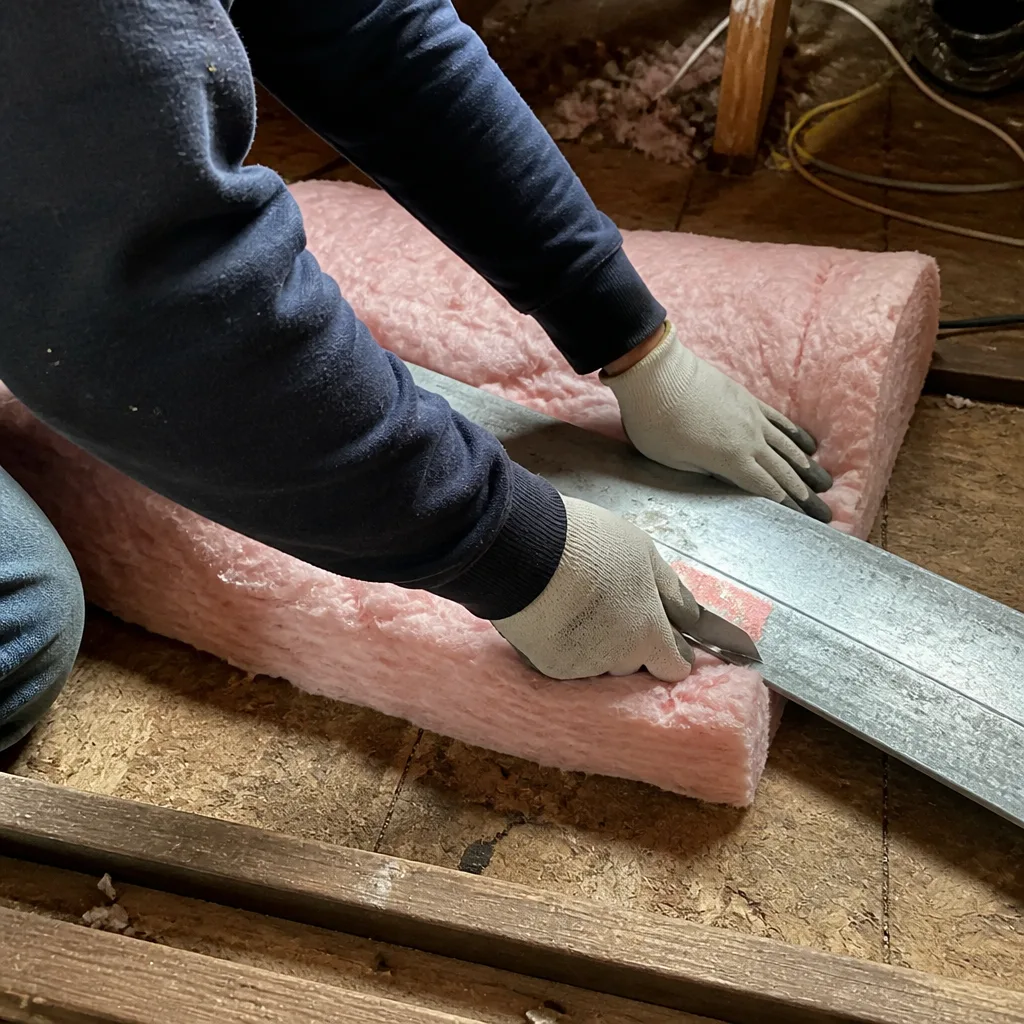
Standard fiberglass batts are held up by friction and staples. In a climate where the ground under the house can swing roughly 40°F between winter and summer, that’s not enough. The wood framing expands and contracts against the batt. The staples pull. The batt sags, drops, and leaves the rim and wall exposed. In older Henderson crawl spaces, finding a batt hanging by one corner is routine.
Rigid foam board fastened with mechanical anchors to the stem wall doesn’t depend on compression fit. It stays put through the cycle, and it keeps a stable R-value when it does. That’s why we spec rigid board and quote it per linear foot rather than by the square, and why the difference in cost is worth naming out loud: a re-staple today that fails again in four years costs more than the rigid board did the first time.
Vented vs. Encapsulated: Which Does a Desert Crawl Space Actually Need?
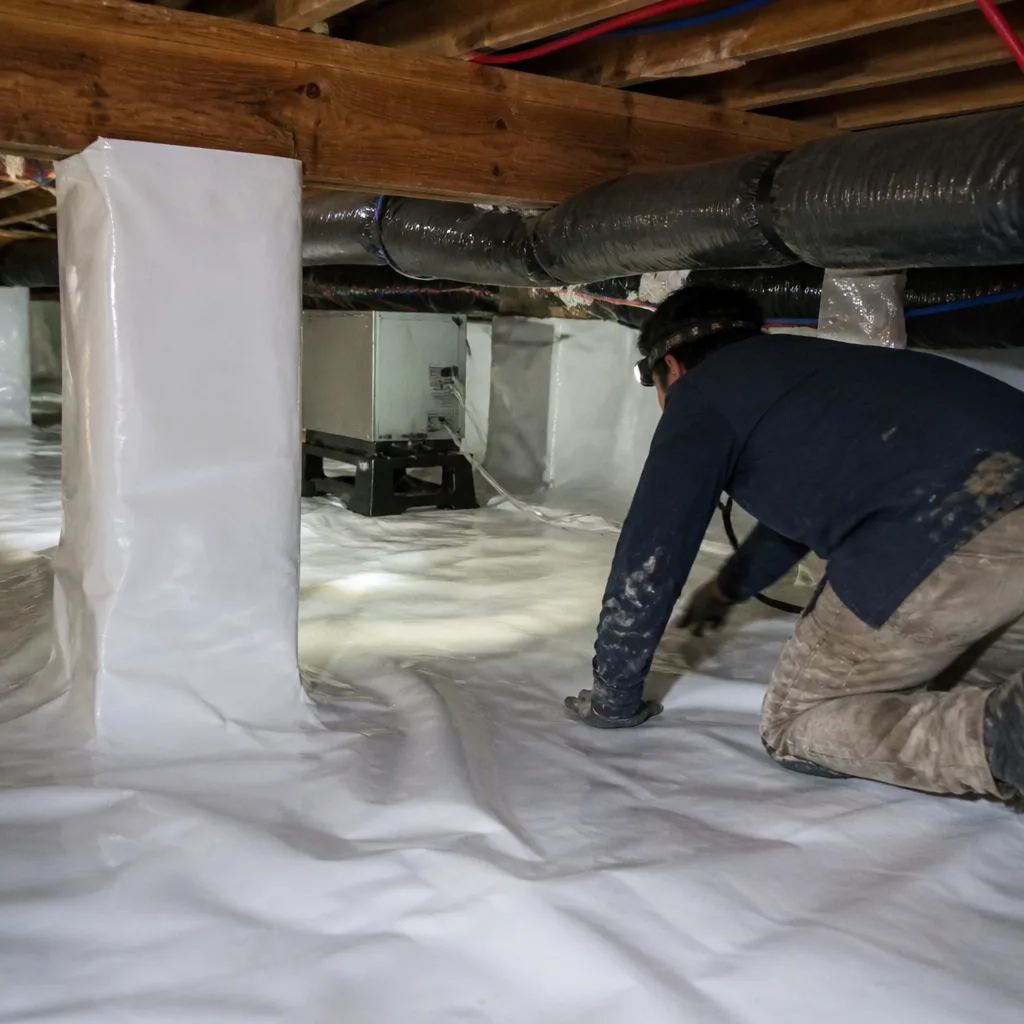
In humid climates, encapsulation is close to automatic. In Las Vegas, the ventilation argument is genuinely weaker. A vented space in dry desert air is doing some of the work encapsulation would otherwise do, and pushing a homeowner toward a sealed, conditioned crawl space that isn’t needed is a real risk in this market.
The right answer depends on what the space is actually doing. Two scenarios cover most of what we see:
- Vented, dry, and stable: a barrier replacement with heavier mil and taped seams, plus rim joist sealing. Lower cost, appropriate to the climate.
- Vented but struggling during monsoon season: the humidity spike moves in and doesn’t leave. Here encapsulation with sealed vents and insulated walls earns its price, and the reason should be spelled out in writing.
What shouldn’t happen is a scope that says “encapsulation” with no reasoning attached. Under The Haven Standard, the written price includes a written scope that names the approach and the reason for it. That’s the standard a homeowner should expect from whoever prices the job.
Sealed First, Insulated Second: The Rim Joist Is Where This Shows Up
Air sealing comes before insulation, and in a crawl space that means the rim joist. Every plumbing line and electrical run that enters the living space from below is a hole in the thermal boundary. Blowing insulation around those penetrations without sealing them first is a shortcut, and it’s the shortcut most often taken.
We seal the penetrations, install the barrier and board, then run a blower-door test. That’s a pressurization reading, a single number that shows how much air the building envelope is losing. Before-and-after readings are published on every applicable job, so the homeowner sees the change in a figure, not a paragraph. For homes where the crawl space ties into a broader restoration scope, our Attic & Crawl Space Restoration in Las Vegas page covers how the two projects line up.
The before-and-after documentation matters more here than usual. Crawl space work is invisible after the fact. Without a photo record and a blower-door number, the homeowner has no way to verify what they paid for. Under our process, a documented photo record is included on every visit, and the 365-Day Done Right Promise covers the finished work. Our technicians work with materials from CertainTeed, Rockwool, and Icynene, with no proprietary product lock-in.
Common Local Scenarios (and What Each Typically Costs)
Real jobs in this market fall into a handful of patterns. Here’s how they price out and what drives the number.
- Older Henderson home, original barrier cracked at the seams: barrier replacement plus rim joist sealing. Typically $1,800 - $3,000.
- North Las Vegas build with detached batts on the walls: removal, rigid foam board on the stem wall, re-seal penetrations. Typically $2,500 - $4,200.
- Post-monsoon moisture issue in an unconditioned space: diagnostic first, then encapsulation with sealed vents. Typically $4,000 - $8,000 depending on square footage.
- Home where the crawl space is the second half of an attic project: bundle the scopes, get one blower-door series, one written price, one photo record.
Each of these came in with a national-template estimate first. That’s the pattern in this market, and it’s why a free second opinion on any written estimate is worth the call. Bring us a competing quote and we’ll read it with you, line by line. The second written scope, from a contractor who has actually worked Las Vegas crawl spaces, usually looks substantially different, and you’ll know why before you sign anything.
FAQs
Crawl space insulation in Las Vegas typically costs $1,800 to $5,500, with vapor barrier replacement on the low end and full encapsulation running $4,000 to $8,500. The number depends on square footage, access, and whether old material has to come out. Call (833) 362-4859 for a written price before any work starts, free of charge.
Because most Las Vegas homes were built on slab foundations during the 1990s and 2000s tract buildouts. The crawl spaces that do exist are concentrated in older Henderson and North Las Vegas neighborhoods built decades earlier. That scarcity is why local crawl space pricing so often comes from national templates built for climates that don’t match this one.
Not automatically. In dry desert air, a vented space can be the right approach, and a heavier vapor barrier with taped seams plus rim joist sealing often solves the problem at lower cost. The written scope should name which approach it recommends and why. Call (833) 362-4859 and we’ll walk through which case applies to your home.
Often, yes. Crawl space jobs in Las Vegas are smaller scope than full attic projects, so scheduling moves faster. Every job starts with a written price and a written scope before anyone lifts a tool, and every visit closes with a documented photo record. Call (833) 362-4859 and a live person will answer, day or night.
Get a Written Price on Your Crawl Space
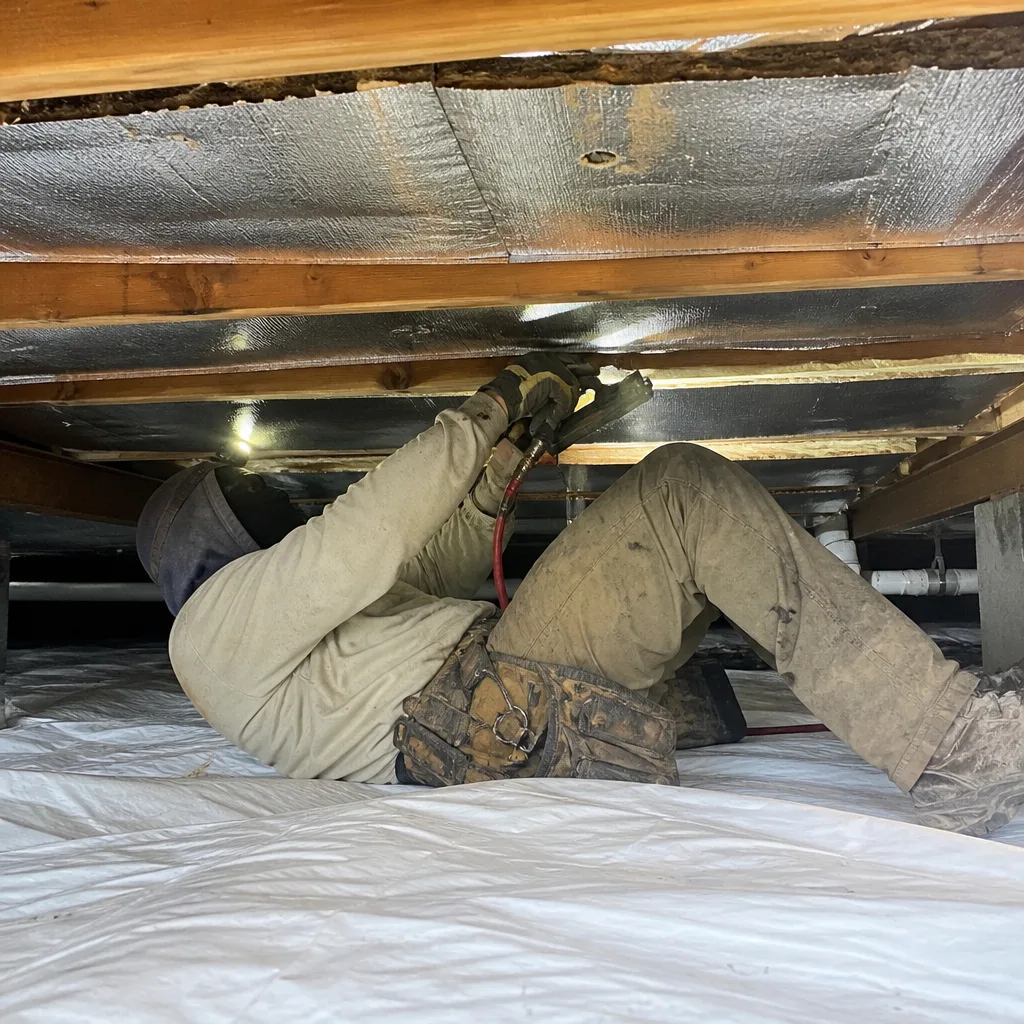
Every crawl space job with Envelope Insulation Las Vegas starts with a written price, a written scope that names the approach, and a written warranty. No work starts without them. Free second opinion on any written estimate you already have. Call (833) 362-4859 for a free estimate and a straight answer on what your crawl space actually needs.
Written by the team at Envelope Insulation Las Vegas.
What Our Customers Say
"The winter gas bill dropped by about a third. They had estimated a quarter, so they under-promised."
- Genevieve R."They air-sealed the attic floor before insulating and showed me the blower-door number before and after. The upstairs is finally the same temperature as downstairs."
- Marisol D."Crawl space encapsulation done properly. Photographs of the vapour barrier at every seam, and the damp smell in the hallway is gone."
- Ainsley P.