
Emergency Attic Insulation Near Me: What Las Vegas Homeowners Should Do First
A homeowner who calls for same-day blown insulation after finding animal damage in the attic, and gets it installed before the entry points are sealed, will have $1,500 worth of new insulation compressed and contaminated within one season. The emergency isn’t the missing R-value. It’s the open envelope. In Las Vegas, the first 48 hours after an attic problem shows up should go toward diagnosis, not installation scheduling. If you’d rather have a trained eye do that diagnosing, call (833) 362-4859.
What actually counts as an attic insulation emergency in Las Vegas?
Most calls we get labeled “emergency attic insulation” are comfort or efficiency problems that can wait a week or two on the schedule. A genuine emergency is narrow, and it’s worth knowing the difference before you spend money in a panic.
An insulation emergency means the building envelope is open or contaminated right now, and every day it stays that way costs you money or safety. Examples:
- Storm damage that tears off roofing or soffit, leaving the attic exposed to wind-driven rain. Las Vegas monsoon season (roughly July through September) produces this exact pattern, often with 50 mph downdrafts off the Spring Mountains.
- Active water intrusion reaching insulation, which collapses R-value fast and creates a mold risk in a climate that already runs single-digit humidity.
- Pest intrusion where rodents or birds have tunneled through batts or blown fiber, voiding insulation and leaving droppings behind.
- Complete failure of an old vapor barrier or radiant barrier that lets attic heat dump straight into the living space during a 110°F July.
A high summer utility bill, a room that runs 6 degrees warmer than the rest of the house, or insulation that looks flat but intact isn’t an emergency. It’s a scheduled diagnostic. Conflating the two is how people end up paying for insulation they didn’t need, installed over problems that weren’t fixed.
What’s the correct diagnostic sequence before any insulation goes in?
The order matters more than the speed. Blowing insulation over an unsealed attic floor is the single most common mistake we see on Las Vegas homes. It hides the leaks and traps the problem under a fresh layer of fiber.
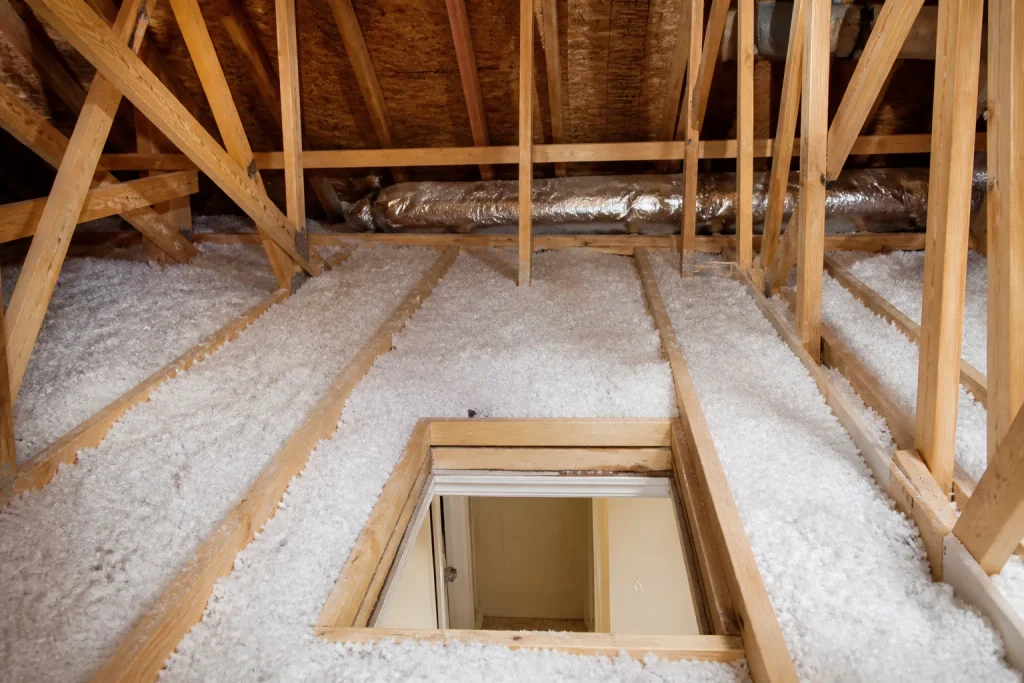
- Visual inspection first. Look for rodent trails, droppings, moisture staining on decking, sagging batts, and daylight coming through penetrations. Note every top plate, can light, plumbing chase, and wire hole.
- Moisture meter readings if water intrusion is suspected. A handheld pin or pinless meter tells you whether the framing and insulation are actually wet or just stained. This reading belongs in the written scope.
- Blower-door test before any material goes in. A blower-door test is a pressurization reading that shows, in a single number (CFM50), how much conditioned air your envelope is losing. We’ve pulled readings of 4,200 CFM50 before sealing on Las Vegas homes that read closer to 2,100 after. That number is what tells you whether the air sealing actually worked, and it’s what you should ask for before and after.
- Air sealing, then insulation. Top plates, can lights, and penetrations sealed first. Insulation second. Always that order.
Skipping steps 1 through 3 is how a home in Summerlin ends up with R-49 blown over a 3-inch gap at the top plate, and a bill that doesn’t move.
What should you do in the first 24 hours after storm damage opens the attic?
If a monsoon cell tore roof decking or soffit off your home and the attic is exposed, the first day is about stopping further damage and documenting what already happened.
Temporary measures: tarp the opening if you can do it safely from the ground or a ladder at a height you’re comfortable with, and close off the attic access so rain and debris stay out of the conditioned space. Do not climb onto a wet roof. Las Vegas roofs after a storm are slick, and the injury risk is real.
Documentation for insurance: photograph the exterior opening, the interior damage, and any wet insulation before you touch anything. Keep a dated list of what got wet and when you found it. Your adjuster needs the pre-cleanup state, not the tidy version.
What NOT to disturb: don’t pull soaked insulation out of the attic before an adjuster visits unless it’s actively blocking access to a leak. Once it’s in a bag on the curb, the record of how much was damaged is gone. Let the adjuster see it where it sits.
What does Nevada require for pest-contaminated insulation removal?
Rodent and bird intrusion in a Las Vegas attic is common, especially in older neighborhoods near the washes and open desert edges. The remediation question is whether the insulation can be cleaned or must come out, and the answer should be based on testing, not a guess.
Blown cellulose contaminated with rodent activity should be tested before any removal decision. Cellulose is treated with fire retardants, but rodent urine and droppings change what’s in the material, and the removal protocol depends on severity. Nevada health code and Clark County environmental health guidance treat significant rodent contamination as a remediation job, not a vacuum-and-go job. That means containment, HEPA filtration, and disposal per local rules, followed by entry-point sealing and rodent proofing before new insulation goes back in.
We’ve seen homes where a crew blew new fiber over a contaminated layer, and the smell came back within a month. The fix is removal, sealing, proofing, then re-insulation. Not the other way around. Learn more about our attic insulation services in Las Vegas if you’re weighing that path.
What should a written emergency scope document include before a bag is opened?
Under Haven Standard Clause 1, a written price, a written scope, and a written warranty come before anyone lifts a tool. For an emergency job, the scope should include:
- Material type and target R-value, named specifically: Owens Corning blown fiberglass, Johns Manville, GreenFiber cellulose, or Knauf, with the R-value and depth called out in inches.
- Pre-work air sealing plan listing each penetration (top plates, can lights, chases) that gets sealed before insulation is installed.
- Post-install verification method, including whether a blower-door reading will be taken and reported.
- Photo record commitment for both pre-work conditions and finished work, delivered on every visit.
- Flat price and warranty terms, in writing, before work starts.
If a contractor hands you a verbal quote and starts blowing fiber the same hour, the scope doesn’t exist. That’s a red flag, especially on an emergency call where speed feels like a virtue.
When to call a pro: if you’re not sure whether the problem is an open envelope or a comfort issue, the diagnostic itself is the answer. Most of this work involves attics at 130°F or more in a Las Vegas summer, and one wrong step on a joist is a serious fall. A trained team with a blower door and a moisture meter resolves it in an afternoon.
Related services in Las Vegas: spray foam insulation for rim joists and hard-to-reach penetrations, and crawl space encapsulation and vapor barrier work when the intrusion isn’t coming from the attic at all.
The Bottom Line
If the envelope is open or the insulation is contaminated, that’s an emergency and the fix is sealing plus removal plus re-insulation, in that order. If the utility bill is up or a room feels warm, that’s a scheduled diagnostic. In either case, the smart move is a visual inspection, a moisture reading if warranted, and a blower-door test before a single bag is opened.
Our technicians have up to 10 years of experience on Las Vegas attics, and we won’t blow insulation over an unsealed floor. If you’re in Las Vegas and need help, Envelope Insulation Las Vegas offers free estimates – call (833) 362-4859.
Frequently Asked Questions
No. New insulation over an unsealed attic floor will be compressed and contaminated by the same leaks that damaged the old layer, often within one season. Sealing comes first, always. Call (833) 362-4859 for a free written scope.
A live person answers our calls, and we schedule emergency diagnostics as quickly as the schedule allows, typically within a day or two for genuine envelope failures. Call (833) 362-4859 to check current availability for your address.
Repair runs less when the insulation is intact and the problem is limited sealing, but once rodent contamination or water damage is present, replacement is usually the better long-term call. A written second opinion on any estimate helps you compare, and ours is free.
Diagnostic visits with a blower-door test and written scope generally run in the low hundreds, and full attic insulation replacement typically runs from roughly $2,000 to $6,000 depending on square footage and material. Call (833) 362-4859 for an exact written price before any work starts.
For the full range of building-envelope services, start at our Envelope Insulation Las Vegas home page.
Written by the team at Envelope Insulation Las Vegas.
Need Insulation Help?
Call Envelope Insulation Las Vegas - licensed & insured, here with fast after-hours help in Las Vegas.
(833) 362-4859