
Blown-In Insulation: Repair or Replace? How Las Vegas Homeowners Decide
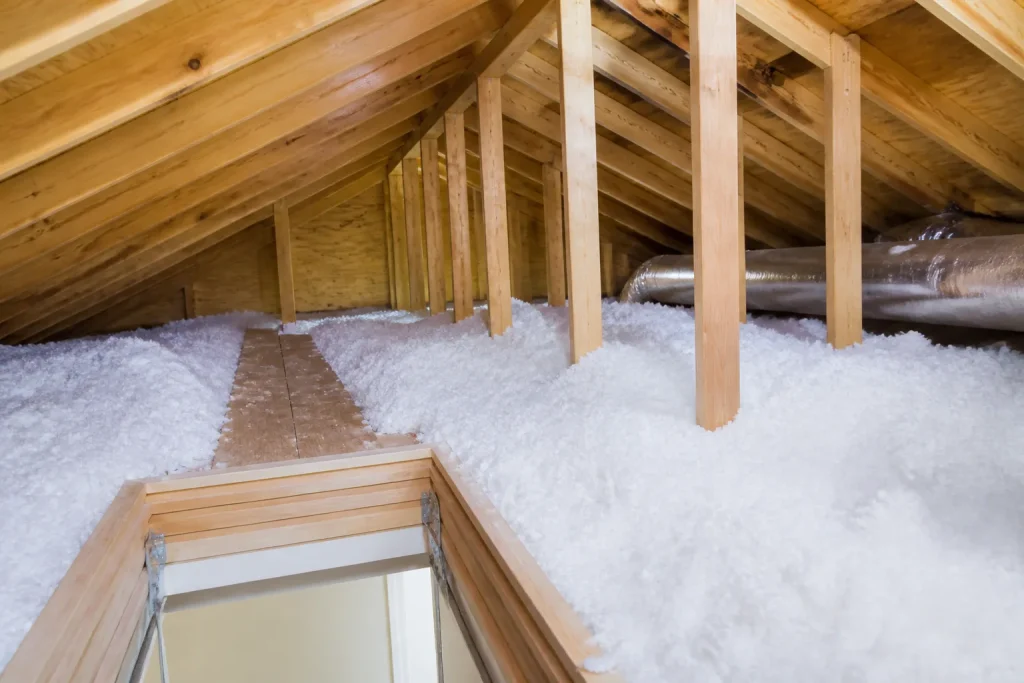
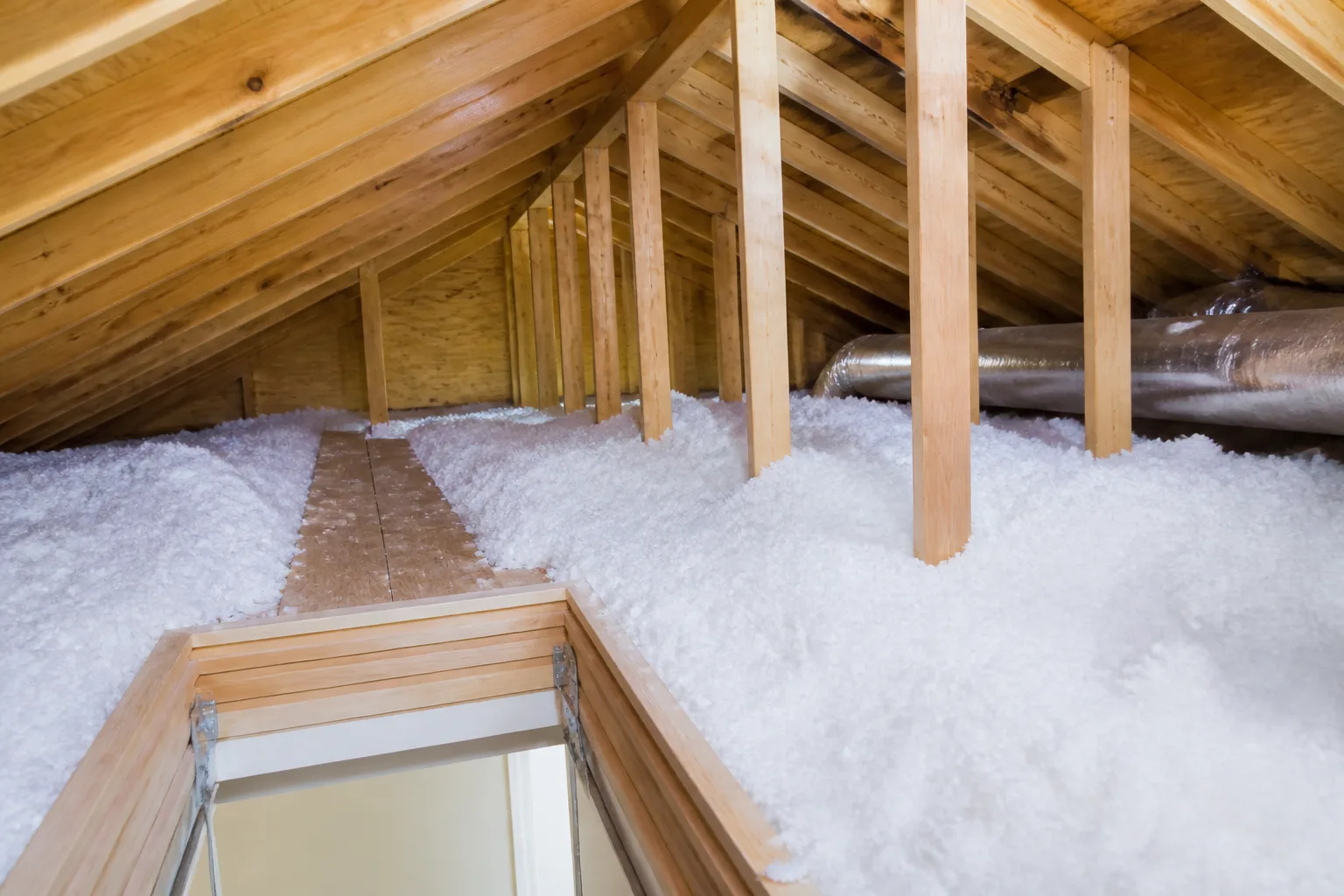
Most blown-in insulation in Las Vegas doesn’t fail because the fiberglass went bad. It fails because air kept moving through it. A 1,200-square-foot attic with 10 inches of existing blown fiberglass and 15 unsealed recessed light fixtures performs closer to R-11 than the R-30 printed on the bag, because hot attic air and conditioned air trade places through those fixtures faster than the R-value can resist the transfer. That single fact reshapes the repair-or-replace question. You’re not really deciding about the material. You’re deciding whether to fix the conditions that made the original install underperform before you spend another dollar on depth.
If you’d rather hand the diagnosis to someone with a blower door than crawl through the hatch yourself, call (833) 362-4859 and we’ll walk the attic with you.
Why “Just Add More” Usually Wastes Money in a Las Vegas Attic
Adding inches over a compromised attic floor is the most common insulation mistake we see in Las Vegas, and it’s an expensive one. Blown fiberglass and cellulose only resist heat when they sit still and trap air. When a vent, a can light, or a top-plate gap lets air push through the fibers, the material gets “wind-washed” – a trade term for insulation that’s been thinned and disturbed by continuous air movement. The R-value at that spot drops well below spec even though the depth looks fine on a ruler.
Las Vegas makes this worse than most climates. Summer attic temperatures routinely climb past 150°F, and the temperature swing between a July afternoon and a January night is one of the widest in the country. That swing drives pressure differences across the attic floor all year. Every unsealed penetration becomes a chimney. We’ve measured homes in Summerlin where the owner added four inches of new fiberglass the previous summer and the blower-door number barely moved, because the air leaks were still wide open underneath.
This is the core of our “sealed first, then insulated” rule. We won’t blow new material over an unsealed attic floor, regardless of what the homeowner asked for. Under Haven Standard Clause 1, that goes in writing before we start.
The Diagnostic Sequence: What Has to Happen Before Anyone Orders Materials
Any honest repair-or-replace call starts with three measurements, not an estimate pad. Here’s the sequence, and you can ask any contractor to show you the results before you sign anything.
- Depth measurement at 10 points. A ruler pushed to the attic floor at a grid of locations reveals the real average depth, not the depth near the hatch where installers tend to be generous. Uneven depth is a wind-washing indicator.
- Wind-washing assessment near vents, can lights, and the attic hatch. Look for darkened, matted, or displaced fiber – the visual fingerprint of air that’s been moving through it. This tells you where sealing is needed.
- Blower-door test before materials are ordered. A blower-door reading (CFM50, or cubic feet per minute at 50 pascals of pressure) shows in one number how much air the whole envelope is losing. It’s the only figure that tells you whether you need sealing, top-up, or a full removal.
We publish before-and-after blower-door numbers on every applicable job because that reading is the difference between “we added insulation” and “we added measurable performance.” Without a pre-work number, nobody can prove what changed.
When Existing Blown-In Insulation Has to Come Out, Not Top Up
Some attics can’t be saved with sealing and a top-up. Contamination is the deciding factor, and there are three field indicators we check on every Las Vegas assessment.
- Rodent activity. Droppings, tunnels through the fiber, chewed vapor barrier, and the ammonia smell that lingers after the animals leave. Insulation that’s been used as nesting material holds pathogens and has to go. Air sealing over contaminated fiber traps the problem in place.
- HVAC condensate intrusion. In Las Vegas, a dripping condensate line or an overflowing drain pan saturates the fiber, and wet fiberglass or cellulose loses R-value fast and can grow mold in an unconditioned attic. If you can see water staining on the deck or smell a musty note near the air handler, removal is the answer.
- Smoke damage. After a kitchen or attic fire, soot settles into the fiber and can’t be cleaned out of blown material. Insurance carriers typically require removal and replacement, not a top-up.
We pulled one out of a garage conversion over in North Las Vegas last year where a leaking condensate line had soaked the fiber for two summers. The owner had been quoted a simple top-up by another company. A depth check and a moisture probe would have caught it in ten minutes.
Air Sealing Plus Top-Up vs. Full Removal: How to Find the Break-Even
Here’s how the math works in the Las Vegas market. A typical attic air-sealing job (top plates, can lights, plumbing and electrical penetrations) runs $1,200 to $2,800 depending on ceiling complexity and the number of penetrations. Blowing additional fiberglass or cellulose to code depth (R-49 to R-60, which is where Las Vegas should sit) adds roughly $900 to $2,200 for most homes. Full removal of the old material plus sealing plus new insulation runs $3,800 to $7,500.
The break-even question is simple: if the old fiber is clean and dry and the depth is within about 2 inches of spec, sealing plus a top-up almost always wins on cost per unit of performance. If the old fiber is contaminated, wind-washed below spec by more than a third, or has to be removed anyway for a contamination reason, full replacement is usually the cheaper route once you factor in removing the old material before the top-up. Two days of labor, hauling, and disposal are already in the quote either way.
If you’re weighing a competing written estimate, we’ll read it with you at no charge. Free second opinions on any written estimate are part of how we work, and no work starts until you have a written price in hand – that’s Clause 1 of the Haven Standard, and it holds whether you hire us or somebody else.
What Blown-In Removal Actually Requires in Las Vegas (and the Paper Trail)
Blown-in removal isn’t a shop-vac job. In Las Vegas, where attics routinely hit 140°F to 160°F in July and August, a proper removal uses HEPA-filtered, negative-pressure equipment. That means a sealed containment over the attic access so dust and fibers don’t migrate into the living space, HEPA filtration rated for particulate capture, and crews working in short shifts with cooling and hydration breaks. A crew without that equipment will pump fiberglass dust through your house.
When the work is done, ask for the disposal documentation. A legitimate removal job should give you:
- A written record of the cubic yards removed
- Disposal receipts from the receiving facility
- The name and contact of the hauling firm
- A post-removal depth confirmation showing the attic floor is clear
If a contractor can’t produce those, the material didn’t go where they say it went. The same discipline applies to attic cleaning and rodent proofing, where the old material has to be off the floor before any sealing work can be verified.
For the full envelope picture, including how removal fits alongside crawl space encapsulation and vapor barrier work on the same house, that’s a separate scope and priced separately.
The Record You Should Walk Away With
Whether you choose repair or replacement, the paperwork is what tells you the job was done to a standard. A completed job should leave you with four items in hand.
- Pre-work blower-door reading. The CFM50 number from before any material was added or removed.
- Depth photos at a minimum of 10 locations. Not one photo of the hatch – a grid across the attic, showing the installed depth at each point against the ruler.
- Bag count. The number of bags or bales installed, which should reconcile with the square footage and target R-value.
- Post-work blower-door reading. The ACH50 (air changes per hour at 50 pascals) after sealing, so you can see the actual change in airtightness, not a promised one.
We issue that record on every applicable job as a Documented Photo Record, included on every visit, not available only on request. Homeowners who bought a Las Vegas home between 2015 and 2025 have often inherited a builder’s install that had no such documentation at all. Getting a proper record on the repair or replacement is the first honest baseline you’ll have.
When to Call a Pro
Air sealing around can lights and top plates is a routine part of what we do – but diagnosing a blower-door reading, calculating whether the existing fiber is recoverable, and running HEPA-filtered removal safely at 150°F are not weekend projects. The trade vocabulary matters less than the equipment and the documentation, and both live with a trained crew. If you’re on the fence about whether to seal, top up, or pull everything out, get the measurements first. That’s the honest starting point.
Related services in Las Vegas: attic insulation, spray foam insulation, and the full Envelope Insulation Las Vegas home suite for sealing, removal, and envelope work.
The Bottom Line
For most Las Vegas attics, the repair-or-replace decision comes down to substrate, not material. If the existing blown-in is clean, dry, and within a couple inches of spec, air sealing plus a top-up to R-49 or better is the efficient move – and it costs less than full replacement by thousands. If rodent activity, HVAC condensate, or smoke has compromised the fiber, removal is the only honest answer. Either way, the pre-work blower-door reading tells you what you’re solving, and the post-work reading tells you what you actually achieved. No material should be ordered before the first number is on paper.
If you’re in Las Vegas and you’d rather not crawl a 150°F attic with a ruler, we’ll do it. Envelope Insulation Las Vegas offers free estimates with a written price before any work starts and a documented photo record when we leave – call (833) 362-4859 to schedule.
Frequently Asked Questions
Only if it’s contaminated by rodents, water from HVAC condensate, or smoke, or if it’s been wind-washed below spec across most of the attic floor. Clean, dry fiber within about 2 inches of target depth can usually be sealed around and topped up. The deciding evidence is a blower-door reading and a visual check for matted, displaced material around vents and can lights. Call (833) 362-4859 for a free estimate – we’ll measure before recommending either path.
Air sealing plus a top-up typically runs $2,100 to $5,000 total for a Las Vegas home. Full removal plus sealing plus new insulation runs $3,800 to $7,500, depending on home size, ceiling complexity, and disposal volume. The lower end of the replacement range applies when existing fiber is already at reasonable depth and only needs removal before a top-up. Estimates are free and written before any work starts – call (833) 362-4859 for an exact number.
Target R-49 to R-60 under current building practice, which for blown fiberglass or cellulose means roughly 15 to 20 inches depending on the material’s rated R per inch. Blown fiberglass runs about R-2.2 to R-3.0 per inch; cellulose is closer to R-3.2 to R-3.8. We measure depth at a minimum of 10 points because single-point measurements near the hatch are almost always higher than the attic average. Call (833) 362-4859 to schedule a measurement before you buy another bag of anything.
Not reliably, unless the air leaks are sealed first. Blown fiberglass over an unsealed attic floor with 15 recessed lights and a half-dozen penetration gaps performs near R-11 no matter how much you add. Air sealing the top plates, can lights, and penetrations is the prerequisite, then the added R-value does the job it’s rated for. The proof is the before-and-after blower-door reading – a post-work ACH50 that’s noticeably lower than the pre-work figure is the number that tracks with a lower bill. Call (833) 362-4859 to get the initial reading scheduled.
Written by the team at Envelope Insulation Las Vegas.
Need Insulation Help?
Call Envelope Insulation Las Vegas - licensed & insured, here with fast after-hours help in Las Vegas.
(833) 362-4859