Attic Insulation: Repair or Replace? How Las Vegas Homeowners Decide
Replacing functional R-30 blown fiberglass to reach R-49 costs roughly $1,800 on a 1,500 sq ft attic and cuts summer cooling load by an estimated 8 – 12%, according to Oak Ridge National Laboratory data. Sealing the attic air bypasses first – a $400 – 600 scope – often delivers a larger load reduction than the full replacement. Most contractors don’t recommend the smaller scope, and that’s the part worth paying attention to.
The repair-or-replace decision for attic insulation in Las Vegas is less about how old the material is and more about three things you can actually measure: current installed R-value, the ACH50 number from a blower-door test, and whether the existing material is contaminated. Get those three readings and the answer usually writes itself. If you’d rather have someone else run the numbers, call (833) 362-4859 and we’ll walk you through them.
What are the three measurements that settle the repair-or-replace question?
You don’t guess at this. Three objective readings tell you whether full replacement is clearly correct or whether a smaller scope will get the same result for less money. In our experience across Las Vegas homes, these are the only criteria that hold up:
- Contamination. Rodent nesting, mold, or water damage confirmed by inspection. Rodent droppings and urine-soaked fiberglass can’t be sealed over – the material comes out. This is a health and air-quality decision, not an insulation one.
- Compressed R-value below R-19. We measure depth with a ruler at multiple points. If existing fiberglass has settled and compressed under its own weight or from foot traffic, and the effective R-value reads under R-19, the material has lost its job and replacement is justified.
- Hazardous legacy material. Original vermiculite – the gray, pebble-like fill common in mid-century homes – may contain asbestos and requires testing before anything else happens. If it’s present, that changes the entire scope.
If none of those three are true, replacement is often the wrong call. A 1,500 sq ft Las Vegas attic with intact R-30 fiberglass and no contamination is a candidate for a top-up or air-sealing-only, not a full tear-out. Ongoing attic insulation services in Las Vegas should start with measurement, not with a quote for the biggest job.
When is a top-up the right call instead of replacement?
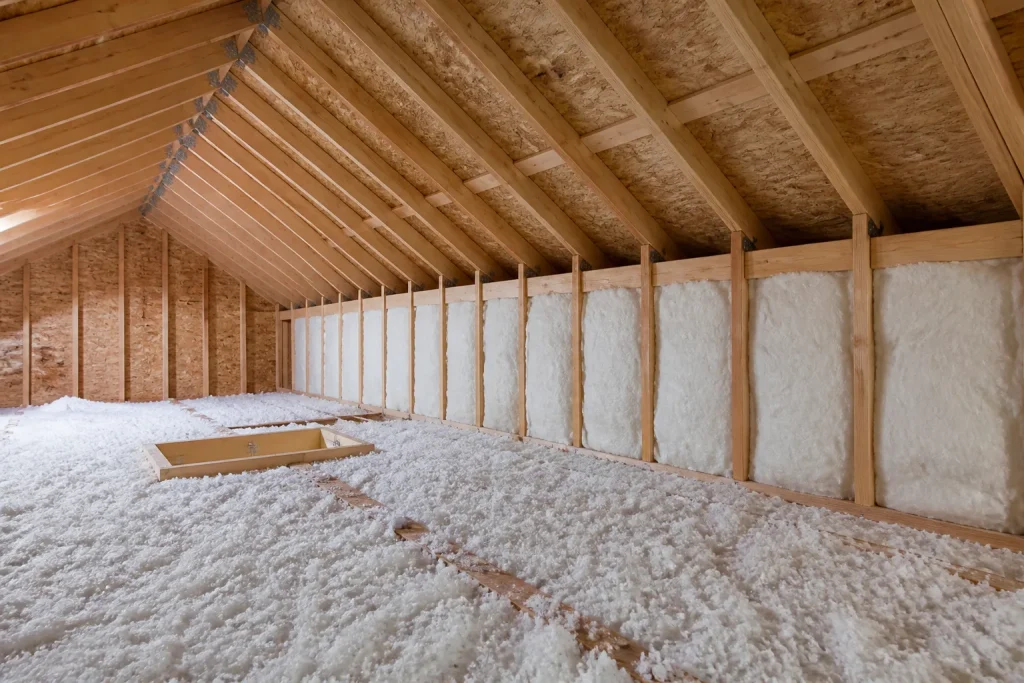
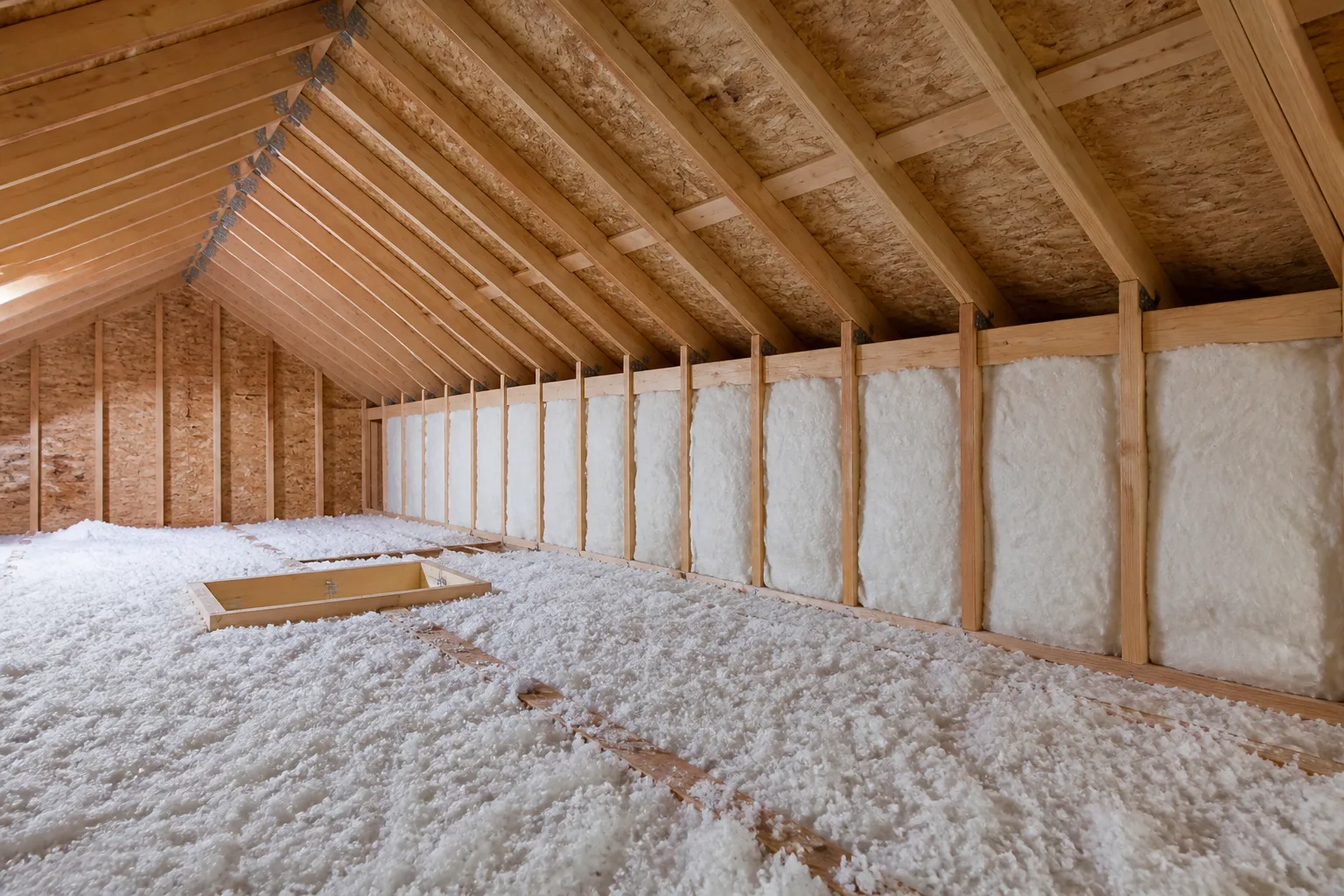
A top-up – adding material over existing – is valid when the existing insulation is clean, uncompressed, and stays where it is. What must be true for a top-up to work:
- The material isn’t contaminated and shows no rodent or water damage.
- The existing R-value is measurable and above R-19, so you’re adding to a working layer rather than burying a dead one.
- Air sealing happens first. Every time. Blowing insulation over an unsealed attic floor traps the leaks underneath and wastes the new material. The bypasses at top plates, can lights, and plumbing penetrations need to be sealed before anything gets added on top.
Here’s the sequence in our experience that actually moves the number: seal first, then insulate. Under The Haven Standard we won’t blow insulation over an unsealed attic floor, because the blower-door reading after the job tells the true story – and if you skip the sealing, the reading barely changes even though you paid for new material. A top-up in Las Vegas without air sealing is money spent on the wrong layer of the problem.
How does a blower-door test change the decision?
The blower-door test – a pressurization measurement that shows, in a single number, how much air your building envelope is losing – does more to guide the repair-or-replace call than any visual inspection. ACH50 is that number: air changes per hour at 50 pascals of pressure.
On a typical Las Vegas home, if ACH50 reads above 15, the envelope failure is likely at penetrations and drywall gaps, not in the insulation layer itself. That means removing good material to “start fresh” spends money on a layer that wasn’t the leak. Seal the bypasses first and re-test, and the number often drops far enough that the insulation only needs a top-up to reach target R-value. Homeowners in older Las Vegas homes with attic insulation needs around the historic core routinely see exactly this pattern – the drywall gaps and recessed lights are the culprit, not the fiberglass.
We publish before-and-after blower-door numbers on every applicable job so you can see the performance change you paid for, in one figure. It’s the difference between “the house feels better” and 4,200 CFM50 down to 2,100.
What does each option cost in Las Vegas in 2026?
Here’s the math so you can run it yourself. These are 2026 Las Vegas labor and material ranges for a 1,500 sq ft attic:
| Scope | Typical cost | What it does |
|---|---|---|
| Air sealing only | $400 – $600 | Seals top plates, can lights, penetrations; often the largest ACH50 drop |
| Air sealing + top-up to R-49 | $1,100 – $1,500 | Seals first, then adds material over clean existing fiberglass |
| Full replacement to R-49 | $1,700 – $2,300 | Remove contaminated or compressed material, seal, then install fresh (Owens Corning or Johns Manville blown fiberglass) |
| Removal add-on (contamination) | $600 – $1,000 | Hazardous or damaged material hauled out before new work |
The gap between air-sealing-only and full replacement on the same attic is often over $1,000. Sealing bypasses first frequently delivers more load reduction than the replacement – which is why the smaller scope deserves a real look. In a casa out in the western valley last month, we found clean R-30 under a layer of settled dust and a blower-door number of 18 ACH50; sealing brought it to 9 for under $600, and the homeowner skipped the tear-out entirely. That’s the case worth making. Call (833) 362-4859 for a free estimate with the numbers on the page.
When does replacement actually win?
Replacement is the right answer when contamination or hazardous material makes top-up unsafe or ineffective. If rodent waste, mold, or water damage is confirmed, the material comes out – you can’t seal over it and you shouldn’t bury it. If the original vermiculite fill tests positive for asbestos, that drives the scope before anything else happens. And if compression has genuinely dropped effective R-value below R-19, added material won’t fix a layer that’s already dead.
In those cases, replacement plus air sealing is the honest call. Removal and disposal in Las Vegas carries weight because of the heat, dust, and the need for proper handling of contaminated material – this isn’t a job to improvise. Our technicians have up to 10 years of experience with removal and reinstallation, and we source material from established manufacturers like Owens Corning, Johns Manville, Knauf, and Rockwool so you’re not locked into one proprietary product.
When should you call a pro?
If you’re on a ladder in a 140°F attic with a flashlight, stop and think about it. Contact with contaminated insulation, handling legacy vermiculite, and the heat exposure itself all make this a job for a trained professional. The measurement work – blower-door testing, R-value depth readings – requires equipment most homeowners don’t have, and the diagnosis is the whole point. Call us rather than improvising in the attic.
Related services in Las Vegas: if your crawl space is part of the moisture story, see Crawl Space Encapsulation & Vapor Barrier in Las Vegas, and for unusual framing or hard-to-seal cavities, Spray Foam Insulation in Las Vegas is worth a look.
What should the documentation trail look like?
Whatever you decide, the decision should be backed by a written record you keep. That’s how you know the scope was chosen on evidence, not on which job pays more. A proper repair-or-replace record includes:
- Blower-door pre-test results in CFM50, taken before any recommendation is made.
- R-value depth measurements at a minimum of five points across the attic floor, written down, not eyeballed.
- A written scope rationale explaining why the chosen approach – seal-only, top-up, or replacement – was correct given the readings.
Under Haven Standard Clause 1, you get a flat price, written scope, and written warranty before anyone lifts a tool. That written price before any work starts is the foundation everything else rests on. If you already have a competing estimate, we offer a free second opinion and will read it with you – no pressure, just the numbers side by side.
The Bottom Line
The repair-or-replace decision comes down to three readings: contamination status, measured R-value, and ACH50 from a blower-door test. If none of them flag a problem, sealing the air bypasses first – often a $400 – $600 scope – delivers more load reduction than a $1,800 replacement, and you should ask any contractor why they’re recommending the bigger job. If contamination, compressed R-value under R-19, or legacy hazardous material is present, replacement is the honest answer. Either way, insist on the measurements and the written rationale before work begins.
If you’re in Las Vegas and need help sorting this out, Envelope Insulation Las Vegas offers free estimates – call (833) 362-4859. Every job starts with a written price and ends with a Documented Photo Record on every visit, backed by our 365-Day Done Right Promise: if it’s not done right, we make it right.
Frequently Asked Questions
Air-sealing-only is usually the cheapest effective option at $400 – $600 and often delivers the largest load reduction. Air sealing plus a top-up runs $1,100 – $1,500, while full replacement runs $1,700 – $2,300 for a 1,500 sq ft attic. Replacement only wins on price when contamination or compressed R-value forces it. Call (833) 362-4859 for an exact quote – estimates are free.
Three checks: measure installed R-value at multiple points with a depth ruler, have a blower-door test run to get your ACH50 number, and inspect for rodent, mold, or water contamination. If R-value reads above R-19 and the material is clean, a top-up plus air sealing is usually enough. Call (833) 362-4859 to schedule the measurements.
Yes, when the existing material is clean and uncompressed – but air sealing must happen first, every time. Blowing new material over an unsealed attic floor traps the leaks underneath and wastes the money. We won’t do a top-up without sealing the bypasses first. Call (833) 362-4859 for a written scope.
A blower-door test is a pressurization measurement that shows, in one number (ACH50), how much air your building envelope is losing. If ACH50 reads above 15 on a typical Las Vegas home, the leak is at penetrations and drywall gaps, not the insulation – which means sealing first often beats replacing. Call (833) 362-4859 and we’ll publish the before-and-after numbers on your job.
Written by the team at Envelope Insulation Las Vegas.
Need Insulation Help?
Call Envelope Insulation Las Vegas - licensed & insured, here with fast after-hours help in Las Vegas.
(833) 362-4859