CertainTeed Attic Insulation in Las Vegas: A Homeowner’s Guide
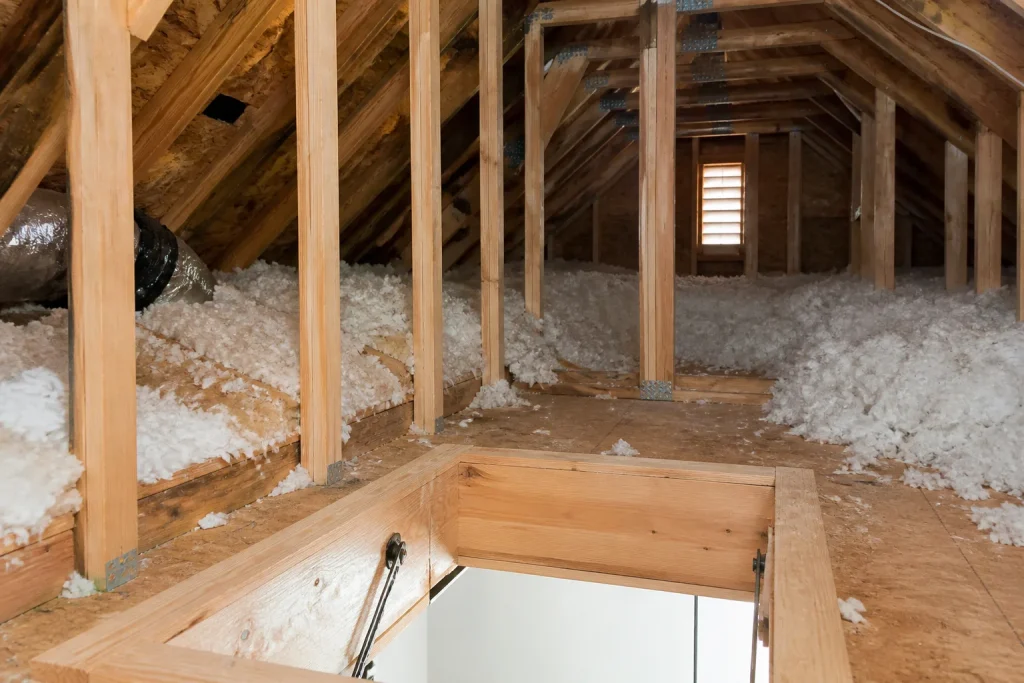
CertainTeed’s InsulSafe SP, like all blown fiberglass, settles after installation. The coverage chart on the bag already accounts for this, but only if the installer reads the column for settled thickness instead of initial thickness. A crew that stops at the initial-thickness depth delivers R-38 on day one and something closer to R-30 by year two, and the homeowner never learns the difference until the summer power bill tells them.
If you’d rather not climb into a 140-degree attic to check depth marks yourself, call (833) 362-4859. Our technicians have up to 10 years of experience, and we put the price in writing before anyone touches your attic.
Key Takeaways
- Blown fiberglass settles. CertainTeed’s own chart has separate columns for initial and settled depth, and the settled column is the one that matters in Las Vegas.
- Climate Zone 3B runs hot and dry. Vapor barriers under fiberglass in a Las Vegas attic trap moisture where there shouldn’t be any, and CertainTeed’s own permeability ratings show why they’re unnecessary here.
- InsulSafe SP carries GREENGUARD Gold certification, which speaks to what’s off-gassing into your home, not just a label on a bag.
- CertainTeed’s Spirit batt product and InsulSafe SP each win on different things. Which one fits your attic depends on framing, access, and how much sealing needs to happen first.
What does the CertainTeed coverage chart actually say about settled depth?
Every bag of CertainTeed InsulSafe SP lists coverage in board feet per bag, and the chart runs two sets of depth numbers: initial installed thickness and settled thickness. Fiberglass blown to R-49 at installation will lose roughly 15 to 20 percent of its volume over the first year as the binder relaxes and gravity does its work. CertainTeed builds that shrinkage into the chart, which is why the settled column asks for a deeper mark than the initial column at the same R-value.
Here’s the practical problem. Some crews blow to the number that looks right on the day of the job, collect the check, and leave. The attic passes a visual inspection because the insulation looks fluffy and even. Twelve months later, the depth has dropped and nobody’s measuring anymore.
What you want installed in your Las Vegas attic is a set of depth markers at the settled-thickness numbers for your target R-value. R-38 in Climate Zone 3B is the common residential target for a Las Vegas attic. R-49 or higher is worth discussing if your ducts run through the space. The installer should staple rulers or depth sticks at multiple points across the attic floor and photograph each one after blowing. When the crew leaves, you should know exactly what depth was measured and at which points.
We’ve pulled initial-only depth readings out of attics in Summerlin where the insulation measured R-30 two winters after a contractor sold R-38. The homeowner had no way to know until we put a tape measure against a joist.
Why vapor barriers don’t belong under fiberglass in Las Vegas
Las Vegas sits in IECC Climate Zone 3B, which is hot and dry. CertainTeed publishes vapor permeability ratings for each of its fiberglass products, and those numbers matter here more than they do in a humid climate. Standard fiberglass batts and blown InsulSafe SP are vapor-permeable by design, typically rated in the range of 30 to 50 perms depending on density and thickness. That permeability is intentional: moisture that migrates into the insulation can move through and dry out.
A vapor barrier under that insulation, in this climate, does the opposite. It traps whatever moisture reaches it and holds it against the attic floor. In Las Vegas that’s usually not bulk water leaking in. It’s the small amount of humid air that moves up from the living space during the summer cooling season and condenses on the cool side of the assembly at night.
What you want instead is air sealing first, then fiberglass, no vapor barrier. Seal the top plates, the can lights, the wire penetrations, and the plumbing chase with caulk and foam. That’s what stops the humid air movement at its source. InsulSafe SP goes in on top of a sealed attic floor, and the assembly dries to the attic side the way the manufacturer intends.
If a contractor tells you a “vapor barrier” is required under fiberglass in Las Vegas, ask them to show you the permeability rating for that product and the specific code citation. In our experience, they can’t. Las Vegas homes don’t need it, and adding one is a way to bill for material that does no work.
What does GREENGUARD Gold certification actually mean for a CertainTeed attic?
GREENGUARD Gold is a third-party indoor air quality certification from UL that tests products for volatile organic compound emissions against limits set for sensitive environments like schools and healthcare facilities. The thresholds are tighter than the standard GREENGUARD certification. CertainTeed holds GREENGUARD Gold on InsulSafe SP, which means the product has been tested and passes those emission limits.
That matters in two windows of time. During installation, blown fiberglass generates dust because the fibers are being chopped and blown under pressure. GREENGUARD Gold doesn’t make the dust go away; what it tells you is the product isn’t introducing significant chemical emissions on top of the mechanical dust. After installation, when the attic is sealed up and the fiberglass sits there for years, GREENGUARD Gold is the only third-party document that speaks to what it’s releasing into your home’s air.
Two caveats we tell homeowners up front. First, GREENGUARD Gold is a certification of the product, not of the installation. A crew that doesn’t air seal the ceiling plane before blowing can still leave you with a dusty, leaky attic. Second, the certification doesn’t cover the dust generated during the work itself. We bag and haul out the old insulation on removal jobs and run HEPA filtration where the access allows, but the attic will be dusty for a day no matter what’s on the bag.
InsulSafe SP is one of several fiberglass products on the market with this certification. Owens Corning and Johns Manville make qualifying fiberglass products too. We don’t lock into one brand; we match the product to the job.
InsulSafe SP vs. CertainTeed Spirit batts: which wins in a Las Vegas attic?
Spirit is CertainTeed’s fiberglass batt line, and InsulSafe SP is the blown version. Both are legitimate for a Las Vegas attic, and each has a real advantage depending on what your attic looks like.
InsulSafe SP wins on:
- Coverage over irregular framing, plumbing chases, and the cluttered floors common in Las Vegas homes built between 2015 and 2025.
- Sealing around duct boots and recessed cans without cutting and fitting each batt.
- Reaching targets above R-38 without specialty-order batts.
- Rewriting the envelope retroactively. Blown insulation can be added over existing material without removing it, if that material is intact.
Spirit batts win on:
- Knee-wall and low-clearance attics where a blower hose can’t reach without wrecking the insulation it just laid.
- Rim joists and other tight spots where a batt fits and blown material can’t be contained.
- Attics with an accessible floor path where you want a clean, visible layer with predictable installed R-value per batt.
In most Las Vegas attics we walk into, InsulSafe SP is the right call. The story we can’t stop telling is a job in Henderson where the attic had a mess of duct boots and wire runs across the ceiling plane. Spirit batts would have needed to be cut around every one. Blown InsulSafe SP sealed the whole thing in a fraction of the time.
What should the post-installation paperwork for a CertainTeed blown job include?
The bag count is the foundation of any legitimate blown insulation job. If your contractor claims R-49 and blows less than the chart calls for, the bag count will show it. Every bag of CertainTeed InsulSafe SP covers a defined board footage at a given R-value, and a real documentation packet lists the bag count, the square footage covered, and the math.
What we hand over on every CertainTeed job:
- Bag count and coverage math. The number of bags, the board-footage figure from the CertainTeed chart, and how it lands on your specific attic square footage.
- Installer-verified depth measurements at multiple points. Depth readings taken at 6 to 10 spots across the attic floor, at the settled-thickness number, and photographed.
- Air sealing scope. Photos of sealed top plates, can lights, and penetrations, taken before any insulation went over them.
- Blower-door readings. A before-and-after CFM50 measurement if air sealing was performed first. This is the number that shows, in a single figure, how much air the home was losing before and after.
- Written scope and warranty delivered before the work started. Not after.
If your contractor can’t walk you through the bag count and the settled depth, they didn’t document the job. That’s a warning sign worth taking seriously.
When to call a pro
Attic insulation is one of the few home improvements where the gap between a good installation and a bad one is invisible from the living room. If your attic has recessed lights you can see from below, if the current insulation looks uneven or compressed, if you’ve had any rodent activity, or if you’re not sure the settled depth is actually hitting the target, that’s a call-a-professional moment. Blown insulation goes in once, and re-doing it costs more than doing it right the first time.
If you want your own starting point, an Envelope Insulation Las Vegas home page walks through the full service line, and attic insulation in Las Vegas has the specifics on our attic work. Air sealing always happens before insulation goes in on our jobs; we don’t blow material over an unsealed attic floor. If your home also has a crawl space losing conditioned air up through the floor, crawl space encapsulation and vapor barrier in Las Vegas is worth a read. And for rim joists and other tight spots where CertainTeed batts don’t fit, spray foam insulation in Las Vegas is the material that gets the job done.
The Bottom Line
CertainTeed’s InsulSafe SP and Spirit batts both belong in a Las Vegas attic. InsulSafe SP earns its place for most homes; Spirit wins in knee walls and tight framing. What actually determines the R-value you get is settled depth, not the number on the bag, and the coverage chart’s settled column is the only one that counts. Skip the vapor barrier in Climate Zone 3B. Air seal the ceiling plane before insulation goes in. And demand documentation: bag count, depth measurements, and blower-door numbers if air sealing was performed.
If you’re in Las Vegas and need help sorting this out, Envelope Insulation Las Vegas offers free estimates. Call (833) 362-4859 and a live person will pick up. Under the Haven Standard, you get a written price before any work starts, a documented photo record when the crew leaves, and the 365-Day Done Right Promise behind the work.
Frequently Asked Questions
R-38 is the common target in Climate Zone 3B for a Las Vegas attic, with R-49 worth considering if ducts run through the attic. The R-value is decided by settled depth, so the installer needs to blow to certainTeed’s settled-thickness column, not the initial column. Call (833) 362-4859 and we’ll measure your attic and tell you in writing.
Yes, with the usual precautions. InsulSafe SP carries GREENGUARD Gold certification, which means the product has been tested for volatile organic compound emissions against stricter limits than standard GREENGUARD. The fibers are mechanically irritant during installation, and dust clears within a day. Call (833) 362-4859 if you want the certification details before scheduling.
No. Las Vegas is Climate Zone 3B, hot and dry, and CertainTeed’s own vapor permeability ratings show that the correct assembly here is air sealing plus fiberglass, with no vapor barrier. A vapor barrier under fiberglass in this climate traps moisture against the attic floor. Call (833) 362-4859 for a free second opinion on any estimate that specifies one.
Most whole-attic InsulSafe SP jobs in Las Vegas land in the $2,400 to $5,800 range for typical 1,200 to 2,000 square foot attics, depending on target R-value, whether old insulation is removed, and how much air sealing is needed. Spirit batt jobs run lower on material and higher on labor where framing is tight. Call (833) 362-4859 for an exact written price. Estimates are free, and a written price is delivered before any work starts.
Written by the team at Envelope Insulation Las Vegas.
Need Insulation Help?
Call Envelope Insulation Las Vegas - licensed & insured, here with fast after-hours help in Las Vegas.
(833) 362-4859